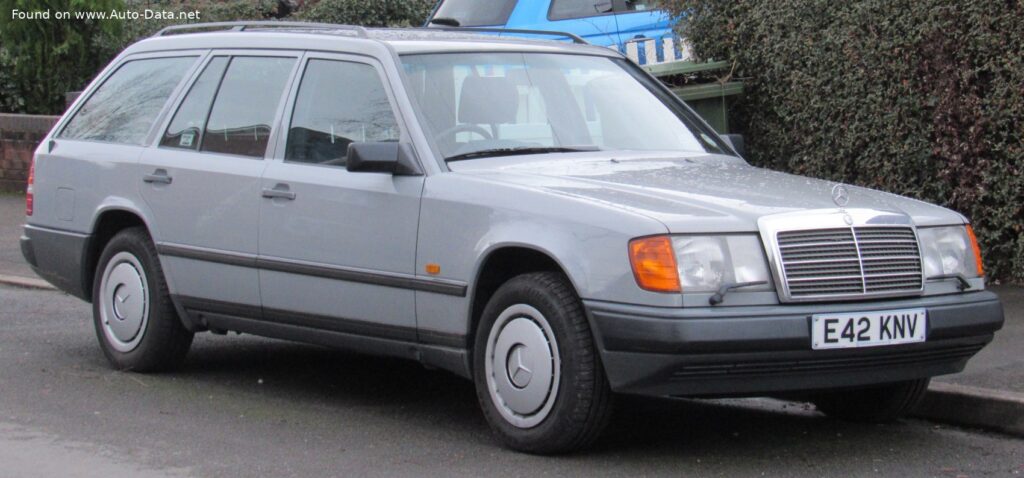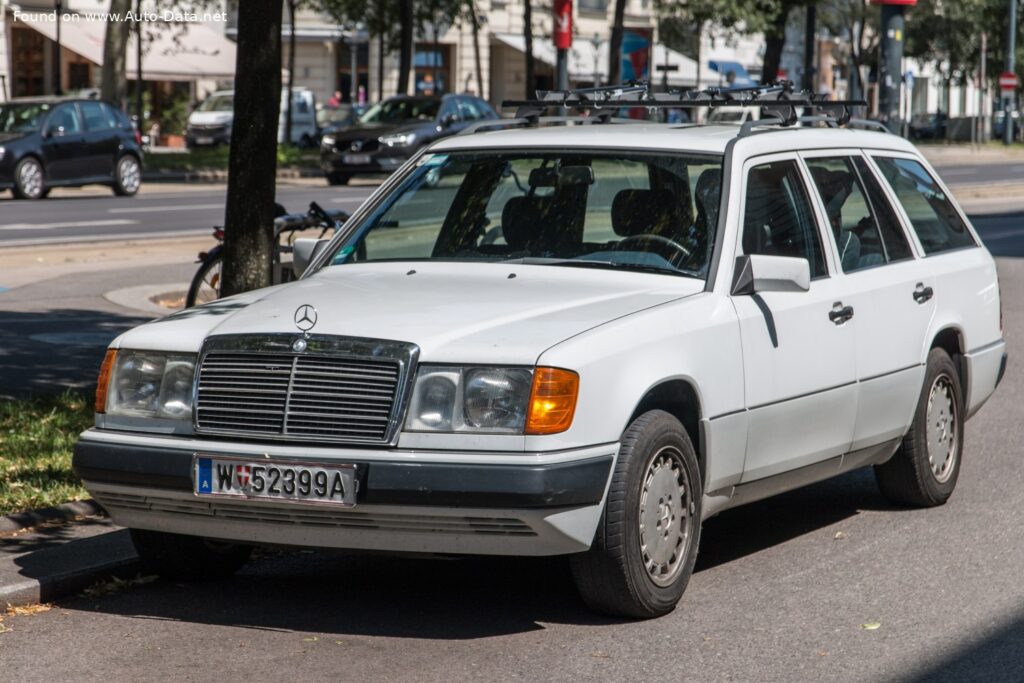
Mercedes-Benz S124 (facelift 1989) 320 TE (220 Hp) Automatic
The Mercedes-Benz W124 series, produced from 1984 to 1996, stands as one of the most iconic and revered vehicle lines in the German automaker’s history. Renowned for its exceptional build quality, engineering integrity, and timeless design, the W124 encompassed sedans (W124), coupes (C124), convertibles (A124), and station wagons (S124). Among these, the Mercedes-Benz S124 (facelift 1989) 320 TE represents a particularly desirable variant, offering a compelling blend of performance, practicality, and luxury. Introduced as part of the significant 1989 facelift, and specifically featuring the M104 3.2-liter inline-six engine from July 1992 to July 1993, this model exemplifies the W124’s peak in terms of powertrain refinement and technological advancement before the introduction of the E-Class designation. The S124 320 TE was a premium executive station wagon, primarily targeted at the European market but also appreciated globally for its robust construction and sophisticated driving dynamics. It offered ample space for families and cargo, combined with the effortless cruising ability expected of a Mercedes-Benz.
Engine and Performance of the Mercedes-Benz S124 (facelift 1989) 320 TE
At the heart of the Mercedes-Benz S124 (facelift 1989) 320 TE lies the formidable M 104 E 32, a 3.2-liter (3199 cm³ or 195.21 cu. in.) inline-six gasoline engine. This naturally aspirated powerplant, identified by the code M 104.992, was a significant upgrade from its predecessors, featuring a dual overhead camshaft (DOHC) valvetrain with four valves per cylinder, a setup that was advanced for its time. This configuration allowed for improved breathing and efficiency, contributing to both power output and smoothness.
The engine delivers a robust 220 horsepower at 5500 rpm, translating to an impressive 68.8 horsepower per liter. Torque output is equally substantial, with 228.64 lb.-ft. (310 Nm) available at a relatively low 3750 rpm, ensuring strong pulling power across the rev range. Power is efficiently transmitted to the rear wheels via a smooth-shifting 4-speed automatic transmission, a common and reliable unit for Mercedes-Benz during this era.
Despite its substantial curb weight of 3505.35 lbs. (1590 kg), the 320 TE is surprisingly agile. It can accelerate from 0 to 60 mph in a brisk 7.6 seconds, and reach a top speed of 136.7 mph (220 km/h). This performance places it firmly in the realm of sporting executive cars, capable of comfortable high-speed cruising on the autobahn or confident overtaking maneuvers. The weight-to-power ratio stands at 7.2 kg/Hp, or 138.4 Hp/tonne, highlighting the effectiveness of the M104 engine. Fuel economy, while not a primary focus for such a performance-oriented luxury vehicle of its time, was rated at 16.1 US mpg in urban conditions and 25 US mpg on the highway, reflecting a balance between power and reasonable efficiency for a large-displacement inline-six.
Design and Features
The design of the Mercedes-Benz S124, particularly after the 1989 facelift, embodies a timeless elegance that continues to be admired today. The station wagon, or “estate” as it’s known in Europe, maintains the W124’s characteristic clean lines and understated sophistication. It features a five-door body with seating for five occupants, though an optional third-row, rear-facing seat was available in some markets, enhancing its versatility.
Measuring 187.6 inches (4765 mm) in length, 68.5 inches (1740 mm) in width, and 58.62 inches (1489 mm) in height, with a generous 110.24-inch (2800 mm) wheelbase, the S124 offers a spacious and comfortable cabin. The cargo area is particularly capacious, a key selling point for the station wagon variant, making it ideal for families, outdoor enthusiasts, or professionals requiring significant load-carrying capacity.
Underneath its elegant exterior, the S124 320 TE boasts a sophisticated chassis. The front suspension employs a wishbone design, while the rear features an independent multi-link suspension. This setup, praised for its ability to combine ride comfort with stable handling, was a hallmark of Mercedes-Benz engineering. Braking performance is handled by ventilated discs at the front and solid discs at the rear, augmented by an Anti-lock Braking System (ABS), a crucial safety feature for the early 1990s. Steering is a hydraulic power-assisted cone worm system with recirculation balls, providing precise and predictable control. The vehicle rides on 195/65 R15 tires mounted on 6.5J x 15-inch wheel rims, offering a comfortable ride and adequate grip for its intended purpose.
Inside, the W124’s cabin is a testament to Mercedes-Benz’s commitment to quality and ergonomics. High-grade materials, precise fit and finish, and a logical control layout define the interior. While specific luxury features varied by market and options, typical appointments included automatic climate control, power windows, central locking, and a premium audio system. Safety was also a paramount concern, with features like a robust passenger cell, pre-tensioners for seatbelts, and driver-side airbags becoming standard or optional during its production run.
Technical Specifications
| Category | Specification |
|---|---|
| Brand | Mercedes-Benz |
| Model | W124 S124 (facelift 1989) |
| Type (Engine) | 320 TE (220 Hp) Automatic |
| Production Start | July 1992 |
| Production End | July 1993 |
| Powertrain Architecture | Internal Combustion engine |
| Body type | Station wagon (estate) |
| Seats | 5 |
| Doors | 5 |
| Fuel consumption (economy) – urban | 14.6 l/100 km (16.1 US mpg) |
| Fuel consumption (economy) – extra urban | 9.4 l/100 km (25 US mpg) |
| Fuel Type | Petrol (Gasoline) |
| Acceleration 0 – 60 mph | 7.6 seconds |
| Acceleration 0 – 100 km/h | 8 seconds |
| Maximum speed | 136.7 mph (220 km/h) |
| Weight-to-power ratio | 7.2 kg/Hp (138.4 Hp/tonne) |
| Weight-to-torque ratio | 5.1 kg/Nm (195 Nm/tonne) |
| Power | 220 Hp @ 5500 rpm |
| Power per liter | 68.8 Hp/l |
| Torque | 228.64 lb.-ft. (310 Nm) @ 3750 rpm |
| Engine layout | Front, Longitudinal |
| Engine Model/Code | M 104 E 32 / 104.992 |
| Engine displacement | 3.2 liters (3199 cm³, 195.21 cu. in.) |
| Number of cylinders | 6 |
| Engine configuration | Inline |
| Cylinder Bore | 3.54 in. (89.9 mm) |
| Piston Stroke | 3.31 in. (84 mm) |
| Compression ratio | 10:1 |
| Number of valves per cylinder | 4 |
| Fuel injection system | Multi-port manifold injection |
| Engine aspiration | Naturally aspirated |
| Valvetrain | DOHC |
| Engine oil capacity | 7.93 US qt (7.5 l) |
| Coolant capacity | 9.51 US qt (9 l) |
| Kerb Weight | 3505.35 lbs. (1590 kg) |
| Max. weight | 4850.17 lbs. (2200 kg) |
| Max load | 1344.82 lbs. (610 kg) |
| Fuel tank capacity | 19.02 US gal (72 l) |
| Length | 187.6 in. (4765 mm) |
| Width | 68.5 in. (1740 mm) |
| Height | 58.62 in. (1489 mm) |
| Wheelbase | 110.24 in. (2800 mm) |
| Front track | 58.94 in. (1497 mm) |
| Rear (Back) track | 58.94 in. (1497 mm) |
| Drivetrain Architecture | Rear wheel drive, Internal Combustion engine |
| Drive wheel | Rear wheel drive |
| Number of gears and type of gearbox | 4 gears, automatic transmission |
| Front suspension | Wishbone |
| Rear suspension | Independent multi-link suspension |
| Front brakes | Ventilated discs |
| Rear brakes | Disc |
| Assisting systems | ABS (Anti-lock braking system) |
| Steering type | Cone worm with recirculation balls |
| Power steering | Hydraulic Steering |
| Front wheel tires | 195/65 R15 |
| Rear wheel tires | 195/65 R15 |
| Front wheel rims | 6.5J x 15 |
| Rear wheel rims | 6.5J x 15 |
Legacy and Market Impact
The Mercedes-Benz W124 series, and particularly the S124 station wagon, enjoys an almost legendary status in the automotive world. It is frequently cited as one of the last “over-engineered” Mercedes-Benz vehicles, a testament to the brand’s commitment to durability, reliability, and superior build quality during that era. The Mercedes-Benz S124 (facelift 1989) 320 TE, with its powerful M104 engine, is a prime example of this philosophy. Its relatively short production run with this specific engine (1992-1993) makes it a somewhat rarer and more sought-after model among enthusiasts today.
In its primary market, Europe, the S124 320 TE competed with other premium executive wagons such as the BMW 5 Series Touring (E34 generation), the Audi 100 Avant (C4 generation), and to some extent, high-end Volvo 940/960 models. While each competitor offered its unique blend of attributes, the Mercedes-Benz stood out for its unparalleled ride comfort, robust engineering, and perceived longevity. It was a vehicle that exuded quiet confidence and understated luxury, often favored by professionals and affluent families who valued practicality without sacrificing prestige or driving pleasure.
The W124’s reputation for mechanical resilience means that many examples are still on the road today, often with incredibly high mileage, a testament to their original design and construction. The S124, in particular, has maintained strong appeal in the classic car market, with well-preserved examples commanding respectable prices. Its historical significance lies in representing the pinnacle of Mercedes-Benz’s traditional engineering values before the company began to embrace more cost-effective manufacturing processes in later generations.
The 320 TE variant, with its potent inline-six, perfectly embodies the W124’s dual nature: a practical, family-friendly vehicle during the week, and a swift, comfortable long-distance cruiser on weekends. Its legacy is one of a benchmark executive car, a vehicle that set standards for safety, comfort, and engineering excellence that few rivals could match. It remains a beloved classic, cherished for its driving experience, its timeless aesthetics, and its enduring reliability.