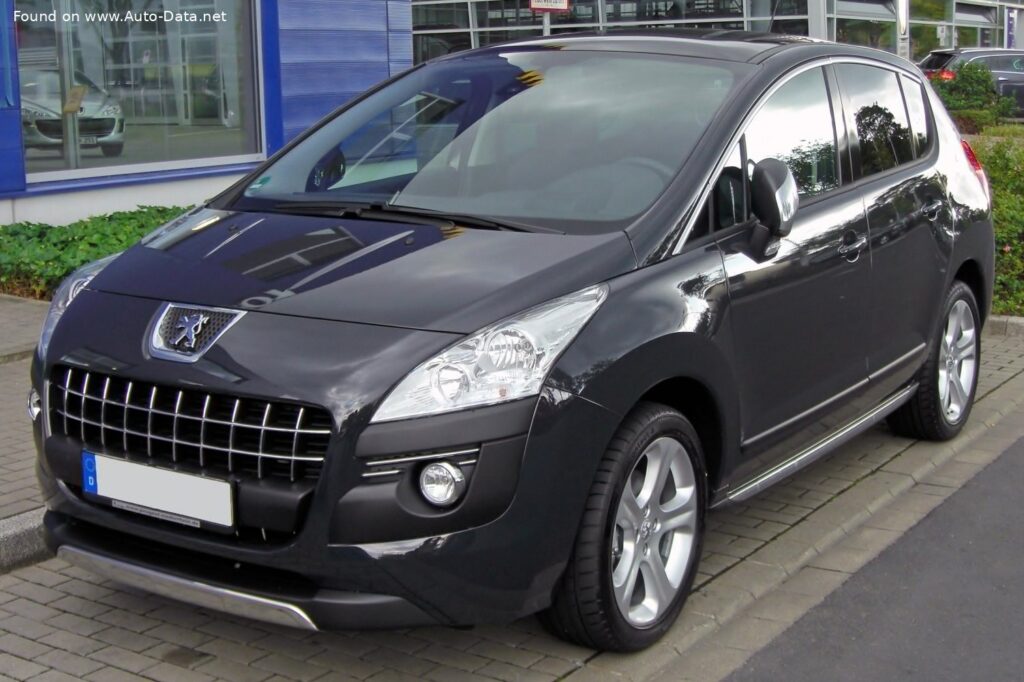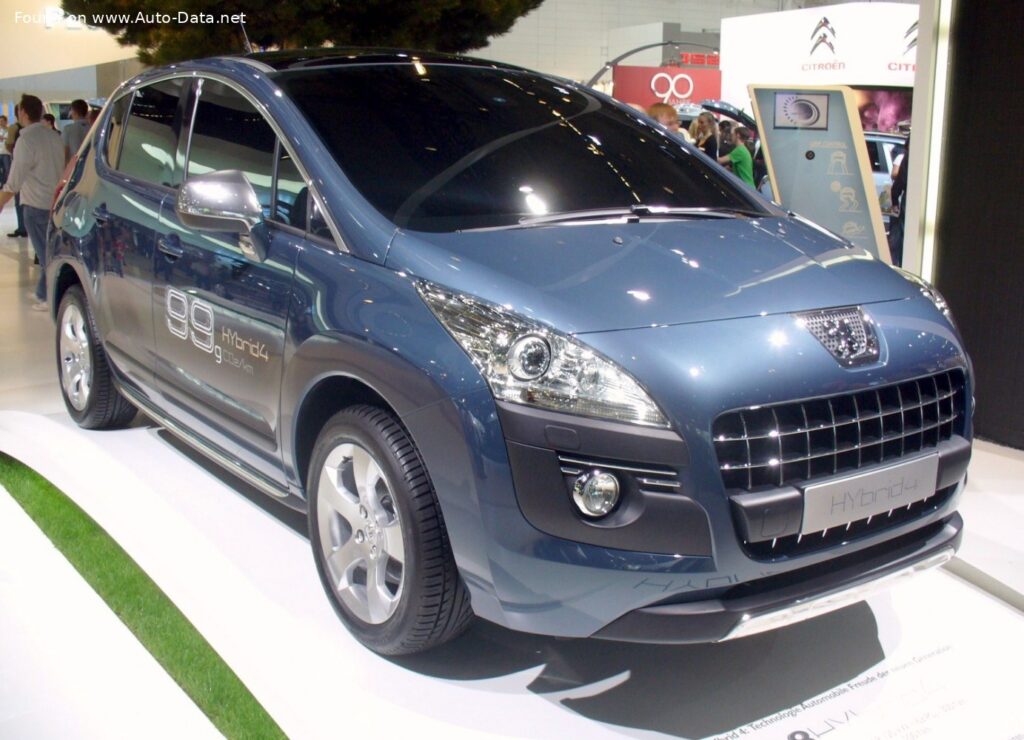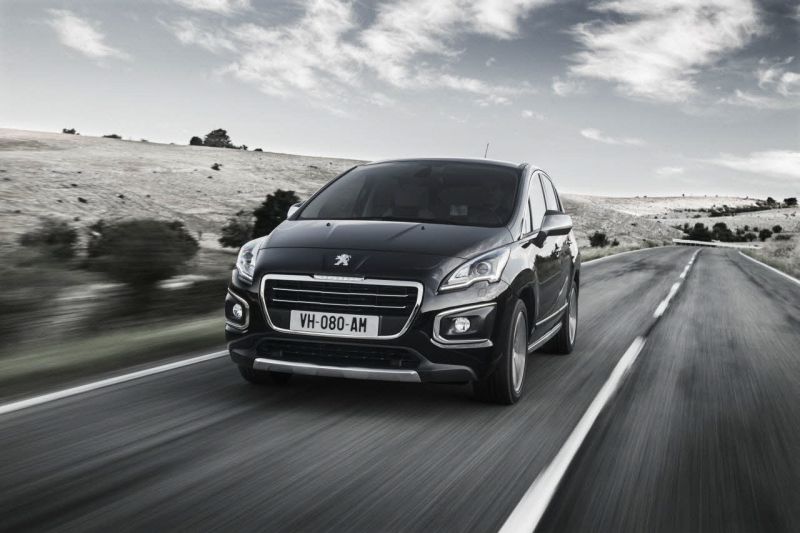
Peugeot 3008 I (Phase II, 2013) 2.0 HDi (136 Hp)
The Peugeot 3008 is a compact crossover SUV (C-segment) produced by the French automaker Peugeot. The model under scrutiny, the Peugeot 3008 I (Phase II, 2013) 2.0 HDi (136 Hp), represents a significant facelift of the first generation, which initially launched in 2009. This Phase II revision, introduced in 2013 and produced until 2015, aimed to refresh the vehicle’s aesthetic appeal and refine its features, keeping it competitive within the burgeoning European crossover market. While never officially sold in the United States, the 3008 played a crucial role in Peugeot’s strategy to expand its footprint in the increasingly popular SUV and crossover segments across Europe and other international markets. It was designed to blend the practicality of an MPV (Multi-Purpose Vehicle) with the elevated driving position and rugged styling cues of an SUV, offering a versatile and family-friendly package.
The 2.0 HDi (High-Pressure Direct Injection) variant, with its 136 horsepower output, was a particularly popular choice in Europe due to its strong balance of performance, fuel efficiency, and lower emissions, adhering to the Euro 5 standard prevalent at the time. This specific iteration of the 3008 I aimed to consolidate its position as a comfortable, well-equipped, and economically viable option for European families seeking a practical daily driver with a distinct French flair.
Engine and Performance: The 2.0 HDi Powerplant
At the heart of the Peugeot 3008 I (Phase II, 2013) 2.0 HDi (136 Hp) lies a robust 2.0-liter (1997 cm3 or 121.86 cu. in.) inline four-cylinder diesel engine. This powerplant, known for its durability and efficiency, delivers a respectable 136 horsepower at 4000 revolutions per minute (rpm). More significantly, it generates a substantial 320 Nm (236.02 lb.-ft.) of torque at a low 2000 rpm. This characteristic high torque at low engine speeds is a hallmark of modern diesel engines, providing excellent off-the-line acceleration and strong pulling power, which is particularly beneficial for urban driving, highway cruising, and towing.
The engine utilizes a common rail direct fuel injection system, ensuring precise fuel delivery for optimal combustion and efficiency. It is further enhanced by a turbocharger and intercooler, which significantly boost power output and improve throttle response across the rev range. With a bore of 85 mm (3.35 in.) and a piston stroke of 88 mm (3.46 in.), the engine’s design contributes to its balanced performance and relatively smooth operation. Each cylinder features two valves, a common setup for diesel engines of this era, prioritizing torque and fuel economy. Mated to a 6-speed manual transmission, the front-wheel-drive architecture ensures a direct and engaging driving experience, allowing the driver to fully utilize the engine’s torque band. The inclusion of a particulate filter was standard, helping the vehicle meet the Euro 5 emission standards, a critical consideration for diesel vehicles in Europe.
The vehicle’s weight-to-power ratio stands at 11.2 kg/Hp (88.9 Hp/tonne), while the weight-to-torque ratio is 4.8 kg/Nm (209.3 Nm/tonne). These figures indicate a well-balanced power-to-weight distribution for a compact crossover, contributing to its agile feel and capable performance in various driving conditions, especially when considering its primary role as a family hauler.
Design and Features of the Peugeot 3008 I (Phase II, 2013)
The Peugeot 3008 I (Phase II, 2013) retained its distinctive crossover SUV body type, characterized by a blend of SUV ruggedness and MPV practicality. The facelift introduced a refreshed front fascia, including a redesigned grille, updated headlights, and revised bumper, giving it a more contemporary and assertive look compared to the pre-facelift model. The vehicle measures 4365 mm (171.85 in.) in length, 1837 mm (72.32 in.) in width (2113 mm or 83.19 in. including mirrors), and 1635 mm (64.37 in.) in height, with a wheelbase of 2613 mm (102.87 in.). These dimensions place it firmly within the compact crossover segment, offering a good balance between interior space and maneuverability.
Inside, the 3008 Phase II continued to offer a practical and versatile cabin with seating for five occupants across five doors. The interior design was driver-focused, with a cockpit-like dashboard and good visibility. One of its standout features was its flexible cargo capacity. The trunk (boot) space ranged from a generous 512 liters (18.08 cu. ft.) with all seats up, expanding to an impressive 1604 liters (56.64 cu. ft.) when the rear seats were folded down. This adaptability made it highly suitable for families and individuals requiring ample space for luggage, groceries, or sports equipment. The fuel tank capacity of 60 liters (15.85 US gal) provided a decent range, especially with the economical diesel engine.
In terms of ride and handling, the 3008 featured an independent McPherson strut front suspension with coil springs and an anti-roll bar, paired with a semi-independent rear suspension also utilizing coil springs. This setup provided a comfortable ride quality, absorbing road imperfections effectively, while the anti-roll bar helped minimize body roll during cornering. Braking duties were handled by ventilated discs at the front and solid discs at the rear, complemented by an Anti-lock Braking System (ABS) for enhanced safety. The electric power steering system offered light and precise control, making urban maneuvers and parking effortless. The vehicle was equipped with 225/50 R17 tires on 7.5J x 17 wheel rims, providing a good balance of grip and ride comfort.
Technical Specifications: Peugeot 3008 I (Phase II, 2013) 2.0 HDi (136 Hp)
| Category | Specification | Metric / US Equivalent |
|---|---|---|
| General Information | ||
| Brand | Peugeot | |
| Model | 3008 | |
| Generation | 3008 I (Phase II, 2013) | |
| Engine Type | 2.0 HDi (136 Hp) | |
| Start of Production | 2013 year | |
| End of Production | 2015 year | |
| Powertrain Architecture | Internal Combustion engine | |
| Body Type | SUV | |
| Seats | 5 | |
| Doors | 5 | |
| Performance Specs | ||
| Fuel Type | Diesel | |
| Emission Standard | Euro 5 | |
| Weight-to-power ratio | 11.2 kg/Hp | 88.9 Hp/tonne |
| Weight-to-torque ratio | 4.8 kg/Nm | 209.3 Nm/tonne |
| Engine Specs | ||
| Power | 136 Hp @ 4000 rpm. | |
| Power per liter | 68.1 Hp/l | |
| Torque | 320 Nm @ 2000 rpm. | 236.02 lb.-ft. @ 2000 rpm. |
| Engine Layout | Front, Transverse | |
| Engine Displacement | 1997 cm3 | 121.86 cu. in. |
| Number of Cylinders | 4 | |
| Engine Configuration | Inline | |
| Cylinder Bore | 85 mm | 3.35 in. |
| Piston Stroke | 88 mm | 3.46 in. |
| Number of Valves per Cylinder | 2 | |
| Fuel Injection System | Diesel Commonrail | |
| Engine Aspiration | Turbocharger, Intercooler | |
| Engine Systems | Particulate filter | |
| Space, Volume and Weights | ||
| Kerb Weight | 1529 kg | 3370.87 lbs. |
| Max. Weight | 2080 kg | 4585.62 lbs. |
| Max Load | 551 kg | 1214.75 lbs. |
| Trunk (boot) space – minimum | 512 l | 18.08 cu. ft. |
| Trunk (boot) space – maximum | 1604 l | 56.64 cu. ft. |
| Fuel Tank Capacity | 60 l | 15.85 US gal |
| Permitted Trailer Load with Brakes (12%) | 1400 kg | 3086.47 lbs. |
| Permitted Trailer Load without Brakes | 750 kg | 1653.47 lbs. |
| Permitted Towbar Download | 70 kg | 154.32 lbs. |
| Dimensions | ||
| Length | 4365 mm | 171.85 in. |
| Width | 1837 mm | 72.32 in. |
| Width with mirrors folded | 1910 mm | 75.2 in. |
| Width including mirrors | 2113 mm | 83.19 in. |
| Height | 1635 mm | 64.37 in. |
| Wheelbase | 2613 mm | 102.87 in. |
| Front Track | 1532 mm | 60.31 in. |
| Rear (Back) Track | 1527 mm | 60.12 in. |
| Front Overhang | 916 mm | 36.06 in. |
| Rear Overhang | 836 mm | 32.91 in. |
| Minimum Turning Circle (turning diameter) | 10.9 m | 35.76 ft. |
| Drivetrain, Brakes and Suspension Specs | ||
| Drivetrain Architecture | Front wheel drive, Internal Combustion engine | |
| Drive Wheel | Front wheel drive | |
| Number of Gears and Type of Gearbox | 6 gears, manual transmission | |
| Front Suspension | Independent, type McPherson with coil spring and anti-roll bar | |
| Rear Suspension | Semi-independent, coil spring | |
| Front Brakes | Ventilated discs | |
| Rear Brakes | Disc | |
| Assisting Systems | ABS (Anti-lock braking system) | |
| Steering Type | Steering rack and pinion | |
| Power Steering | Electric Steering | |
| Tires Size | 225/50 R17 | |
| Wheel Rims Size | 7.5J x 17 |
Legacy and Market Impact
The Peugeot 3008 I, particularly its Phase II iteration with the 2.0 HDi engine, carved out a significant niche in the European automotive landscape. Its reputation was built on a foundation of practicality, comfort, and impressive fuel economy, especially crucial during a period when diesel powertrains were highly favored across the continent for their efficiency and lower running costs. The 3008 was often praised for its unique styling, which, while polarizing for some, stood out from its more conventional rivals. Its elevated driving position and generous cargo space made it a compelling choice for families and those seeking a versatile daily driver.
In its primary markets, the 3008 competed fiercely with a growing number of compact crossovers and SUVs. Key competitors included established players like the Nissan Qashqai, which largely pioneered the segment, the robust Volkswagen Tiguan, the dynamic Ford Kuga, and offerings from Korean manufacturers such as the Kia Sportage and Hyundai ix35. Against these rivals, the 3008 differentiated itself with its distinct French design philosophy, a more comfortable and less sport-oriented ride, and a cabin that prioritized clever storage and modularity over outright performance. The 2.0 HDi engine was a strong selling point, offering a compelling blend of power and economy that many gasoline engines of the era couldn’t match.
Historically, the 3008 I marked Peugeot’s successful entry into the mainstream crossover segment, a strategic move away from traditional MPVs and sedans. Its success laid the groundwork for the dramatically restyled and even more popular second generation, which pivoted more definitively towards an SUV aesthetic. The first-generation 3008, especially the refined Phase II, demonstrated Peugeot’s ability to innovate and adapt to changing consumer preferences, proving that a blend of MPV practicality and SUV styling could resonate with a broad audience. It cemented Peugeot’s reputation for producing vehicles that offered a comfortable ride, efficient powertrains, and a touch of French design flair, contributing significantly to the brand’s global sales and segment presence in the mid-2010s.