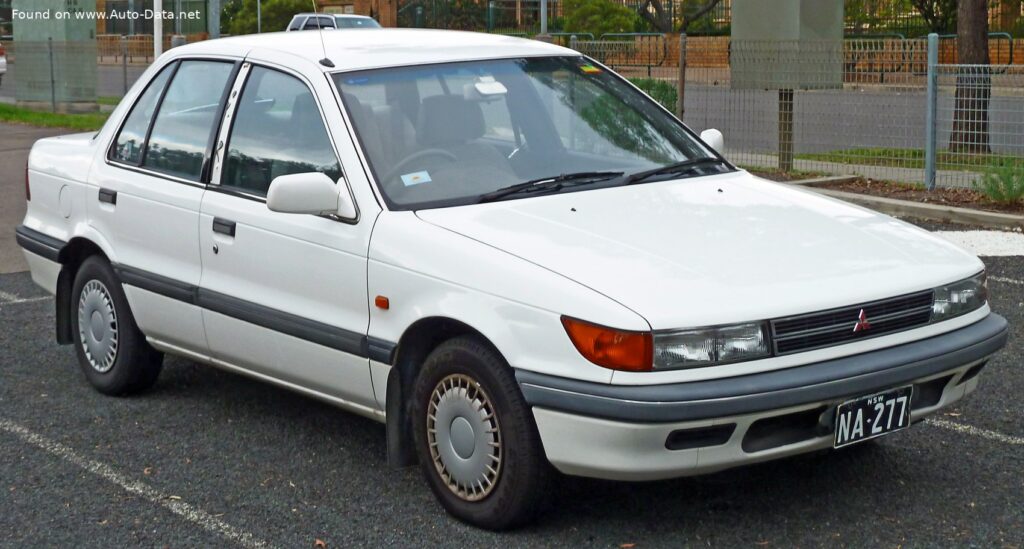
Mitsubishi Lancer IV 1.8 (97 Hp) 4×4: A Comprehensive Overview
The Mitsubishi Lancer, a nameplate synonymous with accessible performance and reliability for decades, entered its fourth generation in 1989, marking a significant evolution in its design and engineering. Among the various configurations offered, the Mitsubishi Lancer IV 1.8 (97 Hp) 4×4 sedan stood out as a particularly practical and capable variant. Produced from 1989 to 1992, this iteration of the Lancer was designed to cater to a global market, offering a compelling blend of compact dimensions, comfortable seating for five, and the added traction of an all-wheel-drive (4×4) system. While not a high-performance rally homologation special like its later Evolution brethren, this specific Lancer IV variant carved a niche for itself as a dependable compact sedan, especially appealing in regions where adverse weather conditions or varied terrain demanded enhanced grip and stability. Its role was primarily that of a robust, everyday family car, delivering peace of mind through its sure-footed drivetrain, a feature not commonly found in its direct competitors in the compact segment during that era.
Engine and Performance: The Heart of the Mitsubishi Lancer IV 1.8 (97 Hp) 4×4
At the core of the Mitsubishi Lancer IV 1.8 (97 Hp) 4×4 was a transversely mounted 1.8-liter (1755 cm3 or 107.1 cu. in.) inline-four gasoline engine. This naturally aspirated powerplant was engineered for dependable daily operation rather than outright speed. Featuring a multi-port manifold injection system and a valvetrain configuration specified as DOHC (Dual Overhead Camshaft) with two valves per cylinder, it delivered a respectable 97 horsepower at 5500 rpm. Torque output was equally pragmatic, peaking at 104 lb.-ft. (141 Nm) at 4000 rpm. These figures, while modest by today’s standards, were competitive for a compact sedan of its vintage, especially considering the added weight and complexity of an all-wheel-drive system.
Power was channeled to all four wheels via a robust 5-speed manual transmission, providing the driver with direct control over the engine’s output and the vehicle’s traction. This all-wheel-drive system was a key differentiator for the Lancer IV, offering enhanced stability and grip in challenging conditions, from slippery roads to light off-road trails. Performance figures reflected its utilitarian nature: the Lancer IV 1.8 (97 Hp) 4×4 could accelerate from 0 to 60 mph in approximately 12 seconds, reaching a maximum speed of 104.39 mph (168 km/h). Fuel economy, as reported, was a combined 25.3 US mpg (9.3 l/100 km), which was reasonable for an AWD vehicle of its size and era, balancing the demands of four-wheel traction with everyday running costs.
Design and Features: Practicality Meets Compact Form
The fourth-generation Mitsubishi Lancer adopted a clean, aerodynamic design language typical of late 1980s and early 1990s automotive aesthetics. As a four-door sedan, the Mitsubishi Lancer IV 1.8 (97 Hp) 4×4 offered a practical and conventional body style, emphasizing functionality and passenger comfort. Its dimensions were compact, with a length of 166.73 inches (4235 mm), a width of 65.75 inches (1670 mm), and a height of 55.31 inches (1405 mm). The wheelbase measured 96.65 inches (2455 mm), contributing to a stable ride and a surprisingly spacious cabin for its class.
Inside, the Lancer IV was designed to accommodate five occupants comfortably, with a focus on durable materials and straightforward ergonomics. While not laden with luxury features, it provided all the essential amenities expected of a compact family car. The trunk offered a practical 11.9 cubic feet (337 liters) of cargo space, sufficient for daily errands or weekend trips. Suspension duties were handled by coil springs at both the front and rear, tuned to provide a balance of ride comfort and handling stability. Stopping power came from ventilated disc brakes at the front and disc brakes at the rear, a competent setup for the vehicle’s performance capabilities. The steering system utilized a rack and pinion design, offering predictable and direct control. The car rode on 175/70 R13 tires, a common size for compact vehicles of the period, prioritizing ride comfort and general-purpose traction.
Technical Specifications
| Category | Specification | Value |
|---|---|---|
| General Information | Brand | Mitsubishi |
| Model | Lancer | |
| Generation | Lancer IV | |
| Type (Engine) | 1.8 (97 Hp) 4×4 | |
| Start of production | 1989 year | |
| End of production | 1992 year | |
| Powertrain Architecture | Internal Combustion engine | |
| Body type | Sedan | |
| Seats | 5 | |
| Doors | 4 | |
| Performance Specs | Fuel consumption (economy) – urban | 11.9 l/100 km (19.8 US mpg) |
| Fuel consumption (economy) – extra urban | 7.2 l/100 km (32.7 US mpg) | |
| Fuel consumption (economy) – combined | 9.3 l/100 km (25.3 US mpg) | |
| Fuel Type | Petrol (Gasoline) | |
| Acceleration 0 – 60 mph | 12 sec | |
| Maximum speed | 104.39 mph (168 km/h) | |
| Weight-to-power ratio | 11.7 kg/Hp, 85.5 Hp/tonne | |
| Weight-to-torque ratio | 8 kg/Nm, 124.2 Nm/tonne | |
| Engine Specs | Power | 97 Hp @ 5500 rpm |
| Power per liter | 55.3 Hp/l | |
| Torque | 104 lb.-ft. @ 4000 rpm (141 Nm) | |
| Engine layout | Front, Transverse | |
| Engine displacement | 1.8 liters (1755 cm3, 107.1 cu. in.) | |
| Number of cylinders | 4 | |
| Engine configuration | Inline | |
| Cylinder Bore | 3.17 in. (80.6 mm) | |
| Piston Stroke | 3.39 in. (86 mm) | |
| Compression ratio | 9.5:1 | |
| Number of valves per cylinder | 2 | |
| Fuel injection system | Multi-port manifold injection | |
| Engine aspiration | Naturally aspirated engine | |
| Valvetrain | DOHC | |
| Space, Volume and Weights | Kerb Weight | 2502.25 lbs. (1135 kg) |
| Max. weight (Gross Vehicle Weight) | 3571.49 lbs. (1620 kg) | |
| Max load | 1069.24 lbs. (485 kg) | |
| Trunk (boot) space – minimum | 11.9 cu. ft. (337 l) | |
| Fuel tank capacity | 13.21 US gal (50 l) | |
| Dimensions | Length | 166.73 in. (4235 mm) |
| Width | 65.75 in. (1670 mm) | |
| Height | 55.31 in. (1405 mm) | |
| Wheelbase | 96.65 in. (2455 mm) | |
| Front track | 56.3 in. (1430 mm) | |
| Rear (Back) track | 56.3 in. (1430 mm) | |
| Drivetrain, Brakes and Suspension Specs | Drive wheel | All wheel drive (4×4) |
| Number of gears and type of gearbox | 5 gears, manual transmission | |
| Front suspension | Coil spring | |
| Rear suspension | Coil spring | |
| Front brakes | Ventilated discs | |
| Rear brakes | Disc | |
| Steering type | Steering rack and pinion | |
| Tires size | 175/70 R13 |
Legacy and Market Impact
The Mitsubishi Lancer IV 1.8 (97 Hp) 4×4, while not a headline-grabber, played a crucial role in establishing the Lancer’s reputation as a versatile and dependable compact car. In its primary markets, particularly across Asia, Europe, and Australia, this 4×4 sedan offered a compelling alternative to front-wheel-drive competitors, especially for buyers living in areas prone to snow, ice, or unpaved roads. Its robust construction and reliable powertrain contributed to Mitsubishi’s image for durability and engineering prowess during this period.
Competitors in the compact AWD sedan segment during the late 1980s and early 1990s were relatively few, but notable examples included the Mazda 323 AWD and, in some markets, early Subaru Impreza models, though the Impreza’s full impact came slightly later. The Lancer IV 4×4 stood out by offering a well-rounded package of practicality, fuel efficiency, and the undeniable advantage of all-weather traction in a segment where such features were still considered premium or niche. Its mechanical simplicity and ease of maintenance further endeared it to owners seeking a long-lasting vehicle.
Historically, the Lancer IV 4×4’s most significant legacy might be its contribution to the broader acceptance and development of all-wheel-drive technology in mainstream passenger cars. While Mitsubishi is more famously associated with the high-performance Lancer Evolution series, which would later dominate rally stages and enthusiast markets, models like the Lancer IV 1.8 (97 Hp) 4×4 laid the groundwork. They demonstrated the practicality and utility of an AWD system in an accessible, everyday sedan, proving that enhanced traction wasn’t exclusive to SUVs or specialized sports cars. This everyday application of 4×4 technology helped pave the way for AWD to become a much more common feature in a wide array of passenger vehicles in subsequent decades, influencing consumer expectations and automotive engineering trends globally. The Lancer IV 4×4, therefore, remains an understated but important chapter in Mitsubishi’s rich automotive history.