
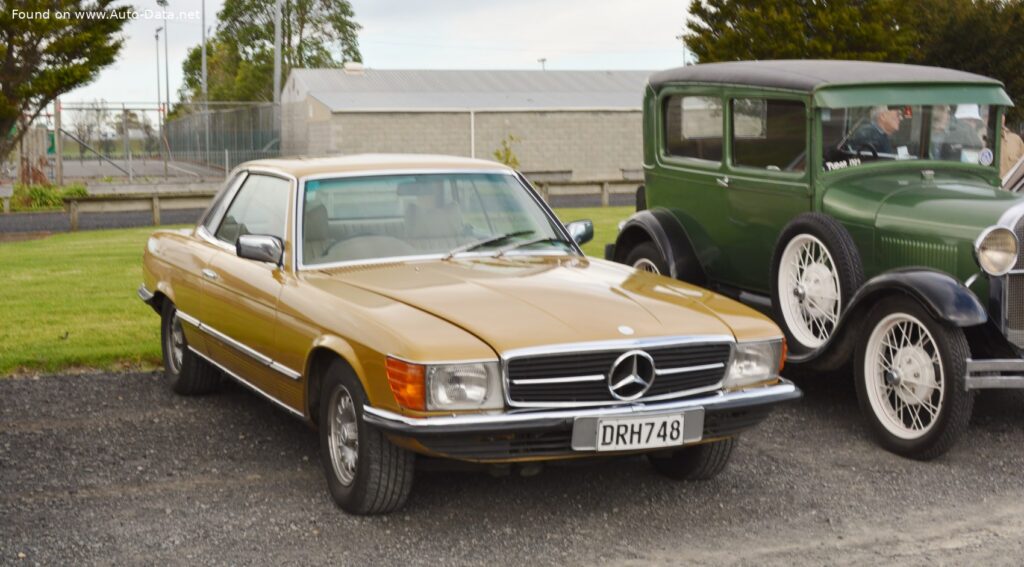
Introduction to the Mercedes-Benz SLC (C107) 280 SLC
The Mercedes-Benz SLC (C107) 280 SLC (177 Hp) represents a distinctive chapter in the German automaker’s illustrious history, embodying a blend of grand touring luxury and robust engineering characteristic of the brand in the 1970s. Introduced in February 1976 and produced until April 1978, the C107 series was the coupe variant of the popular R107 SL roadster, but with a significantly extended wheelbase to accommodate a true 2+2 seating configuration. While the R107 SL was a two-seater convertible designed for leisurely drives, the Mercedes-Benz SLC (C107) 280 SLC was conceived as a more practical, all-weather grand tourer, offering the same elegant styling with enhanced interior space and comfort for longer journeys. This particular 280 SLC model, powered by a sophisticated inline-six engine, carved out a niche in the European luxury coupe market, appealing to discerning buyers who sought Mercedes-Benz’s renowned build quality and refinement in a more accommodating package than its roadster sibling.
During its production run, the SLC (C107) series, and specifically the 280 SLC, was a testament to Mercedes-Benz’s commitment to engineering excellence and luxury. Though not directly sold in the United States in the same volumes or configurations as its SL convertible counterpart, its design language and mechanical underpinnings were familiar to American enthusiasts. It showcased the brand’s pioneering approach to safety, comfort, and performance for the era, setting benchmarks for premium coupes in its class.
Engine and Performance of the Mercedes-Benz SLC (C107) 280 SLC
At the heart of the Mercedes-Benz SLC (C107) 280 SLC lies the venerable M 110 E 28 inline-six engine, a powerplant celebrated for its smoothness, durability, and a surprising eagerness to rev. This naturally aspirated, multi-port manifold injected engine boasts a displacement of 2746 cubic centimeters (167.57 cubic inches). With a sophisticated Double Overhead Camshaft (DOHC) valvetrain and two valves per cylinder, it was a relatively advanced design for its time, contributing to both efficiency and performance.
The 280 SLC’s engine delivered a respectable 177 horsepower at 6000 rpm, translating to a power-per-liter output of 64.5 horsepower. Torque stood at 233 Nm (171.85 lb-ft) available at 4500 rpm, providing ample pulling power for a grand touring coupe. Mated to a 4-speed manual transmission, this powertrain architecture drove the rear wheels, a classic setup for a luxury performance vehicle.
In terms of acceleration, the 280 SLC was capable of reaching 60 mph from a standstill in an estimated 9.6 seconds, with a 0-100 km/h sprint taking 10.1 seconds. Its maximum speed was a commendable 200 km/h (124.27 mph), allowing for comfortable high-speed cruising on European autobahns. Fuel economy, while not the primary concern for a luxury coupe of this era, was rated at 12.5 liters per 100 kilometers in combined driving, which translates to approximately 18.8 US miles per gallon. With a 90-liter (23.78 US gallon) fuel tank, the 280 SLC offered a considerable cruising range, further cementing its grand touring credentials. The vehicle’s weight-to-power ratio was 8.8 kg/Hp, or 114.2 Hp per tonne, indicating a solid balance of power and curb weight at 3417.17 lbs (1550 kg).
Design and Features
The Distinctive Design of the Mercedes-Benz SLC (C107)
The Mercedes-Benz SLC (C107) series inherited the iconic styling cues of the R107 SL, including its distinctive “pagoda” hardtop-inspired roofline, albeit in a fixed-roof coupe form. However, the SLC differentiated itself with a significantly longer wheelbase of 2820 mm (111.02 inches) compared to the SL’s 2455 mm (96.65 inches). This extension was visually evident in the longer rear quarter windows and the unique louvers on the C-pillars, which were a hallmark of the SLC. Measuring 4750 mm (187.01 inches) in length, 1790 mm (70.47 inches) in width, and 1330 mm (52.36 inches) in height, the SLC presented a substantial and elegant presence on the road.
The body type was a classic 2-door coupe, but unlike many coupes of the era, the extended wheelbase allowed for genuine five-person seating, making it a more versatile option for families or those needing extra passenger capacity. The interior was a sanctuary of luxury and ergonomic design, featuring high-quality materials, comfortable seating, and a driver-focused dashboard. For its time, the SLC boasted advanced features such as hydraulic power steering (cone worm with recirculation balls) for effortless maneuverability, and a robust suspension system comprising double wishbones with a transverse stabilizer at the front and trailing arms with a transverse stabilizer at the rear, ensuring a smooth and controlled ride.
Safety was a paramount concern for Mercedes-Benz, even in the 1970s. The SLC (C107) featured a rigid body structure, large glass areas for excellent visibility, and a sophisticated braking system with ventilated discs at the front and solid discs at the rear, providing strong stopping power. The standard tire size was 195/70 R14, mounted on 6.5J x 14 wheel rims, offering a good balance of grip and ride comfort. The overall design language exuded timeless elegance and understated luxury, a characteristic that continues to define Mercedes-Benz classics.
Technical Specifications
| Category | Specification | Value (US/Imperial) |
|---|---|---|
| General Information | ||
| Brand | Mercedes-Benz | |
| Model | SLC | |
| Generation | SLC (C107) | |
| Type (Engine) | 280 SLC (177 Hp) | |
| Start of Production | February, 1976 | |
| End of Production | April, 1978 | |
| Powertrain Architecture | Internal Combustion engine | |
| Body Type | Coupe | |
| Seats | 5 | |
| Doors | 2 | |
| Performance Specs | ||
| Fuel Consumption (combined) | 12.5 l/100 km | 18.8 US mpg |
| Fuel Type | Petrol (Gasoline) | |
| Acceleration 0 – 60 mph | 9.6 sec | |
| Acceleration 0 – 100 km/h | 10.1 sec | |
| Maximum Speed | 200 km/h | 124.27 mph |
| Weight-to-power ratio | 8.8 kg/Hp | 114.2 Hp/tonne |
| Weight-to-torque ratio | 6.7 kg/Nm | 150.3 Nm/tonne |
| Engine Specs | ||
| Power | 177 Hp @ 6000 rpm. | |
| Power per liter | 64.5 Hp/l | |
| Torque | 233 Nm @ 4500 rpm. | 171.85 lb.-ft. @ 4500 rpm. |
| Engine Layout | Front, Longitudinal | |
| Engine Model/Code | M 110 E 28 / 110.986 | |
| Engine Displacement | 2746 cm3 | 167.57 cu. in. |
| Number of Cylinders | 6 | |
| Engine Configuration | Inline | |
| Cylinder Bore | 86 mm | 3.39 in. |
| Piston Stroke | 78.8 mm | 3.1 in. |
| Compression Ratio | 8.7:1 | |
| Number of Valves per Cylinder | 2 | |
| Fuel Injection System | Multi-port manifold injection | |
| Engine Aspiration | Naturally aspirated engine | |
| Valvetrain | DOHC | |
| Engine Oil Capacity | 6 l | 6.34 US qt |
| Engine Oil Specification | Log in to see. | |
| Coolant Capacity | 12 l | 12.68 US qt |
| Space, Volume and Weights | ||
| Kerb Weight | 1550 kg | 3417.17 lbs. |
| Max. Weight | 2040 kg | 4497.43 lbs. |
| Max Load | 490 kg | 1080.27 lbs. |
| Fuel Tank Capacity | 90 l | 23.78 US gal |
| Dimensions | ||
| Length | 4750 mm | 187.01 in. |
| Width | 1790 mm | 70.47 in. |
| Height | 1330 mm | 52.36 in. |
| Wheelbase | 2820 mm | 111.02 in. |
| Front Track | 1452 mm | 57.17 in. |
| Rear (Back) Track | 1440 mm | 56.69 in. |
| Drivetrain, Brakes and Suspension Specs | ||
| Drivetrain Architecture | The Internal combustion engine (ICE) drives the rear wheels of the vehicle. | |
| Drive Wheel | Rear wheel drive | |
| Number of Gears and Type of Gearbox | 4 gears, manual transmission | |
| Front Suspension | Double wishbone, Transverse stabilizer | |
| Rear Suspension | Transverse stabilizer, Trailing arm | |
| Front Brakes | Ventilated discs | |
| Rear Brakes | Disc | |
| Steering Type | Cone worm with recirculation balls | |
| Power Steering | Hydraulic Steering | |
| Tires Size | 195/70 R14 | |
| Wheel Rims Size | 6.5J x 14 | |
Legacy and Market Impact
The Mercedes-Benz SLC (C107) 280 SLC, despite its relatively short production run for this specific variant, left a lasting impression as a sophisticated grand touring coupe. In its primary European market, it competed directly with other luxury performance coupes such as the BMW 6-Series (E24) and the Jaguar XJS, offering a distinct blend of Mercedes-Benz’s legendary build quality, understated elegance, and a more practical interior than many of its rivals. Its reputation for exceptional engineering and robust construction meant that these vehicles were built to last, a hallmark of Mercedes-Benz during this golden era.
The SLC series, including the 280 SLC, often gets overshadowed by its more famous roadster sibling, the R107 SL. However, this distinction is precisely what gives the SLC its unique appeal today. Its longer wheelbase not only provided more interior space but also contributed to a more stable and comfortable ride, ideal for long-distance travel. While the SL was the glamorous choice for sunny weekends, the SLC was the discerning choice for those who appreciated the same luxury and performance in a more versatile, year-round package. The 280 SLC, with its potent yet refined inline-six engine and manual transmission option, offered an engaging driving experience that was both sporting and comfortable.
Historically, the C107 SLC also had an interesting, albeit brief, foray into motorsports, particularly in endurance rallying, where its robust construction and powerful engines proved surprisingly competitive. This demonstrated the underlying strength and reliability inherent in its design. Today, the Mercedes-Benz SLC (C107) 280 SLC is recognized by collectors and enthusiasts as a classic Mercedes-Benz, appreciated for its distinctive styling, superb build quality, and enjoyable driving dynamics. Its relative rarity compared to the SL, combined with its unique 2+2 grand touring proposition, ensures its continued relevance and desirability in the classic car market, particularly among those who value a blend of luxury, heritage, and usability. It stands as a testament to Mercedes-Benz’s unwavering commitment to engineering excellence during a pivotal period in automotive history.
