The Peugeot 3008 I (Phase II, 2013) 2.0 HDi (150 Hp) FAP: A European Crossover’s Refined Evolution
The Peugeot 3008, initially launched in 2008, represented a significant departure for the French automaker, blending elements of an SUV, an MPV (Multi-Purpose Vehicle), and a hatchback into a distinctive compact crossover package. The model under scrutiny here is the Peugeot 3008 I (Phase II, 2013) 2.0 HDi (150 Hp) FAP, which signifies the refreshed version of the first generation, introduced in 2013 and produced until 2016. This iteration aimed to enhance the original’s appeal with updated styling, improved features, and a continued focus on efficiency, particularly with its advanced diesel powertrains. Primarily targeted at the highly competitive European market, where diesel engines and versatile family vehicles are staples, the 3008 carved out a niche for itself as a practical, comfortable, and economically sensible choice, offering a compelling blend of utility and refined driving dynamics.
During its production run, the 3008 I (Phase II) continued to build on the success of its predecessor, emphasizing intelligent packaging and a comfortable ride. Its role in the European market was crucial, as it allowed Peugeot to compete effectively against a growing wave of compact SUVs and crossovers, offering a distinctly French take on the segment. This specific variant, powered by the 2.0-liter HDi diesel engine, exemplifies the sophisticated diesel technology prevalent in Europe at the time, designed to deliver strong torque, excellent fuel economy, and lower emissions, thanks in part to its FAP (Filtre à Particules) system.
Engine and Performance of the Peugeot 3008 I (Phase II, 2013)
At the heart of this Peugeot 3008 I (Phase II, 2013) 2.0 HDi (150 Hp) FAP is a robust 2.0-liter (1997 cm³, or 121.86 cubic inches) inline four-cylinder diesel engine, designated by the code RHE DW10CTED4. This powerplant is a testament to Peugeot’s expertise in diesel technology, featuring a common rail fuel injection system, turbocharging, and an intercooler to optimize performance and efficiency. It delivers a healthy 150 horsepower at 3750 rpm, providing ample power for daily driving and highway cruising. More importantly for a vehicle of this type, it produces a substantial 340 Nm (250.77 lb.-ft.) of torque, which peaks at a low 2000 rpm. This strong torque output ensures excellent low-end grunt, making the 3008 feel responsive and capable, especially when accelerating from a standstill or overtaking.
Power is channeled to the front wheels through a precise 6-speed manual transmission, a common and favored setup in European markets for its engaging driving experience and efficiency. This powertrain combination allows the 3008 to accelerate from 0 to 60 mph in a respectable 9.2 seconds (0-100 km/h in 9.7 seconds) and reach a top speed of 121.17 mph (195 km/h). These figures position it as a sprightly performer within its segment.
One of the core strengths of this 2.0 HDi engine is its impressive fuel economy. The combined cycle fuel consumption is rated at 5.3 l/100 km, which translates to an excellent 44.4 US mpg. Even in urban conditions, it achieves 6.8 l/100 km (34.6 US mpg), and on the extra-urban cycle, it boasts an outstanding 4.5 l/100 km (52.3 US mpg). These figures highlight the inherent efficiency of modern diesel engines. Furthermore, with CO2 emissions of 139 g/km, the vehicle meets Euro 5 emission standards, showcasing its commitment to environmental performance for its era, aided by the standard-fit Diesel Particulate Filter (FAP) system. This system is crucial for trapping soot particles, significantly reducing harmful emissions.
Design and Features
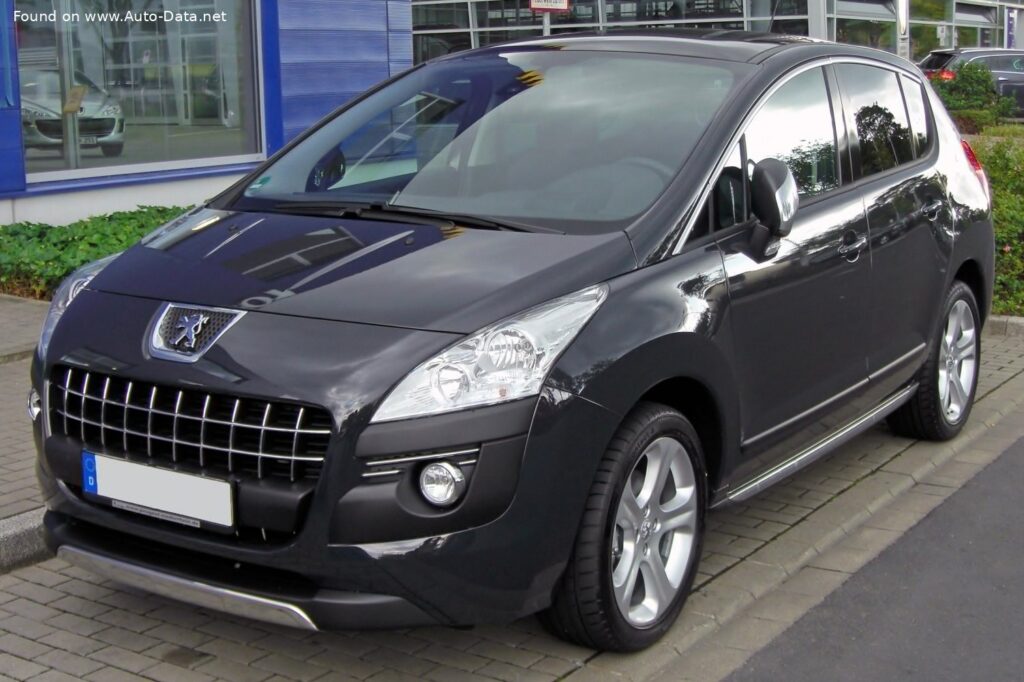
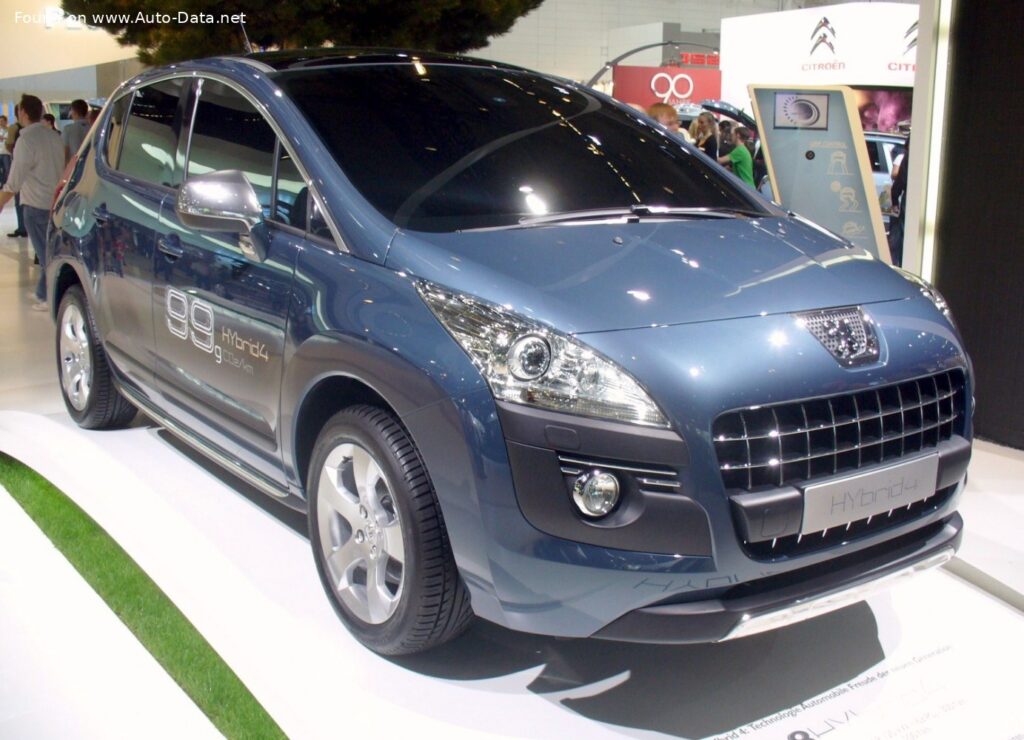
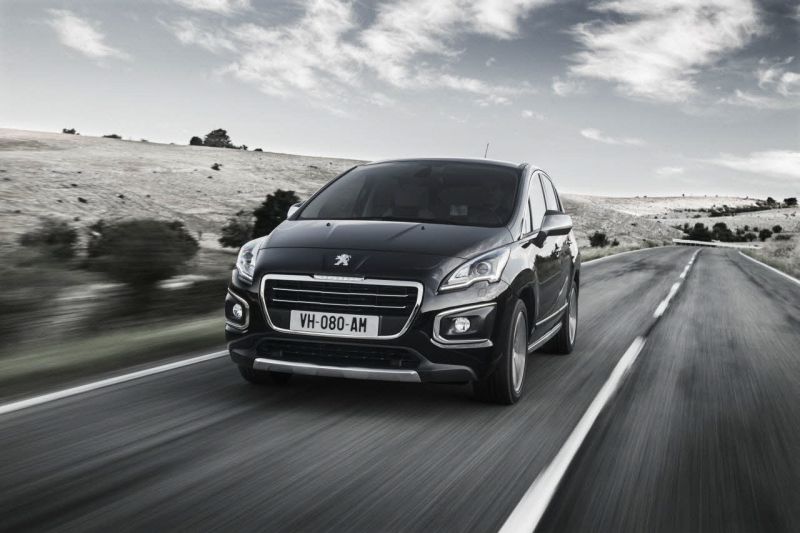
The Peugeot 3008 I (Phase II, 2013) retains the distinctive five-door, five-seat SUV body style of the first generation, though Peugeot often marketed it as a “crossover” to emphasize its multi-segment appeal. The Phase II refresh brought subtle yet effective styling updates, primarily to the front fascia. This included a revised grille, headlights, and bumper designs that aligned the 3008 more closely with Peugeot’s contemporary design language, giving it a more modern and assertive look. The overall silhouette remained chunky and robust, exuding a sense of practicality and stability.
Measuring 171.85 inches (4365 mm) in length, 72.32 inches (1837 mm) in width (83.19 inches or 2113 mm including mirrors), and 64.37 inches (1635 mm) in height, the 3008 offers a substantial road presence for a compact crossover. Its 102.87-inch (2613 mm) wheelbase contributes to a stable ride and a surprisingly spacious interior. The interior is designed with practicality and comfort in mind, featuring a driver-focused cockpit with elevated seating for an commanding view of the road. High-quality materials and thoughtful ergonomics were hallmarks of the 3008’s cabin.
Cargo capacity is generous, with a minimum trunk space of 18.08 cubic feet (512 liters), expanding significantly to 56.64 cubic feet (1604 liters) with the rear seats folded down. This flexibility makes the 3008 a highly versatile vehicle for families and those needing ample storage. The car’s kerb weight stands at 3370.87 lbs (1529 kg), with a maximum permissible weight of 4585.62 lbs (2080 kg), allowing for a maximum load of 1214.75 lbs (551 kg).
In terms of chassis and safety, the 3008 I (Phase II) is equipped with an independent McPherson-type front suspension with coil springs and an anti-roll bar, complemented by an independent coil spring rear suspension. This setup provides a comfortable ride and competent handling. Braking is handled by ventilated discs at the front and disc brakes at the rear, supported by an Anti-lock Braking System (ABS) for enhanced safety. The steering is a rack and pinion type, offering precise control. The vehicle rides on 225/50 R17 or 235/45 R18 tires, mounted on 17-inch or 18-inch wheel rims, respectively, contributing to both aesthetics and roadholding.
Technical Specifications
| Category | Specification | Metric Value | US Customary Value |
|---|---|---|---|
General Information |
|||
| Brand | Peugeot | ||
| Model | 3008 | ||
| Generation | 3008 I (Phase II, 2013) | ||
| Type (Engine) | 2.0 HDi (150 Hp) FAP | ||
| Start of Production | 2013 year | ||
| End of Production | 2016 year | ||
| Powertrain Architecture | Internal Combustion engine | ||
| Body Type | SUV | ||
| Seats | 5 | ||
| Doors | 5 | ||
Performance Specifications |
|||
| Fuel Consumption (Urban) | 6.8 l/100 km | 34.6 US mpg | |
| Fuel Consumption (Extra Urban) | 4.5 l/100 km | 52.3 US mpg | |
| Fuel Consumption (Combined) | 5.3 l/100 km | 44.4 US mpg | |
| CO2 Emissions | 139 g/km | ||
| Fuel Type | Diesel | ||
| Acceleration 0 – 62 mph (0-100 km/h) | 9.7 sec | 9.7 sec | |
| Acceleration 0 – 60 mph | (Calculated by Auto-Data.net) | 9.2 sec | |
| Maximum Speed | 195 km/h | 121.17 mph | |
| Emission Standard | Euro 5 | ||
| Weight-to-Power Ratio | 10.2 kg/Hp | 22.49 lbs/Hp | |
| Weight-to-Torque Ratio | 4.5 kg/Nm | 9.92 lbs/Nm | |
Engine Specifications |
|||
| Power | 150 Hp @ 3750 rpm | 150 Hp @ 3750 rpm | |
| Power per Liter | 75.1 Hp/l | ||
| Torque | 340 Nm @ 2000 rpm | 250.77 lb.-ft. @ 2000 rpm | |
| Engine Layout | Front, Transverse | ||
| Engine Model/Code | RHE DW10CTED4 | ||
| Engine Displacement | 1997 cm3 | 121.86 cu. in. | |
| Number of Cylinders | 4 | ||
| Engine Configuration | Inline | ||
| Number of Valves per Cylinder | 4 | ||
| Fuel Injection System | Diesel Commonrail | ||
| Engine Aspiration | Turbocharger, Intercooler | ||
| Engine Oil Capacity | 5 l | 5.28 US qt | |
| Engine Systems | Particulate filter | ||
Space, Volume and Weights |
|||
| Kerb Weight | 1529 kg | 3370.87 lbs | |
| Max. Weight | 2080 kg | 4585.62 lbs | |
| Max Load | 551 kg | 1214.75 lbs | |
| Trunk (Boot) Space – Minimum | 512 l | 18.08 cu. ft. | |
| Trunk (Boot) Space – Maximum | 1604 l | 56.64 cu. ft. | |
| Fuel Tank Capacity | 60 l | 15.85 US gal | |
Dimensions |
|||
| Length | 4365 mm | 171.85 in. | |
| Width | 1837 mm | 72.32 in. | |
| Width with mirrors folded | 1910 mm | 75.20 in. | |
| Width including mirrors | 2113 mm | 83.19 in. | |
| Height | 1635 mm | 64.37 in. | |
| Wheelbase | 2613 mm | 102.87 in. | |
| Front Overhang | 916 mm | 36.06 in. | |
| Rear Overhang | 836 mm | 32.91 in. | |
| Minimum Turning Circle (Turning Diameter) | 11.7 m | 38.39 ft | |
Drivetrain, Brakes and Suspension Specifications |
|||
| Drivetrain Architecture | Internal combustion engine (ICE) drives the front wheels. | ||
| Drive Wheel | Front wheel drive | ||
| Number of Gears and Type of Gearbox | 6 gears, manual transmission | ||
| Front Suspension | Independent, McPherson with coil spring and anti-roll bar | ||
| Rear Suspension | Independent coil spring | ||
| Front Brakes | Ventilated discs | ||
| Rear Brakes | Disc | ||
| Assisting Systems | ABS (Anti-lock braking system) | ||
| Steering Type | Steering rack and pinion | ||
| Tires Size | 225/50 R17; 235/45 R18 | ||
| Wheel Rims Size | 17; 18 | ||
Legacy and Market Impact
The Peugeot 3008 I (Phase II, 2013) played a vital role in establishing Peugeot’s presence in the burgeoning compact crossover segment, particularly in Europe. While it never officially reached the American market, its influence on the European automotive landscape was significant. It competed fiercely with established rivals such as the Nissan Qashqai, Volkswagen Tiguan, Ford Kuga (Escape in North America), and its domestic competitor, the Renault Kadjar. The 3008 distinguished itself with a unique blend of MPV-like practicality, SUV-inspired styling, and a driving experience that prioritized comfort and refinement.
The 2.0 HDi (150 Hp) FAP variant, in particular, was highly regarded for its blend of strong performance and exceptional fuel economy, a critical factor for European buyers. Its Euro 5 compliance and the inclusion of a Diesel Particulate Filter showcased Peugeot’s commitment to meeting evolving environmental standards while still offering the benefits of diesel power, such as high torque and long-distance efficiency. This made it a popular choice for families and business users who covered significant mileage.
The first-generation 3008, including the Phase II refresh, earned a reputation for its robust build quality, comfortable ride, and versatile interior. Its innovative split tailgate design, which could support a considerable weight, added to its practicality, making loading and unloading easier. While its styling was initially polarizing, many came to appreciate its distinctive character and the pragmatic advantages it offered. The success of the 3008 I laid crucial groundwork for its successor, the second-generation 3008, which went on to win numerous awards, including European Car of the Year, by adopting a more conventional SUV aesthetic while retaining the core values of its predecessor. The 2013 Phase II model thus represents a critical evolutionary step, refining a successful formula and reinforcing Peugeot’s position as a capable and innovative player in the competitive European crossover market. Its legacy is one of a practical, efficient, and comfortable family vehicle that successfully bridged different automotive segments.