The Renault Megane II Grandtour (Phase II, 2006): A European Family Workhorse
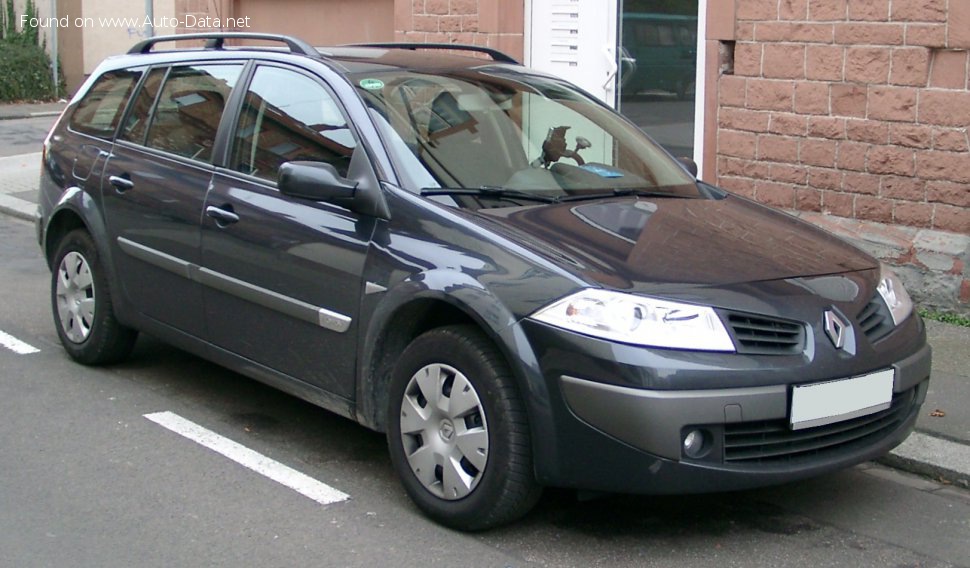
The Renault Megane II Grandtour (Phase II, 2006) 2.0 16V (135 Hp) Automatic represents a pivotal offering in the European C-segment (compact car) market during the mid-2000s. As the station wagon variant of the second-generation Megane, the Grandtour was designed to cater to families and individuals requiring greater cargo capacity and versatility than the standard hatchback or sedan models. The “Phase II” designation indicates a mid-cycle refresh, introduced in 2006, which typically brought subtle styling updates, interior improvements, and possibly minor mechanical enhancements to keep the model competitive. While never officially sold in the United States, the Megane II Grandtour played a significant role in solidifying Renault’s presence in the highly competitive European compact segment, offering a compelling blend of practicality, comfort, and contemporary design for its time. This particular configuration, featuring a 2.0-liter 16-valve engine paired with an automatic transmission, aimed to provide a smooth, comfortable, and adequately powerful driving experience for daily commutes and longer journeys alike.
Powertrain and Driving Dynamics
At the heart of the Renault Megane II Grandtour (Phase II, 2006) lies a robust F4R 2.0-liter (1998 cm3, or 121.93 cubic inches) inline-four engine. This naturally aspirated, 16-valve unit, featuring a Double Overhead Camshaft (DOHC) valvetrain and multi-port manifold injection, was engineered to deliver a balanced blend of performance and efficiency. It produced a respectable 135 horsepower at 5500 rpm, providing ample power for typical European driving conditions, including highway cruising and urban maneuvering. Torque output stood at 191 Newton-meters (140.87 lb.-ft.) at 3750 rpm, ensuring responsive acceleration and sufficient pulling power, especially when carrying passengers or cargo.
Power was transmitted to the front wheels via a 4-speed automatic transmission. While modern vehicles often feature more gears, a 4-speed automatic was a common and acceptable offering in the mid-2000s compact segment, prioritizing smooth shifts and ease of driving over ultimate performance or fuel economy. The front-wheel-drive architecture, combined with an electric power steering system and a steering rack and pinion setup, contributed to predictable handling and light steering effort, making the Grandtour comfortable for city driving and parking.
Performance figures for this configuration were competitive for a family station wagon of its era. The vehicle could accelerate from 0 to 62 mph (0-100 km/h) in 11.3 seconds, with a calculated 0-60 mph time of 10.7 seconds. Its top speed was rated at 119.3 mph (192 km/h). Fuel efficiency, crucial for the European market, was rated at a combined 28 US mpg (8.4 liters per 100 km), with urban consumption at 19.9 US mpg (11.8 l/100 km) and extra-urban at 36.2 US mpg (6.5 l/100 km). This powertrain was also compliant with the Euro 4 emission standard, reflecting a commitment to environmental responsibility for its time, with CO2 emissions of 201 g/km. The suspension system, featuring an independent McPherson type at the front and a torsion beam at the rear, was tuned to offer a comfortable ride while maintaining stable road manners, a characteristic appreciated by family car buyers. Braking performance was ensured by ventilated discs at the front and solid discs at the rear, complemented by an Anti-lock Braking System (ABS) for enhanced safety.
Design, Practicality, and Features
The Renault Megane II Grandtour (Phase II, 2006) adopted a more conventional, yet still distinctly French, design compared to the polarizing “bustle-back” rear of its hatchback sibling. As a 5-door station wagon, its primary appeal was its practicality and cargo-carrying capability. With a length of 177.17 inches (4500 mm), a width of 69.96 inches (1777 mm), and a height of 57.76 inches (1467 mm), it offered a substantial footprint for its class, translating into generous interior space. The wheelbase of 105.75 inches (2686 mm) further contributed to cabin roominess and ride comfort.
The Grandtour comfortably seated five occupants, making it an ideal family vehicle. Its true strength, however, lay in its cargo volume. The trunk (boot) offered a minimum of 18.36 cubic feet (520 liters) of space with the rear seats in place, expanding to a cavernous 56.5 cubic feet (1600 liters) when the rear seats were folded down. This impressive capacity allowed for easy transport of luggage, groceries, sports equipment, or even furniture, a key selling point for European buyers seeking versatility. A maximum roof load of 176.37 lbs (80 kg) further extended its utility, allowing for roof racks and cargo boxes.
The Phase II update likely refined the interior with improved materials, updated infotainment options (for the era), and subtle ergonomic tweaks. Safety was a strong focus for Renault, and the Megane II generation, in general, was known for its robust passive safety features, including multiple airbags and a strong chassis design. Active safety systems included the standard ABS. The vehicle also featured practical elements like a 15.85 US gallon (60 liter) fuel tank, providing a decent range between fill-ups, and the capability to tow trailers up to 2976.24 lbs (1350 kg) with brakes, highlighting its versatility as a utility vehicle. The availability of 195/65 R15 or 205/55 R16 tire options, paired with 6.5J x 15 or 6.5J x 16 wheel rims, offered a choice between comfort-oriented or slightly sportier handling characteristics.
Technical Specifications
| Category | Specification | Value |
|---|---|---|
| General Information | ||
| Brand | Renault | |
| Model | Megane | |
| Generation | Megane II Grandtour (Phase II, 2006) | |
| Type (Engine) | 2.0 16V (135 Hp) Automatic | |
| Start of production | 2006 year | |
| End of production | 2008 year | |
| Powertrain Architecture | Internal Combustion engine | |
| Body type | Station wagon (estate) | |
| Seats | 5 | |
| Doors | 5 | |
| Performance Specs | ||
| Fuel consumption (economy) – urban | 11.8 l/100 km | 19.9 US mpg |
| Fuel consumption (economy) – extra urban | 6.5 l/100 km | 36.2 US mpg |
| Fuel consumption (economy) – combined | 8.4 l/100 km | 28 US mpg |
| CO2 emissions | 201 g/km | |
| Fuel Type | Petrol (Gasoline) | |
| Acceleration 0 – 100 km/h | 11.3 sec | |
| Acceleration 0 – 62 mph | 11.3 sec | |
| Acceleration 0 – 60 mph (Calculated) | 10.7 sec | |
| Maximum speed | 192 km/h | 119.3 mph |
| Emission standard | Euro 4 | |
| Weight-to-power ratio | 9.7 kg/Hp | 103.4 Hp/tonne |
| Weight-to-torque ratio | 6.8 kg/Nm | 146.4 Nm/tonne |
| Engine Specs | ||
| Power | 135 Hp @ 5500 rpm | |
| Power per liter | 67.6 Hp/l | |
| Torque | 191 Nm @ 3750 rpm | 140.87 lb.-ft. @ 3750 rpm |
| Engine layout | Front, Transverse | |
| Engine Model/Code | F4R | |
| Engine displacement | 1998 cm3 | 121.93 cu. in. |
| Number of cylinders | 4 | |
| Engine configuration | Inline | |
| Cylinder Bore | 82.7 mm | 3.26 in. |
| Piston Stroke | 93 mm | 3.66 in. |
| Compression ratio | 9.8:1 | |
| Number of valves per cylinder | 4 | |
| Fuel injection system | Multi-port manifold injection | |
| Engine aspiration | Naturally aspirated engine | |
| Valvetrain | DOHC | |
| Engine oil capacity | 5.4 l | 5.71 US qt |
| Coolant | 6.5 l | 6.87 US qt |
| Space, Volume and Weights | ||
| Kerb Weight | 1305 kg | 2877.03 lbs. |
| Max. weight | 1885 kg | 4155.71 lbs. |
| Max load | 580 kg | 1278.68 lbs. |
| Trunk (boot) space – minimum | 520 l | 18.36 cu. ft. |
| Trunk (boot) space – maximum | 1600 l | 56.5 cu. ft. |
| Fuel tank capacity | 60 l | 15.85 US gal |
| Max. roof load | 80 kg | 176.37 lbs. |
| Permitted trailer load with brakes (12%) | 1350 kg | 2976.24 lbs. |
| Permitted trailer load without brakes | 650 kg | 1433 lbs. |
| Permitted towbar download | 75 kg | 165.35 lbs. |
| Dimensions | ||
| Length | 4500 mm | 177.17 in. |
| Width | 1777 mm | 69.96 in. |
| Width including mirrors | 2026 mm | 79.76 in. |
| Height | 1467 mm | 57.76 in. |
| Wheelbase | 2686 mm | 105.75 in. |
| Front track | 1518 mm | 59.76 in. |
| Rear (Back) track | 1514 mm | 59.61 in. |
| Front overhang | 842 mm | 33.15 in. |
| Rear overhang | 972 mm | 38.27 in. |
| Ride height (ground clearance) | 120 mm | 4.72 in. |
| Minimum turning circle (turning diameter) | 11 m | 36.09 ft. |
| Drivetrain, Brakes and Suspension Specs | ||
| Drivetrain Architecture | The Internal combustion engine (ICE) drives the front wheels of the vehicle. | |
| Drive wheel | Front wheel drive | |
| Number of gears and type of gearbox | 4 gears, automatic transmission | |
| Front suspension | Independent type McPherson | |
| Rear suspension | Torsion | |
| Front brakes | Ventilated discs | |
| Rear brakes | Disc | |
| Assisting systems | ABS (Anti-lock braking system) | |
| Steering type | Steering rack and pinion | |
| Power steering | Electric Steering | |
| Tires size | 195/65 R15; 205/55 R16 | |
| Wheel rims size | 6.5J x 15; 6.5J x 16 | |
Legacy and Market Placement
The Renault Megane II, including its versatile Grandtour variant, enjoyed considerable success in Europe and other international markets where Renault operates. Launched initially in 2002, the second generation of the Megane quickly garnered attention for its distinctive styling, particularly the hatchback’s bold rear design, and its strong emphasis on safety, earning a groundbreaking five-star Euro NCAP rating. The Grandtour, while more conventional in its aesthetic approach to appeal to a broader family audience, inherited these core strengths.
In the highly competitive European compact segment, the Megane II Grandtour faced formidable rivals such as the Volkswagen Golf Variant, Ford Focus Estate, Opel Astra Caravan, and Peugeot 307 SW. Despite this intense competition, the Megane Grandtour carved out a strong niche by offering a compelling package of spaciousness, a comfortable ride, and a comprehensive list of features for its price point. Its reputation for good ride quality, decent handling, and particularly strong safety credentials made it a favored choice for families across the continent.
The Phase II refresh from 2006 ensured the Megane Grandtour remained current and competitive until the introduction of the third-generation Megane in 2008. This particular 2.0-liter automatic variant, while not the most common due to European preference for manual transmissions and smaller diesel engines, offered a more relaxed and refined driving experience, appealing to those who prioritized comfort and ease of use. Its compliance with Euro 4 emissions standards was also a testament to its contemporary engineering and Renault’s commitment to evolving environmental regulations.
The Renault Megane II Grandtour (Phase II, 2006)’s legacy is defined by its role as a practical, safe, and comfortable family station wagon that successfully navigated the demands of the European market. It contributed significantly to Renault’s sales volumes and reinforced the brand’s image as a producer of innovative and dependable compact vehicles. Even today, the Megane II Grandtour is remembered as a robust and functional vehicle that delivered on its promise of versatility and value, embodying the quintessential European family car of its era.