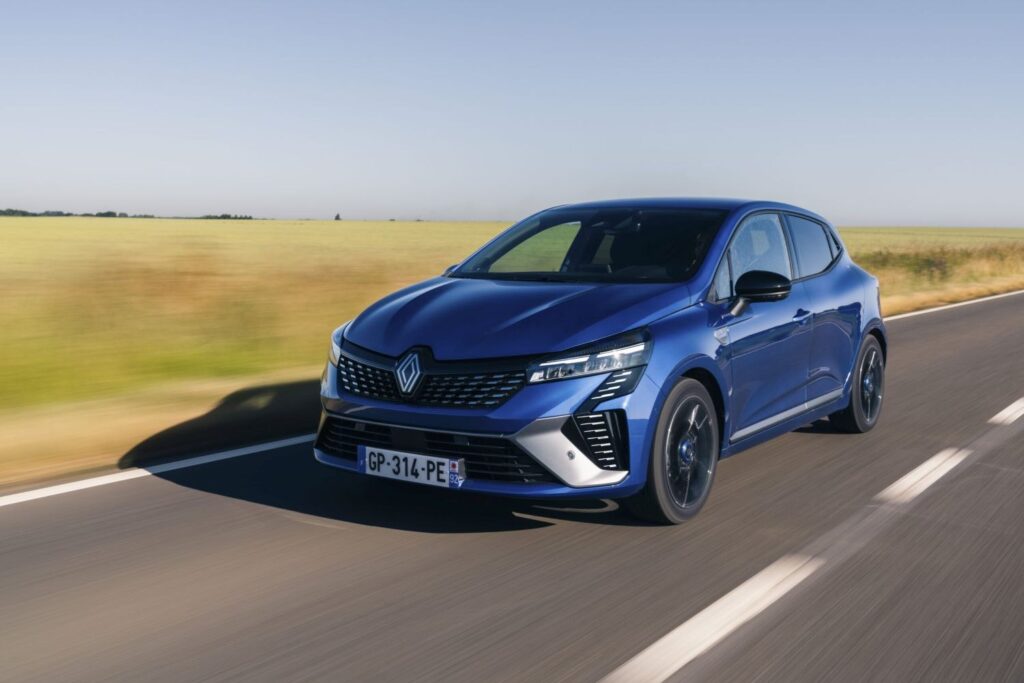
Renault Clio V (Phase II, 2023) 1.6 (143 Hp) E-Tech Hybrid Multimode
The Renault Clio V (Phase II, 2023) 1.6 (143 Hp) E-Tech Hybrid Multimode represents the latest evolution of Renault’s highly successful subcompact (B-segment) hatchback, a cornerstone of the European automotive landscape for over three decades. Unveiled in April 2023, this specific iteration is a mid-cycle refresh, known as “Phase II,” for the fifth generation of the Clio. While not available in the United States market, the Clio is a critical model for Renault in Europe, consistently ranking among the best-selling cars due to its blend of stylish design, practical size, and impressive fuel efficiency. This particular variant showcases Renault’s commitment to hybridization, integrating an advanced Full Hybrid Electric Vehicle (FHEV) powertrain to deliver a compelling combination of performance and eco-consciousness in a segment increasingly focused on sustainable mobility. The Clio V (Phase II) builds upon its predecessor’s strengths, refining its aesthetics, enhancing its technological offerings, and, most notably, optimizing its E-Tech hybrid system to remain competitive in a fiercely contested market.
Engine and Performance: The E-Tech Hybrid Powertrain
At the heart of the Renault Clio V (Phase II, 2023) 1.6 (143 Hp) E-Tech Hybrid Multimode lies its innovative E-Tech Full Hybrid Electric Vehicle (FHEV) powertrain, a testament to Renault’s engineering prowess in hybrid technology. This sophisticated system combines a 1.6-liter naturally aspirated four-cylinder gasoline engine (code H4M 632) with a potent electric motor, delivering a combined system output of 143 horsepower. The internal combustion engine itself produces 94 horsepower at 5600 rpm and 109.16 lb.-ft. of torque at 3200 rpm, featuring a multi-port manifold injection system and a displacement of 1598 cm³ (97.52 cubic inches).
Complementing the gasoline engine is a robust electric motor, which contributes 49 horsepower and a significant 151.2 lb.-ft. of torque. This electric motor is cleverly integrated into Renault’s unique E-Tech Multimode automatic transmission, a clutchless gearbox designed to optimize efficiency by seamlessly switching between electric, hybrid, and internal combustion power delivery. Power is sent to the front wheels, with the system capable of operating in full electric mode, mixed mode, or purely on the gasoline engine. The E-Tech system is supported by a compact 1.2 kWh Lithium-ion battery, strategically located under the trunk to minimize intrusion into cargo space.
This hybrid architecture allows the Clio to achieve impressive performance figures for its class. The vehicle accelerates from 0 to 60 mph in an estimated 8.8 seconds, with a top speed of 108.12 mph. More importantly for its target market, the E-Tech system excels in fuel efficiency and reduced emissions. The combined fuel consumption, according to the WLTP cycle, is an outstanding 56 US mpg (4.2 liters per 100 km), placing it among the leaders in its segment. CO2 emissions range from 95 to 109 g/km, meeting the stringent Euro 6E emission standard. Features like a Start & Stop System and a particulate filter further enhance its environmental credentials, making the Clio E-Tech Hybrid an attractive option for urban commuters and environmentally conscious drivers in Europe.
Design and Features: Modernity and Practicality
The Renault Clio V (Phase II, 2023) maintains its characteristic 5-door hatchback body style, offering a practical and versatile package for up to five occupants. The Phase II refresh brings subtle yet impactful design updates, typically including revised front and rear fascias, new lighting signatures, and updated wheel designs to keep its appearance fresh and contemporary. Its compact dimensions – a length of 159.57 inches, a width of 70.79 inches (with mirrors folded), and a height of 56.65 inches – make it highly maneuverable in congested city environments, a crucial attribute in its primary European market.
Inside, the Clio is designed with a focus on ergonomics and modern connectivity, though specific interior features are not detailed in the provided data. However, as a modern B-segment car, it is expected to offer a comprehensive suite of infotainment options, digital instrument clusters, and advanced driver-assistance systems. The car’s cabin is designed to maximize space and comfort within its footprint. Cargo capacity is respectable for its class, with a minimum trunk space of 13.81 cubic feet, expanding to a generous 37.75 cubic feet with the rear seats folded down. The vehicle’s kerb weight stands at 2729.32 pounds, reflecting a balance between structural rigidity and lightweight construction for efficiency.
From a chassis perspective, the Clio V (Phase II) features an independent McPherson type front suspension, providing precise handling and ride comfort. The rear suspension utilizes a spring strut with an elastic beam, a common and effective setup for subcompact vehicles that balances cost, packaging, and dynamic performance. Braking is handled by ventilated discs at the front and traditional drum brakes at the rear, complemented by an Anti-lock Braking System (ABS) for enhanced safety. The electric power steering system, with a rack and pinion setup, ensures effortless maneuverability, evidenced by a tight minimum turning circle of 34.12 feet. The vehicle offers a range of tire sizes, from 185/65 R15 to 205/45 R17, paired with corresponding 15-inch, 16-inch, or 17-inch wheel rims, allowing for customization and varying levels of grip and ride comfort.
Technical Specifications
| Category | Specification |
|---|---|
| Brand | Renault |
| Model | Clio |
| Generation | Clio V (Phase II, 2023) |
| Type (Engine) | 1.6 (143 Hp) E-Tech Hybrid Multimode |
| Start of Production | April, 2023 |
| Powertrain Architecture | FHEV (Full Hybrid Electric Vehicle) |
| Body Type | Hatchback |
| Seats | 5 |
| Doors | 5 |
| Performance Specs | |
| Combined Fuel Consumption (WLTP) | 56 US mpg (4.2 l/100 km) |
| CO2 Emissions (WLTP) | 95-109 g/km |
| Fuel Type | Petrol (Gasoline) |
| Acceleration 0 – 60 mph | 8.8 sec |
| Maximum Speed | 108.12 mph (174 km/h) |
| Emission Standard | Euro 6E |
| Weight-to-Power Ratio | 8.7 kg/Hp, 115.5 Hp/tonne |
| Weight-to-Torque Ratio | 8.4 kg/Nm, 119.5 Nm/tonne |
| Electric Cars and Hybrids Specs | |
| Gross Battery Capacity | 1.2 kWh |
| Battery Technology | Lithium-ion (Li-Ion) |
| Battery Location | Under the trunk |
| Electric Motor 1 Power | 49 Hp |
| Electric Motor Torque | 151.2 lb.-ft. (205 Nm) |
| Electric Motor Location | Integrated into the transmission |
| System Power | 143 Hp |
| Internal Combustion Engine Specs | |
| Power | 94 Hp @ 5600 rpm. |
| Power per Liter | 58.8 Hp/l |
| Torque | 109.16 lb.-ft. (148 Nm) @ 3200 rpm. |
| Engine Layout | Front, Transverse |
| Engine Model/Code | H4M 632 |
| Engine Displacement | 97.52 cu. in. (1598 cm³) |
| Number of Cylinders | 4 |
| Engine Configuration | Inline |
| Number of Valves per Cylinder | 4 |
| Fuel Injection System | Multi-port manifold injection |
| Engine Aspiration | Naturally aspirated engine |
| Engine Oil Capacity | 4.76 US qt (4.5 l) |
| Coolant Capacity | 6.87 US qt (6.5 l) |
| Engine Systems | Start & Stop System, Particulate filter |
| Space, Volume and Weights | |
| Kerb Weight | 2729.32 lbs. (1238 kg) |
| Max. Weight | 3875.73 lbs. (1758 kg) |
| Max Load | 1146.4 lbs. (520 kg) |
| Trunk (boot) Space – Minimum | 13.81 cu. ft. (391 l) |
| Trunk (boot) Space – Maximum | 37.75 cu. ft. (1069 l) |
| Fuel Tank Capacity | 10.3 US gal (39 l) |
| Permitted Trailer Load with Brakes (12%) | 1984.16 lbs. (900 kg) |
| Dimensions | |
| Length | 159.57 in. (4053 mm) |
| Width with Mirrors Folded | 70.79 in. (1798 mm) |
| Width Including Mirrors | 78.27 in. (1988 mm) |
| Height | 56.65 in. (1439 mm) |
| Wheelbase | 101.69 in. (2583 mm) |
| Front Track | 59.76 in. (1518 mm) |
| Rear (Back) Track | 59.29 in. (1506 mm) |
| Front Overhang | 32.8 in. (833 mm) |
| Rear Overhang | 25.08 in. (637 mm) |
| Ride Height (Ground Clearance) | 5.59 in. (142 mm) |
| Minimum Turning Circle (Turning Diameter) | 34.12 ft. (10.4 m) |
| Drivetrain, Brakes and Suspension Specs | |
| Drivetrain Architecture | The Internal combustion engine (ICE) and electric motor drive the front wheels of the car with the ability to work in full electric or mixed mode. FHEV. |
| Drive Wheel | Front wheel drive |
| Number of Gears and Type of Gearbox | Automatic transmission E-Tech Multimode |
| Front Suspension | Independent type McPherson |
| Rear Suspension | Spring Strut, Elastic beam |
| Front Brakes | Ventilated discs |
| Rear Brakes | Drum |
| Assisting Systems | ABS (Anti-lock braking system) |
| Steering Type | Steering rack and pinion |
| Power Steering | Electric Steering |
| Tires Size | 185/65 R15; 195/55 R16; 205/45 R17 |
| Wheel Rims Size | 15; 16; 17 |
Legacy and Market Impact in Europe
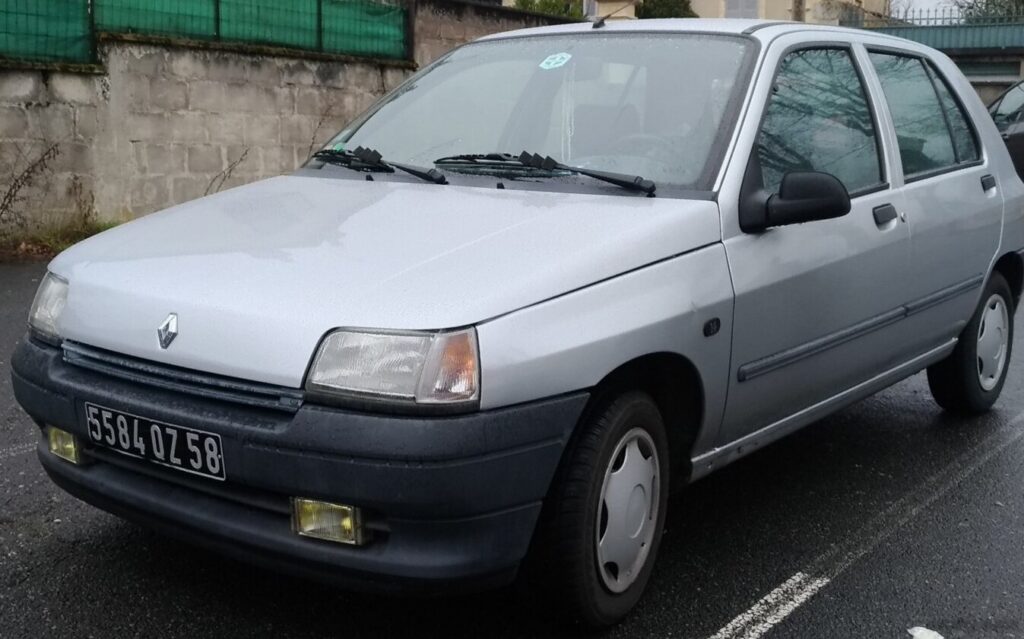
The Renault Clio has enjoyed an illustrious legacy in Europe since its introduction in 1990, consistently challenging rivals and often setting benchmarks in the highly competitive subcompact segment. The Clio V (Phase II, 2023) 1.6 (143 Hp) E-Tech Hybrid Multimode continues this tradition, cementing its position as a segment leader through its emphasis on cutting-edge hybrid technology and refreshed appeal. Its primary role in the European market is to offer a stylish, efficient, and practical urban vehicle that appeals to a wide demographic, from young drivers to small families.
The Clio’s reputation is built on its engaging driving dynamics, comfortable ride, and a design language that has evolved gracefully over generations. The E-Tech Hybrid variant specifically addresses the growing demand for lower emissions and reduced running costs, a critical factor for European consumers facing stringent environmental regulations and rising fuel prices. By offering a full hybrid system, Renault positions the Clio as a compelling alternative to mild hybrids and traditional gasoline engines, without the range anxiety or charging infrastructure requirements of a full electric vehicle.
In the European market, the Clio faces stiff competition from established players such as the Volkswagen Polo, Peugeot 208, Opel Corsa, and particularly the Toyota Yaris Hybrid, which has long been a benchmark for hybrid efficiency in the segment. However, Renault’s E-Tech system, with its unique multimode gearbox derived from Formula 1 technology, offers a distinct proposition, often lauded for its smooth transitions and impressive real-world urban efficiency.
The historical significance of the Clio E-Tech Hybrid lies in its contribution to mainstreaming advanced powertrain technology in an accessible package. It demonstrates that efficiency and environmental responsibility do not have to come at the expense of style or everyday usability. For Renault, the Clio V (Phase II) E-Tech is more than just a refreshed model; it is a strategic vehicle that underscores the brand’s commitment to electrification and its ability to innovate within a highly saturated market. Its continued success in sales charts across Europe is a testament to its enduring appeal and its ability to adapt to changing consumer preferences and regulatory landscapes, reinforcing its status as a true icon of European motoring.