Ford Mustang VI 2.3 EcoBoost (317 Hp): A New Era for an American Icon
The Ford Mustang, an enduring symbol of American automotive prowess and freedom, embarked on a significant new chapter with the introduction of its sixth generation, internally codenamed S550. Launched for the 2015 model year, this iteration represented a pivotal moment in the Mustang’s storied history, transforming it from a predominantly North American legend into a truly global performance car. Among its most noteworthy powertrains was the Ford Mustang VI 2.3 EcoBoost (317 Hp), a turbocharged four-cylinder engine that challenged traditional Mustang V8 orthodoxy while delivering impressive performance and efficiency.
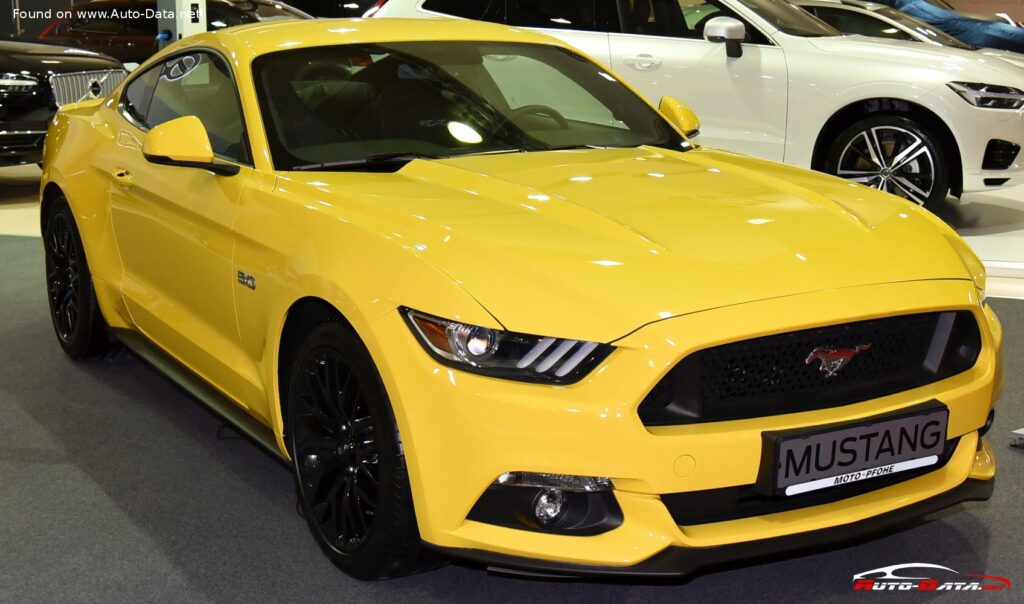
Produced from 2015 to 2017, the Mustang VI 2.3 EcoBoost Fastback offered a compelling blend of modern technology, classic pony car aesthetics, and an accessible entry point into the Mustang lineup. It was designed to appeal to a broader international audience, particularly in markets where fuel efficiency and lower displacement engines were highly valued due to taxation or environmental regulations. This model retained the iconic fastback body style, seating four occupants in a two-door configuration, and was instrumental in the Mustang’s global expansion.
Engineering and Performance: The EcoBoost Revolution
Under the hood of the sixth-generation Mustang, the 2.3-liter EcoBoost engine marked a departure from the long-standing tradition of naturally aspirated V6s and V8s. This advanced internal combustion engine, part of Ford’s highly successful EcoBoost family, featured a sophisticated powertrain architecture. Positioned longitudinally at the front, the engine was an inline-four configuration with a displacement of 2264 cubic centimeters (138.16 cubic inches). It utilized a DOHC (Dual Overhead Camshaft) valvetrain with four valves per cylinder, ensuring efficient airflow and combustion.
A key to its impressive output was the inclusion of a turbocharger and an intercooler, which dramatically boosted power without significantly increasing engine size. The fuel injection system employed direct injection, precisely delivering fuel into the combustion chambers for optimal power and efficiency. With a compression ratio of 9.5:1, the engine produced a robust 317 horsepower at 5500 rpm, translating to a remarkable 140 horsepower per liter. Torque figures were equally impressive, peaking at 318.63 lb.-ft. (432 Nm) at a relatively low 3000 rpm, providing strong acceleration from a standstill and responsive in-gear performance.
Power was channeled to the rear wheels via a slick-shifting 6-speed manual transmission, offering an engaging driving experience that enthusiasts crave. This rear-wheel-drive setup, combined with the engine’s power delivery, allowed the Mustang EcoBoost to sprint from 0 to 60 mph in a swift 5.5 seconds, and 0 to 100 km/h in 5.8 seconds. Its weight-to-power ratio stood at 5.2 kg/Hp (191.5 Hp/tonne), underscoring its performance capabilities despite being a four-cylinder. Fuel economy was a significant selling point, with a combined rating of 29.4 US mpg (8 liters per 100 km), a figure previously unheard of for a Mustang delivering over 300 horsepower. CO2 emissions were rated at 179 g/km, reflecting its improved environmental footprint.
Design, Features, and Innovation for the Ford Mustang VI
The S550 generation of the Mustang, including the Ford Mustang VI 2.3 EcoBoost (317 Hp), brought a fresh yet unmistakably Mustang design language. Its fastback silhouette was both modern and evocative of classic Mustangs, featuring a wider stance, a lower roofline, and a more aggressive front fascia. The vehicle measured 188.35 inches (4784 mm) in length, 75.43 inches (1916 mm) in width (81.89 inches or 2080 mm including mirrors), and 54.37 inches (1381 mm) in height. The wheelbase of 107.09 inches (2720 mm) contributed to both its stable handling and interior space.
A revolutionary aspect of the S550 Mustang was its adoption of an independent multi-link spring suspension with a stabilizer bar for the rear axle, replacing the live rear axle that had been a Mustang staple for decades. This, combined with an independent McPherson type front suspension, significantly improved ride quality, handling dynamics, and overall refinement, making the Mustang a more competitive contender against European and Japanese sports coupes. Braking duties were handled by ventilated discs at both the front and rear, complemented by an Anti-lock Braking System (ABS) for enhanced safety and control. The steering system was a precise rack-and-pinion type.
The car rode on 19-inch wheel rims, shod with 255/40 R19 tires, providing ample grip and a sporty aesthetic. Inside, the Mustang VI offered a 4-seat cabin that blended retro-inspired elements with contemporary features. The trunk space was a practical 14.41 cubic feet (408 liters), making it surprisingly versatile for a sports coupe. The fuel tank capacity of 15.59 US gallons (59 liters) ensured a decent cruising range.
Technical Specifications
| Category | Specification |
|---|---|
| Brand | Ford |
| Model | Mustang |
| Generation | Mustang VI (S550) |
| Type (Engine) | 2.3 EcoBoost (317 Hp) |
| Start of Production | 2015 year |
| End of Production | 2017 year |
| Body Type | Fastback |
| Seats | 4 |
| Doors | 2 |
| Fuel Consumption (Combined) | 29.4 US mpg (8 l/100 km) |
| CO2 Emissions | 179 g/km |
| Fuel Type | Petrol (Gasoline) |
| Acceleration 0-60 mph | 5.5 sec |
| Acceleration 0-100 km/h | 5.8 sec |
| Power | 317 Hp @ 5500 rpm |
| Torque | 318.63 lb.-ft. (432 Nm) @ 3000 rpm |
| Engine Layout | Front, Longitudinal |
| Engine Model/Code | EcoBoost |
| Engine Displacement | 2264 cm3 (138.16 cu. in.) |
| Number of Cylinders | 4 |
| Engine Configuration | Inline |
| Cylinder Bore | 3.45 in. (87.55 mm) |
| Piston Stroke | 3.7 in. (94 mm) |
| Compression Ratio | 9.5:1 |
| Valves per Cylinder | 4 |
| Fuel Injection System | Direct injection |
| Engine Aspiration | Turbocharger, Intercooler |
| Valvetrain | DOHC |
| Engine Oil Capacity | 5.71 US qt (5.4 l) |
| Coolant Capacity | 9.47 US qt (8.96 l) |
| Kerb Weight | 3648.65 lbs. (1655 kg) |
| Trunk (Boot) Space | 14.41 cu. ft. (408 l) |
| Fuel Tank Capacity | 15.59 US gal (59 l) |
| Length | 188.35 in. (4784 mm) |
| Width | 75.43 in. (1916 mm) |
| Width with mirrors folded | 77.01 in. (1956 mm) |
| Width including mirrors | 81.89 in. (2080 mm) |
| Height | 54.37 in. (1381 mm) |
| Wheelbase | 107.09 in. (2720 mm) |
| Front Track | 62.28 in. (1582 mm) |
| Rear Track | 65.16 in. (1655 mm) |
| Minimum Turning Circle | 40.03 ft. (12.2 m) |
| Drivetrain Architecture | Internal Combustion engine drives the rear wheels |
| Drive Wheel | Rear wheel drive |
| Number of Gears & Gearbox Type | 6 gears, manual transmission |
| Front Suspension | Independent type McPherson |
| Rear Suspension | Independent multi-link spring suspension with stabilizer |
| Front Brakes | Ventilated discs |
| Rear Brakes | Ventilated discs |
| Assisting Systems | ABS (Anti-lock braking system) |
| Steering Type | Steering rack and pinion |
| Tires Size | 255/40 R19 |
| Wheel Rims Size | 19 inches |
Legacy and Market Impact of the Ford Mustang VI 2.3 EcoBoost (317 Hp)
The sixth-generation Mustang, and particularly its EcoBoost variant, carved out a unique place in the automotive landscape. Its introduction marked a significant strategic shift for Ford, signaling a commitment to make the Mustang a global player capable of competing on an international stage. The 2.3-liter EcoBoost engine was crucial to this strategy, offering a compelling blend of performance and efficiency that resonated with buyers in markets outside of North America where large displacement V8s were less practical or more heavily taxed.
In its primary markets, the EcoBoost Mustang faced competition from a variety of vehicles. Domestically, its main rivals included the Chevrolet Camaro 2.0T and the Dodge Challenger V6, both offering similar entry-level performance packages. Internationally, it competed with models like the BMW 4 Series, Audi A5, and various Japanese sports coupes, often offering a more distinct style and a better performance-for-dollar proposition. The EcoBoost model’s ability to deliver over 300 horsepower with respectable fuel economy helped dispel skepticism about a four-cylinder Mustang, proving that a smaller engine could still deliver a true pony car experience.
The S550 generation’s adoption of independent rear suspension was a monumental change, transforming the Mustang’s handling characteristics and elevating its status as a genuine sports car. This, combined with the sophisticated EcoBoost powertrain, ensured that the Mustang could hold its own against more expensive and traditionally more refined European competitors. The Ford Mustang VI 2.3 EcoBoost (317 Hp) successfully expanded the Mustang’s appeal, attracting a new generation of buyers who valued modern technology, efficiency, and refined dynamics alongside classic American muscle car styling. It cemented the Mustang’s position not just as an American icon, but as a global performance sensation, demonstrating Ford’s engineering prowess and commitment to innovation.