Introduction to the Skoda Octavia III Combi (facelift 2017)
The Skoda Octavia, a cornerstone of the Czech automaker’s lineup, has long been revered for its exceptional blend of practicality, value, and robust engineering, largely thanks to its affiliation with the Volkswagen Group. The third generation, known internally as the A7, built upon this strong foundation, and received a significant refresh in 2017. This facelifted model, specifically the Skoda Octavia III Combi (facelift 2017) with the 2.0 TDI (150 Hp) DSG 4×4 powertrain, represented a compelling offering in the highly competitive European C-segment.
Positioned as a versatile station wagon (often referred to as an “estate” in Europe), this particular variant combined a potent yet economical diesel engine, a sophisticated automatic transmission, and an all-wheel-drive system. This combination made it an ideal choice for families, business users, and individuals seeking a capable vehicle for varied driving conditions, from urban commutes to long-distance highway cruising and even light off-road excursions or challenging winter weather. Produced from 2017 to 2019, this model underscored Skoda’s commitment to delivering segment-leading utility and advanced technology at an accessible price point within its primary European markets.
Engine and Performance of the Skoda Octavia III Combi (facelift 2017)
At the heart of this particular Skoda Octavia III Combi (facelift 2017) model lies a robust 2.0-liter TDI (Turbocharged Direct Injection) diesel engine, an inline four-cylinder unit renowned for its efficiency and strong torque delivery. This powerplant, identified by engine codes CKFC or CRMB, features a common rail fuel injection system and is boosted by a turbocharger and intercooler, ensuring optimal power output and fuel economy. It generates a respectable 150 horsepower, translating to 76.2 horsepower per liter of displacement, and a substantial 250.77 lb.-ft. of torque, available across a broad rev range from 1750 to 3000 rpm. This ample torque is crucial for effortless acceleration, confident overtaking, and superior towing capabilities.
Power is transmitted through a sophisticated 7-speed DSG (Direct Shift Gearbox) automatic transmission, a dual-clutch unit known for its rapid and smooth gear changes. This gearbox not only enhances driving comfort but also contributes significantly to the vehicle’s efficiency. Complementing the powertrain is a 4×4 all-wheel-drive system, providing enhanced traction and stability, especially in adverse weather conditions or on unpaved roads.
In terms of performance, the Octavia III Combi 2.0 TDI DSG 4×4 is capable of accelerating from 0 to 60 mph in a brisk 8.0 seconds, with a top speed reaching 130.49 mph. These figures highlight its capability as a comfortable and competent long-distance cruiser. Fuel efficiency is a strong suit, with a combined fuel consumption rating of 48 US mpg (4.9 liters per 100 km). Urban driving yields approximately 41.3 US mpg, while extra-urban driving can achieve an impressive 53.5 US mpg. With CO2 emissions of 130 g/km, this model met the stringent Euro 6 emission standard, making it an environmentally conscious choice for its era. The vehicle’s weight-to-power ratio stands at 9.4 kg per horsepower, or 106 horsepower per tonne, indicating a well-balanced power delivery for its segment.
Design and Features
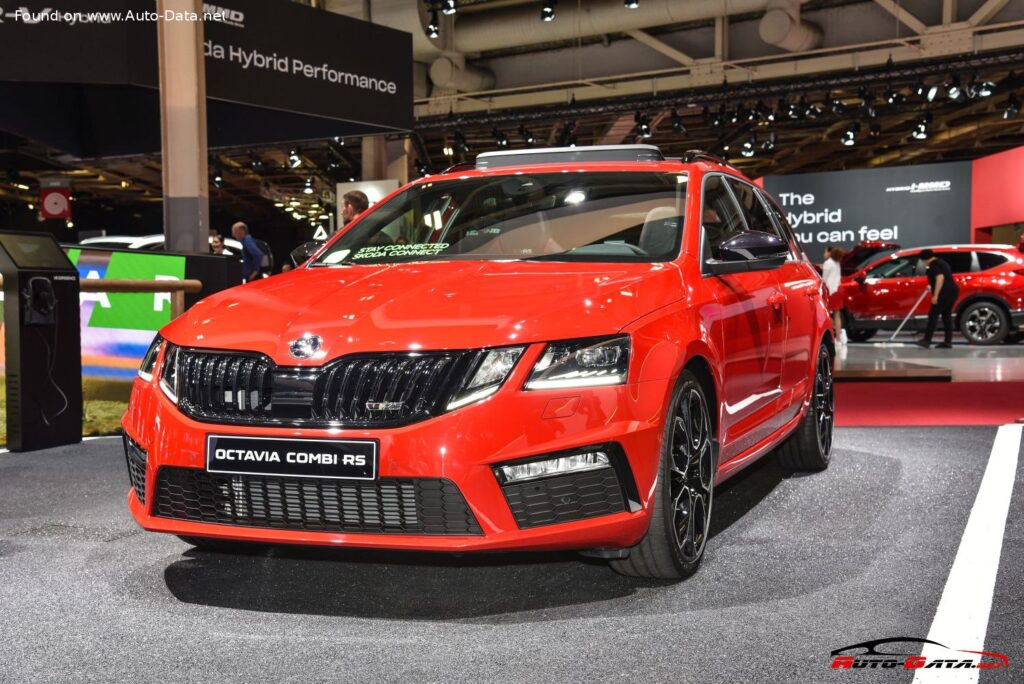
The Skoda Octavia III Combi (facelift 2017) retained its highly practical station wagon body type, a design philosophy that has been central to the Octavia’s success in Europe. With five doors and seating for five occupants, it offered an ideal blend of passenger comfort and cargo versatility. The 2017 facelift brought several aesthetic enhancements, most notably the redesigned front fascia featuring distinctive split headlights, which gave the Octavia a more assertive and contemporary look. The crisp lines and understated elegance of the Skoda design language were further refined, contributing to a modern and mature appearance.
Measuring 183.74 inches in length, 71.42 inches in width (excluding mirrors), and 57.6 inches in height, with a wheelbase of 105.51 inches, the Octavia Combi offered generous interior space. Its most compelling feature, however, was its cavernous cargo capacity. The trunk space started at an impressive 21.54 cubic feet (610 liters) with all seats in place, expanding to a massive 61.45 cubic feet (1740 liters) when the rear seats were folded down. This made it one of the most practical vehicles in its class, capable of swallowing significant luggage, sports equipment, or even furniture.
Inside, the Octavia maintained Skoda’s reputation for robust build quality and logical ergonomics. While specific interior features are not detailed in the raw data, a 2017 facelift model would typically include a modern infotainment system with touchscreen display, smartphone connectivity (Apple CarPlay and Android Auto were becoming standard at this time), and a suite of driver-assistance technologies. Standard safety features would include ABS (Anti-lock Braking System), multiple airbags, electronic stability control, and traction control, ensuring a high level of passive and active safety. The electric power steering system offered precise control and ease of maneuvering, complemented by a minimum turning circle of 34.74 feet. The vehicle rode on 16-inch wheels with 205/55 R16 tires, providing a comfortable and compliant ride.
Technical Specifications
General Information |
|
| Brand | Skoda |
| Model | Octavia |
| Generation | Octavia III Combi (facelift 2017) |
| Type (Engine) | 2.0 TDI (150 Hp) DSG 4×4 |
| Start of Production | 2017 year |
| End of Production | 2019 year |
| Powertrain Architecture | Internal Combustion engine |
| Body Type | Station wagon (estate) |
| Seats | 5 |
| Doors | 5 |
Performance Specifications |
|
| Fuel Consumption (Economy) – Urban | 5.7 l/100 km (41.3 US mpg) |
| Fuel Consumption (Economy) – Extra Urban | 4.4 l/100 km (53.5 US mpg) |
| Fuel Consumption (Economy) – Combined | 4.9 l/100 km (48 US mpg) |
| CO2 Emissions | 130 g/km |
| Fuel Type | Diesel |
| Acceleration 0 – 60 mph | 8.0 sec |
| Maximum Speed | 210 km/h (130.49 mph) |
| Emission Standard | Euro 6 |
| Weight-to-Power Ratio | 9.4 kg/Hp (106 Hp/tonne) |
| Weight-to-Torque Ratio | 4.2 kg/Nm (240.3 Nm/tonne) |
Engine Specifications |
|
| Power | 150 Hp |
| Power per Liter | 76.2 Hp/l |
| Torque | 340 Nm (250.77 lb.-ft.) @ 1750-3000 rpm |
| Engine Layout | Front, Transverse |
| Engine Model/Code | CKFC, CRMB |
| Engine Displacement | 1968 cm3 (120.09 cu. in.) |
| Number of Cylinders | 4 |
| Engine Configuration | Inline |
| Cylinder Bore | 81 mm (3.19 in.) |
| Piston Stroke | 95.5 mm (3.76 in.) |
| Number of Valves per Cylinder | 4 |
| Fuel Injection System | Diesel Commonrail |
| Engine Aspiration | Turbocharger, Intercooler |
| Engine Oil Capacity | 4.6 l (4.86 US qt) |
| Engine Systems | Particulate filter |
Space, Volume and Weights |
|
| Kerb Weight | 1415 kg (3119.54 lbs.) |
| Max. Weight | 2053 kg (4526.09 lbs.) |
| Max Load | 638 kg (1406.55 lbs.) |
| Trunk (boot) Space – Minimum | 610 l (21.54 cu. ft.) |
| Trunk (boot) Space – Maximum | 1740 l (61.45 cu. ft.) |
| Fuel Tank Capacity | 55 l (14.53 US gal) |
| Max. Roof Load | 75 kg (165.35 lbs.) |
| Permitted Trailer Load with Brakes (12%) | 2000 kg (4409.25 lbs.) |
| Permitted Trailer Load without Brakes | 740 kg (1631.42 lbs.) |
Dimensions |
|
| Length | 4667 mm (183.74 in.) |
| Width | 1814 mm (71.42 in.) |
| Height | 1463 mm (57.6 in.) |
| Wheelbase | 2680 mm (105.51 in.) |
| Front Track | 1543 mm (60.75 in.) |
| Rear (Back) Track | 1542 mm (60.71 in.) |
| Minimum Turning Circle (Turning Diameter) | 10.59 m (34.74 ft.) |
Drivetrain, Brakes and Suspension Specifications |
|
| Drive Wheel | All wheel drive (4×4) |
| Number of Gears and Type of Gearbox | 7 gears, automatic transmission DSG |
| Front Brakes | Ventilated discs |
| Rear Brakes | Disc |
| Assisting Systems | ABS (Anti-lock braking system) |
| Steering Type | Steering rack and pinion |
| Power Steering | Electric Steering |
| Tires Size | 205/55 R16 |
| Wheel Rims Size | 16 inches |
Legacy and Market Impact
The Skoda Octavia has consistently been a cornerstone of Skoda’s success, particularly in Europe, since its modern reintroduction under Volkswagen Group ownership. The third-generation Combi, and especially the 2017 facelift model with the 2.0 TDI DSG 4×4 powertrain, played a crucial role in cementing Skoda’s reputation as a purveyor of high-quality, dependable, and exceptionally practical vehicles. While Skoda models are not sold in the United States, in their primary European markets, the Octavia Combi competes fiercely with established players like the Volkswagen Golf Variant, Ford Focus Estate, Opel Astra Sports Tourer, and Peugeot 308 SW. Its unique selling proposition often came down to offering superior interior and cargo space, robust engineering shared with Volkswagen, and a more attractive price point compared to its direct German siblings.
This specific 4×4 diesel automatic variant held particular significance. The combination of a torquey diesel engine, the efficient DSG transmission, and all-wheel drive made it an incredibly versatile vehicle. It appealed to a wide demographic, from families needing ample space and all-weather capability to business fleet operators prioritizing low running costs and reliability. In countries with challenging winter conditions or a prevalence of rural roads, the 4×4 system provided an invaluable layer of security and capability. The Octavia’s reputation for being a “sensible” choice, delivering more car for the money without sacrificing quality or technology, was further enhanced by this well-rounded model.
Historically, the Octavia represented Skoda’s transformation from a manufacturer of more budget-oriented vehicles to a respected, technologically advanced brand within the Volkswagen Group. The third generation, and its facelift, showcased Skoda’s mature design language, advanced safety features, and modern infotainment systems, all while upholding its core values of practicality and value. The 2.0 TDI (150 Hp) DSG 4×4 Combi, produced for a relatively short period between 2017 and 2019, remains a testament to Skoda’s ability to create a highly competent and appealing vehicle that perfectly balances performance, efficiency, and utilitarian excellence in its segment. Its enduring appeal in the used car market in Europe speaks volumes about its build quality and long-term reliability.