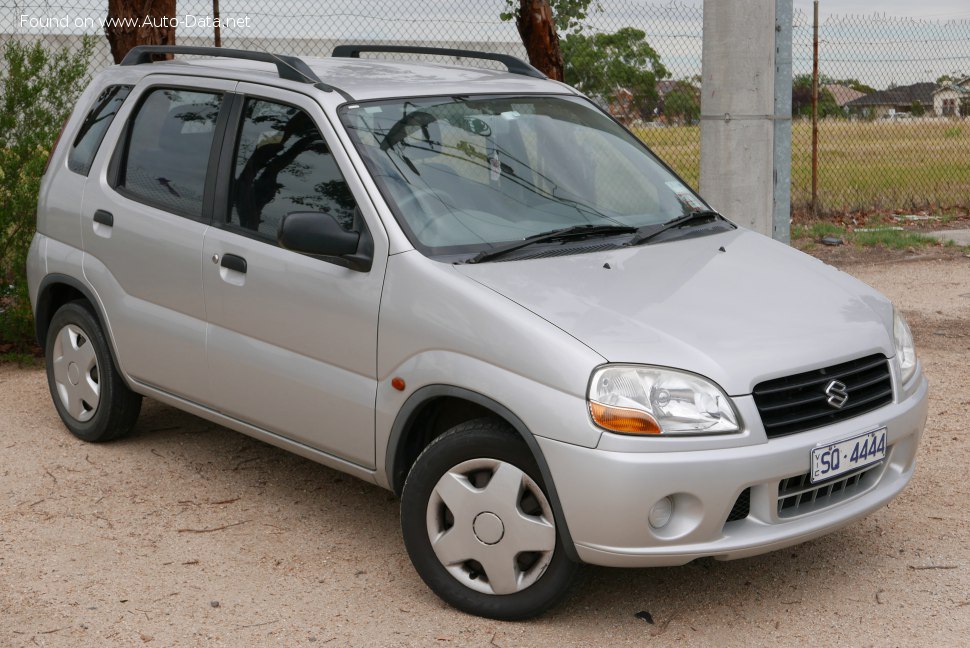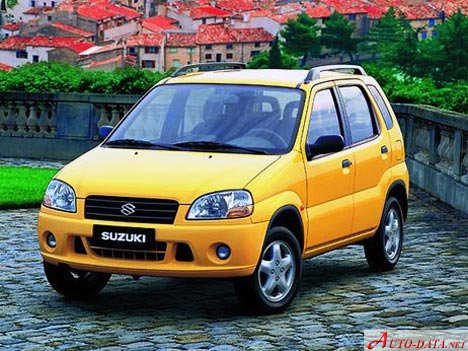
The Suzuki Ignis I FH 1.3 i 16V (86 Hp) Automatic: A Compact Global Player
The Suzuki Ignis I FH 1.3 i 16V (86 Hp) Automatic represents a significant entry by the Japanese automaker Suzuki into the burgeoning global market for compact and versatile vehicles at the turn of the millennium. Produced from 2000 to 2003, this first-generation Ignis variant, specifically configured as a four-door sedan with a five-seat capacity, carved out a niche for itself in various international markets, particularly in Europe and Asia. While the Ignis nameplate often evokes images of a compact hatchback or even a mini-SUV crossover, this particular FH generation model highlights Suzuki’s adaptability in offering diverse body styles to meet regional demands. It was designed as a practical, economical, and agile vehicle, perfectly suited for urban environments while also capable of handling longer journeys with reasonable comfort.
As an international automotive expert, it’s clear that Suzuki engineered the Ignis I FH to embody reliability and efficiency, characteristics synonymous with the brand. This specific model, equipped with a 1.3-liter, 16-valve engine mated to an automatic transmission, aimed to provide a user-friendly driving experience without compromising on the robust build quality expected from Suzuki. Its compact dimensions, coupled with a relatively spacious interior for its class, made it a compelling option for consumers seeking a no-frills, dependable daily driver.
Engine & Performance: The Heart of the Suzuki Ignis I FH
At the core of the Suzuki Ignis I FH 1.3 i 16V (86 Hp) Automatic lies a robust and efficient powertrain. This variant is powered by Suzuki’s M13A engine, a 1.3-liter (1328 cm3 or 81.04 cu. in.) naturally aspirated inline-four gasoline engine. Engineered with a Double Overhead Camshaft (DOHC) valvetrain and 16 valves (four per cylinder), this configuration allowed for optimized airflow and combustion efficiency, a sophisticated setup for a compact car of its era. Fuel delivery was managed by a multi-port manifold injection system, ensuring precise fuel metering and contributing to both performance and fuel economy.
The M13A engine produces a respectable 86 horsepower at 6000 rpm, translating to a power-per-liter output of 64.8 horsepower per liter. Torque peaks at 87.03 lb.-ft. (118 Nm) at a relatively low 3400 rpm, providing ample pulling power for city driving and making the most of the vehicle’s lightweight construction. The engine’s layout is front, transverse, driving the front wheels through a 4-speed automatic transmission. This drivetrain architecture prioritizes ease of driving and packaging efficiency, common traits for vehicles in this segment.
In terms of performance, the Ignis I FH 1.3 i 16V Automatic was designed for practical daily use rather than outright speed. It accelerates from 0 to 60 mph in 12.8 seconds, with a top speed of 96.31 mph (155 km/h). These figures are competitive for a compact automatic sedan of its time, emphasizing its role as an accessible and manageable vehicle. Fuel efficiency was a key selling point, with urban consumption rated at 25 US mpg (9.4 l/100 km) and extra-urban consumption at an impressive 37.9 US mpg (6.2 l/100 km). This made the Ignis an economical choice, especially in regions where fuel costs were a significant consideration for motorists.
Design & Features: Practicality and Compact Utility
The design philosophy behind the Suzuki Ignis I FH was rooted in practicality and efficient space utilization. This specific variant, presented as a four-door sedan, offered a conventional and accessible body style. With a length of 142.32 inches (3615 mm), a width of 62.99 inches (1600 mm), and a height of 60.63 inches (1540 mm), the Ignis maintained a compact footprint, making it ideal for navigating congested urban streets and fitting into tight parking spaces. The wheelbase measured 93.11 inches (2365 mm), contributing to its agile handling characteristics.
Despite its compact exterior, the Ignis I FH sedan provided seating for five occupants. The interior was designed with functionality in mind, offering a straightforward dashboard layout and durable materials. Cargo capacity was also practical for its class, with a minimum trunk space of 10.42 cubic feet (295 liters), sufficient for daily errands or weekend trips. The vehicle’s curb weight of 1862.91 lbs (845 kg) contributed to its nimble feel and fuel efficiency, while a maximum load capacity of 1091.29 lbs (495 kg) allowed for significant passenger and cargo hauling.
Underneath, the Ignis featured a conventional but effective chassis setup. Both the front and rear suspensions utilized coil springs, providing a balance between ride comfort and handling stability. Stopping power came from ventilated disc brakes at the front, offering superior heat dissipation and consistent performance, complemented by drum brakes at the rear. For enhanced safety, the vehicle was equipped with an Anti-lock Braking System (ABS), a crucial active safety feature for its time. Steering was managed by a hydraulic rack and pinion system, offering direct feedback and ease of maneuverability, particularly at lower speeds.
Technical Specifications
| Specification | Value |
|---|---|
| General Information | |
| Brand | Suzuki |
| Model | Ignis |
| Generation | Ignis I FH |
| Type (Engine) | 1.3 i 16V (86 Hp) Automatic |
| Start of production | 2000 year |
| End of production | 2003 year |
| Powertrain Architecture | Internal Combustion engine |
| Body type | Sedan |
| Seats | 5 |
| Doors | 4 |
| Performance Specs | |
| Fuel consumption (economy) – urban | 9.4 l/100 km (25 US mpg) |
| Fuel consumption (economy) – extra urban | 6.2 l/100 km (37.9 US mpg) |
| Fuel Type | Petrol (Gasoline) |
| Acceleration 0 – 60 mph | 12.8 sec |
| Acceleration 0 – 100 km/h | 13.5 sec |
| Maximum speed | 96.31 mph (155 km/h) |
| Weight-to-power ratio | 9.8 kg/Hp, 101.8 Hp/tonne |
| Weight-to-torque ratio | 7.2 kg/Nm, 139.6 Nm/tonne |
| Engine Specs | |
| Power | 86 Hp @ 6000 rpm |
| Power per liter | 64.8 Hp/l |
| Torque | 87.03 lb.-ft. (118 Nm) @ 3400 rpm |
| Engine layout | Front, Transverse |
| Engine Model/Code | M13A |
| Engine displacement | 1328 cm3 (81.04 cu. in.) |
| Number of cylinders | 4 |
| Engine configuration | Inline |
| Cylinder Bore | 78 mm (3.07 in.) |
| Piston Stroke | 69.5 mm (2.74 in.) |
| Compression ratio | 9.5:1 |
| Number of valves per cylinder | 4 |
| Fuel injection system | Multi-port manifold injection |
| Engine aspiration | Naturally aspirated engine |
| Valvetrain | DOHC |
| Engine oil capacity | 3.8 l (4.02 US qt) |
| Coolant | 5.6 l (5.92 US qt) |
| Space, Volume and Weights | |
| Kerb Weight | 845 kg (1862.91 lbs) |
| Max. weight | 1340 kg (2954.19 lbs) |
| Max load | 495 kg (1091.29 lbs) |
| Trunk (boot) space – minimum | 295 l (10.42 cu. ft.) |
| Fuel tank capacity | 40 l (10.57 US gal) |
| Dimensions | |
| Length | 3615 mm (142.32 in.) |
| Width | 1600 mm (62.99 in.) |
| Height | 1540 mm (60.63 in.) |
| Wheelbase | 2365 mm (93.11 in.) |
| Front track | 1405 mm (55.31 in.) |
| Rear (Back) track | 1385 mm (54.53 in.) |
| Drivetrain, Brakes and Suspension Specs | |
| Drivetrain Architecture | Front wheel drive, Internal Combustion engine |
| Drive wheel | Front wheel drive |
| Number of gears and type of gearbox | 4 gears, automatic transmission |
| Front suspension | Coil spring |
| Rear suspension | Coil spring |
| Front brakes | Ventilated discs |
| Rear brakes | Drum |
| Assisting systems | ABS (Anti-lock braking system) |
| Steering type | Steering rack and pinion |
| Power steering | Hydraulic Steering |
| Tires size | 165/70 R14 |
Legacy & Market Impact: The Global Reach of the Suzuki Ignis I FH
The Suzuki Ignis I FH 1.3 i 16V (86 Hp) Automatic played a pivotal role in Suzuki’s strategy to capture a larger share of the compact car market outside of North America. While the Ignis nameplate is globally recognized, this specific sedan variant was primarily targeted at markets in Europe and Asia, where compact sedans and practical small cars enjoy significant popularity. In these regions, the Ignis I FH was valued for its blend of affordability, fuel efficiency, and Suzuki’s renowned reliability.
In its primary markets, the Ignis competed against a host of established and emerging compact cars. Its rivals included models such as the Toyota Yaris (known as the Vitz in some markets), the Honda Fit (Jazz), Nissan Micra, and European stalwarts like the Ford Fiesta and Opel Corsa. What set the Ignis apart was often its robust construction, a hint of SUV-like ground clearance (even in sedan form, the Ignis often retained a slightly taller stance than conventional sedans), and a reputation for being a durable workhorse. Its compact size made it an ideal urban commuter, while the 4-door sedan configuration offered a more traditional and perhaps perceived as more mature alternative to the prevalent hatchbacks in the segment.
The first-generation Ignis, including this sedan variant, laid the groundwork for Suzuki’s future success in the compact crossover segment. Although this specific model was a sedan, the broader Ignis family often featured a more upright, almost mini-SUV stance, especially in its 3-door and 5-door hatchback forms. This versatility demonstrated Suzuki’s understanding of diverse consumer needs and its ability to adapt a core platform to various market preferences. The Ignis earned a reputation for being a no-nonsense, dependable vehicle that offered good value for money, making it a popular choice for budget-conscious buyers and those seeking a reliable second car.
Ultimately, the Suzuki Ignis I FH 1.3 i 16V Automatic, despite its short production run as a first-generation model, solidified Suzuki’s position as a competent manufacturer of small, practical vehicles. It contributed to the brand’s image of producing reliable, efficient, and surprisingly capable cars that could withstand the rigors of diverse driving conditions, from bustling city streets to less-than-perfect rural roads. Its legacy is one of a pragmatic and successful compact car that met the demands of its era with characteristic Suzuki engineering.