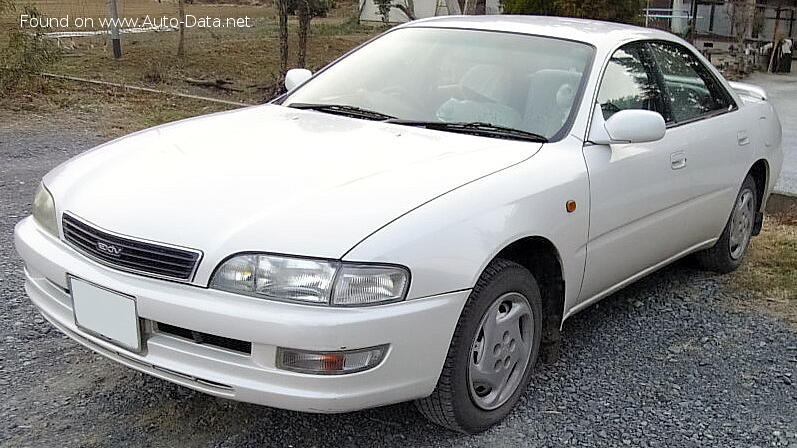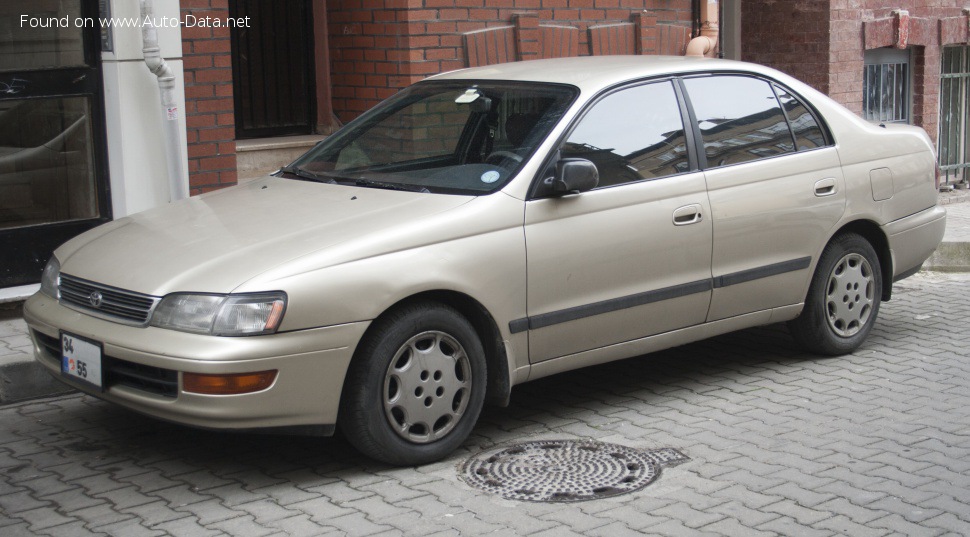
The Toyota Corona (T19) 2.0 i 16V (175 Hp): A Global Performer
The Toyota Corona (T19) 2.0 i 16V (175 Hp) represents a significant evolution in Toyota’s long-running Corona lineage, a nameplate that for decades served as a cornerstone of the automaker’s global sales success. Produced between 1995 and 1996, this particular variant of the tenth-generation Corona, often referred to as the T190 series, showcased a blend of Toyota’s renowned reliability with a decidedly performance-oriented powertrain. While the Corona nameplate had largely been superseded by the Camry in the North American market by this era, the T19 generation continued to thrive in various Asian, European, and other international markets, where it was appreciated for its robust engineering, practical design, and efficient packaging. The 2.0 i 16V model, in particular, stood out with its potent engine, offering a sportier driving experience within the sensible mid-size sedan segment it occupied.
Positioned as a comfortable and dependable family sedan, the T19 Corona aimed to strike a balance between everyday usability and a more engaging drive, especially with its higher-output engine options. This generation continued Toyota’s tradition of offering a front-engine, front-wheel-drive platform, ensuring predictable handling and maximizing interior space. The 1995-1996 model years marked the twilight of the T19 generation before its eventual replacement, making this 2.0 i 16V (175 Hp) variant a notable, albeit brief, highlight in its production run.
Engine and Performance: The Heart of the Toyota Corona (T19) 2.0 i 16V (175 Hp)
At the core of the Toyota Corona (T19) 2.0 i 16V (175 Hp) lies a highly regarded powertrain, the 3S-GE engine. This naturally aspirated, 2.0-liter (1998 cm³) inline-four engine was a gem in Toyota’s catalog, renowned for its durability and spirited performance. Featuring a Double Overhead Camshaft (DOHC) valvetrain with 4 valves per cylinder, this 16-valve setup allowed for excellent breathing and high-revving capability, producing its peak power of 175 horsepower at a lofty 7000 revolutions per minute. This power output, especially for a naturally aspirated 2.0-liter engine in the mid-1990s, was quite impressive, yielding a power-per-liter ratio of 87.6 horsepower per liter, indicating a high level of engine tuning and efficiency for its time.
Torque delivery was equally respectable, with the engine generating 186 Nm (137.19 lb.-ft.) at 4400 rpm. This relatively broad torque band, combined with a standard 5-speed manual transmission, provided a responsive and engaging driving experience. The engine’s layout was front, transverse, driving the front wheels, a common and effective powertrain architecture for maximizing interior space and manufacturing efficiency in a mid-size sedan. The multi-port manifold injection system ensured precise fuel delivery, contributing to both performance and a combined fuel economy rating of 7.3 liters per 100 km (32.2 US mpg), which was commendable for a performance-oriented engine of its displacement in the mid-90s. With a compression ratio of 10.3:1 and an equal bore and stroke of 86 mm, the engine was designed for both power and efficiency, offering a balanced characteristic that appealed to a wide range of drivers in its target markets.
Design and Features
The T19 generation of the Toyota Corona adhered to the functional and understated design philosophy prevalent in Japanese sedans of the mid-1990s. As a 4-door sedan, it offered practical ingress and egress for all five occupants. Its exterior styling was clean and aerodynamic, characterized by smooth lines and a conservative profile, designed for universal appeal rather than dramatic flair. The dimensions of the vehicle – a length of 177.17 inches (4500 mm), a width of 68.5 inches (1740 mm), and a height of 52.17 inches (1325 mm) – placed it firmly in the mid-size segment, offering ample interior room for families and professional use. The 99.8-inch (2535 mm) wheelbase contributed to a stable ride and comfortable cabin.
Inside, the Corona T19 prioritized ergonomics and durability. While specific interior features are not detailed in the provided data, it’s reasonable to infer a cabin designed for practicality, with durable materials and straightforward controls, typical of Toyota’s reputation for user-friendliness. The 5-seat configuration was standard for the segment, making it a reliable choice for daily commuting and longer journeys. From a safety perspective, the inclusion of ABS (Anti-lock Braking System) was a significant feature for the mid-90s, enhancing vehicle control during emergency braking situations. The braking system utilized ventilated discs at the front for superior heat dissipation and stopping power, complemented by drum brakes at the rear, a common setup for cost-effectiveness and adequate performance in its class. The steering system was a rack and pinion type, offering direct and responsive handling, paired with a wishbone front and rear suspension setup for a comfortable and composed ride. The 205/55 R15 V tires provided a good balance of grip and ride comfort, suitable for a sedan with sporting aspirations.
Technical Specifications
| Category | Specification | US/Imperial Equivalent |
|---|---|---|
| Brand | Toyota | |
| Model | Corona | |
| Generation | Corona (T19) | |
| Type (Engine) | 2.0 i 16V (175 Hp) | |
| Start of Production | 1995 year | |
| End of Production | 1996 year | |
| Powertrain Architecture | Internal Combustion Engine | |
| Body Type | Sedan | |
| Seats | 5 | |
| Doors | 4 | |
| Fuel Consumption (Combined) | 7.3 l/100 km | 32.2 US mpg |
| Fuel Type | Petrol (Gasoline) | |
| Weight-to-Power Ratio | 7 kg/Hp | 143.4 Hp/tonne |
| Weight-to-Torque Ratio | 6.6 kg/Nm | 152.5 Nm/tonne |
| Power | 175 Hp @ 7000 rpm | |
| Power per Liter | 87.6 Hp/l | |
| Torque | 186 Nm @ 4400 rpm | 137.19 lb.-ft. @ 4400 rpm |
| Engine Layout | Front, Transverse | |
| Engine Model/Code | 3S-GE | |
| Engine Displacement | 1998 cm³ | 121.93 cu. in. |
| Number of Cylinders | 4 | |
| Engine Configuration | Inline | |
| Cylinder Bore | 86 mm | 3.39 in. |
| Piston Stroke | 86 mm | 3.39 in. |
| Compression Ratio | 10.3:1 | |
| Number of Valves per Cylinder | 4 | |
| Fuel Injection System | Multi-port manifold injection | |
| Engine Aspiration | Naturally aspirated engine | |
| Valvetrain | DOHC | |
| Engine Oil Capacity | 4.5 l | 4.76 US qt |
| Coolant Capacity | 6.9 l | 7.29 US qt |
| Kerb Weight | 1220 kg | 2689.64 lbs. |
| Max. Weight | 1495 kg | 3295.91 lbs. |
| Max Load | 275 kg | 606.27 lbs. |
| Fuel Tank Capacity | 60 l | 15.85 US gal |
| Length | 4500 mm | 177.17 in. |
| Width | 1740 mm | 68.5 in. |
| Height | 1325 mm | 52.17 in. |
| Wheelbase | 2535 mm | 99.8 in. |
| Front Track | 1510 mm | 59.45 in. |
| Rear (Back) Track | 1490 mm | 58.66 in. |
| Drivetrain Architecture | Front-wheel drive | |
| Drive Wheel | Front wheel drive | |
| Number of Gears & Gearbox Type | 5 gears, manual transmission | |
| Front Suspension | Wishbone | |
| Rear Suspension | Wishbone | |
| Front Brakes | Ventilated discs | |
| Rear Brakes | Drum | |
| Assisting Systems | ABS (Anti-lock braking system) | |
| Steering Type | Steering rack and pinion | |
| Tires Size | 205/55 R15 V |
Legacy and Market Impact
The Toyota Corona, particularly the T19 generation, holds a significant place in automotive history, especially in markets outside North America. While the Camry became Toyota’s dominant mid-size offering in the United States, the Corona continued its legacy as a dependable and versatile sedan across Asia, parts of Europe, and other global regions. The Toyota Corona (T19) 2.0 i 16V (175 Hp) variant, with its potent 3S-GE engine, carved out a niche for itself as a “driver’s car” within a segment often characterized by practicality over performance. It offered an engaging alternative to more mundane family sedans, combining Toyota’s bulletproof reliability with a dose of sporting spirit.
In its primary markets, the Corona T19 competed with established rivals such as the Honda Accord (specifically its European and Asian market variants), Nissan Primera (known as the G20 in the US), and the Mazda 626. What set the Corona apart, particularly this 2.0 i 16V model, was its reputation for exceptional build quality, low running costs, and the enduring reliability of its powertrain. The 3S-GE engine, in particular, gained a cult following among enthusiasts for its robust design and tuning potential, contributing to the Corona’s lasting appeal beyond its initial production years.
The T19 generation played a crucial role in reinforcing Toyota’s brand image as a manufacturer of durable, efficient, and well-engineered vehicles. Even as the Corona nameplate eventually faded, replaced by models like the Avensis in Europe or absorbed into the Camry/Carina family in other regions, its influence on Toyota’s engineering principles and market strategy remained. The 2.0 i 16V (175 Hp) variant stands as a testament to Toyota’s willingness to inject performance into its mainstream offerings, providing a compelling package for those seeking both practicality and driving enjoyment in a mid-size sedan. Its legacy is one of quiet competence, punctuated by moments of unexpected performance, solidifying its place as a respected and enduring model in Toyota’s expansive global portfolio.