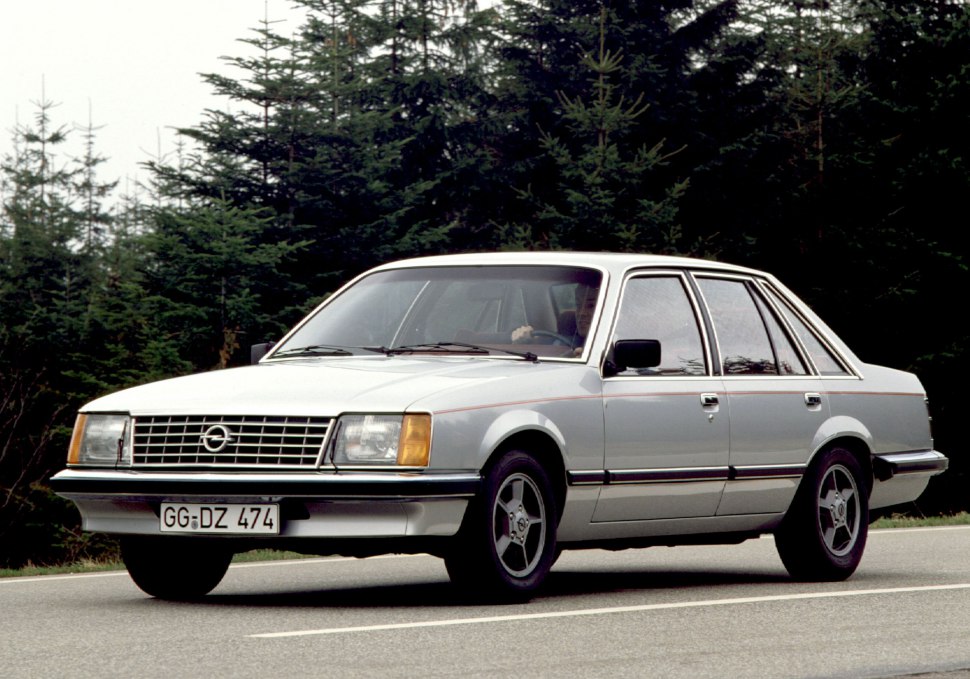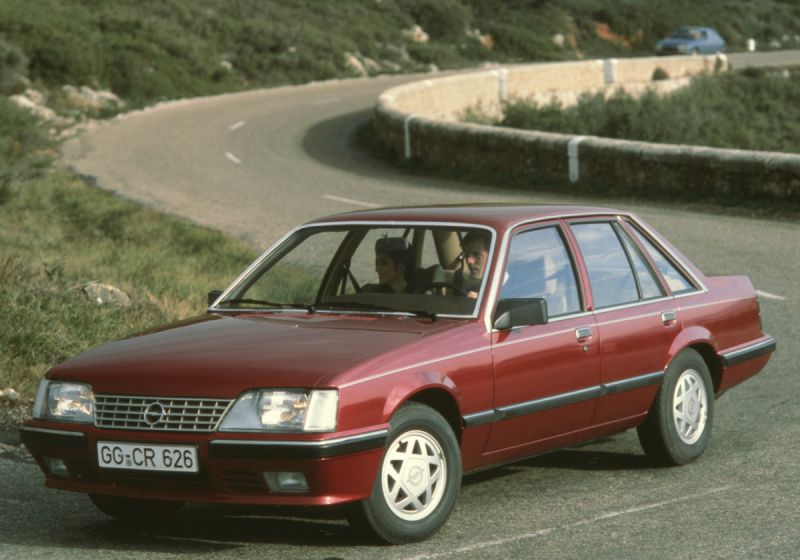
The Opel Senator A (facelift 1982) 2.5 E (140 Hp) Automatic: Opel’s Executive Flagship
The Opel Senator A (facelift 1982) 2.5 E (140 Hp) Automatic represents a significant chapter in Opel’s history as a prominent European automaker, a subsidiary of General Motors. Launched in 1978, the Senator A was Opel’s foray into the highly competitive executive car segment, aiming to rival established players like BMW and Mercedes-Benz. This particular iteration, produced between 1984 and 1986, reflects the updated “facelift” model introduced in 1982, bringing refined styling and updated mechanicals to the platform.
As a vehicle primarily designed and sold in Europe, the Opel Senator A was a large, luxurious four-door sedan, positioned above the smaller Rekord and Omega models in Opel’s lineup. It shared its platform with the Opel Monza coupe, offering a blend of comfort, performance, and advanced features for its era. While the Opel brand itself was not directly sold in the United States, its engineering and design philosophies often trickled into GM’s global portfolio. The Senator, with its robust inline-six engine and rear-wheel-drive architecture, was a testament to traditional European executive car values, emphasizing smooth power delivery and a composed ride, making it a popular choice among business executives and families seeking an upscale, reliable sedan in its home markets.
Engine & Performance: The Robust 2.5 E Powertrain
At the heart of the Opel Senator A (facelift 1982) 2.5 E (140 Hp) Automatic lies a naturally aspirated 2.5-liter (2490 cubic centimeters or 151.95 cubic inches) inline-six gasoline engine, designated by the code 25NE. This powerplant, a hallmark of European executive sedans of the era, was engineered for smooth operation and dependable performance. Featuring a Single Overhead Camshaft (SOHC) valvetrain with two valves per cylinder, and a multi-port manifold injection system, the engine produced a respectable 140 horsepower at 5200 revolutions per minute. Its power per liter stood at 56.2 horsepower, a competitive figure for a non-turbocharged engine of its generation.
Torque output was equally commendable, with 205 Newton-meters (151.2 lb.-ft.) available at 4000 rpm, ensuring ample pulling power for highway cruising and confident acceleration. Mated to a four-speed automatic transmission, the powertrain delivered a refined driving experience, characteristic of a vehicle designed for long-distance comfort. Performance figures for this sedan included an acceleration from 0 to 60 miles per hour in 11.4 seconds, with a top speed reaching 118.68 miles per hour (191 km/h).
Despite its size and automatic transmission, the Senator 2.5 E offered a combined fuel economy of approximately 22.2 US miles per gallon (10.6 liters per 100 km), which was a reasonable figure for a large six-cylinder sedan in the mid-1980s. The engine’s robust design, with a compression ratio of 9.2:1, contributed to its longevity and reputation for reliability. Its 5.5-liter engine oil capacity and 10-liter coolant capacity further indicated a design focused on durability and thermal management, essential for sustained high-speed Autobahn driving in its primary market.
Design & Features: Classic Executive Sedan Aesthetics
The Opel Senator A (facelift 1982) maintained the classic four-door, five-seat sedan body style that defined executive cars of its period. Measuring 190.51 inches (4839 mm) in length, 67.8 inches (1722 mm) in width, and 55.71 inches (1415 mm) in height, the Senator commanded a significant road presence. Its long wheelbase of 105.63 inches (2683 mm) contributed to a spacious cabin and a stable ride, hallmarks of a comfortable long-distance cruiser. The 1982 facelift introduced subtle yet effective styling updates, including revised front and rear fascias, contributing to a more modern and aerodynamic appearance, as evidenced by a drag coefficient (Cd) of 0.39.
Inside, the Senator was designed with passenger comfort and practicality in mind. The generous interior space was complemented by a cavernous trunk offering up to 25.25 cubic feet (715 liters) of cargo capacity, making it exceptionally practical for family trips or business travel. The kerb weight of 3053.4 lbs. (1385 kg) underscored its solid build quality, while a maximum load capacity of 1212.54 lbs. (550 kg) further highlighted its utility.
In terms of driving dynamics, the Senator A featured a traditional rear-wheel-drive architecture, providing a balanced feel and predictable handling. The vehicle was equipped with ventilated disc brakes at the front and disc brakes at the rear, offering competent stopping power for its weight and performance. The minimum turning circle of 35.43 feet (10.8 meters) was respectable for a car of its size, aiding maneuverability in urban environments. The overall design language was understated yet elegant, reflecting the prevailing automotive trends of the early to mid-1980s, prioritizing clean lines and functional aesthetics over overt flashiness.
Technical Specifications: Opel Senator A (facelift 1982) 2.5 E (140 Hp) Automatic
| Category | Specification | US Equivalent (where applicable) |
|---|---|---|
| General Information | ||
| Brand | Opel | |
| Model | Senator | |
| Generation | Senator A (facelift 1982) | |
| Type (Engine) | 2.5 E (140 Hp) Automatic | |
| Start of Production | 1984 year | |
| End of Production | 1986 year | |
| Powertrain Architecture | Internal Combustion engine | |
| Body Type | Sedan | |
| Seats | 5 | |
| Doors | 4 | |
| Performance Specs | ||
| Fuel Consumption (Combined) | 10.6 l/100 km | 22.2 US mpg |
| Fuel Type | Petrol (Gasoline) | |
| Acceleration 0 – 60 mph | 11.4 sec | |
| Maximum Speed | 191 km/h | 118.68 mph |
| Weight-to-Power Ratio | 9.9 kg/Hp | 101.1 Hp/tonne |
| Weight-to-Torque Ratio | 6.8 kg/Nm | 148 Nm/tonne |
| Engine Specs | ||
| Power | 140 Hp @ 5200 rpm | |
| Power per Liter | 56.2 Hp/l | |
| Torque | 205 Nm @ 4000 rpm | 151.2 lb.-ft. @ 4000 rpm |
| Engine Model/Code | 25NE | |
| Engine Displacement | 2490 cm3 | 151.95 cu. in. |
| Number of Cylinders | 6 | |
| Engine Configuration | Inline | |
| Cylinder Bore | 87 mm | 3.43 in. |
| Piston Stroke | 69.8 mm | 2.75 in. |
| Compression Ratio | 9.2:1 | |
| Number of Valves per Cylinder | 2 | |
| Fuel Injection System | Multi-port manifold injection | |
| Engine Aspiration | Naturally aspirated engine | |
| Valvetrain | SOHC | |
| Engine Oil Capacity | 5.5 l | 5.81 US qt |
| Coolant Capacity | 10 l | 10.57 US qt |
| Space, Volume and Weights | ||
| Kerb Weight | 1385 kg | 3053.4 lbs. |
| Max. Weight (Gross Vehicle Weight) | 1935 kg | 4265.94 lbs. |
| Max Load | 550 kg | 1212.54 lbs. |
| Trunk (Boot) Space – Maximum | 715 l | 25.25 cu. ft. |
| Fuel Tank Capacity | 75 l | 19.81 US gal |
| Dimensions | ||
| Length | 4839 mm | 190.51 in. |
| Width | 1722 mm | 67.8 in. |
| Height | 1415 mm | 55.71 in. |
| Wheelbase | 2683 mm | 105.63 in. |
| Front Track | 1447 mm | 56.97 in. |
| Rear (Back) Track | 1472 mm | 57.95 in. |
| Ride Height (Ground Clearance) | 140 mm | 5.51 in. |
| Drag Coefficient (Cd) | 0.39 | |
| Minimum Turning Circle (Diameter) | 10.8 m | 35.43 ft. |
| Drivetrain, Brakes and Suspension Specs | ||
| Drivetrain Architecture | The Internal combustion engine (ICE) drives the rear wheels of the vehicle. | |
| Drive Wheel | Rear wheel drive | |
| Number of Gears and Type of Gearbox | 4 gears, automatic transmission | |
| Front Brakes | Ventilated discs | |
| Rear Brakes | Disc |
Legacy & Market Impact of the Opel Senator A (facelift 1982)
The Opel Senator A, especially in its facelifted form from 1982 to 1986, played a crucial role in Opel’s strategy to compete in the demanding European executive car market. While it never achieved the same iconic status or sales volumes as its German rivals from BMW and Mercedes-Benz, the Senator carved out a niche for itself as a value-oriented, comfortable, and well-equipped alternative. Its primary competitors included the Ford Granada/Scorpio, the Volvo 760, and to some extent, the more expensive BMW 5 Series (E28) and Mercedes-Benz W123/W124 models.
Opel, as a General Motors subsidiary, often positioned its vehicles to offer a strong blend of practicality, robust engineering, and accessible luxury. The Senator A embodied this philosophy, providing a spacious and refined driving experience without the premium price tag of some of its more prestigious competitors. It was particularly popular in Germany, the UK, and other parts of Europe where Opel had a strong dealer network and brand recognition. Its inline-six engine, a configuration favored by many premium European brands, gave it a smooth power delivery and a sense of refinement that was appreciated by its target audience.
Despite its solid attributes, the Senator A faced the challenge of brand perception. Opel, while a mass-market brand, struggled to shed its utilitarian image sufficiently to fully compete with the perceived prestige of BMW and Mercedes-Benz in the executive segment. However, its reputation for reliability and lower running costs compared to some rivals made it an attractive proposition for those seeking a capable and comfortable executive sedan without the higher acquisition and maintenance costs.
The Senator A’s legacy is one of quiet competence. It represented Opel’s ambition to offer a truly competitive executive car, demonstrating General Motors’ engineering capabilities in Europe. While its successor, the Senator B (based on the Omega A), would continue this tradition, the A-generation laid the groundwork, proving that Opel could produce a large, comfortable, and capable rear-wheel-drive sedan. Today, the Opel Senator A is remembered as a classic example of 1980s European automotive design and engineering, appreciated by enthusiasts for its comfortable ride, robust mechanics, and understated elegance, holding a special place in the history of Opel and the European executive car market.