Introduction to the Nissan Sunny (B15)
The Nissan Sunny, a nameplate synonymous with reliability and practical motoring across numerous global markets, saw the introduction of its B15 generation in 1998. This iteration continued the Sunny’s long-standing tradition as a compact sedan designed for efficiency, durability, and affordability. While the Nissan Sunny (B15) was not officially sold in the United States under this specific name, its underlying platform and engineering principles often informed models that did reach American shores, such as the Nissan Sentra. For many markets in Asia, the Middle East, and parts of Europe, the B15 Sunny represented a vital segment offering a no-nonsense approach to personal transportation.
Positioned as a mainstream compact car, the Sunny (B15) aimed to cater to a broad demographic, from first-time car buyers to families seeking an economical and dependable daily driver. Its design ethos prioritized function over flamboyant styling, focusing instead on maximizing interior space, fuel economy, and ease of maintenance. This particular variant, equipped with the 1.5-liter 16-valve engine producing 105 horsepower, was a popular choice, striking a balance between adequate performance for various driving conditions and commendable fuel efficiency. The 1998 launch marked a significant update, bringing refreshed styling and updated mechanicals to a highly competitive segment.
Engine and Performance: The Heart of the Nissan Sunny (B15)
At the core of this particular Nissan Sunny (B15) model is a naturally aspirated 1.5-liter, 16-valve internal combustion engine. Generating a respectable 105 horsepower, this powertrain was engineered for smooth, predictable performance rather than outright speed. Likely to be Nissan’s QG15DE engine, a member of the QG engine family, it was renowned for its robust construction and long-term reliability. The 16-valve configuration allowed for efficient air intake and exhaust flow, contributing to both power output and fuel economy.
The naturally aspirated design, devoid of turbocharging or supercharging, meant a linear power delivery, making the Sunny B15 an easy car to drive in both urban environments and on the highway. While specific torque figures are not provided, a 1.5-liter engine of this era typically produced around 100-110 lb-ft of torque, delivered at mid-range RPMs, which was perfectly adequate for daily commuting and light cargo hauling. This engine was generally paired with either a 5-speed manual transmission or a 4-speed automatic, both options emphasizing smooth shifts and economical operation. The drivetrain architecture, consistent with most compact sedans of its time, was front-wheel drive, ensuring predictable handling and efficient packaging.
Fuel efficiency was a key selling point for the Sunny B15. Running on standard petrol (gasoline), the 1.5-liter engine was optimized to deliver competitive mileage, a crucial factor for buyers in its target markets. Its straightforward mechanical design also contributed to lower maintenance costs, further enhancing its appeal as an economical choice. The 105 horsepower output provided sufficient power for highway cruising and overtaking, though it was never intended to be a performance-oriented vehicle. Instead, its strength lay in its ability to reliably transport occupants and cargo with minimal fuss and expense.
Design and Features of the Nissan Sunny (B15) Sedan
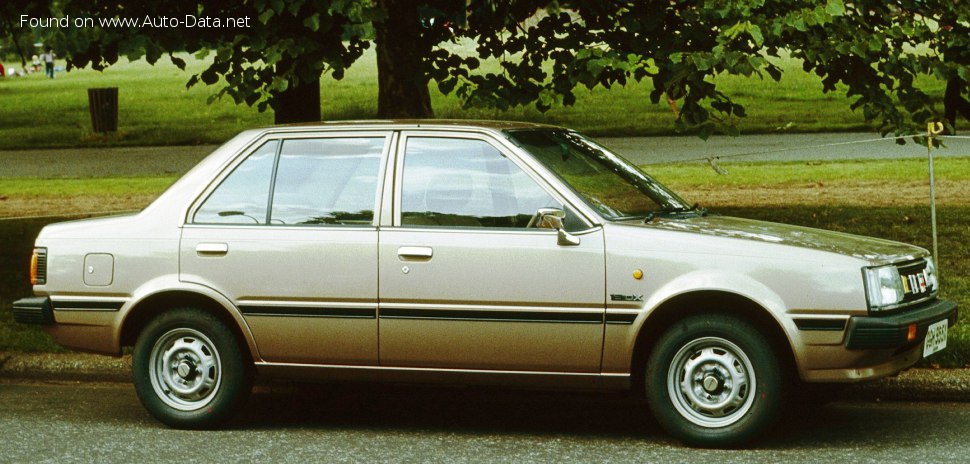
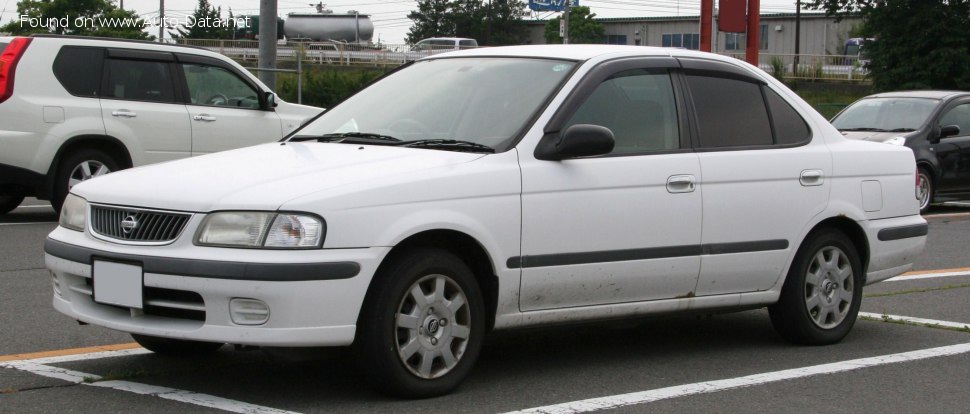
The Nissan Sunny (B15) adopted a design language that emphasized practicality and understated elegance, typical of compact sedans from the late 1990s. Its body type is a classic sedan, featuring a three-box silhouette that provided a distinct trunk for cargo, a preference in many markets where it was sold. The exterior styling was clean and aerodynamic, with smooth lines and minimal ornamentation, reflecting a focus on functionality and efficiency. The front fascia typically featured modest headlights and a grille that was consistent with Nissan’s corporate identity of the era.
Inside, the Sunny B15 offered a surprisingly spacious and comfortable cabin for its class. Nissan engineers prioritized ergonomics and ease of use, resulting in a dashboard layout that was intuitive and straightforward. Materials were chosen for durability and ease of cleaning, rather than luxury, aligning with the car’s economical positioning. Standard features for a 1998 compact sedan in its primary markets often included air conditioning, power steering, and a basic audio system. Higher trim levels might have offered power windows, central locking, and more advanced sound systems. The seating was designed for long-distance comfort, and the rear bench provided ample room for two adults or three children.
Safety features, while not as extensive as modern vehicles, were present and reflected the standards of the late 1990s. Common safety equipment included driver and passenger airbags, and in some markets or higher trims, an Anti-lock Braking System (ABS) might have been available. The rigid body structure itself offered a degree of passive safety. The sedan’s practical design extended to its trunk, which provided a generous amount of cargo space, making it suitable for family trips or daily errands. The overall aesthetic of the Nissan Sunny (B15) was one of a dependable, unpretentious vehicle that efficiently served its purpose without unnecessary frills.
Technical Specifications
| Category | Specification |
|---|---|
| Brand | Nissan |
| Model | Sunny |
| Generation | Sunny (B15) |
| Type (Engine) | 1.5 16V (105 Hp) |
| Start of Production | 1998 year |
| Powertrain Architecture | Internal Combustion Engine |
| Body Type | Sedan |
| Fuel Type | Petrol (Gasoline) |
| Power | 105 Hp |
| Engine Aspiration | Naturally Aspirated Engine |
| Engine Displacement | 1.5 Liters (estimated) |
| Torque | Not specified |
| Transmission | Not specified (typically 5-speed manual or 4-speed automatic) |
| Drive Type | Not specified (typically Front-Wheel Drive) |
| 0-60 mph Acceleration | Not specified |
| Top Speed | Not specified |
| Fuel Economy | Not specified |
Legacy and Market Impact of the Nissan Sunny (B15)
The Nissan Sunny (B15) carved out a significant legacy, particularly in its primary markets across Asia, the Middle East, and Latin America. Its reputation was built on unwavering reliability, low running costs, and a practical design, making it a highly desirable vehicle for a wide range of consumers. In many countries, the Sunny became a benchmark for what a compact, affordable sedan should be: a dependable workhorse capable of enduring diverse climates and road conditions.
Its main competitors in these markets included perennial rivals such as the Toyota Corolla, Honda Civic, and Mitsubishi Lancer. The Sunny consistently held its own against these formidable opponents by offering a compelling package of value, durability, and a strong dealer network. While the Corolla often boasted a slightly more refined ride and the Civic a sportier demeanor, the Sunny often won over buyers with its straightforward approach and reputation for being exceptionally trouble-free.
The B15 generation played a crucial role in Nissan’s global strategy, reinforcing its presence in emerging markets and providing a solid foundation for its compact vehicle offerings. While the “Sunny” nameplate itself faded from some markets, its spirit and engineering principles lived on in subsequent Nissan models. For instance, in some regions, the B15 Sunny was sold as the Nissan Sentra, effectively serving as the same vehicle under a different moniker, a testament to its adaptable platform and broad appeal. This cross-market branding strategy allowed Nissan to leverage the Sunny’s proven reliability across various regions.
Even today, the Nissan Sunny (B15) maintains a strong presence in the used car markets of many countries. Its enduring popularity is a testament to its robust construction and the longevity of its mechanical components. Owners frequently praise its minimal maintenance requirements and excellent fuel efficiency, making it a smart choice for those seeking an economical and reliable mode of transport. The B15 Sunny stands as a classic example of Nissan’s commitment to building practical, durable vehicles that meet the everyday needs of millions of drivers worldwide, securing its place as an iconic compact sedan of its era.