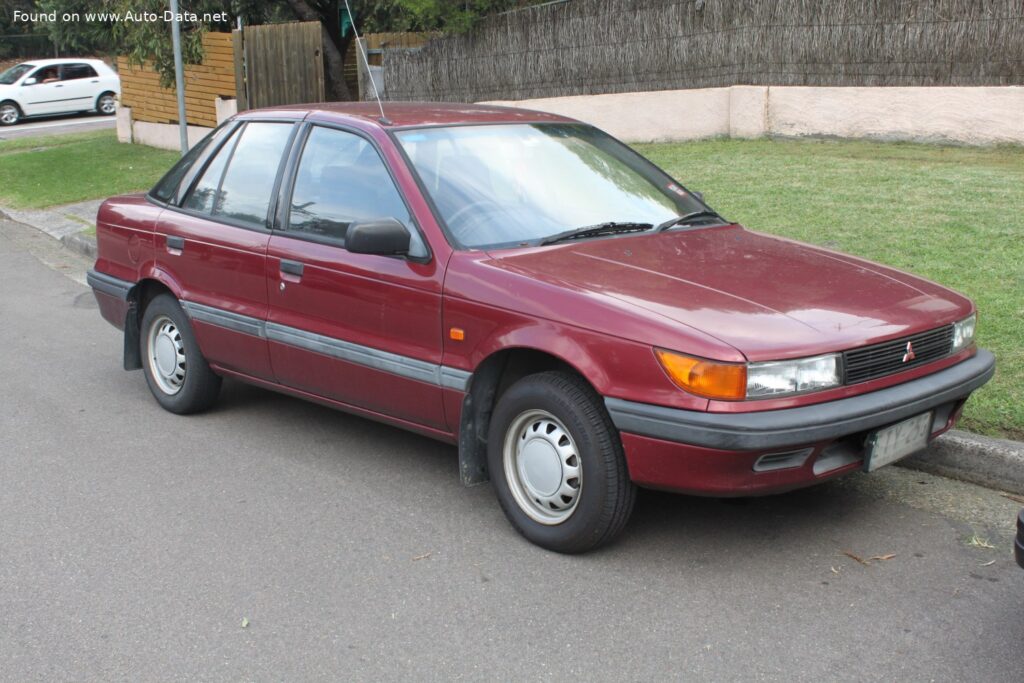
Introduction to the Mitsubishi Lancer IV Hatchback 1.3 12V (75 Hp)
The Mitsubishi Lancer, a nameplate synonymous with robust engineering and reliability for decades, entered its fourth generation in 1991, offering a range of body styles to cater to diverse global markets. Among these was the practical and economical Mitsubishi Lancer IV Hatchback 1.3 12V (75 Hp), produced from 1991 to 1992. While the Lancer name was well-known in North America, this specific 1.3-liter hatchback variant primarily targeted markets where fuel efficiency, compact dimensions, and affordability were paramount, such as Europe and parts of Asia. This model represented Mitsubishi’s commitment to providing a dependable and accessible compact vehicle, embodying the straightforward design and mechanical integrity typical of Japanese automobiles of its era.
Positioned as a versatile and budget-friendly option, the Lancer IV Hatchback distinguished itself with its five-door configuration, offering enhanced utility compared to its sedan counterparts. It was designed to appeal to individuals and small families seeking reliable daily transportation without unnecessary frills. The vehicle’s powertrain architecture centered around a conventional internal combustion engine driving the front wheels, a layout that had become the industry standard for compact cars due to its efficiency and packaging advantages. As a product of the early 1990s, the Lancer IV Hatchback reflected the prevailing automotive trends of the time, emphasizing functionality, ease of maintenance, and a no-nonsense approach to motoring.
Engine and Performance of the Mitsubishi Lancer IV Hatchback
At the heart of the Lancer IV Hatchback 1.3 12V (75 Hp) was a modest yet capable 1.3-liter (1299 cm³ or 79.27 cu. in.) inline four-cylinder engine. This powerplant, designated as a 12-valve unit, featured an OHC (Overhead Camshaft) valvetrain with three valves per cylinder—a common configuration for optimizing both low-end torque and high-end power without the added complexity and cost of a full DOHC four-valve-per-cylinder setup. The engine was naturally aspirated and fed by a carburetion system, reflecting the technology prevalent before widespread electronic fuel injection became standard across all segments.
This compact engine produced a respectable 75 horsepower at 6000 rpm, delivering a power-per-liter ratio of 57.7 Hp/l. Torque output stood at 102 Nm (75.23 lb.-ft.) at 4000 rpm, providing adequate thrust for urban commuting and highway cruising within its class. The engine’s front, transverse layout, coupled with front-wheel drive, contributed to efficient packaging and predictable handling characteristics. Power was transmitted to the road via a five-speed manual transmission, offering the driver direct control and contributing to the vehicle’s overall fuel economy.
Performance figures for the Lancer IV Hatchback 1.3 12V highlighted its economy-oriented nature. It achieved a maximum speed of 163 km/h (approximately 101.28 mph), which was competitive for its segment. Fuel efficiency was a key selling point, with urban consumption rated at 9 liters per 100 km (26.1 US mpg) and a more impressive extra-urban (highway) figure of 6 liters per 100 km (39.2 US mpg). With a curb weight of just 2028.25 lbs (920 kg), the car boasted a weight-to-power ratio of 12.3 kg/Hp (81.5 Hp/tonne), underscoring its lightweight construction and contribution to its thrifty fuel consumption. The 13.21 US gallon (50-liter) fuel tank provided a decent cruising range, making it a practical choice for everyday use.
Design and Features of the Lancer IV Hatchback
The design of the Lancer IV Hatchback adhered to the functional and somewhat conservative aesthetic prevalent in Japanese compact cars of the early 1990s. Its five-door hatchback body type offered a blend of sedan-like comfort for five occupants and the cargo versatility of a wagon. The exterior featured clean lines, a relatively low beltline, and large glass areas, contributing to good outward visibility—a practical consideration for city driving.
Dimensions for the vehicle included a length of 166.73 inches (4235 mm), a width of 65.75 inches (1670 mm), and a height of 55.31 inches (1405 mm). These compact measurements made the Lancer IV Hatchback easy to maneuver and park in congested urban environments, while its 96.65-inch (2455 mm) wheelbase provided a stable ride for its size. The front and rear tracks were identical at 56.3 inches (1430 mm), contributing to balanced handling.
Inside, the focus was on straightforward ergonomics and durability. The five-seat configuration provided adequate space for its class, and the hatchback design was a significant advantage for cargo flexibility. The trunk space offered a minimum of 11.3 cu. ft. (320 liters), which could be expanded to a substantial 33.55 cu. ft. (950 liters) with the rear seats folded down, making it highly practical for hauling groceries, luggage, or larger items.
Mechanically, the Lancer IV Hatchback featured a dependable chassis setup. Both the front and rear suspensions utilized coil springs, a cost-effective and robust solution that provided a comfortable ride for everyday driving. Braking duties were handled by disc brakes at the front and drum brakes at the rear, a common and effective combination for vehicles of this segment and era. Steering was managed by a rack and pinion system, offering direct and responsive feedback to the driver. The vehicle rode on relatively small 155/80 R13 tires, further emphasizing its economical and practical design philosophy, prioritizing low running costs and a smooth ride over outright grip or performance.
Technical Specifications: Mitsubishi Lancer IV Hatchback 1.3 12V (75 Hp)
| Category | Specification | Value |
|---|---|---|
General Information |
||
| Brand | Mitsubishi | |
| Model | Lancer | |
| Generation | Lancer IV Hatchback | |
| Type (Engine) | 1.3 12V (75 Hp) | |
| Production Start | 1991 year | |
| Production End | 1992 year | |
| Powertrain Architecture | Internal Combustion engine | |
| Body type | Hatchback | |
| Seats | 5 | |
| Doors | 5 | |
Performance Specifications |
||
| Fuel consumption (urban) | 26.1 US mpg (9 l/100 km) | |
| Fuel consumption (extra urban) | 39.2 US mpg (6 l/100 km) | |
| Fuel Type | Petrol (Gasoline) | |
| Maximum speed | 101.28 mph (163 km/h) | |
| Weight-to-power ratio | 12.3 kg/Hp, 81.5 Hp/tonne | |
| Weight-to-torque ratio | 9 kg/Nm, 110.9 Nm/tonne | |
Engine Specifications |
||
| Power | 75 Hp @ 6000 rpm | |
| Power per liter | 57.7 Hp/l | |
| Torque | 75.23 lb.-ft. @ 4000 rpm (102 Nm) | |
| Engine layout | Front, Transverse | |
| Engine displacement | 1.3 liters (1299 cm³, 79.27 cu. in.) | |
| Number of cylinders | 4 | |
| Engine configuration | Inline | |
| Cylinder Bore | 2.8 in. (71 mm) | |
| Piston Stroke | 3.23 in. (82 mm) | |
| Compression ratio | 9.5:1 | |
| Number of valves per cylinder | 3 | |
| Fuel injection system | Carburetor | |
| Engine aspiration | Naturally aspirated engine | |
| Valvetrain | OHC | |
Space, Volume and Weights |
||
| Kerb Weight | 2028.25 lbs (920 kg) | |
| Trunk (boot) space – minimum | 11.3 cu. ft. (320 liters) | |
| Trunk (boot) space – maximum | 33.55 cu. ft. (950 liters) | |
| Fuel tank capacity | 13.21 US gal (50 liters) | |
Dimensions |
||
| Length | 166.73 in. (4235 mm) | |
| Width | 65.75 in. (1670 mm) | |
| Height | 55.31 in. (1405 mm) | |
| Wheelbase | 96.65 in. (2455 mm) | |
| Front track | 56.3 in. (1430 mm) | |
| Rear (Back) track | 56.3 in. (1430 mm) | |
Drivetrain, Brakes and Suspension Specs |
||
| Drivetrain Architecture | The Internal combustion engine (ICE) drives the front wheels of the vehicle. | |
| Drive wheel | Front wheel drive | |
| Number of gears and type of gearbox | 5 gears, manual transmission | |
| Front suspension | Coil spring | |
| Rear suspension | Coil spring | |
| Front brakes | Disc | |
| Rear brakes | Drum | |
| Steering type | Steering rack and pinion | |
| Tires size | 155/80 R13 | |
Legacy and Market Impact of the Mitsubishi Lancer IV Hatchback
The Mitsubishi Lancer IV Hatchback 1.3 12V (75 Hp), though a relatively short-lived variant within the Lancer’s extensive history, carved out a niche as a highly dependable and economical compact car in its primary markets. Its reputation was built on Mitsubishi’s hallmark qualities of engineering robustness and reliability, making it a popular choice for buyers prioritizing long-term ownership and low running costs. In regions like Europe and parts of Asia, where smaller engine displacements and hatchback practicality are often favored, this Lancer variant was a strong contender in the fiercely competitive compact segment.
Its main competitors included other Japanese stalwarts known for their reliability and efficiency, such as the Toyota Corolla Hatchback, Honda Civic Hatchback, and Nissan Pulsar/Sunny. European rivals like the Ford Escort, Opel Astra, and Volkswagen Golf also presented significant competition, though the Lancer often offered a compelling value proposition. While it lacked the sporting pretensions of later Lancer Evolution models, the Lancer IV Hatchback played a crucial role in establishing the Lancer nameplate as a versatile and trustworthy option for mainstream buyers globally.
The 1.3-liter Lancer Hatchback’s historical significance lies in its embodiment of the late 20th-century compact car ideal: a no-frills, practical, and fuel-efficient vehicle designed to serve as dependable daily transport. Its simple mechanicals, including the carbureted OHC engine and manual transmission, contributed to its ease of maintenance and longevity, qualities that are often appreciated by classic car enthusiasts today. While it might not have garnered the same enthusiast following as its performance-oriented siblings, the Mitsubishi Lancer IV Hatchback was a workhorse that quietly contributed to Mitsubishi’s global sales success and solidified its image as a manufacturer of reliable and accessible automobiles. Today, it stands as a testament to an era when automotive design prioritized practicality and durability above all else, representing a foundational piece of Mitsubishi’s extensive automotive heritage.