Volkswagen Transporter (T5, facelift 2009) Panel Van: A European Workhorse with Premium Dynamics
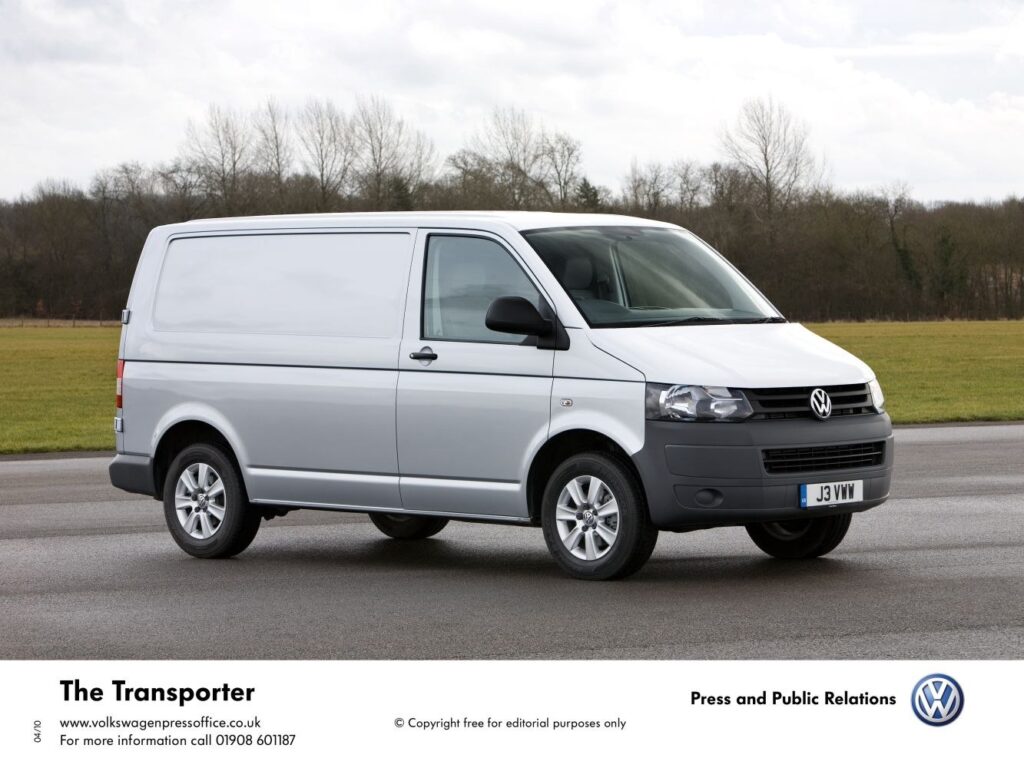
The Volkswagen Transporter, a name synonymous with versatility and reliability in the light commercial vehicle (LCV) segment, saw its fifth generation (T5) receive a significant facelift in 2009. This iteration, produced from 2011 to 2015, continued to build upon the Transporter’s legendary heritage, offering a blend of robust utility and car-like driving dynamics. Specifically, the Volkswagen Transporter (T5, facelift 2009) Panel Van 2.0 TSI (204 Hp) 4MOTION DSG L2H2 configuration represented a top-tier offering, combining a potent gasoline engine with an advanced all-wheel-drive system and an efficient automatic transmission. While primarily a staple in European and other international markets, where it served a myriad of professional and private uses, this model showcased Volkswagen’s commitment to engineering sophisticated and capable vans. Its L2H2 designation indicated a long wheelbase and a high roof, maximizing cargo volume for businesses requiring substantial carrying capacity, all while delivering a surprisingly spirited performance for its class.
Engine and Performance
At the heart of this particular Transporter T5 variant was a highly advanced 2.0-liter TSI (Turbocharged Stratified Injection) gasoline engine, an iteration of Volkswagen’s renowned EA888 engine family (code CJKA). This inline four-cylinder powerplant, featuring direct fuel injection, a turbocharger, and an intercooler, was engineered to deliver an impressive output for a commercial vehicle of its stature. It generated a robust 204 horsepower at a broad range of 4200-6000 rpm, paired with a substantial 258.15 lb.-ft. of torque available from a low 1500 rpm all the way up to 4000 rpm. This wide torque band ensured excellent pulling power across varying load conditions and made for a responsive driving experience.
Power was efficiently managed by a 7-speed DSG (Direct Shift Gearbox) automatic transmission. This dual-clutch unit was celebrated for its rapid, seamless gear changes, contributing to both performance and fuel efficiency. Further enhancing its capability, especially in adverse conditions or on challenging terrain, was Volkswagen’s 4MOTION all-wheel-drive system. This sophisticated drivetrain architecture primarily drove the front wheels, engaging the rear wheels via an electrically or mechanically operated clutch only when additional traction was needed. This on-demand system optimized fuel consumption while providing crucial grip when required, making the Transporter a highly adaptable vehicle for diverse professional needs.
Performance figures for the 2.0 TSI (204 Hp) 4MOTION DSG L2H2 were notable for a panel van. It could accelerate from 0 to 60 mph in a brisk 8.5 seconds, reaching a maximum speed of 118.68 mph. Despite its power, Volkswagen aimed for reasonable efficiency for its time. The combined fuel economy (NEDC standard) was rated between 22.4 and 22.8 US mpg, with CO2 emissions ranging from 239-245 g/km, meeting the Euro 5 emission standard. The engine’s power-to-weight ratio stood at 105.5 Hp per tonne, and its torque-to-weight ratio at 181 Nm per tonne, underscoring its dynamic capabilities.
Design and Features of the Volkswagen Transporter (T5, facelift 2009) Panel Van
The T5 facelift brought a refreshed exterior design, aligning it with Volkswagen’s contemporary passenger car lineup while maintaining its inherently functional aesthetic. As a panel van, its primary focus was utility, characterized by its robust and straightforward body. The L2H2 designation was particularly significant, indicating a long wheelbase of 133.86 inches (3400 mm) and a high roof, which translated into an enormous cargo volume. The maximum trunk (boot) space was an impressive 7800 liters, or 275.45 cubic feet, making it ideal for large deliveries, equipment transport, or specialist conversions.
The interior, while focused on durability and ergonomics for commercial use, also offered a comfortable and practical environment for its 2-3 occupants. The dashboard layout was intuitive, with controls easily accessible to the driver. Storage solutions were integrated throughout the cabin to accommodate documents, tools, and personal items. Visibility was excellent, crucial for navigating urban environments and tight loading docks.
Underneath its utilitarian skin, the Transporter featured a sophisticated chassis. The front suspension utilized an independent McPherson strut design with coil springs and an anti-roll bar, while the rear employed an independent coil spring system with a transverse stabilizer and trailing arms. This setup contributed to the Transporter’s car-like handling and ride comfort, a significant differentiator in the van segment. Braking performance was ensured by ventilated discs at both the front (340×32.5 mm) and rear (294×22 mm), complemented by an Anti-lock Braking System (ABS). The hydraulic rack-and-pinion power steering provided direct feedback and ease of maneuverability, despite the vehicle’s considerable dimensions (length: 208.35 inches, width: 74.96 inches, height: 85.67 inches). Standard tire sizes ranged from 215/60 R17 to 255/45 R18, mounted on 17-inch or 18-inch wheels, further enhancing its roadholding capabilities.
Technical Specifications
| Volkswagen Transporter (T5, facelift 2009) Panel Van 2.0 TSI (204 Hp) 4MOTION DSG L2H2 | |
|---|---|
| General Information | |
| Brand | Volkswagen |
| Model | Transporter |
| Generation | Transporter (T5, facelift 2009) Panel Van |
| Type (Engine) | 2.0 TSI (204 Hp) 4MOTION DSG L2H2 |
| Start of Production | 2011 year |
| End of Production | 2015 year |
| Powertrain Architecture | Internal Combustion engine |
| Body Type | Van |
| Seats | 2-3 |
| Doors | 4-5 |
| Performance Specs | |
| Fuel consumption (economy) – urban (NEDC) | 13.8-14 l/100 km (16.8-17 US mpg) |
| Fuel consumption (economy) – extra urban (NEDC) | 8.3-8.5 l/100 km (27.7-28.3 US mpg) |
| Fuel consumption (economy) – combined (NEDC) | 10.3-10.5 l/100 km (22.4-22.8 US mpg) |
| CO2 emissions (NEDC) | 239-245 g/km |
| Fuel Type | Petrol (Gasoline) |
| Acceleration 0 – 60 mph | 8.5 sec |
| Maximum speed | 191 km/h (118.68 mph) |
| Emission standard | Euro 5 |
| Weight-to-power ratio | 9.5 kg/Hp (105.5 Hp/tonne) |
| Weight-to-torque ratio | 5.5 kg/Nm (181 Nm/tonne) |
| Engine Specs | |
| Power | 204 Hp @ 4200-6000 rpm |
| Power per liter | 102.8 Hp/l |
| Torque | 350 Nm (258.15 lb.-ft.) @ 1500-4000 rpm |
| Engine layout | Front, Transverse |
| Engine Model/Code | EA888 / CJKA |
| Engine displacement | 1984 cm3 (2.0 liters / 121.07 cu. in.) |
| Number of cylinders | 4 |
| Engine configuration | Inline |
| Cylinder Bore | 82.5 mm (3.25 in.) |
| Piston Stroke | 92.8 mm (3.65 in.) |
| Compression ratio | 9.8:1 |
| Number of valves per cylinder | 4 |
| Fuel injection system | Direct injection |
| Engine aspiration | Turbocharger, Intercooler |
| Valvetrain | DOHC |
| Engine oil capacity | 5.7 l (6.02 US qt) |
| Coolant capacity | 11 l (11.62 US qt) |
| Space, Volume and Weights | |
| Kerb Weight | 1934-2351 kg (4263.74-5183.07 lbs.) |
| Max. weight | 3000-3200 kg (6613.87-7054.79 lbs.) |
| Max load | 849-1066 kg (1871.72-2350.13 lbs.) |
| Trunk (boot) space – maximum | 7800 l (275.45 cu. ft.) |
| Fuel tank capacity | 80 l (21.13 US gal) |
| Permitted trailer load with brakes (12%) | 2500 kg (5511.56 lbs.) |
| Permitted trailer load without brakes | 750 kg (1653.47 lbs.) |
| Permitted towbar download | 100 kg (220.46 lbs.) |
| Dimensions | |
| Length | 5292 mm (208.35 in.) |
| Width | 1904 mm (74.96 in.) |
| Width including mirrors | 2283 mm (89.88 in.) |
| Height | 2176 mm (85.67 in.) |
| Wheelbase | 3400 mm (133.86 in.) |
| Front overhang | 896 mm (35.28 in.) |
| Rear overhang | 996 mm (39.21 in.) |
| Ride height (ground clearance) | 201 mm (7.91 in.) |
| Minimum turning circle (turning diameter) | 13.2 m (43.31 ft.) |
| Approach angle | 21° |
| Departure angle | 17° |
| Ramp-over (brakeover) angle | 12° |
| Drivetrain, Brakes and Suspension Specs | |
| Drivetrain Architecture | The Internal combustion engine (ICE) drives the front wheels permanently, and the rear wheels are driven through an electrically or mechanically operated clutch if necessary. |
| Drive wheel | All wheel drive (4×4) |
| Number of gears and type of gearbox | 7 gears, automatic transmission DSG |
| Front suspension | Independent, type McPherson with coil spring and anti-roll bar |
| Rear suspension | Independent coil spring, Transverse stabilizer, Trailing arm |
| Front brakes | Ventilated discs, 340×32.5 mm |
| Rear brakes | Ventilated discs, 294×22 mm |
| Assisting systems | ABS (Anti-lock braking system) |
| Steering type | Steering rack and pinion |
| Power steering | Hydraulic Steering |
| Tires size | 215/60 R17; 235/55 R17; 255/45 R18 |
| Wheel rims size | 7J x 17; 8J x 18 |
Legacy and Market Impact
The Volkswagen Transporter T5, especially its facelifted version from 2009 onwards, solidified its position as a benchmark in the European and global LCV markets. The 2.0 TSI (204 Hp) 4MOTION DSG L2H2 variant, in particular, carved out a niche for businesses and individuals seeking a powerful, all-weather-capable, and refined panel van. Its combination of a potent gasoline engine, advanced DSG transmission, and intelligent 4MOTION all-wheel drive offered a driving experience that was uncharacteristic for a commercial vehicle, often compared favorably to passenger cars.
In its primary markets, the Transporter competed fiercely with rivals such as the Mercedes-Benz Vito, Ford Transit Custom, Renault Trafic, and Fiat Ducato. What set the Transporter apart was its perceived premium quality, strong brand image, and a broader range of sophisticated powertrain options, including this high-output gasoline variant. While diesel engines typically dominated the LCV segment due to their torque characteristics and fuel efficiency, the 2.0 TSI offered a compelling alternative for those prioritizing smoother operation, lower NVH (noise, vibration, harshness), and a more car-like driving feel, often favored in urban delivery or specialized service roles. The 4MOTION system also provided a distinct advantage for customers operating in regions with challenging weather or requiring off-road capability for construction sites or remote locations.
The Transporter’s legacy is deeply intertwined with its consistent evolution and ability to adapt to changing market demands while retaining its core values of practicality and durability. The T5 generation, and specifically the facelifted models, continued the tradition of strong residual values, a testament to their robust engineering and enduring popularity. While the panel van variant was not widely marketed in the United States due to various factors, including the “chicken tax” on imported light trucks and a market preference for larger, domestically produced vans at the time, its impact across Europe, Australia, and parts of Asia was profound. It represented a sophisticated, capable, and highly versatile commercial vehicle that seamlessly blended utility with advanced automotive technology, ensuring its place as a significant chapter in the storied history of the Volkswagen Transporter line.