<!DOCTYPE html>
<html lang=”en”>
<head>
<meta charset=”UTF-8″>
<meta name=”viewport” content=”width=device-width, initial-scale=1.0″>
<title>Peugeot 3008 II (Phase I, 2016) 1.2 PureTech (130 Hp) S&S</title>
<style>
body { font-family: Arial, sans-serif; line-height: 1.6; color: #333; }
h2, h3 { color: #0056b3; }
table { width: 100%; border-collapse: collapse; margin-bottom: 20px; }
th, td { border: 1px solid #ddd; padding: 8px; text-align: left; }
th { background-color: #f2f2f2; }
p { margin-bottom: 10px; }
</style>
</head>
<body>
<h2>Peugeot 3008 II (Phase I, 2016) 1.2 PureTech (130 Hp) S&S</h2>
<p>
The <strong>Peugeot 3008 II (Phase I, 2016) 1.2 PureTech (130 Hp) S&S</strong> represents a pivotal moment for the French automaker, marking a dramatic shift from its predecessor’s multi-purpose vehicle (MPV) styling to a more contemporary and highly successful compact SUV. Launched in 2016, this second-generation 3008 quickly established itself as a formidable contender in the fiercely competitive European C-segment SUV market, ultimately earning the prestigious European Car of the Year award in 2017. While not officially sold in the United States, the 3008 became a benchmark in its primary markets, particularly across Europe and parts of Asia, for its striking design, sophisticated interior, and efficient powertrain options. The specific variant, equipped with the 1.2-liter PureTech turbocharged gasoline engine delivering 130 horsepower and featuring a Start & Stop (S&S) system, highlighted Peugeot’s commitment to combining performance with environmental responsibility and fuel economy.
</p>
<h2>Engine and Performance of the Peugeot 3008 II (Phase I, 2016) 1.2 PureTech (130 Hp) S&S</h2>
<p>
At the heart of this particular <strong>Peugeot 3008 II (Phase I, 2016)</strong> model lies Peugeot’s acclaimed 1.2-liter PureTech (HNY EB2DTS) inline three-cylinder gasoline engine. This compact yet potent powerplant is a testament to modern engine downsizing, employing direct fuel injection and a turbocharger with an intercooler to extract impressive performance from its small displacement of 1199 cubic centimeters (73.17 cubic inches). The engine generates a respectable 130 horsepower at 5500 rpm, delivering a power-to-liter ratio of 108.4 Hp/l, which is excellent for its class.
</p>
<p>
More crucially for everyday driving, the 1.2 PureTech engine produces a robust 230 Newton-meters (approximately 169.64 lb.-ft.) of torque, available at a low 1750 rpm. This broad torque band ensures brisk acceleration and flexible performance, making the 3008 feel responsive in urban environments and capable on highways. Mated to a precise 6-speed manual transmission, the front-wheel-drive SUV can accelerate from 0 to 60 mph in a swift 10.3 seconds, reaching a maximum speed of 116.82 mph (188 km/h).
</p>
<p>
Fuel efficiency was a key focus for this powertrain, especially in the European market. The 3008 1.2 PureTech S&S boasts an impressive combined fuel economy ranging from 43.6 to 46.1 US mpg (5.1-5.4 l/100 km). Urban driving sees figures between 36.8 and 39.2 US mpg (6.0-6.4 l/100 km), while extra-urban consumption can reach an excellent 48 to 52.3 US mpg (4.5-4.9 l/100 km). These figures are significantly aided by the standard Start & Stop system, which automatically shuts off the engine when the vehicle is stationary, reducing fuel consumption and CO2 emissions in city traffic. With CO2 emissions rated between 117-124 g/km, the vehicle complies with the stringent Euro 6 emission standard, highlighting its environmental credentials.
</p>
<h3>Design and Features</h3>
<p>
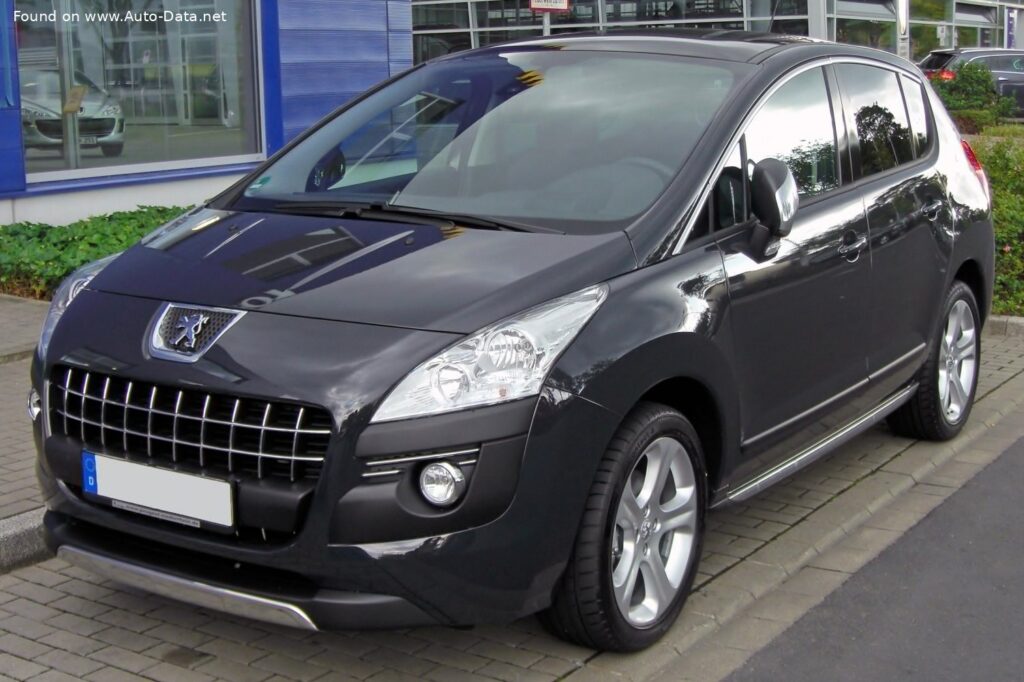
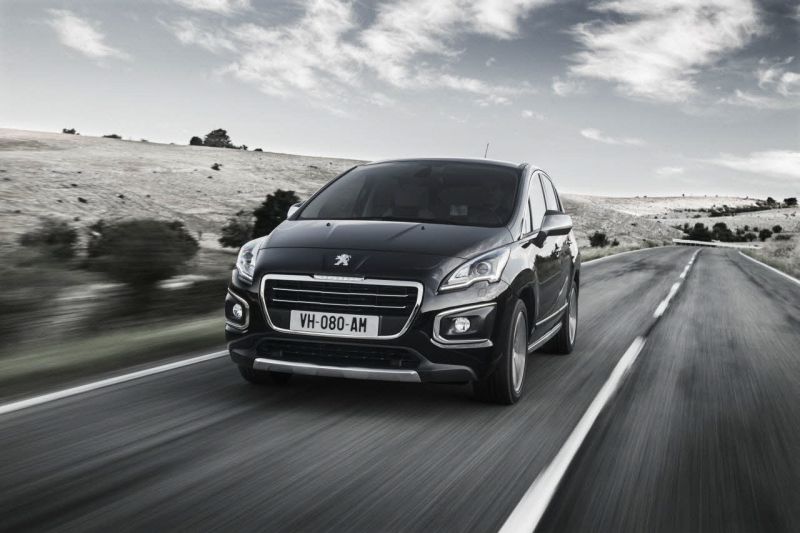
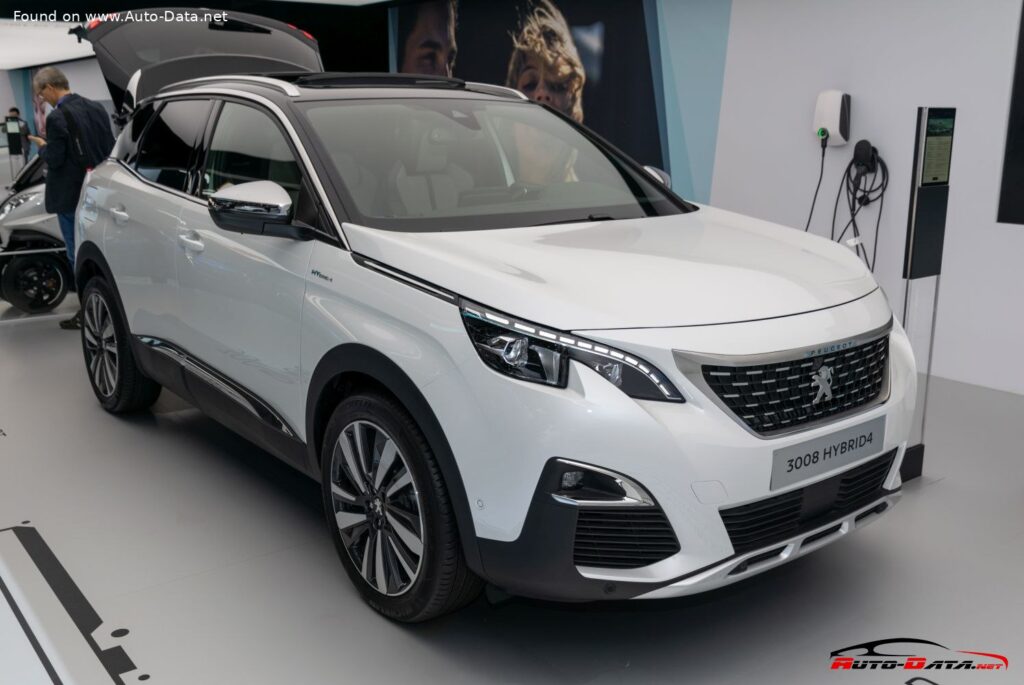
The second-generation <strong>Peugeot 3008</strong> introduced a radical design philosophy that propelled it to the forefront of the compact SUV segment. Its aggressive and modern styling, characterized by sharp lines, a bold grille, and distinctive “claw-effect” LED taillights, immediately set it apart from its more conventional rivals. The SUV body type, with its five doors and seating for five occupants, offers a practical and versatile package.
</p>
<p>
Dimensionally, the 3008 is well-proportioned for its class, with a length of 175.08 inches (4447 mm), a width of 72.48 inches (1841 mm), and a height of 63.58 inches (1615 mm). Its generous 105.31-inch (2675 mm) wheelbase contributes to a stable ride and ample interior space. With a ground clearance of 8.62 inches (219 mm), it offers a confident stance and a degree of capability on varied terrain, though its primary focus remains on-road performance. The turning circle of 35.01 feet (10.67 m) makes it maneuverable in urban settings.
</p>
<p>
Inside, the 3008’s cabin was revolutionary, featuring Peugeot’s “i-Cockpit” design. This included a small, sporty steering wheel, a configurable 12.3-inch digital instrument cluster (not explicitly stated in the provided data but a hallmark of this generation), and a central touchscreen infotainment system. While specific infotainment details are not provided, the overall design emphasized ergonomics and a premium feel, typically including features like automatic climate control, various connectivity options, and advanced driver-assistance systems for its time. Practicality is strong, with a minimum trunk space of 18.36 cubic feet (520 liters), expanding to an impressive 52.34 cubic feet (1482 liters) with the rear seats folded, making it suitable for families and cargo hauling. Safety features for the 2016 model year included standard Anti-lock Braking System (ABS) and electric power steering, with more advanced active safety systems often available as options. The vehicle rides on a choice of 17, 18, or 19-inch wheels, shod with tires ranging from 215/65 R17 to 205/55 R19.
</p>
<h3>Technical Specifications</h3>
<table>
<thead>
<tr>
<th>Category</th>
<th>Specification</th>
<th>US Equivalent (where applicable)</th>
</tr>
</thead>
<tbody>
<tr><td colspan=”3″><strong>General Information</strong></td></tr>
<tr><td>Brand</td><td>Peugeot</td><td></td></tr>
<tr><td>Model</td><td>3008</td><td></td></tr>
<tr><td>Generation</td><td>3008 II (Phase I, 2016)</td><td></td></tr>
<tr><td>Engine Type</td><td>1.2 PureTech (130 Hp) S&S</td><td></td></tr>
<tr><td>Production Start</td><td>2016 year</td><td></td></tr>
<tr><td>Production End</td><td>2018 year</td><td></td></tr>
<tr><td>Powertrain Architecture</td><td>Internal Combustion engine</td><td></td></tr>
<tr><td>Body Type</td><td>SUV</td><td></td></tr>
<tr><td>Seats</td><td>5</td><td></td></tr>
<tr><td>Doors</td><td>5</td><td></td></tr>
<tr><td colspan=”3″><strong>Performance Specs</strong></td></tr>
<tr><td>Fuel Consumption (Urban)</td><td>6.0-6.4 l/100 km</td><td>36.8 – 39.2 US mpg</td></tr>
<tr><td>Fuel Consumption (Extra Urban)</td><td>4.5-4.9 l/100 km</td><td>48 – 52.3 US mpg</td></tr>
<tr><td>Fuel Consumption (Combined)</td><td>5.1-5.4 l/100 km</td><td>43.6 – 46.1 US mpg</td></tr>
<tr><td>CO2 Emissions</td><td>117-124 g/km</td><td></td></tr>
<tr><td>Fuel Type</td><td>Petrol (Gasoline)</td><td></td></tr>
<tr><td>Acceleration 0 – 60 mph</td><td>10.3 sec</td><td></td></tr>
<tr><td>Maximum Speed</td><td>188 km/h</td><td>116.82 mph</td></tr>
<tr><td>Emission Standard</td><td>Euro 6</td><td></td></tr>
<tr><td>Weight-to-Power Ratio</td><td>9.6 kg/Hp</td><td>104 Hp/tonne</td></tr>
<tr><td>Weight-to-Torque Ratio</td><td>5.4 kg/Nm</td><td>184 Nm/tonne</td></tr>
<tr><td colspan=”3″><strong>Engine Specs</strong></td></tr>
<tr><td>Power</td><td>130 Hp @ 5500 rpm</td><td></td></tr>
<tr><td>Power per Liter</td><td>108.4 Hp/l</td><td></td></tr>
<tr><td>Torque</td><td>230 Nm @ 1750 rpm</td><td>169.64 lb.-ft. @ 1750 rpm</td></tr>
<tr><td>Engine Layout</td><td>Front, Transverse</td><td></td></tr>
<tr><td>Engine Model/Code</td><td>HNY EB2DTS</td><td></td></tr>
<tr><td>Engine Displacement</td><td>1199 cm<sup>3</sup></td><td>1.2 Liters / 73.17 cu. in.</td></tr>
<tr><td>Number of Cylinders</td><td>3</td><td></td></tr>
<tr><td>Engine Configuration</td><td>Inline</td><td></td></tr>
<tr><td>Cylinder Bore</td><td>75 mm</td><td>2.95 in.</td></tr>
<tr><td>Piston Stroke</td><td>90.5 mm</td><td>3.56 in.</td></tr>
<tr><td>Valves per Cylinder</td><td>4</td><td></td></tr>
<tr><td>Fuel Injection System</td><td>Direct injection</td><td></td></tr>
<tr><td>Engine Aspiration</td><td>Turbocharger, Intercooler</td><td></td></tr>
<tr><td>Engine Oil Capacity</td><td>3.5 l</td><td>3.7 US qt</td></tr>
<tr><td>Engine Systems</td><td>Start & Stop System</td><td></td></tr>
<tr><td colspan=”3″><strong>Space, Volume and Weights</strong></td></tr>
<tr><td>Kerb Weight</td><td>1250 kg</td><td>2755.78 lbs.</td></tr>
<tr><td>Max. Weight</td><td>1910 kg</td><td>4210.83 lbs.</td></tr>
<tr><td>Max Load</td><td>660 kg</td><td>1455.05 lbs.</td></tr>
<tr><td>Trunk (Boot) Space – Minimum</td><td>520 l</td><td>18.36 cu. ft.</td></tr>
<tr><td>Trunk (Boot) Space – Maximum</td><td>1482 l</td><td>52.34 cu. ft.</td></tr>
<tr><td>Fuel Tank Capacity</td><td>53 l</td><td>14 US gal</td></tr>
<tr><td>