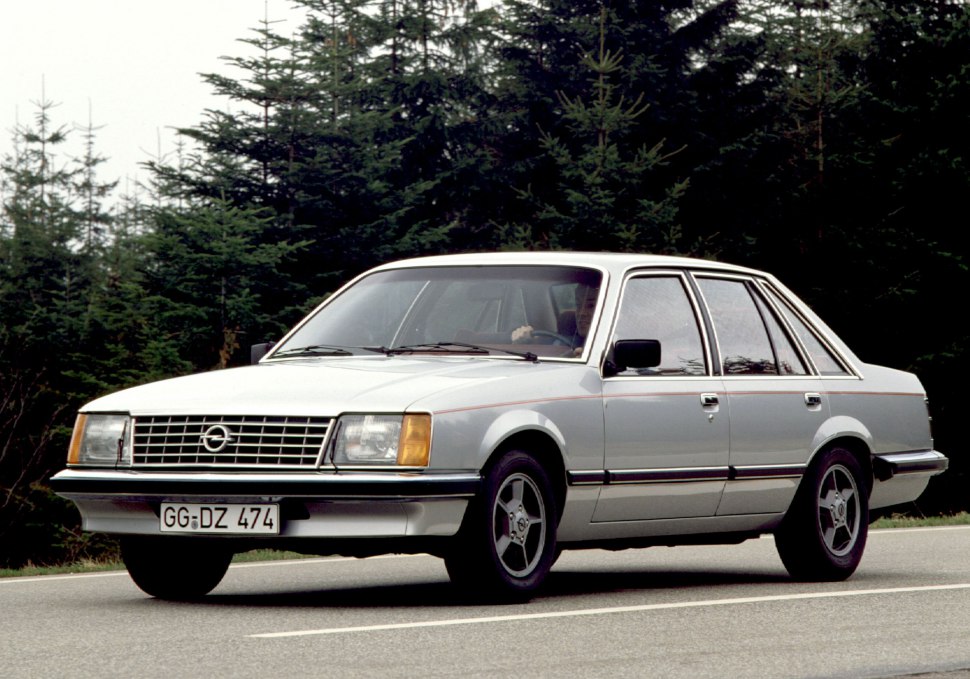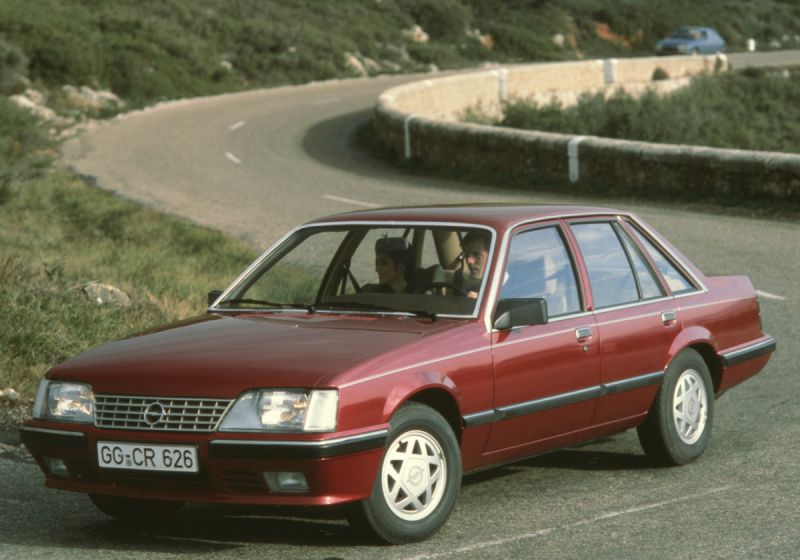
The Opel Senator A (facelift 1982) 3.0 E (180 Hp): A European Executive Sedan Icon
The Opel Senator A (facelift 1982) 3.0 E (180 Hp) represents a significant chapter in Opel’s history, serving as the flagship executive sedan for General Motors’ European division during the early to mid-1980s. Launched in 1978, the Senator A was Opel’s ambitious entry into the fiercely competitive European luxury car segment, aiming to rival established players from Mercedes-Benz and BMW. The 1982 facelift introduced a series of refinements, both aesthetic and mechanical, solidifying its position as a comfortable, powerful, and well-engineered grand tourer. While never officially imported to the United States under the Opel badge, its underlying platform and engineering principles were shared with other GM products, giving it a tangential connection to American automotive design philosophy of the era. This particular variant, the 3.0 E, stood out as the performance pinnacle of the Senator A range, offering a compelling blend of straight-six power and refined driving dynamics.
Evolution and Market Positioning of the Opel Senator A (facelift 1982) 3.0 E (180 Hp)
The original Senator A debuted alongside its coupé sibling, the Monza, built on the same V-platform, which was an elongated version of the Rekord E’s underpinnings. The 1982 facelift, often referred to as the Senator A2 (or Monza A2 for the coupé), brought a more aerodynamic and contemporary appearance. Key visual changes included a revised front fascia with new headlights and grille, updated taillights, and more integrated bumpers, all contributing to a lower drag coefficient of 0.39, a respectable figure for a large sedan of its time. Internally, the facelift aimed to enhance the car’s perceived luxury and comfort, with improved materials and updated instrumentation. The Senator A was positioned as a sensible, value-oriented alternative to its more expensive German rivals, offering generous space, robust engineering, and a strong emphasis on comfortable long-distance cruising. Its primary market was continental Europe, where it competed for executive and government fleet sales, as well as discerning private buyers seeking a blend of performance and practicality.
Engine & Performance: The Heart of the Opel Senator A (facelift 1982) 3.0 E (180 Hp)
At the core of the Opel Senator A (facelift 1982) 3.0 E (180 Hp) was Opel’s venerable “CIH” (Cam-in-Head) inline-six engine, specifically the 30E variant. This naturally aspirated, front-longitudinal powerplant displaced 2,969 cubic centimeters (approximately 3.0 Liters) and was a testament to Opel’s engineering prowess in creating smooth, durable, and relatively powerful engines. With a bore of 3.74 inches and a stroke of 2.75 inches, along with a compression ratio of 9.4:1, the engine delivered a robust 180 horsepower at 5800 rpm. This output translated to a power-per-liter figure of 60.6 Hp/l, which was competitive for a non-turbocharged engine of its era.
Torque production was equally impressive, with 248 Newton-meters (182.92 lb.-ft.) available at 4200 rpm, providing ample pulling power across the rev range. This strong torque figure, combined with the 180 horsepower, enabled the Senator 3.0 E to achieve compelling performance. It could accelerate from 0 to 60 mph in a swift 8.6 seconds and reach a top speed of 130.49 mph (210 km/h). These figures placed it firmly in the performance bracket of executive sedans of its time, offering brisk acceleration and effortless highway cruising.
Power was delivered to the rear wheels via a 5-speed manual transmission, a choice that appealed to driving enthusiasts seeking a more engaging experience. The drivetrain architecture, with its front-longitudinal engine and rear-wheel drive, was a classic setup for a performance-oriented executive car, ensuring balanced handling characteristics. Fuel economy, while not a primary concern for such a vehicle, was respectable for the period, averaging 21.8 US mpg (10.8 l/100 km) in combined driving, with extra-urban figures reaching 30.9 US mpg (7.6 l/100 km). The multi-port manifold injection system ensured precise fuel delivery and improved efficiency compared to carbureted predecessors. The engine’s substantial 5.5-liter oil capacity and 10.1-liter coolant capacity underscored its design for durability and sustained high-speed operation.
Design and Features: Executive Comfort and Practicality
The Opel Senator A (facelift 1982) 3.0 E (180 Hp) was conceived as a full-size, 4-door, 5-seat sedan, prioritizing passenger comfort and luggage capacity. Its exterior dimensions – a length of 190.51 inches, a width of 67.8 inches, and a height of 55.71 inches – provided a commanding presence on the road. The 105.63-inch wheelbase contributed significantly to its stable ride and generous interior space, particularly for rear passengers. The facelifted model featured a more modern and streamlined aesthetic, with flush-fitting headlights and a redesigned grille that gave it a more contemporary look compared to the original A1 generation. The overall design was understated yet elegant, reflecting its executive aspirations.
Inside, the Senator offered a spacious and well-appointed cabin. While specific luxury features varied by trim, the 3.0 E model typically included amenities such as power windows, central locking, and a sophisticated heating and ventilation system. The seats were designed for long-distance comfort, often upholstered in velour or optional leather. Instrumentation was clear and driver-focused, providing all necessary information at a glance. Practicality was a strong suit, with a cavernous trunk space of 25.25 cubic feet (715 liters), making it ideal for family trips or business travel. The substantial 19.81 US gallon (75-liter) fuel tank further enhanced its grand touring capabilities, allowing for extended ranges between fill-ups.
Underneath, the Senator A featured an independent suspension setup both front and rear. The front utilized a McPherson strut design with coil springs and an anti-roll bar, while the rear employed an independent coil spring system with a transverse stabilizer and trailing arms. This configuration provided a comfortable ride quality while maintaining competent handling for a large sedan. Braking was handled by ventilated discs at the front and solid discs at the rear, offering reliable stopping power. The hydraulic power steering, utilizing a cone worm with recirculation balls, provided a good balance of assist and road feel, making the large sedan maneuverable despite its size. The 195/70 R14 tires mounted on 6J x 14-inch wheel rims were standard for the period, prioritizing comfort and grip.
Technical Specifications: Opel Senator A (facelift 1982) 3.0 E (180 Hp)
| Category | Specification | Value |
|---|---|---|
| General Information | ||
| Brand | Opel | |
| Model | Senator | |
| Generation | Senator A (facelift 1982) | |
| Type (Engine) | 3.0 E (180 Hp) | |
| Start of Production | 1982 year | |
| End of Production | 1986 year | |
| Powertrain Architecture | Internal Combustion engine | |
| Body type | Sedan | |
| Seats | 5 | |
| Doors | 4 | |
| Performance Specs | ||
| Fuel consumption (economy) – urban | 14.9 l/100 km (15.8 US mpg) | |
| Fuel consumption (economy) – extra urban | 7.6 l/100 km (30.9 US mpg) | |
| Fuel consumption (economy) – combined | 10.8 l/100 km (21.8 US mpg) | |
| Fuel Type | Petrol (Gasoline) | |
| Acceleration 0 – 60 mph | 8.6 sec | |
| Maximum speed | 210 km/h (130.49 mph) | |
| Weight-to-power ratio | 7.6 kg/Hp (131.4 Hp/tonne) | |
| Weight-to-torque ratio | 5.5 kg/Nm (181 Nm/tonne) | |
| Engine Specs | ||
| Power | 180 Hp @ 5800 rpm | |
| Power per liter | 60.6 Hp/l | |
| Torque | 248 Nm (182.92 lb.-ft.) @ 4200 rpm | |
| Engine layout | Front, Longitudinal | |
| Engine Model/Code | 30E | |
| Engine displacement | 2969 cm3 (181.18 cu. in.) | |
| Number of cylinders | 6 | |
| Engine configuration | Inline | |
| Cylinder Bore | 95 mm (3.74 in.) | |
| Piston Stroke | 69.8 mm (2.75 in.) | |
| Compression ratio | 9.4:1 | |
| Number of valves per cylinder | 2 | |
| Fuel injection system | Multi-port manifold injection | |
| Engine aspiration | Naturally aspirated engine | |
| Valvetrain | CIH | |
| Engine oil capacity | 5.5 l (5.81 US qt) | |
| Coolant | 10.1 l (10.67 US qt) | |
| Space, Volume and Weights | ||
| Kerb Weight | 1370 kg (3020.33 lbs.) | |
| Max. weight | 1935 kg (4265.94 lbs.) | |
| Max load | 565 kg (1245.61 lbs.) | |
| Trunk (boot) space – minimum | 715 l (25.25 cu. ft.) | |
| Fuel tank capacity | 75 l (19.81 US gal) | |
| Max. roof load | 80 kg (176.37 lbs.) | |
| Permitted trailer load with brakes (12%) | 1700 kg (3747.86 lbs.) | |
| Permitted trailer load without brakes | 700 kg (1543.24 lbs.) | |
| Dimensions | ||
| Length | 4839 mm (190.51 in.) | |
| Width | 1722 mm (67.8 in.) | |
| Height | 1415 mm (55.71 in.) | |
| Wheelbase | 2683 mm (105.63 in.) | |
| Front track | 1447 mm (56.97 in.) | |
| Rear (Back) track | 1472 mm (57.95 in.) | |
| Front overhang | 891 mm (35.08 in.) | |
| Rear overhang | 1265 mm (49.8 in.) | |
| Ride height (ground clearance) | 140 mm (5.51 in.) | |
| Drag coefficient (Cd) | 0.39 | |
| Minimum turning circle (turning diameter) | 10.8 m (35.43 ft.) | |
| Drivetrain, Brakes and Suspension Specs | ||
| Drivetrain Architecture | The Internal combustion engine (ICE) drives the rear wheels of the vehicle. | |
| Drive wheel | Rear wheel drive | |
| Number of gears and type of gearbox | 5 gears, manual transmission | |
| Front suspension | Independent, type McPherson with coil spring and anti-roll bar | |
| Rear suspension | Independent coil spring, Transverse stabilizer, Trailing arm | |
| Front brakes | Ventilated discs | |
| Rear brakes | Disc | |
| Steering type | Cone worm with recirculation balls | |
| Power steering | Hydraulic Steering | |
| Tires size | 195/70 R14 | |
| Wheel rims size | 6J x 14 | |
Legacy and Market Impact
The Opel Senator A (facelift 1982) 3.0 E (180 Hp) carved out a respectable niche for itself in the European executive car market. It was a well-regarded contender against rivals such as the Ford Granada/Scorpio, Peugeot 604, and even the entry-level models of the Mercedes-Benz E-Class (W123/W124) and BMW 5 Series (E28). While it often lacked the ultimate brand prestige of its German luxury counterparts, the Senator offered a compelling package of comfort, performance, and value. Its reputation was built on its robust mechanicals, spacious interior, and composed ride, particularly suited for long-distance highway travel across Europe.
The Senator’s significance for Opel was profound. It demonstrated that the brand could produce a sophisticated and competitive large car, challenging the notion that only premium marques could excel in this segment. The 3.0 E, in particular, showcased Opel’s ability to deliver genuine performance. Its inline-six engine was praised for its smoothness and durability, contributing to the Senator’s image as a reliable and understated workhorse for executives and families alike.
Although the Opel Senator A was never officially sold in the United States, its DNA resonated with General Motors’ global strategy. Its platform and engineering informed other GM products, highlighting the interconnectedness of automotive development across different markets. In Europe, it maintained a solid presence throughout its production run, laying the groundwork for its successor, the Senator B, which continued Opel’s pursuit of the executive segment. Today, the Opel Senator A, especially in its powerful 3.0 E facelift guise, is remembered as a classic European executive car, appreciated by enthusiasts for its blend of traditional rear-wheel-drive dynamics, comfortable ride, and solid construction, representing a golden era for Opel’s engineering ambition. It stands as a testament to European automotive design and engineering of the 1980s, a period marked by a strong emphasis on driving refinement and understated luxury.