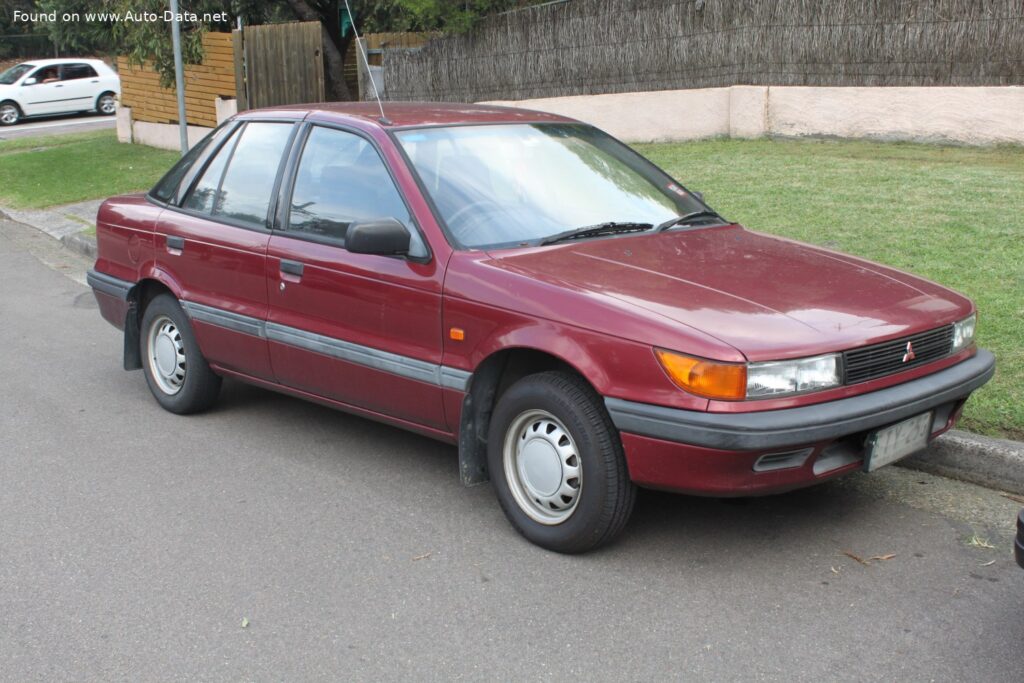
The Mitsubishi Lancer IV Hatchback 1.3 12V (C61A) (75 Hp) Automatic: A Global Compact Workhorse
The Mitsubishi Lancer, a nameplate synonymous with reliability and versatility across multiple generations, saw its fourth iteration (known internally as the C60 series for front-wheel drive models) introduced in 1988. Among the myriad variants offered globally, the
Mitsubishi Lancer IV Hatchback 1.3 12V (C61A) (75 Hp) Automatic
represented a practical and economical choice, primarily targeting markets in Europe, Asia, and other regions where compact dimensions, fuel efficiency, and ease of use were paramount. Produced for a brief but impactful period between 1991 and 1992, this particular model combined the utility of a five-door hatchback with a modest yet capable 1.3-liter engine and a convenient automatic transmission, positioning it as an ideal daily commuter and family car in its segment. While the Lancer name gained significant recognition in North America through its more performance-oriented Evolution variants or as a sedan competitor, this specific hatchback, especially with its smaller engine and automatic gearbox, was a distinctly European and Asian market offering, emphasizing accessibility and low running costs over outright power or luxury.
The fourth-generation Lancer, often referred to as the Lancer IV, marked a significant evolution in Mitsubishi’s compact car strategy. It built upon the foundations of its predecessors, enhancing aerodynamics, interior space, and overall refinement. The hatchback body style, a popular choice in many international markets, offered a compelling blend of passenger comfort and cargo flexibility. The 1.3 12V (C61A) variant with its 75 horsepower engine and automatic transmission was engineered for urban environments and suburban commutes, where its nimble size and straightforward operation shone brightest. It embodied the Japanese automotive philosophy of the era: reliable, efficient, and well-built transportation for the masses.
Engine & Performance of the Mitsubishi Lancer IV Hatchback 1.3 12V (C61A) (75 Hp) Automatic
At the heart of the
Mitsubishi Lancer IV Hatchback 1.3 12V (C61A) (75 Hp) Automatic
was a transversely mounted, naturally aspirated 1.3-liter (1299 cm³) inline-four gasoline engine. This powerplant, designated C61A, was a testament to Mitsubishi’s engineering prowess in producing durable and efficient small-displacement engines. Featuring an OHC (Overhead Camshaft) valvetrain and 12 valves (three per cylinder), it delivered a respectable 75 horsepower at 6000 rpm. The engine’s power output per liter stood at 57.7 Hp/l, a competitive figure for its time and class. Torque was rated at 102 Nm (75.23 lb.-ft.) available at a moderate 4000 rpm, indicating a powerplant designed for smooth, accessible power delivery rather than high-revving performance.
Fueling for this engine was managed by a carburettor system, a common technology in the early 1990s before widespread adoption of electronic fuel injection. This setup contributed to the engine’s simplicity and robustness. The compression ratio was a healthy 9.5:1, aiding in efficiency. With a bore of 71 mm and a piston stroke of 82 mm, it was a relatively undersquare design, typically favoring torque production.
Mated to this engine was a 3-speed automatic transmission. While modern automatics boast many more gears, a 3-speed unit was typical for entry-level and economy cars of this period, prioritizing simplicity and cost-effectiveness. The drivetrain architecture was front-wheel drive, with the internal combustion engine driving the front wheels, a configuration known for its packaging efficiency and predictable handling characteristics in compact cars. This powertrain allowed the Lancer IV Hatchback to achieve a top speed of 163 km/h (101.28 mph). Fuel economy figures were quite impressive for the era, with urban consumption at 9 l/100 km (26.1 US mpg) and extra-urban consumption dropping to 6 l/100 km (39.2 US mpg), making it a truly economical vehicle to operate. Its weight-to-power ratio was 12.3 kg/Hp (81.5 Hp/tonne), reflecting its lightweight construction and adequate performance for its segment.
Design & Features
The design of the Mitsubishi Lancer IV Hatchback was characteristic of early 1990s Japanese automotive aesthetics: clean lines, functional shapes, and an emphasis on practicality. The five-door hatchback body style, measuring 4235 mm (166.73 inches) in length, 1670 mm (65.75 inches) in width, and 1405 mm (55.31 inches) in height, offered a compact footprint suitable for navigating crowded city streets and tight parking spaces. The 2455 mm (96.65 inches) wheelbase contributed to a stable ride and maximized interior volume within its external dimensions.
Inside, the Lancer IV Hatchback provided seating for five occupants. The interior was designed with durability and ergonomics in mind, featuring straightforward controls and robust materials. While not luxurious, it was functional and comfortable for daily use. A key feature of the hatchback body was its versatile cargo space. With the rear seats in place, the trunk offered 320 liters (11.3 cu. ft.) of space, which could be expanded significantly to 950 liters (33.55 cu. ft.) by folding down the rear seats, providing ample room for groceries, luggage, or larger items. This flexibility was a major selling point for families and individuals requiring practical utility.
From a chassis perspective, the Lancer IV utilized coil springs for both front and rear suspension, a common and effective setup for balancing ride comfort and handling. The steering system was a responsive rack and pinion type, offering direct feedback to the driver. Braking duties were handled by disc brakes at the front and drum brakes at the rear, a standard configuration for economy cars of the period, providing reliable stopping power for a vehicle of its weight. The car rode on 155/80 R13 tires, emphasizing comfort and fuel efficiency over aggressive grip. Safety features, by modern standards, were rudimentary, likely limited to seatbelts and a sturdy body structure, reflecting the prevailing safety regulations and expectations of the early 1990s.
Technical Specifications
| Category | Specification | Metric / US Equivalent |
|---|---|---|
| Brand | Mitsubishi | – |
| Model | Lancer IV Hatchback | – |
| Type (Engine) | 1.3 12V (C61A) (75 Hp) Automatic | – |
| Production Years | 1991 – 1992 | – |
| Body Type | Hatchback | 5 Doors, 5 Seats |
| Powertrain Architecture | Internal Combustion engine | – |
| Fuel Type | Petrol (Gasoline) | – |
| Fuel Consumption (Urban) | 9 l/100 km | 26.1 US mpg |
| Fuel Consumption (Extra Urban) | 6 l/100 km | 39.2 US mpg |
| Maximum Speed | 163 km/h | 101.28 mph |
| Power | 75 Hp @ 6000 rpm | – |
| Torque | 102 Nm @ 4000 rpm | 75.23 lb.-ft. @ 4000 rpm |
| Engine Displacement | 1299 cm³ | 1.3 liters (79.27 cu. in.) |
| Number of Cylinders | 4, Inline | – |
| Valves per Cylinder | 3 | 12 valves total |
| Compression Ratio | 9.5:1 | – |
| Fuel Injection System | Carburettor | – |
| Engine Aspiration | Naturally aspirated | – |
| Valvetrain | OHC | – |
| Kerb Weight | 920 kg | 2028.25 lbs. |
| Trunk Space (Min/Max) | 320 l / 950 l | 11.3 cu. ft. / 33.55 cu. ft. |
| Fuel Tank Capacity | 50 l | 13.21 US gal |
| Length | 4235 mm | 166.73 in. |
| Width | 1670 mm | 65.75 in. |
| Height | 1405 mm | 55.31 in. |
| Wheelbase | 2455 mm | 96.65 in. |
| Front Track | 1430 mm | 56.3 in. |
| Rear Track | 1430 mm | 56.3 in. |
| Drive Wheel | Front wheel drive | – |
| Gearbox Type | 3 gears, automatic | – |
| Front Suspension | Coil spring | – |
| Rear Suspension | Coil spring | – |
| Front Brakes | Disc | – |
| Rear Brakes | Drum | – |
| Steering Type | Rack and pinion | – |
| Tires Size | 155/80 R13 | – |
Legacy & Market Impact
The Mitsubishi Lancer IV Hatchback, particularly the 1.3 12V (C61A) (75 Hp) Automatic variant, carved out a significant niche in its target markets during its production run. While it might not have garnered the headlines of its more powerful or rally-bred Lancer siblings, its enduring legacy lies in its role as an accessible, dependable, and efficient mode of transportation for countless individuals and families. It contributed to Mitsubishi’s global reputation for producing robust and long-lasting vehicles, especially in the compact segment.
In markets where it was primarily sold, such as parts of Europe and Asia, the Lancer IV Hatchback faced stiff competition from a host of well-established rivals. Key competitors included popular models like the Honda Civic hatchback, Toyota Corolla hatchback, Opel Astra, Volkswagen Golf, and Ford Escort. Against these formidable contenders, the Lancer distinguished itself through its competitive pricing, proven reliability, and practical design. Its 1.3-liter engine offered a compelling balance of fuel economy and adequate power for daily driving, making it a pragmatic choice for buyers prioritizing running costs and ease of ownership. The automatic transmission, while a 3-speed unit, further enhanced its appeal in urban areas where stop-and-go traffic made manual shifting tiresome.
The historical significance of this particular Lancer variant is rooted in its embodiment of the global compact car market in the early 1990s. It represented a period when Japanese manufacturers were cementing their reputation for quality and efficiency worldwide. The Lancer IV’s widespread availability in various body styles and engine configurations allowed it to cater to diverse consumer needs, from economical city cars like this hatchback to more performance-oriented sedans. While the Lancer nameplate would continue to evolve, eventually becoming synonymous with rally dominance through the Lancer Evolution, models like the 1.3 12V Hatchback were the bedrock of its success, proving that Mitsubishi could deliver reliable and practical vehicles for everyday life. Its straightforward engineering, combined with the inherent practicality of a hatchback, ensured its continued presence on roads for many years after its production ceased, a testament to its fundamental design and construction quality.