
<!DOCTYPE html>
<html lang=”en-US”>
<head>
<meta charset=”UTF-8″>
<title>Rover 600 (RH) 623 Si (158 Hp) – Expert Analysis</title>
</head>
<body>
<h2>The Rover 600 (RH) 623 Si (158 Hp): A British Executive Sedan with Japanese Pedigree</h2>
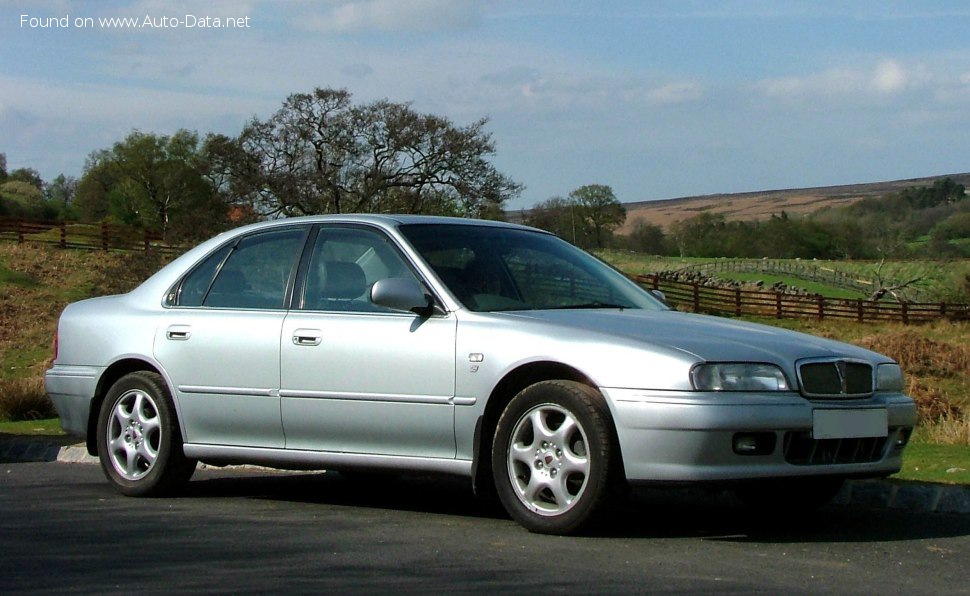
<p>The <strong>Rover 600 (RH) 623 Si (158 Hp)</strong> represents a significant chapter in the history of the British automotive manufacturer Rover Group. Introduced in 1993, the 600 series was Rover’s entry into the fiercely competitive European executive compact sedan segment, aiming to offer a more premium and refined experience than mainstream family cars, while still providing a distinctively British aesthetic. This particular variant, the 623 Si, stood as one of the more potent offerings within the range, powered by a robust 2.3-liter engine. The Rover 600 was a direct successor to the Rover 800 (and, in spirit, the smaller 200/400 series), positioned to compete against established European rivals. Crucially, its development was a product of the long-standing collaboration between Rover and Honda, sharing its platform and many mechanical components with the fifth-generation Honda Accord. This partnership was intended to infuse Rover’s traditional British styling and interior craftsmanship with Honda’s renowned reliability and engineering prowess, creating a compelling package for the discerning European buyer.</p>
<h2>Engine and Performance of the Rover 600 (RH) 623 Si (158 Hp)</h2>
<p>At the heart of the <strong>Rover 600 (RH) 623 Si (158 Hp)</strong> lies a naturally aspirated 2.3-liter (2259 cm<sup>3</sup> or 137.85 cu. in.) inline four-cylinder gasoline engine, designated H23A2. This powerplant, a direct derivative of Honda’s F-series and H-series engines, was a cornerstone of the 623 Si’s appeal, providing a blend of smooth operation and respectable performance. With a DOHC (Double Overhead Camshaft) valvetrain and four valves per cylinder, the engine was capable of producing 158 horsepower at 5800 rpm. This power output, combined with a torque figure of 151.94 lb.-ft. (206 Nm) at 4500 rpm, enabled the sedan to achieve a 0 to 60 mph acceleration time of approximately 8.1 seconds. Its top speed was rated at 134.22 mph (216 km/h), making it a capable performer on the European autobahns and motorways.</p>
<p>The engine’s front, transverse layout, coupled with a five-speed manual transmission, directed power to the front wheels. This drivetrain architecture was a common and efficient setup for its class, contributing to a competitive combined fuel economy of approximately 26.4 US mpg (8.9 l/100 km). With a compression ratio of 9.8:1 and multi-port manifold injection, the H23A2 engine was designed for efficiency and responsiveness, providing a solid, linear power delivery characteristic of Honda’s engineering philosophy. The weight-to-power ratio of 8.4 kg/Hp (119.7 Hp/tonne) further underscored its spirited performance for a car of its size and era.</p>
<h3>Design and Features: Blending British Elegance with Japanese Engineering</h3>
<p>The Rover 600 (RH) 623 Si was offered exclusively as a four-door sedan, a body style that perfectly encapsulated its executive aspirations. Its design was a clever fusion of traditional British styling cues and a more contemporary, aerodynamic profile, largely influenced by the Honda Accord platform it shared. Rover’s designers ensured the 600 retained a distinctive “Britishness,” particularly evident in the grille design, the chrome accents, and the overall proportions, which exuded a sense of understated elegance.</p>
<p>Measuring 182.87 inches (4645 mm) in length, 67.52 inches (1715 mm) in width, and 54.33 inches (1380 mm) in height, with a generous 107.09-inch (2720 mm) wheelbase, the 600 provided ample interior space for five occupants. The cabin was a hallmark of Rover’s attention to detail, featuring high-quality materials, often including wood trim and plush fabrics or leather upholstery, creating a comfortable and sophisticated environment. For its time, the 600 offered a respectable 14.3 cu. ft. (405 liters) of trunk space, sufficient for executive travel or family needs.</p>
<p>From a dynamic perspective, the Rover 600 benefited significantly from its Honda underpinnings. The vehicle featured an advanced double wishbone suspension system at both the front and rear, a setup more commonly found in higher-end sports sedans. This sophisticated suspension contributed to the 600’s reputation for a refined ride quality and surprisingly agile handling for a front-wheel-drive sedan. Braking was handled by ventilated discs at the front and solid discs at the rear, complemented by an Anti-lock Braking System (ABS) as a standard or optional feature, providing confident stopping power. The hydraulic power steering, utilizing a rack and pinion system, offered precise control and good feedback to the driver, enhancing the overall driving experience. The car was typically fitted with 195/60 R15V tires, balancing grip and ride comfort.</p>
<h2>Technical Specifications: Rover 600 (RH) 623 Si (158 Hp)</h2>
<table border=”1″ style=”width:100%; border-collapse: collapse;”>
<tr>
<th style=”padding: 8px; text-align: left; background-color: #f2f2f2;”>Category</th>
<th style=”padding: 8px; text-align: left; background-color: #f2f2f2;”>Specification</th>
</tr>
<tr>
<td style=”padding: 8px; border: 1px solid #ddd;”>Brand</td>
<td style=”padding: 8px; border: 1px solid #ddd;”>Rover</td>
</tr>
<tr>
<td style=”padding: 8px; border: 1px solid #ddd;”>Model</td>
<td style=”padding: 8px; border: 1px solid #ddd;”>600 (RH)</td>
</tr>
<tr>
<td style=”padding: 8px; border: 1px solid #ddd;”>Type (Engine)</td>
<td style=”padding: 8px; border: 1px solid #ddd;”>623 Si (158 Hp)</td>
</tr>
<tr>
<td style=”padding: 8px; border: 1px solid #ddd;”>Production Start</td>
<td style=”padding: 8px; border: 1px solid #ddd;”>1993</td>
</tr>
<tr>
<td style=”padding: 8px; border: 1px solid #ddd;”>Production End</td>
<td style=”padding: 8px; border: 1px solid #ddd;”>1999</td>
</tr>
<tr>
<td style=”padding: 8px; border: 1px solid #ddd;”>Body Type</td>
<td style=”padding: 8px; border: 1px solid #ddd;”>Sedan, 4 Doors, 5 Seats</td>
</tr>
<tr>
<td style=”padding: 8px; border: 1px solid #ddd;”>Powertrain Architecture</td>
<td style=”padding: 8px; border: 1px solid #ddd;”>Internal Combustion Engine</td>
</tr>
<tr>
<td style=”padding: 8px; border: 1px solid #ddd;”>Fuel Type</td>
<td style=”padding: 8px; border: 1px solid #ddd;”>Gasoline (Petrol)</td>
</tr>
<tr>
<td style=”padding: 8px; border: 1px solid #ddd;”>Fuel Consumption (Combined)</td>
<td style=”padding: 8px; border: 1px solid #ddd;”>26.4 US mpg (8.9 l/100 km)</td>
</tr>
<tr>
<td style=”padding: 8px; border: 1px solid #ddd;”>Acceleration 0-60 mph</td>
<td style=”padding: 8px; border: 1px solid #ddd;”>8.1 seconds</td>
</tr>
<tr>
<td style=”padding: 8px; border: 1px solid #ddd;”>Maximum Speed</td>
<td style=”padding: 8px; border: 1px solid #ddd;”>134.22 mph (216 km/h)</td>
</tr>
<tr>
<td style=”padding: 8px; border: 1px solid #ddd;”>Power</td>
<td style=”padding: 8px; border: 1px solid #ddd;”>158 Hp @ 5800 rpm</td>
</tr>
<tr>
<td style=”padding: 8px; border: 1px solid #ddd;”>Torque</td>
<td style=”padding: 8px; border: 1px solid #ddd;”>151.94 lb.-ft. (206 Nm) @ 4500 rpm</td>
</tr>
<tr>
<td style=”padding: 8px; border: 1px solid #ddd;”>Engine Displacement</td>
<td style=”padding: 8px; border: 1px solid #ddd;”>2.3 liters (2259 cm<sup>3</sup> / 137.85 cu. in.)</td>
</tr>
<tr>
<td style=”padding: 8px; border: 1px solid #ddd;”>Number of Cylinders</td>
<td style=”padding: 8px; border: 1px solid #ddd;”>4, Inline</td>
</tr>
<tr>
<td style=”padding: 8px; border: 1px solid #ddd;”>Valvetrain</td>
<td style=”padding: 8px; border: 1px solid #ddd;”>DOHC, 4 valves per cylinder</td>
</tr>
<tr>
<td style=”padding: 8px; border: 1px solid #ddd;”>Engine Aspiration</td>
<td style=”padding: 8px; border: 1px solid #ddd;”>Naturally aspirated</td>
</tr>
<tr>
<td style=”padding: 8px; border: 1px solid #ddd;”>Compression Ratio</td>
<td style=”padding: 8px; border: 1px solid #ddd;”>9.8:1</td>
</tr>
<tr>
<td style=”padding: 8px; border: 1px solid #ddd;”>Curb Weight</td>
<td style=”padding: 8px; border: 1px solid #ddd;”>2910.1 lbs. (1320 kg)</td>
</tr>
<tr>
<td style=”padding: 8px; border: 1px solid #ddd;”>Max. Weight (GVWR)</td>
<td style=”padding: 8px; border: 1px solid #ddd;”>4144.69 lbs. (1880 kg)</td>
</tr>
<tr>
<td style=”padding: 8px; border: 1px solid #ddd;”>Max Load</td>
<td style=”padding: 8px; border: 1px solid #ddd;”>1234.59 lbs. (560 kg)</td>
</tr>
<tr>
<td style=”padding: 8px; border: 1px solid #ddd;”>Trunk (Boot) Space</td>
<td style=”padding: 8px; border: 1px solid #ddd;”>14.3 cu. ft. (405 liters)</td>
</tr>
<tr>
<td style=”padding: 8px; border: 1px solid #ddd;”>Fuel Tank Capacity</td>
<td style=”padding: 8px; border: 1px solid #ddd;”>17.17 US gallons (65 liters)</td>
</tr>
<tr>
<td style=”padding: 8px; border: 1px solid #ddd;”>Length</td>
<td style=”padding: 8px; border: 1px solid #ddd;”>182.87 inches (4645 mm)</td>
</tr>
<tr>
<td style=”padding: 8px; border: 1px solid #ddd;”>Width</td>
<td style=”padding: 8px; border: 1px solid #ddd;”>67.52 inches (1715 mm)</td>
</tr>
<tr>
<td style=”padding: 8px; border: 1px solid #ddd;”>Height</td>
<td style=”padding: 8px; border: 1px solid #ddd;”>54.33 inches (1380 mm)</td>
</tr>
<tr>
<td style=”padding: 8px; border: 1px solid #ddd;”>Wheelbase</td>
<td style=”padding: 8px; border: 1px solid #ddd;”>107.09 inches (2720 mm)</td>
</tr>
<tr>
<td style=”padding: 8px; border: 1px solid #ddd;”>Front Track</td>
<td style=”padding: 8px; border: 1px solid #ddd;”>58.07 inches (1475 mm)</td>
</tr>
<tr>
<td style=”padding: 8px; border: 1px solid #ddd;”>Rear Track</td>
<td style=”padding: 8px; border: 1px solid #ddd;”>58.27 inches (1480 mm)</td>
</tr>
<tr>
<td style=”padding: 8px; border: 1px solid #ddd;”>Drive Wheel</td>
<td style=”padding: 8px; border: 1px solid #ddd;”>Front-wheel drive</td>
</tr>
<tr>
<td style=”padding: 8px; border: 1px solid #ddd;”>Gearbox Type</td>
<td style=”padding: 8px; border: 1px solid #ddd;”>5-speed manual transmission</td>
</tr>
<tr>
<td style=”padding: 8px; border: 1px solid #ddd;”>Front Suspension</td>
<td style=”padding: 8px; border: 1px solid #ddd;”>Double wishbone</td>
</tr>
<tr>
<td style=”padding: 8px; border: 1px solid #ddd;”>Rear Suspension</td>
<td style=”padding: 8px; border: 1px solid #ddd;”>Double wishbone</td>
</tr>
<tr>
<td style=”padding: 8px;
