Introduction: The Pioneering Renault Espace I (J11/13)
The
Renault Espace I (J11/13)
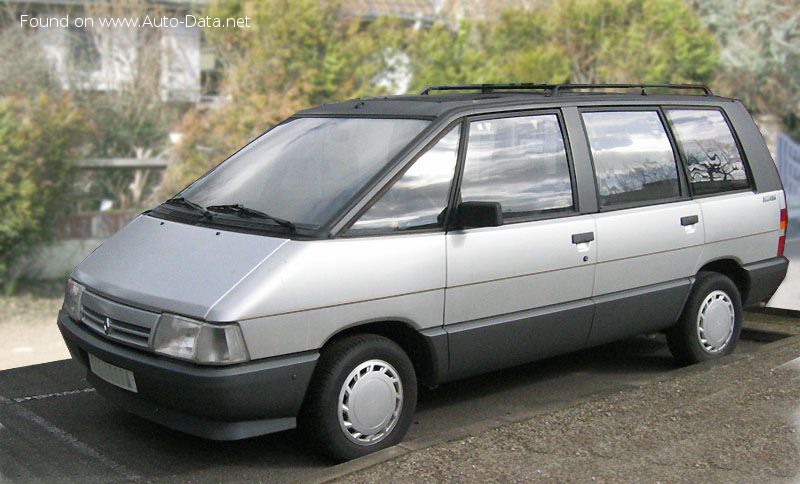
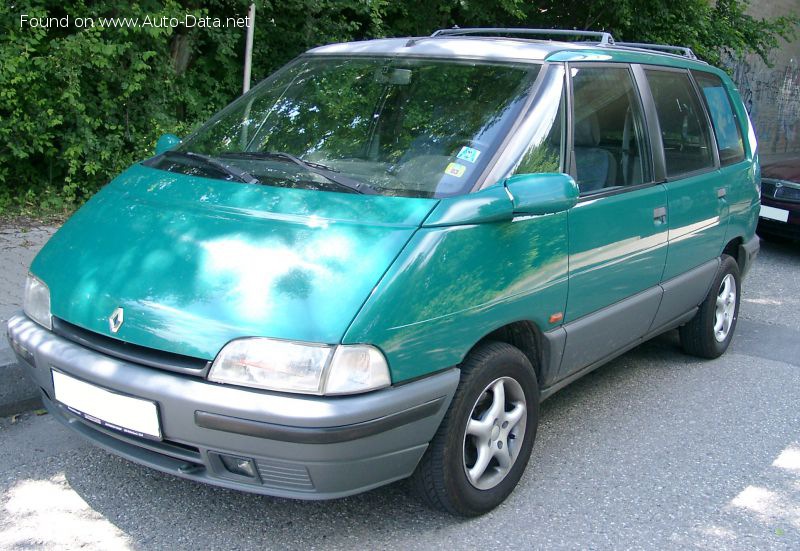
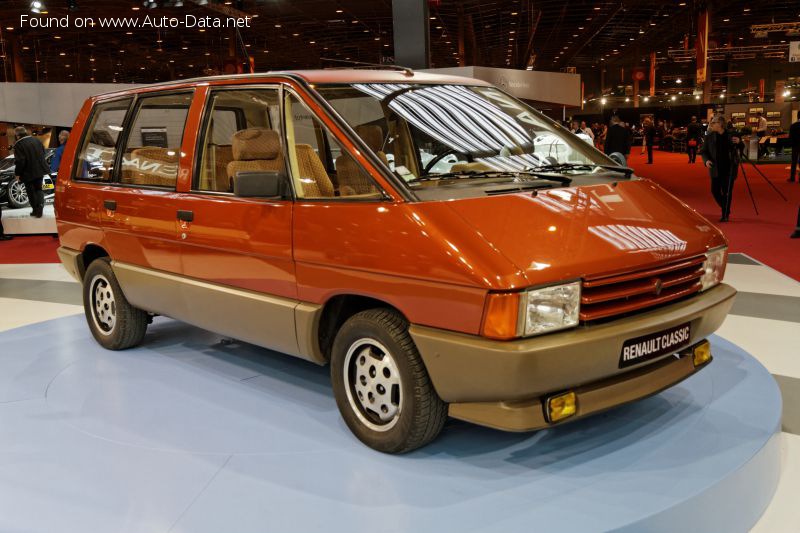
stands as a landmark vehicle in automotive history, particularly within the European market. Launched in 1984, this first-generation Espace is widely credited with popularizing the Multi-Purpose Vehicle (MPV) segment, often referred to in the United States as a minivan. A collaborative effort between the French automaker Renault and Matra, a company renowned for its innovative engineering, the Espace broke new ground with its distinctive “one-box” design and highly versatile interior. This particular variant, the 2.0 GTS (110 Hp), represented a well-balanced offering in the lineup, combining practical performance with the revolutionary spaciousness that defined the model. Produced from 1984 to 1988, the Espace I was a bold departure from traditional station wagons and sedans, offering families unprecedented flexibility and comfort, and setting the stage for future generations of family transporters across the globe.
The Genesis of the Renault Espace I (J11/13): A European Vision
The concept for what would become the Renault Espace originated in the late 1970s with British designer Fergus Pollock, working for Chrysler UK. The project, initially known as P16, was later taken over by the French firm Matra, which developed it further as the Matra P18. Matra, known for its expertise in composite materials and innovative vehicle design, initially pitched the concept to PSA Peugeot Citroën, who ultimately rejected it. Renault, however, saw the potential in Matra’s vision for a groundbreaking family vehicle. The collaboration between Renault and Matra culminated in the production of the Espace, a vehicle that would redefine family travel in Europe.
The Espace I was revolutionary for its time, featuring a fiberglass body mounted on a galvanized steel chassis, a construction method inherited from Matra’s experience with sports cars. This composite body offered benefits in terms of weight savings and resistance to corrosion, aspects that were particularly appealing to consumers. Its distinctive silhouette, often described as a “one-box” or “monovolume” design, provided exceptional interior volume, challenging the conventional notions of what a family car could be.
Powertrain: The 2.0 GTS Engine
The 2.0 GTS variant of the
Renault Espace I (J11/13)
was powered by a robust 2.0-liter (1995 cm³ or 121.74 cu. in.) inline four-cylinder engine, designated by the code J6R-823. This naturally aspirated gasoline engine, equipped with a carburetor fuel injection system, delivered a respectable 110 horsepower at 5500 rpm. Torque output stood at 160 Nm (118.01 lb.-ft.) at a low 3000 rpm, providing ample pulling power for a vehicle of its size and intended purpose. With a compression ratio of 9.2:1 and two valves per cylinder, this engine was a reliable workhorse, characteristic of French automotive engineering of the era.
Power was transmitted to the front wheels via a 5-speed manual transmission, a common and efficient setup for a family vehicle in the 1980s. This powertrain enabled the Espace 2.0 GTS to accelerate from 0 to 60 mph in a competitive 10.7 seconds, with a top speed of approximately 110 mph (177 km/h). Fuel economy, while not the primary focus of early MPVs, was reasonable for the period, with a combined rating of around 26.1 US mpg (9 l/100 km). The engine’s front, longitudinal layout contributed to the vehicle’s weight distribution and overall driving dynamics.
Design, Innovation, and Features of the Renault Espace I (J11/13)
Revolutionary Design and Interior Flexibility
The defining characteristic of the
Renault Espace I (J11/13)
was its groundbreaking design. As a minivan (or MPV), it featured five doors and seating for seven passengers, a configuration that offered unprecedented versatility. The exterior dimensions—a length of 167.32 inches, a width of 69.69 inches, and a height of 65.35 inches—created a remarkably spacious interior within a relatively compact footprint. The aerodynamic profile, with a drag coefficient (Cd) of 0.32, was considered quite good for a vehicle of its type at the time, contributing to both fuel efficiency and reduced wind noise.
Inside, the Espace truly shone. Its modular seating system allowed the rear seats to be removed, swiveled, or even folded flat, creating an enormous cargo area. Minimum trunk space started at a generous 20.48 cubic feet (580 liters), expanding to a cavernous 108.06 cubic feet (3060 liters) with the rear seats removed, making it an ideal vehicle for families, tradespeople, or anyone needing flexible space. This emphasis on interior adaptability was a major selling point and a feature that would be emulated by countless competitors in the years to come.
Chassis and Dynamics
The Espace I was built on a chassis designed to provide a comfortable and stable ride. It featured an independent McPherson strut front suspension, a common and effective setup for front-wheel-drive vehicles, offering good handling and ride quality. The rear suspension was a semi-independent coil spring design, chosen for its balance of comfort and load-carrying capability. Steering was handled by a conventional rack and pinion system, providing direct and predictable control.
Braking performance was managed by ventilated discs at the front, offering improved heat dissipation and consistent stopping power, paired with drum brakes at the rear. The vehicle rode on 185/70 R13 tires mounted on 13-inch wheel rims, a modest size by today’s standards but typical for the era, prioritizing ride comfort and cost-effectiveness. With a curb weight of 2645.55 lbs (1200 kg) and a maximum permissible weight of 3968.32 lbs (1800 kg), the Espace offered a substantial payload capacity, further enhancing its utility as a family and cargo hauler.
Technical Specifications: Renault Espace I (J11/13) 2.0 GTS (110 Hp)
| Category | Specification |
|---|---|
| General Information | |
| Brand | Renault |
| Model | Espace |
| Generation | Espace I (J11/13) |
| Type (Engine) | 2.0 GTS (110 Hp) |
| Start of Production | 1984 year |
| End of Production | 1988 year |
| Powertrain Architecture | Internal Combustion engine |
| Body Type | Minivan, MPV |
| Seats | 7 |
| Doors | 5 |
| Performance Specs | |
| Fuel Consumption (Urban) | 10.8 l/100 km (21.8 US mpg) |
| Fuel Consumption (Extra Urban) | 6.8 l/100 km (34.6 US mpg) |
| Fuel Consumption (Combined) | 9 l/100 km (26.1 US mpg) |
| Fuel Type | Petrol (Gasoline) |
| Acceleration 0 – 60 mph | 10.7 sec |
| Acceleration 0 – 62 mph (0-100 km/h) | 11.3 sec |
| Maximum Speed | 177 km/h (109.98 mph) |
| Weight-to-Power Ratio | 10.9 kg/Hp (91.7 Hp/tonne) |
| Weight-to-Torque Ratio | 7.5 kg/Nm (133.3 Nm/tonne) |
| Engine Specs | |
| Power | 110 Hp @ 5500 rpm |
| Power per liter | 55.1 Hp/l |
| Torque | 160 Nm @ 3000 rpm (118.01 lb.-ft. @ 3000 rpm) |
| Engine Layout | Front, Longitudinal |
| Engine Model/Code | J6R-823 |
| Engine Displacement | 1995 cm³ (2.0 l / 121.74 cu. in.) |
| Number of Cylinders | 4 |
| Engine Configuration | Inline |
| Cylinder Bore | 88 mm (3.46 in.) |
| Piston Stroke | 82 mm (3.23 in.) |
| Compression Ratio | 9.2:1 |
| Number of Valves per Cylinder | 2 |
| Fuel Injection System | Carburetor |
| Engine Aspiration | Naturally aspirated engine |
| Engine Oil Capacity | 5.5 l (5.81 US qt) |
| Coolant Capacity | 7.2 l (7.61 US qt) |
| Space, Volume and Weights | |
| Kerb Weight | 1200 kg (2645.55 lbs) |
| Max. Weight | 1800 kg (3968.32 lbs) |
| Max Load | 600 kg (1322.77 lbs) |
| Trunk (Boot) Space – Minimum | 580 l (20.48 cu. ft.) |
| Trunk (Boot) Space – Maximum | 3060 l (108.06 cu. ft.) |
| Fuel Tank Capacity | 63 l (16.64 US gal) |
| Max. Roof Load | 70 kg (154.32 lbs) |
| Dimensions | |
| Length | 4250 mm (167.32 in.) |
| Width | 1770 mm (69.69 in.) |
| Height | 1660 mm (65.35 in.) |
| Wheelbase | 2580 mm (101.57 in.) |
| Front Track | 1426 mm (56.14 in.) |
| Rear (Back) Track | 1489 mm (58.62 in.) |
| Front Overhang | 870 mm (34.25 in.) |
| Rear Overhang | 800 mm (31.5 in.) |
| Ride Height (Ground Clearance) | 150 mm (5.91 in.) |
| Drag Coefficient (Cd) | 0.32 |
| Minimum Turning Circle (Turning Diameter) | 11.80 m (38.71 ft.) |
| Drivetrain, Brakes and Suspension Specs | |
| Drivetrain Architecture | Front-wheel drive, Internal Combustion engine |
| Drive Wheel | Front wheel drive |
| Number of Gears and Type of Gearbox | 5 gears, manual transmission |
| Front Suspension | Independent type McPherson |
| Rear Suspension | Semi-independent, coil spring |
| Front Brakes | Ventilated discs |
| Rear Brakes | Drum |
| Steering Type | Steering rack and pinion |
| Tires Size | 185/70 R13 |
| Wheel Rims Size | 13 inches |
Legacy and Market Impact
The
Renault Espace I (J11/13)
holds a unique and revered place in automotive history, particularly in Europe. Upon its launch, it was truly a vehicle ahead of its time. While the American market had seen the introduction of the Chrysler Voyager/Dodge Caravan around the same period, the Espace carved out its own niche as the definitive European MPV. Its innovative design and spacious, adaptable interior quickly made it a favorite among families and those requiring versatile transport solutions.
Initially, sales were slow, as consumers were hesitant to embrace such a radical new vehicle concept. However, word-of-mouth and positive reviews soon turned the tide, and the Espace became a resounding success, solidifying Renault’s position as an innovator. It effectively created and dominated the European MPV segment for years, inspiring other manufacturers to develop their own takes on the multi-purpose vehicle. Competitors in its primary market, while not direct rivals initially due to the Espace’s pioneering nature, eventually included models like the Fiat Ulysse/Lancia Zeta (much later) and various large station wagons or vans converted for passenger use. The Espace, however, offered a purpose-built, car-like driving experience with van-like practicality.
The Espace’s legacy extends far beyond its initial sales figures. It demonstrated that a family vehicle didn’t have to be a staid sedan or a utilitarian van. It could be stylish, comfortable, and incredibly flexible, offering a new dimension to family mobility. Its influence can be seen in the countless minivans and MPVs that followed, not just in Europe but globally. The Espace proved that innovative design, when coupled with genuine utility, could fundamentally change consumer expectations and create entirely new market segments. It remains a testament to Renault and Matra’s foresight and engineering prowess, a true classic that shaped the automotive landscape for generations.