Ford Mustang VI (Facelift 2017) 2.3 GTDi EcoBoost (310 Hp)
The Ford Mustang, an iconic American pony car, received a significant refresh for its sixth generation in 2017, introducing a host of enhancements to its design, technology, and powertrain options. Among the most compelling choices for enthusiasts and daily drivers alike was the 2.3 GTDi EcoBoost variant, a sophisticated turbocharged four-cylinder engine that defied traditional Mustang expectations while delivering impressive performance and efficiency. This iteration of the Mustang, produced from 2017 to 2023, continued the model’s global expansion, offering a more accessible yet spirited entry point into the legendary lineage. The Ford Mustang VI (facelift 2017) EcoBoost model represented a strategic move by Ford to cater to a broader international audience, providing a balance of modern engineering, classic styling, and improved fuel economy without compromising the driving excitement the Mustang is known for.
Engine and Performance of the Ford Mustang VI (facelift 2017)
At the heart of the Ford Mustang VI (facelift 2017) 2.3 GTDi EcoBoost lies a potent 2.3-liter (2254 cm³) inline-four cylinder engine, a testament to modern engineering’s ability to extract substantial power from a smaller displacement. This particular EcoBoost unit, known for its direct injection (GTDi) and turbocharging with an intercooler, delivers a robust 310 horsepower at 5500 rpm. The power output per liter is an impressive 137.5 horsepower, showcasing the engine’s advanced design and efficiency.
Equally important for a sports car is torque, and the EcoBoost engine doesn’t disappoint, providing a healthy 350.34 lb.-ft. of torque available at a relatively low 3000 rpm. This broad torque band ensures brisk acceleration and responsive performance across the rev range, making it a joy to drive both on the highway and through winding roads. The engine’s front, longitudinal layout and rear-wheel-drive architecture adhere to the classic Mustang formula, ensuring a dynamic and engaging driving experience.
Power is channeled through a standard six-speed manual transmission, offering drivers an authentic and immersive connection to the machine. This gearbox choice underscores the Mustang’s enthusiast-oriented character, allowing for precise gear selection and maximum control over the engine’s output. The weight-to-power ratio for this model stands at 5.2 kg/Hp (192.9 Hp/tonne), indicating a favorable balance between the vehicle’s curb weight of 3542.83 lbs. and its power output, contributing to its agile performance.
Despite its performance credentials, the 2.3 GTDi EcoBoost engine also focuses on fuel efficiency, a significant departure from the V8-only perception of classic Mustangs. With a combined fuel economy rating of 25 US mpg, it offers a compelling option for those seeking a sports coupe that doesn’t demand frequent trips to the gas pump. This efficiency is particularly noticeable in extra-urban driving, where it achieves 31.4 US mpg, making it a viable grand tourer as well as a weekend warrior.
Design and Features
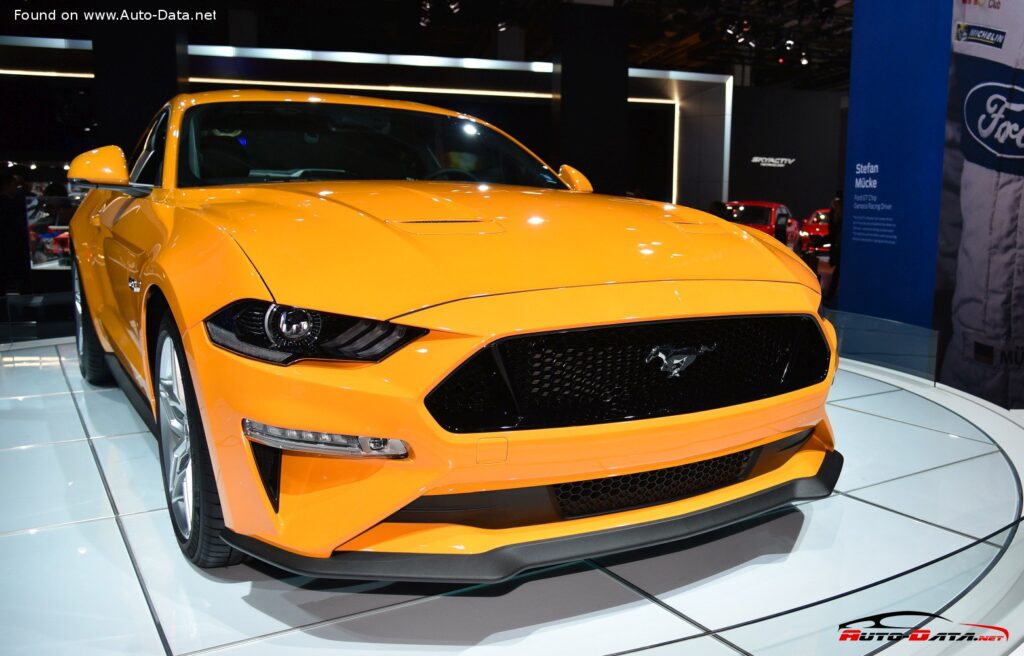
The 2017 facelift of the sixth-generation Ford Mustang brought a more aggressive and aerodynamic aesthetic to the already striking Fastback body style. The front fascia received a sharper, lower-set hood, revised grille, and redesigned LED headlamps, giving the Mustang a more menacing presence. At the rear, new LED taillights and a restyled bumper maintained the iconic triple-bar design while integrating modern elements.
This Fastback model, with its two doors and four-seat configuration, perfectly blends classic pony car proportions with contemporary design cues. Its dimensions – 188.5 inches in length, 75.39 inches in width, and 54.29 inches in height – contribute to its muscular stance and road presence. The 107.09-inch wheelbase ensures a stable ride, while the wide front (62.4 inches) and rear (65.12 inches) tracks enhance handling and grip.
Underneath its sculpted exterior, the Mustang EcoBoost features a sophisticated suspension setup designed for both spirited driving and everyday comfort. An independent McPherson strut system with coil springs and an anti-roll bar handles the front, while the rear benefits from an independent multi-link spring suspension with a stabilizer. This fully independent suspension system, a hallmark of the sixth-generation Mustang, significantly improved ride quality and handling dynamics compared to previous generations, which often featured a solid rear axle.
Safety and driver control are paramount, with ventilated disc brakes on both the front and rear axles providing strong stopping power. An Anti-lock Braking System (ABS) comes standard, enhancing safety during emergency braking. The steering system utilizes a precise rack and pinion setup, offering direct feedback and a communicative driving experience. The trunk space, at 13.49 cubic feet, is practical for a sports coupe, offering enough room for weekend getaways or daily errands.
Technical Specifications
| Category | Specification |
|---|---|
| Brand | Ford |
| Model | Mustang |
| Generation | Mustang VI (facelift 2017) |
| Type (Engine) | 2.3 GTDi EcoBoost (310 Hp) |
| Start of Production | 2017 year |
| End of Production | 2023 year |
| Powertrain Architecture | Internal Combustion engine |
| Body type | Fastback |
| Seats | 4 |
| Doors | 2 |
| Fuel Consumption (Urban) | 21 US mpg (11.2 l/100 km) |
| Fuel Consumption (Extra Urban) | 31.4 US mpg (7.5 l/100 km) |
| Fuel Consumption (Combined) | 25 US mpg (9.4 l/100 km) |
| Fuel Type | Petrol (Gasoline) |
| Weight-to-Power Ratio | 5.2 kg/Hp (192.9 Hp/tonne) |
| Weight-to-Torque Ratio | 3.4 kg/Nm (295.6 Nm/tonne) |
| Power | 310 Hp @ 5500 rpm |
| Power per Liter | 137.5 Hp/l |
| Torque | 350.34 lb.-ft. @ 3000 rpm (475 Nm) |
| Engine Layout | Front, Longitudinal |
| Engine Model/Code | EcoBoost |
| Engine Displacement | 2.3 liters (2254 cm³ / 137.55 cu. in.) |
| Number of Cylinders | 4 |
| Engine Configuration | Inline |
| Cylinder Bore | 3.44 in. (87.5 mm) |
| Piston Stroke | 3.7 in. (94 mm) |
| Compression Ratio | 9.5:1 |
| Fuel Injection System | Direct injection |
| Engine Aspiration | Turbocharger, Intercooler |
| Engine Oil Capacity | 5.99 US qt (5.67 l) |
| Coolant Capacity | 9.47 US qt (8.96 l) |
| Kerb Weight | 3542.83 lbs. (1607 kg) |
| Trunk (boot) space – minimum | 13.49 cu. ft. (382 l) |
| Fuel Tank Capacity | 15.59 US gal (59 l) |
| Length | 188.5 in. (4788 mm) |
| Width | 75.39 in. (1915 mm) |
| Width with mirrors folded | 76.1 in. (1933 mm) |
| Width including mirrors | 81.89 in. (2080 mm) |
| Height | 54.29 in. (1379 mm) |
| Wheelbase | 107.09 in. (2720 mm) |
| Front Track | 62.4 in. (1585 mm) |
| Rear (Back) Track | 65.12 in. (1654 mm) |
| Drivetrain Architecture | The Internal combustion engine (ICE) drives the rear wheels of the vehicle. |
| Drive Wheel | Rear wheel drive |
| Number of Gears and Type of Gearbox | 6 gears, manual transmission |
| Front Suspension | Independent, type McPherson with coil spring and anti-roll bar |
| Rear Suspension | Independent multi-link spring suspension with stabilizer |
| Front Brakes | Ventilated discs |
| Rear Brakes | Ventilated discs |
| Assisting Systems | ABS (Anti-lock braking system) |
| Steering Type | Steering rack and pinion |
Legacy and Market Impact
The introduction of the EcoBoost engine in the sixth-generation Mustang marked a pivotal moment in the model’s storied history, continuing with the 2017 facelift. For decades, the Mustang was synonymous with large-displacement V8 engines, and the idea of a four-cylinder powerplant initially met with skepticism from purists. However, the 2.3 GTDi EcoBoost quickly proved its worth, offering a compelling blend of modern performance and efficiency that expanded the Mustang’s appeal both domestically and internationally.
In the North American market, the EcoBoost Mustang carved out a niche as a more affordable and fuel-efficient alternative to its V8-powered GT sibling, while still delivering a genuinely sporty driving experience. It competed effectively against rivals such as the Chevrolet Camaro 2.0T and the Dodge Challenger V6, often outperforming them in terms of raw power and torque, thanks to its advanced turbocharging technology. The EcoBoost variant demonstrated that a Mustang could be both powerful and pragmatic, attracting a new generation of buyers who valued technological sophistication alongside traditional muscle car aesthetics.
Globally, particularly in markets like Europe and Asia where fuel prices are higher and displacement taxes are common, the EcoBoost Mustang was a game-changer. It allowed the Mustang to be sold in significant numbers, transforming it from a niche import to a globally recognized and best-selling sports coupe. This international success not only boosted Ford’s brand image but also solidified the Mustang’s status as a true global icon, capable of adapting to diverse market demands without losing its American identity.
The 2017 facelift further refined the EcoBoost Mustang, enhancing its visual appeal and incorporating advanced driver-assistance systems and infotainment technologies that were increasingly expected in modern vehicles. Its legacy is one of successful modernization and global outreach, proving that the Mustang could evolve beyond its traditional V8 roots while maintaining its fundamental character as an accessible, performance-oriented sports car. The 2.3 GTDi EcoBoost engine, in particular, will be remembered as the powertrain that democratized the Mustang, making its unique blend of style and performance available to a wider audience than ever before.