The Peugeot 3008 II (Phase I, 2016) 1.2 PureTech (130 Hp) TBC S&S: A European Crossover Success Story
The Peugeot 3008 II (Phase I, 2016) marked a significant turning point for the French automaker, transforming its rather conservative first-generation MPV-like crossover into a stylish, technology-laden compact SUV. Launched in 2016, this second-generation model quickly garnered critical acclaim and commercial success, especially across European markets where it competes fiercely in the highly competitive C-segment SUV category. While Peugeot vehicles are not widely available in the United States, the 3008 II represents a prime example of modern European automotive design and engineering, emphasizing efficiency, sophisticated aesthetics, and practical utility. This particular variant, powered by the efficient 1.2 PureTech gasoline engine with 130 horsepower, showcased Peugeot’s commitment to downsizing without compromising performance or refinement, making it a compelling choice for urban and suburban families in its primary markets.
Engine & Performance of the Peugeot 3008 II (Phase I, 2016)
At the heart of this specific Peugeot 3008 II (Phase I, 2016) model lies the innovative 1.2-liter PureTech turbocharged gasoline engine, a three-cylinder unit that delivers a surprising punch for its modest displacement. Generating 130 horsepower at 5500 rpm and a robust 169.64 lb.-ft. of torque from a low 1750 rpm, this powertrain is a testament to modern engine downsizing technologies. The combination of a turbocharger and intercooler ensures impressive responsiveness and a broad powerband, making the vehicle feel more energetic than its engine size might suggest. Power is efficiently delivered to the front wheels via a smooth 6-speed manual transmission, offering an engaging driving experience. This setup allows the 3008 II to accelerate from 0 to 60 mph in a respectable 10.1 seconds, with a top speed of 116.82 mph.
Fuel efficiency is a strong suit for the 1.2 PureTech engine, a crucial factor in European markets. The combined fuel economy is rated at approximately 47 US mpg (5 liters per 100 km), with urban consumption at 37.9 US mpg and extra-urban figures reaching an impressive 54.7 US mpg. These figures, coupled with CO2 emissions of 115 g/km, qualify the vehicle for the Euro 6 emission standard, highlighting its environmental consciousness. The engine also features a Start & Stop system, further enhancing fuel economy in city driving conditions by automatically shutting off the engine when the vehicle is stationary. With an engine displacement of 1199 cm³ (73.17 cu. in.) and a compact inline-three configuration, the 1.2 PureTech engine exemplifies engineering efficiency, offering a compelling balance of performance and economy.
Design & Features: A Bold Statement in the SUV Segment
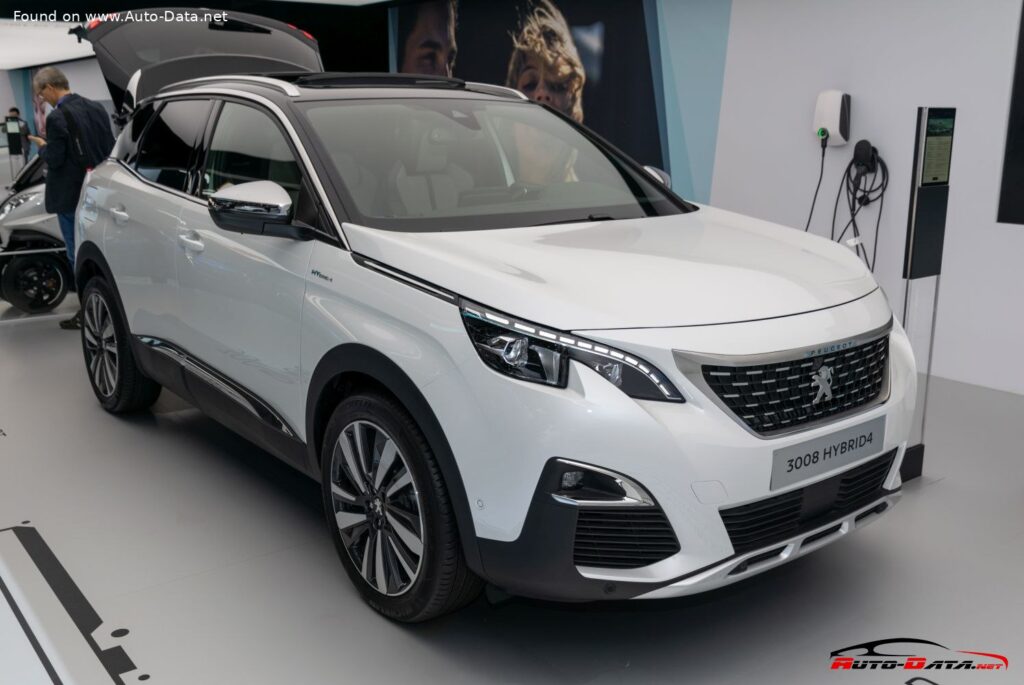
The design of the Peugeot 3008 II (Phase I, 2016) represented a radical departure from its predecessor, embracing a more assertive and angular SUV aesthetic. Its exterior styling is characterized by sharp lines, a prominent upright grille, distinctive LED daytime running lights, and a sleek, coupé-like roofline, all contributing to a dynamic and contemporary appearance. The vehicle measures 175.08 inches in length, 72.48 inches in width (82.6 inches including mirrors), and 63.58 inches in height, with a substantial 105.31-inch wheelbase, providing a commanding road presence and a spacious interior.
Inside, the 3008 II introduced Peugeot’s innovative “i-Cockpit” design philosophy, featuring a compact steering wheel, a configurable 12.3-inch digital instrument cluster, and a central touchscreen infotainment system. This driver-centric layout aims to enhance engagement and provide an intuitive user experience. The cabin offers seating for five occupants across two rows, with generous headroom and legroom for a compact SUV. Practicality is a key strength, with a minimum trunk space of 18.36 cu. ft. (520 liters) that expands to a cavernous 52.34 cu. ft. (1482 liters) with the rear seats folded down, making it highly versatile for cargo and family needs. The kerb weight of 2764.6 lbs (1254 kg) contributes to its agile handling and efficiency. Safety features common to modern vehicles of this era, such as ABS (Anti-lock Braking System), ventilated front disc brakes, and disc rear brakes, were standard, ensuring confident stopping power.
Technical Specifications: Peugeot 3008 II (Phase I, 2016) 1.2 PureTech (130 Hp) TBC S&S
| Category | Specification | US Equivalent (where applicable) |
|---|---|---|
| General Information | ||
| Brand | Peugeot | |
| Model | 3008 | |
| Generation | 3008 II (Phase I, 2016) | |
| Type (Engine) | 1.2 PureTech (130 Hp) TBC S&S | |
| Start of Production | 2016 year | |
| End of Production | 2018 year | |
| Powertrain Architecture | Internal Combustion Engine | |
| Body Type | SUV | |
| Seats | 5 | |
| Doors | 5 | |
| Performance Specs | ||
| Fuel consumption (urban) | 6.2 l/100 km | 37.9 US mpg |
| Fuel consumption (extra urban) | 4.3 l/100 km | 54.7 US mpg |
| Fuel consumption (combined) | 5 l/100 km | 47 US mpg |
| CO2 emissions | 115 g/km | |
| Fuel Type | Petrol (Gasoline) | |
| Acceleration 0 – 62 mph (0-100 km/h) | 10.6 sec | |
| Acceleration 0 – 60 mph (Calculated) | 10.1 sec | |
| Maximum Speed | 188 km/h | 116.82 mph |
| Emission Standard | Euro 6 | |
| Weight-to-power ratio | 9.6 kg/Hp | 103.7 Hp/tonne |
| Weight-to-torque ratio | 5.5 kg/Nm | 183.4 Nm/tonne |
| Engine Specs | ||
| Power | 130 Hp @ 5500 rpm | |
| Power per liter | 108.4 Hp/l | |
| Torque | 230 Nm @ 1750 rpm | 169.64 lb.-ft. @ 1750 rpm |
| Engine Layout | Front, Transverse | |
| Engine Model/Code | HNY EB2DTS | |
| Engine Displacement | 1199 cm³ | 73.17 cu. in. |
| Number of Cylinders | 3 | |
| Engine Configuration | Inline | |
| Cylinder Bore | 75 mm | 2.95 in. |
| Piston Stroke | 90.5 mm | 3.56 in. |
| Number of Valves per Cylinder | 4 | |
| Fuel Injection System | Direct injection | |
| Engine Aspiration | Turbocharger, Intercooler | |
| Engine Oil Capacity | 3.5 l | 3.7 US qt |
| Engine Systems | Start & Stop System | |
| Space, Volume and Weights | ||
| Kerb Weight | 1254 kg | 2764.6 lbs |
| Trunk (boot) Space – Minimum | 520 l | 18.36 cu. ft. |
| Trunk (boot) Space – Maximum | 1482 l | 52.34 cu. ft. |
| Fuel Tank Capacity | 53 l | 14 US gal |
| Dimensions | ||
| Length | 4447 mm | 175.08 in. |
| Width | 1841 mm | 72.48 in. |
| Width with Mirrors Folded | 1906 mm | 75.04 in. |
| Width Including Mirrors | 2098 mm | 82.6 in. |
| Height | 1615 mm | 63.58 in. |
| Wheelbase | 2675 mm | 105.31 in. |
| Front Track | 1593-1601 mm | 62.72 – 63.03 in. |
| Rear (Back) Track | 1601-1610 mm | 63.03 – 63.39 in. |
| Front Overhang | 923 mm | 36.34 in. |
| Rear Overhang | 849 mm | 33.43 in. |
| Ride Height (Ground Clearance) | 219 mm | 8.62 in. |
| Minimum Turning Circle (Turning Diameter) | 10.67 m | 35.01 ft. |
| Approach Angle | 20° | |
| Departure Angle | 29° | |
| Drivetrain, Brakes and Suspension Specs | ||
| Drivetrain Architecture | Internal combustion engine drives front wheels | |
| Drive Wheel | Front-wheel drive | |
| Number of Gears and Type of Gearbox | 6 gears, manual transmission | |
| Front Suspension | Independent, McPherson with coil spring and anti-roll bar | |
| Rear Suspension | Semi-independent, coil spring | |
| Front Brakes | Ventilated discs | |
| Rear Brakes | Disc | |
| Assisting Systems | ABS (Anti-lock braking system) | |
| Steering Type | Steering rack and pinion | |
| Power Steering | Electric Steering | |
| Tires Size | 215/65 R17; 205/55 R19 | |
| Wheel Rims Size | 17; 18; 19 |
Legacy & Market Impact of the Peugeot 3008 II (Phase I, 2016)
The Peugeot 3008 II (Phase I, 2016) rapidly established itself as a significant player in the European compact SUV market. Its bold design, sophisticated interior, and efficient powertrains, particularly the 1.2 PureTech, resonated strongly with consumers and critics alike. It was recognized with numerous accolades, most notably being crowned the European Car of the Year in 2017, a testament to its comprehensive appeal and innovative approach. This award underscored its impact on the segment and its ability to blend practicality with an upscale feel.
In its primary markets, the 3008 II competed against formidable rivals such as the Nissan Qashqai, Volkswagen Tiguan, Renault Kadjar, and Hyundai Tucson. What set the Peugeot apart was its distinctive “i-Cockpit,” which offered a unique cabin experience, and its striking exterior design, which broke away from the often-homogenous styling of its competitors. The 1.2 PureTech engine, while small in displacement, was praised for its refinement and impressive real-world fuel economy, making it a popular choice for buyers seeking lower running costs without sacrificing driveability.
The success of the 3008 II played a crucial role in rejuvenating Peugeot’s brand image, repositioning it as a purveyor of stylish, high-quality, and technologically advanced vehicles. It demonstrated that a mainstream brand could offer a premium experience, challenging traditional perceptions of what a French car could be. Its strong sales performance contributed significantly to Peugeot’s overall profitability and market share in Europe. The first phase of the second-generation 3008, produced from 2016 to 2018, laid the groundwork for subsequent updates and solidified its reputation as a benchmark in the compact SUV segment, leaving a lasting legacy as a pivotal model in Peugeot’s modern history.