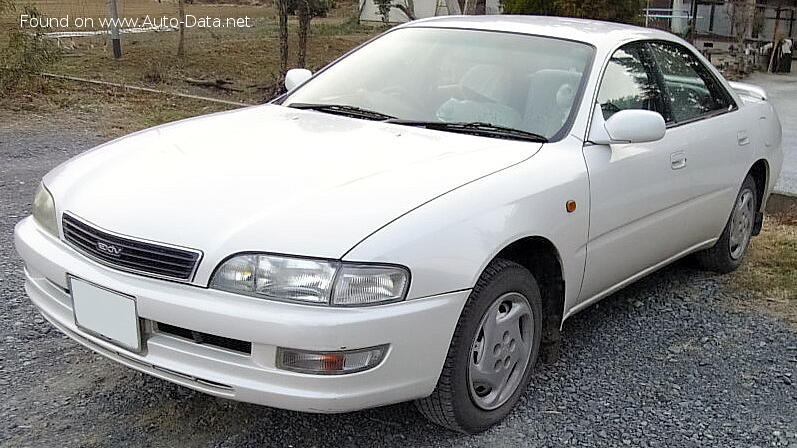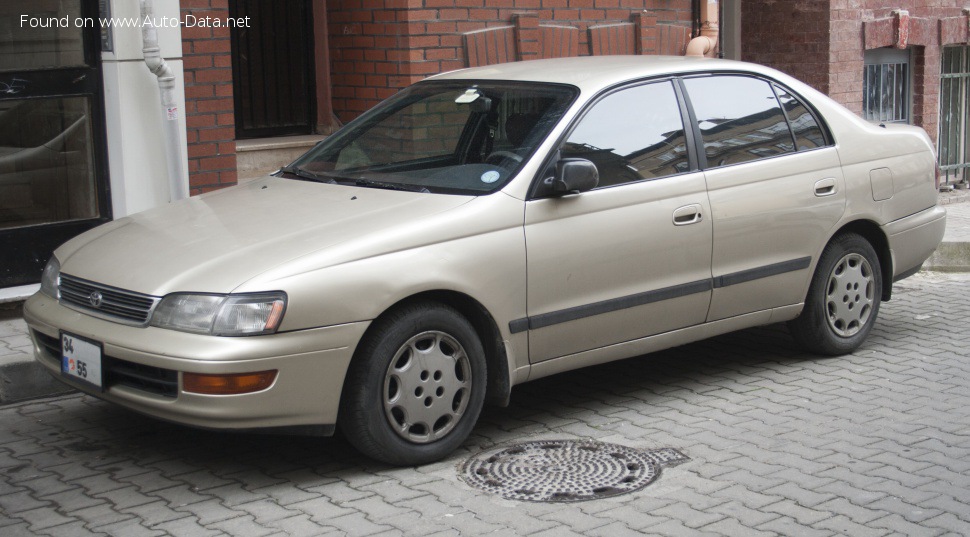
The Toyota Corona (T19): A Global Mid-Size Standard
The Toyota Corona, a nameplate with a storied history spanning several decades, represented Toyota’s commitment to producing reliable and practical family sedans for markets around the world. The T19 generation, produced from 1993 to 1996, continued this legacy, offering a blend of robust engineering, comfortable interiors, and advanced features for its time. Specifically, the Toyota Corona (T19) 2.0i 16V 4WS TR-R (133 Hp) variant was a notable offering, particularly in its primary markets of Japan, parts of Asia, and Europe, showcasing a surprisingly sophisticated four-wheel steering system alongside its dependable powertrain. While not officially sold in the United States, the T19 Corona played a crucial role in cementing Toyota’s reputation for quality and innovation in the global automotive landscape, serving as a pillar of the brand’s mid-size sedan segment during the mid-1990s.
Positioned as a mainstream compact to mid-size sedan, the T19 Corona was designed to appeal to a broad demographic looking for a spacious, economical, and durable vehicle. It sat below more premium offerings like the Toyota Camry in some markets but often shared similar underpinnings and an emphasis on passenger comfort and cargo capacity. The inclusion of a 4WS system in the TR-R trim highlighted Toyota’s willingness to integrate advanced technology into its volume sellers, offering enhanced driving dynamics that were uncommon for a car in its class. This article delves into the technical prowess, design philosophy, and enduring impact of this significant, albeit internationally focused, Toyota model.
Engine and Performance: The 2.0i 16V Powertrain in the Toyota Corona (T19)
At the heart of the Toyota Corona (T19) 2.0i 16V 4WS TR-R (133 Hp) was Toyota’s venerable 3S-FE engine. This 2.0-liter (1998 cm3 or 121.93 cubic inches) inline-four gasoline engine was renowned for its durability and smooth operation, characteristics that were highly valued by Toyota customers worldwide. Featuring a double overhead camshaft (DOHC) valvetrain with four valves per cylinder, the 3S-FE was a naturally aspirated unit employing a multi-port manifold injection system for efficient fuel delivery.
The engine produced a respectable 133 horsepower at 5800 rpm, providing ample power for daily driving and highway cruising. Torque output stood at 134.97 lb.-ft. (183 Nm) at 4400 rpm, ensuring good responsiveness and flexibility in various driving conditions. With a compression ratio of 9.5:1 and a square bore and stroke of 86 mm (3.39 inches), the engine was designed for a balanced blend of power and longevity. Its front, transverse layout, coupled with a front-wheel-drive architecture, was a common and efficient configuration for sedans of this era, maximizing interior space and manufacturing simplicity.
Power was delivered to the front wheels via a precise 5-speed manual transmission, offering drivers an engaging experience and optimal control over the engine’s output. This combination contributed to impressive fuel economy for a 2.0-liter sedan from the mid-90s, with a combined rating of approximately 39.2 US mpg (6 liters per 100 km). This efficiency, combined with a 15.85 US gallon (60 liter) fuel tank, provided a commendable cruising range, making the Corona a practical choice for long journeys as well as urban commutes. The car’s weight-to-power ratio of 8.9 kg per HP (112.7 HP per tonne) and weight-to-torque ratio of 6.4 kg per Nm (155.1 Nm per tonne) underscored its balanced performance profile.
Design and Features: Practicality Meets Innovation in the Toyota Corona (T19)
The design of the T19 generation Toyota Corona (T19) reflected the prevailing automotive aesthetics of the mid-1990s: clean lines, a focus on aerodynamics, and a generally understated elegance. As a four-door sedan with seating for five, it prioritized interior space and comfort. The exterior dimensions were well-proportioned for its class, measuring 177.17 inches in length, 68.5 inches in width, and 52.17 inches in height, with a wheelbase of 99.8 inches. These dimensions contributed to a stable ride and a surprisingly roomy cabin for its segment.
A standout feature, especially for the TR-R variant, was the inclusion of 4WS (Four-Wheel Steering). This advanced system, typically found on sportier or more luxurious vehicles of the era, allowed the rear wheels to turn slightly in conjunction with the front wheels. At lower speeds, the rear wheels would turn in the opposite direction to the front, enhancing maneuverability and reducing the turning radius, making parking and tight urban navigation significantly easier. At higher speeds, the rear wheels would turn in the same direction, improving stability during lane changes and cornering. This technology demonstrated Toyota’s commitment to offering sophisticated engineering even in its more conventional models.
Other key features included a robust suspension system with wishbones at both the front and rear, designed to provide a comfortable ride and predictable handling. Braking performance was handled by ventilated discs at the front and solid discs at the rear, augmented by an Anti-lock Braking System (ABS), a significant safety feature for the time. The steering system was a hydraulic power-assisted rack and pinion unit, offering good feedback and ease of use. The car rode on 195/65 R14 tires, providing a good balance of grip and ride comfort. Inside, the Corona T19 embodied Toyota’s reputation for ergonomic design and high-quality materials, ensuring a durable and user-friendly environment for both driver and passengers.
Technical Specifications
| Category | Specification |
|---|---|
| General Information | |
| Brand | Toyota |
| Model | Corona |
| Generation | Corona (T19) |
| Type (Engine) | 2.0i 16V 4WS TR-R (133 Hp) |
| Production Start | 1993 |
| Production End | 1996 |
| Powertrain Architecture | Internal Combustion Engine |
| Body Type | Sedan |
| Seats | 5 |
| Doors | 4 |
| Performance Specs | |
| Fuel Consumption (Combined) | 39.2 US mpg (6 l/100 km) |
| Fuel Type | Petrol (Gasoline) |
| Weight-to-Power Ratio | 8.9 kg/Hp (112.7 Hp/tonne) |
| Weight-to-Torque Ratio | 6.4 kg/Nm (155.1 Nm/tonne) |
| Engine Specs | |
| Power | 133 Hp @ 5800 rpm |
| Power per Liter | 66.6 Hp/l |
| Torque | 134.97 lb.-ft. (183 Nm) @ 4400 rpm |
| Engine Layout | Front, Transverse |
| Engine Model/Code | 3S-FE |
| Engine Displacement | 2.0 l (1998 cm3 / 121.93 cu. in.) |
| Number of Cylinders | 4 |
| Engine Configuration | Inline |
| Cylinder Bore | 3.39 in. (86 mm) |
| Piston Stroke | 3.39 in. (86 mm) |
| Compression Ratio | 9.5:1 |
| Valves per Cylinder | 4 |
| Fuel Injection System | Multi-port manifold injection |
| Engine Aspiration | Naturally aspirated |
| Valvetrain | DOHC |
| Engine Oil Capacity | 4.12 US qt (3.9 l) |
| Coolant Capacity | 6.87 US qt (6.5 l) |
| Space, Volume and Weights | |
| Kerb Weight | 2601.45 lbs. (1180 kg) |
| Max. Weight | 3207.73 lbs. (1455 kg) |
| Max Load | 606.27 lbs. (275 kg) |
| Fuel Tank Capacity | 15.85 US gal (60 l) |
| Dimensions | |
| Length | 177.17 in. (4500 mm) |
| Width | 68.5 in. (1740 mm) |
| Height | 52.17 in. (1325 mm) |
| Wheelbase | 99.8 in. (2535 mm) |
| Front Track | 59.45 in. (1510 mm) |
| Rear Track | 58.27 in. (1480 mm) |
| Drivetrain, Brakes and Suspension Specs | |
| Drivetrain Architecture | Internal Combustion Engine drives the front wheels |
| Drive Wheel | Front-wheel drive |
| Number of Gears | 5 |
| Type of Gearbox | Manual transmission |
| Front Suspension | Wishbone |
| Rear Suspension | Wishbone |
| Front Brakes | Ventilated discs |
| Rear Brakes | Disc |
| Assisting Systems | ABS (Anti-lock Braking System) |
| Steering Type | Steering rack and pinion |
| Power Steering | Hydraulic Steering |
| Tires Size | 195/65 R14 |
Legacy and Market Impact: The Enduring Appeal of the Toyota Corona
The Toyota Corona nameplate, first introduced in 1957, enjoyed a long and successful run, evolving through many generations to meet the changing demands of global markets. The T19 generation, including the advanced Toyota Corona (T19) 2.0i 16V 4WS TR-R (133 Hp), played a vital role in upholding Toyota’s reputation for producing exceptionally reliable, practical, and efficient vehicles. While the Corona was eventually overshadowed by the globally dominant Camry in some markets and succeeded by models like the Avensis in Europe, its contribution to Toyota’s international expansion and brand image cannot be overstated.
In its primary markets, particularly Japan and Southeast Asia, the Corona T19 was a staple. It was often seen as a sensible choice for families and businesses alike, offering a comfortable ride, low running costs, and the legendary Toyota dependability that translated into strong resale values. The introduction of features like the 4WS system in certain trims demonstrated Toyota’s willingness to push technological boundaries even in its mainstream models, offering a taste of advanced handling previously reserved for more niche or premium vehicles. This innovation helped to differentiate the Corona in a highly competitive segment.
Competitors for the T19 Corona varied by region but generally included other Japanese mid-size sedans such as the Honda Accord (international versions), Nissan Primera (known as Infiniti G20 in North America), Mitsubishi Galant, and Mazda 626. In European markets, it also contended with popular models like the Volkswagen Passat and Opel Vectra. The Corona consistently held its own by offering a blend of bulletproof reliability, practical design, and competitive pricing, often surpassing rivals in terms of long-term ownership satisfaction.
The T19 generation marked one of the final chapters for the Corona nameplate in its traditional form before Toyota streamlined its global sedan offerings. Its legacy is one of unwavering quality, understated innovation, and a testament to Toyota’s philosophy of continuous improvement. Even today, many T19 Coronas can still be found on the roads in various parts of the world, a clear indicator of their robust construction and the care with which they were engineered. The Toyota Corona (T19) 2.0i 16V 4WS TR-R (133 Hp) stands as a prime example of a vehicle that, while not widely recognized in the U.S., significantly contributed to Toyota’s global automotive dominance and its enduring reputation for engineering excellence.