The Opel Senator A (facelift 1982): A European Executive Flagship
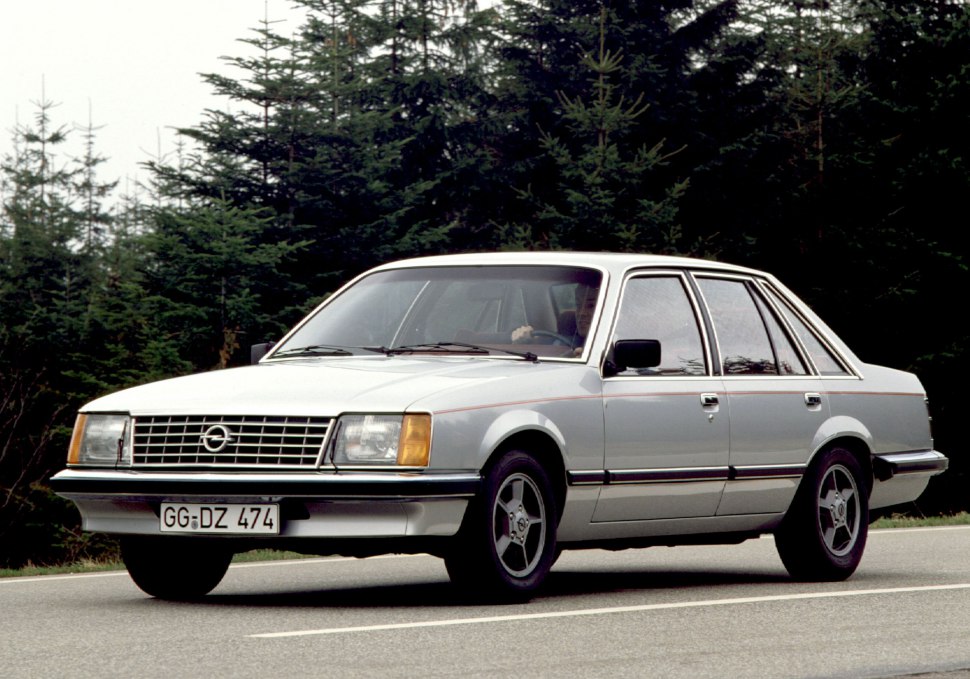
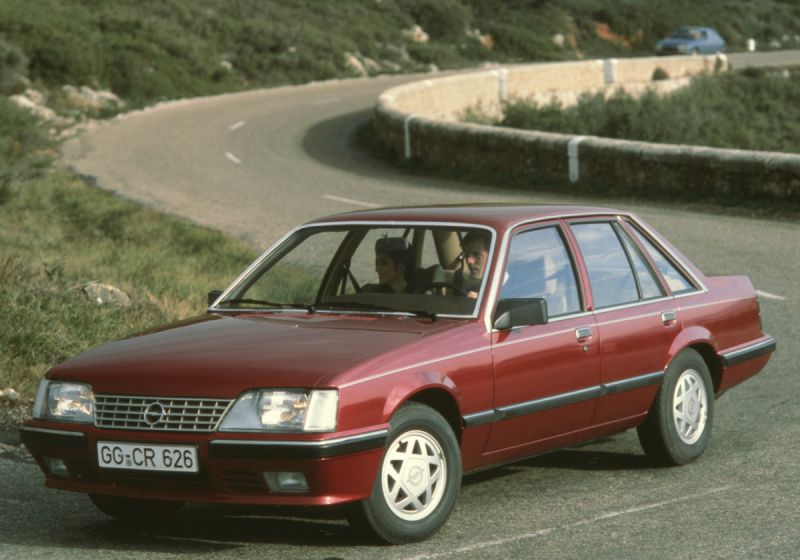
The Opel Senator A (facelift 1982) represents a significant chapter in Opel’s history as its flagship executive sedan. Launched in 1978, the Senator A was Opel’s ambitious entry into the highly competitive European luxury car segment, aiming to rival established players from Mercedes-Benz and BMW. The 1982 facelift brought a series of refinements and updates, solidifying its position and enhancing its appeal. This particular variant, the 3.0 E with its 180 horsepower engine and automatic transmission, was a top-tier offering, blending robust performance with the comfort and prestige expected of a full-size sedan.
Primarily targeting the European market, where it was often badge-engineered as the Vauxhall Senator in the UK, the Senator A was not officially sold in the United States. However, its engineering principles, design ethos, and performance metrics utilized universal automotive standards, making it a compelling subject for automotive enthusiasts globally. The Senator A was designed to offer a spacious, comfortable, and well-appointed experience for up to five occupants, making it a popular choice for business executives, government fleets, and discerning private owners seeking a substantial and reliable vehicle.
Engine and Performance of the Opel Senator A (facelift 1982) 3.0 E
At the heart of the Opel Senator A (facelift 1982) 3.0 E lies a potent 3.0-liter (2969 cm³ or 181.18 cu. in.) naturally aspirated inline-six gasoline engine, designated with the code 30E. This powerplant was a hallmark of Opel’s engineering at the time, featuring a unique “CIH” (Cam-in-Head) valvetrain design with two valves per cylinder. The engine was configured longitudinally at the front, driving the rear wheels, a classic setup for executive sedans emphasizing balanced weight distribution and traditional driving dynamics.
The 3.0 E engine produced a respectable 180 horsepower at 5800 rpm, delivering a robust power-to-liter ratio of 60.6 hp/liter. Torque output was equally impressive for its era, peaking at 182.92 lb.-ft. (248 Nm) at 4200 rpm. This power was managed by a smooth 4-speed automatic transmission, designed to provide effortless cruising and a refined driving experience, consistent with the car’s luxury aspirations. The multi-port manifold injection system ensured efficient fuel delivery, contributing to both performance and relative economy.
Performance figures for the Senator A 3.0 E were commendable. It could accelerate from 0 to 60 mph in approximately 10 seconds (0-100 km/h in 10.5 seconds), which was a brisk pace for a large sedan in the early 1980s. Its top speed reached an impressive 127.38 mph (205 km/h), allowing for comfortable high-speed travel on Europe’s autobahns. Fuel economy, while not a primary selling point for such a vehicle, was rated at a combined 22.2 US mpg (10.6 l/100 km), with urban consumption at 16.1 US mpg (14.6 l/100 km) and extra-urban at 31.4 US mpg (7.5 l/100 km), reflecting a balance between power and efficiency for its class.
Design and Features
The Opel Senator A (facelift 1982) adopted a classic four-door sedan body style, designed to convey an air of understated elegance and solidity. With a length of 190.51 inches (4839 mm), a width of 67.8 inches (1722 mm), and a height of 55.71 inches (1415 mm), the Senator commanded a significant road presence. The facelift introduced subtle but effective changes, including revised headlamps, grille, and taillights, which gave the car a more contemporary look without straying from its original conservative aesthetic. The drag coefficient of 0.39 was typical for a large sedan of its time.
Inside, the Senator A was configured to comfortably seat five passengers, offering ample legroom and headroom, particularly in the rear. The focus was on comfort and functionality, with high-quality upholstery and an ergonomic dashboard layout. Key features for the era included hydraulic power steering (cone worm with recirculation balls), which provided a comfortable and predictable steering feel. The trunk capacity was generous, at 25.25 cu. ft. (715 liters), making it highly practical for long journeys or family use.
In terms of chassis and safety, the Senator A was well-equipped. It featured an independent McPherson strut front suspension with coil springs and an anti-roll bar, paired with an independent coil spring rear suspension utilizing a transverse stabilizer and trailing arms. This setup was engineered to deliver a supple ride while maintaining stable handling. Braking was handled by ventilated discs at the front and solid discs at the rear, a modern setup for the period. Crucially, the 1982 facelift introduced ABS (Anti-lock Braking System) as an assisting system, a significant safety advancement for the early 1980s, enhancing braking control and reducing stopping distances.
Technical Specifications
| Category | Specification | US Equivalent |
|---|---|---|
| General Information | ||
| Brand | Opel | |
| Model | Senator A (facelift 1982) | |
| Type (Engine) | 3.0 E (180 Hp) Automatic | |
| Production Start | 1982 | |
| Production End | 1986 | |
| Body type | Sedan | |
| Seats | 5 | |
| Doors | 4 | |
| Performance Specs | ||
| Fuel consumption – urban | 14.6 l/100 km | 16.1 US mpg |
| Fuel consumption – extra urban | 7.5 l/100 km | 31.4 US mpg |
| Fuel consumption – combined | 10.6 l/100 km | 22.2 US mpg |
| Fuel Type | Petrol (Gasoline) | |
| Acceleration 0 – 60 mph | 10 sec | |
| Maximum speed | 205 km/h | 127.38 mph |
| Weight-to-power ratio | 7.7 kg/Hp | 130 Hp/tonne |
| Weight-to-torque ratio | 5.6 kg/Nm | 179.1 Nm/tonne |
| Engine Specs | ||
| Power | 180 Hp @ 5800 rpm | |
| Torque | 248 Nm @ 4200 rpm | 182.92 lb.-ft. @ 4200 rpm |
| Engine layout | Front, Longitudinal | |
| Engine Model/Code | 30E | |
| Engine displacement | 2969 cm³ | 181.18 cu. in. |
| Number of cylinders | 6 | |
| Engine configuration | Inline | |
| Cylinder Bore | 95 mm | 3.74 in. |
| Piston Stroke | 69.8 mm | 2.75 in. |
| Compression ratio | 9.4:1 | |
| Valves per cylinder | 2 | |
| Fuel injection system | Multi-port manifold injection | |
| Engine aspiration | Naturally aspirated engine | |
| Valvetrain | CIH | |
| Engine oil capacity | 5.5 l | 5.81 US qt |
| Coolant | 10.1 l | 10.67 US qt |
| Space, Volume and Weights | ||
| Kerb Weight | 1385 kg | 3053.4 lbs. |
| Max. weight | 1935 kg | 4265.94 lbs. |
| Max load | 550 kg | 1212.54 lbs. |
| Trunk (boot) space – minimum | 715 l | 25.25 cu. ft. |
| Fuel tank capacity | 75 l | 19.81 US gal |
| Max. roof load | 80 kg | 176.37 lbs. |
| Permitted trailer load with brakes (12%) | 1600 kg | 3527.4 lbs. |
| Permitted trailer load without brakes | 700 kg | 1543.24 lbs. |
| Dimensions | ||
| Length | 4839 mm | 190.51 in. |
| Width | 1722 mm | 67.8 in. |
| Height | 1415 mm | 55.71 in. |
| Wheelbase | 2683 mm | 105.63 in. |
| Front track | 1447 mm | 56.97 in. |
| Rear (Back) track | 1472 mm | 57.95 in. |
| Front overhang | 891 mm | 35.08 in. |
| Rear overhang | 1265 mm | 49.8 in. |
| Ride height (ground clearance) | 140 mm | 5.51 in. |
| Drag coefficient (Cd) | 0.39 | |
| Minimum turning circle | 10.8 m | 35.43 ft. |
| Drivetrain, Brakes and Suspension Specs | ||
| Drivetrain Architecture | Internal Combustion engine drives rear wheels | |
| Drive wheel | Rear wheel drive | |
| Number of gears and type of gearbox | 4 gears, automatic transmission | |
| Front suspension | Independent, McPherson with coil spring and anti-roll bar | |
| Rear suspension | Independent coil spring, Transverse stabilizer, Trailing arm | |
| Front brakes | Ventilated discs | |
| Rear brakes | Disc | |
| Assisting systems | ABS (Anti-lock braking system) | |
| Steering type | Cone worm with recirculation balls | |
| Power steering | Hydraulic Steering | |
| Tires size | 195/70 R14 | |
| Wheel rims size | 6J x 14 | |
Legacy and Market Impact
The Opel Senator A (facelift 1982) carved out a respectable niche in the demanding European executive car market. While it might not have carried the same luxury cachet as a Mercedes-Benz S-Class or a BMW 7-Series, it offered a compelling package of size, comfort, performance, and reliability at a more accessible price point. Its primary competitors included the BMW 5-Series (E28 generation), the Mercedes-Benz W123/W124 E-Class, and the Ford Granada. Against these rivals, the Senator was often praised for its spacious interior, robust inline-six engine, and comfortable ride.
Opel’s reputation for building durable and dependable vehicles was upheld by the Senator. The 3.0 E engine, in particular, was known for its longevity and smooth power delivery, making it a favorite for long-distance travel. The introduction of ABS in the facelifted model further enhanced its appeal, positioning it as a technologically advanced vehicle for its time. It was a common sight on German autobahns and in the fleets of European businesses and government agencies, attesting to its practicality and executive appeal.
The Senator A represented Opel’s serious effort to compete at the upper end of the mainstream market, bridging the gap between mass-market offerings and premium luxury brands. Its mechanical impact was significant, showcasing Opel’s engineering capabilities with its robust drivetrain and advanced suspension for the era. The Senator’s legacy is that of a comfortable, capable, and often overlooked executive sedan that provided excellent value and solid performance, setting the stage for its successor, the Senator B, and influencing subsequent large Opel models. Today, the Opel Senator A is remembered as a classic European executive car, appreciated by enthusiasts for its distinctive style and resilient engineering.