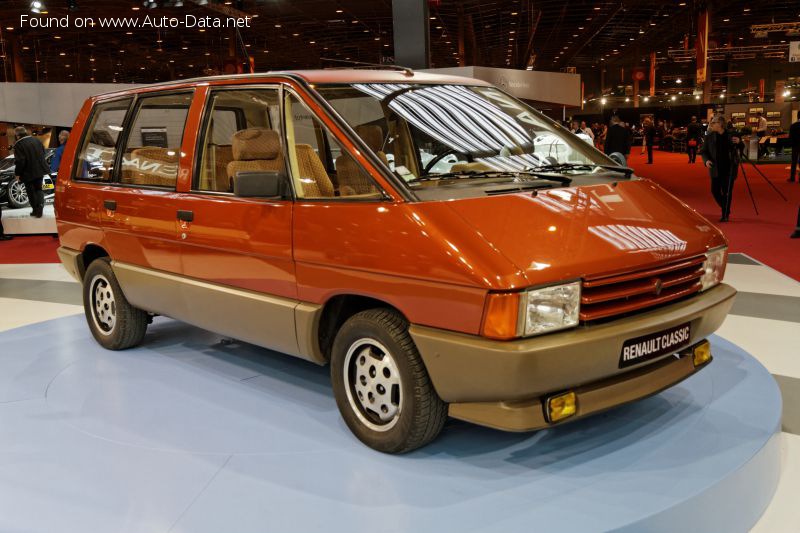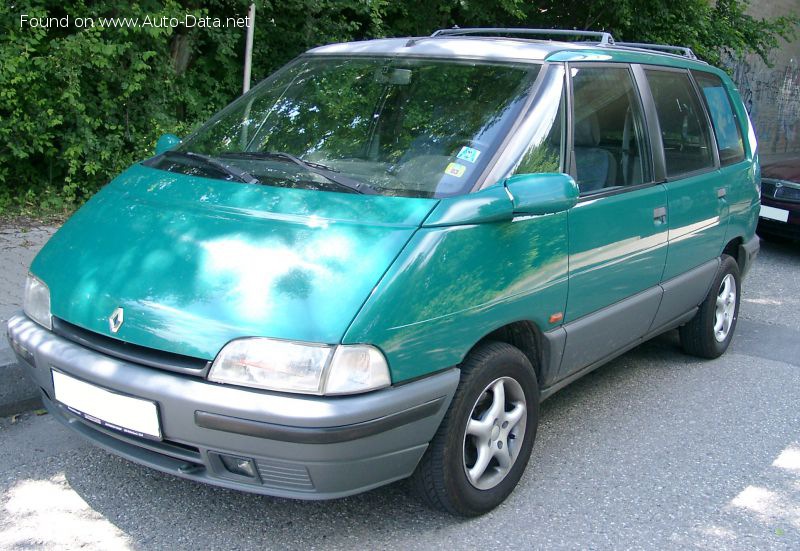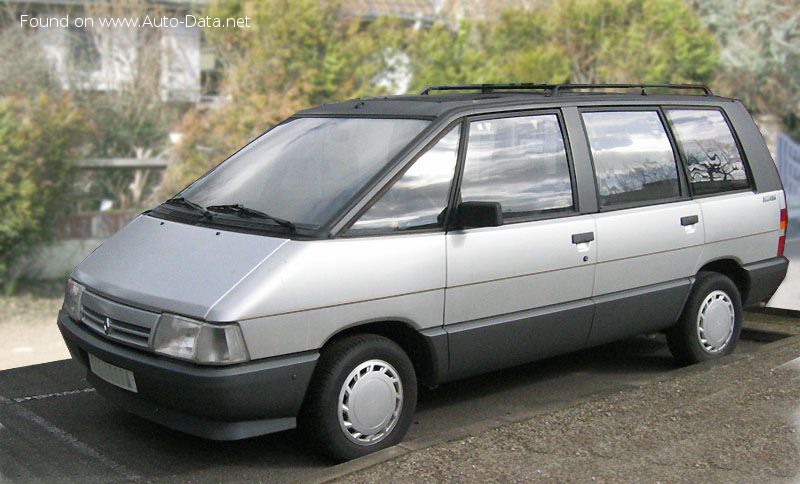
The Renault Espace I (J11/13, Phase II 1988): A European Minivan Pioneer
The Renault Espace I, particularly the Phase II models introduced in 1988, stands as a landmark vehicle in European automotive history. While never officially sold in the United States, the Espace (French for “space”) pioneered the multi-purpose vehicle (MPV) segment on the Continent, a concept that would later gain traction globally as the minivan. This first-generation Espace, produced from 1984 to 1991, was a revolutionary design, offering unprecedented interior versatility and a car-like driving experience in a spacious, family-oriented package. The 1988 Phase II models, including the 2.0 GTS variant, represented a significant refinement of the original groundbreaking design, solidifying its position as a segment leader.
Developed as a collaboration between Matra and Renault, the Espace was a bold departure from traditional station wagons and vans. It presented a sleek, aerodynamic silhouette with a forward-control cabin, maximizing interior volume. The 2.0 GTS variant, with its 103 horsepower engine, offered a practical balance of performance and fuel efficiency for European families, making it a highly desirable choice for those seeking a modern, flexible vehicle. Its innovative approach to passenger and cargo space redefined expectations for family transport and laid the groundwork for future generations of minivans and crossovers.
Engine and Performance: The 1988 Renault Espace I 2.0 GTS Powertrain
The heart of the 1988 Renault Espace I 2.0 GTS was its robust J6R 734 inline-four engine. This naturally aspirated 2.0-liter (1995 cm³ or 121.74 cu. in.) petrol unit was designed for reliability and adequate performance for family duties. Delivering 103 horsepower at 5500 rpm and a respectable 119.49 lb.-ft. (162 Nm) of torque at 3000 rpm, the engine provided sufficient motivation for the Espace’s relatively light 2623.5-pound (1190 kg) curb weight. This translated to a weight-to-power ratio of 11.6 kg/Hp, or 86.6 Hp per tonne, which was competitive for its class at the time.
Power was sent to the front wheels via a five-speed manual transmission, a common and efficient setup for European vehicles of this era. This drivetrain architecture contributed to the Espace’s car-like handling characteristics and fuel economy. The 2.0 GTS could accelerate from 0 to 60 mph in a calculated 12 seconds (0-100 km/h in 12.6 seconds), reaching a top speed of 105.63 mph (170 km/h). While not a performance car, these figures were perfectly adequate for highway cruising and city driving, where its primary purpose was transporting passengers comfortably.
Fuel efficiency for the 2.0 GTS was rated at an impressive 27.7 US mpg (8.5 l/100 km) combined, with urban consumption around 22 US mpg (10.7 l/100 km) and extra-urban figures reaching 37.3 US mpg (6.3 l/100 km). These numbers were quite good for a vehicle of its size and capacity in the late 1980s, especially considering its use of a carbureted fuel injection system, which was common before widespread adoption of electronic fuel injection. The engine’s simple, naturally aspirated design with two valves per cylinder and a 9.2:1 compression ratio underscored its focus on durability and ease of maintenance.
Design and Features: Revolutionizing Space and Versatility
The design of the Renault Espace I was nothing short of revolutionary. It presented a sleek, monobox profile that maximized interior volume within a relatively compact footprint. The exterior, initially constructed from fiberglass panels over a galvanized steel chassis, contributed to its lightweight nature and resistance to corrosion, a novel approach for a mass-market vehicle. The Phase II models introduced in 1988 brought subtle but impactful styling updates, including revised front and rear fascias, giving it a more modern and cohesive look. Its drag coefficient (Cd) of 0.34 was quite aerodynamic for a vehicle of its type, aiding both fuel economy and high-speed stability.
Measuring 171.85 inches (4365 mm) in length, 69.96 inches (1777 mm) in width, and 65.35 inches (1660 mm) in height, the Espace was considerably shorter than many American minivans of the era, making it more maneuverable on narrow European streets. However, its innovative packaging allowed for a truly cavernous interior. The Espace was designed as a 7-seater MPV, featuring highly modular seating. The rear seats could be removed, folded, or even swiveled to face each other, allowing for myriad configurations that transformed the vehicle from a passenger carrier to a spacious cargo van. This flexibility was a key selling point, appealing to families and small businesses alike.
With a minimum trunk space of 20.48 cu. ft. (580 liters) and a maximum of an astonishing 108.06 cu. ft. (3060 liters) with the rear seats removed, the Espace offered unmatched practicality. Other notable features for its time included a relatively low loading floor, large glass areas for excellent visibility, and a comfortable ride thanks to its independent McPherson front suspension. The vehicle was equipped with ventilated disc brakes at the front and drum brakes at the rear, a standard setup for a family vehicle of the late 1980s. Its 14-inch wheels fitted with 185/65 R14 tires provided a comfortable and predictable ride.
Technical Specifications: Renault Espace I (J11/13, Phase II 1988) 2.0 GTS (103 Hp)
| Category | Specification | US Equivalent (where applicable) |
|---|---|---|
General Information |
||
| Brand | Renault | |
| Model | Espace | |
| Generation | Espace I (J11/13, Phase II 1988) | |
| Type (Engine) | 2.0 GTS (103 Hp) | |
| Start of Production | 1988 year | |
| End of Production | 1991 year | |
| Powertrain Architecture | Internal Combustion engine | |
| Body type | Minivan, MPV | |
| Seats | 7 | |
| Doors | 5 | |
Performance Specs |
||
| Fuel Consumption (Economy) – Urban | 10.7 l/100 km | 22 US mpg |
| Fuel Consumption (Economy) – Extra Urban | 6.3 l/100 km | 37.3 US mpg |
| Fuel Consumption (Economy) – Combined | 8.5 l/100 km | 27.7 US mpg |
| Fuel Type | Petrol (Gasoline) | |
| Acceleration 0 – 100 km/h | 12.6 sec | |
| Acceleration 0 – 62 mph | 12.6 sec | |
| Acceleration 0 – 60 mph (Calculated) | 12 sec | |
| Maximum Speed | 170 km/h | 105.63 mph |
| Weight-to-Power Ratio | 11.6 kg/Hp | |
| Weight-to-Torque Ratio | 7.3 kg/Nm | |
Engine Specs |
||
| Power | 103 Hp @ 5500 rpm | |
| Power per Liter | 51.6 Hp/l | |
| Torque | 162 Nm @ 3000 rpm | 119.49 lb.-ft. @ 3000 rpm |
| Engine Layout | Front, Longitudinal | |
| Engine Model/Code | J6R 734 | |
| Engine Displacement | 1995 cm³ | 2.0 Liters (121.74 cu. in.) |
| Number of Cylinders | 4 | |
| Engine Configuration | Inline | |
| Cylinder Bore | 88 mm | 3.46 in. |
| Piston Stroke | 82 mm | 3.23 in. |
| Compression Ratio | 9.2:1 | |
| Number of Valves per Cylinder | 2 | |
| Fuel Injection System | Carburettor | |
| Engine Aspiration | Naturally aspirated engine | |
| Engine Oil Capacity | 6.2 l | 6.55 US qt |
| Coolant Capacity | 7.2 l | 7.61 US qt |
Space, Volume and Weights |
||
| Kerb Weight | 1190 kg | 2623.5 lbs. |
| Max. Weight (Gross Vehicle Weight) | 1820 kg | 4012.41 lbs. |
| Max Load | 630 kg | 1388.91 lbs. |
| Trunk (Boot) Space – Minimum | 580 l | 20.48 cu. ft. |
| Trunk (Boot) Space – Maximum | 3060 l | 108.06 cu. ft. |
| Fuel Tank Capacity | 63 l | 16.64 US gal |
| Max. Roof Load | 70 kg | 154.32 lbs. |
Dimensions |
||
| Length | 4365 mm | 171.85 in. |
| Width | 1777 mm | 69.96 in. |
| Height | 1660 mm | 65.35 in. |
| Wheelbase | 2580 mm | 101.57 in. |
| Front Track | 1467 mm | 57.76 in. |
| Rear (Back) Track | 1489 mm | 58.62 in. |
| Front Overhang | 920 mm | 36.22 in. |
| Rear Overhang | 865 mm | 34.06 in. |
| Ride Height (Ground Clearance) | 150-125 mm | 5.91 – 4.92 in. |
| Drag Coefficient (Cd) | 0.34 | |
| Minimum Turning Circle (Turning Diameter) | 12.4 m | 40.68 ft. |
Drivetrain, Brakes and Suspension Specs |
||
| Drivetrain Architecture | The Internal combustion engine (ICE) drives the front wheels of the vehicle. | |
| Drive Wheel | Front wheel drive | |
| Number of Gears and Type of Gearbox | 5 gears, manual transmission | |
| Front Suspension | Independent type McPherson | |
| Front Brakes | Ventilated discs | |
| Rear Brakes | Drum | |
| Steering Type | Steering rack and pinion | |
| Tires Size | 185/65 R14 | |
| Wheel Rims Size | 14 | |
Legacy and Market Impact of the Renault Espace I
The Renault Espace I carved out a unique and lasting legacy in the European automotive landscape. When it first debuted in 1984, it was met with skepticism due to its unconventional design, but its ingenious packaging and versatility quickly won over families across the continent. It effectively created the European MPV segment, inspiring a host of imitators and establishing a new paradigm for family vehicles that prioritized interior space, comfort, and adaptability over traditional sedan or wagon formats.
In its primary European market, the Espace faced few direct competitors initially. Its closest rivals were often traditional station wagons or larger, more commercially oriented vans that lacked the Espace’s car-like driving dynamics and refined interior. As the segment matured, vehicles like the Chrysler Voyager (which was also sold in Europe as a Dodge or Chrysler) and later the Ford Galaxy/Volkswagen Sharan/SEAT Alhambra triplets emerged, but the Espace had already established itself as the benchmark for innovation and design. Its reputation for practicality, comfort, and a genuinely different approach to family transport cemented its place in automotive history.
The Espace’s impact extended beyond just sales figures; it profoundly influenced vehicle design and consumer expectations. It demonstrated that a family vehicle could be both practical and stylish, challenging the notion that utility had to come at the expense of aesthetics or driving pleasure. Its success led to multiple generations, each evolving the concept, and its DNA can be seen in today’s vast array of crossovers and larger SUVs that blend passenger comfort with versatile cargo capabilities. The 1988 Phase II 2.0 GTS, with its refined engineering and well-balanced performance, represents a crucial chapter in the story of this pioneering vehicle, showcasing how Renault dared to be different and, in doing so, changed the automotive world.