The Volkswagen Multivan (T7) Long 2.0 TDI (150 Hp) DSG: A Modern People Mover
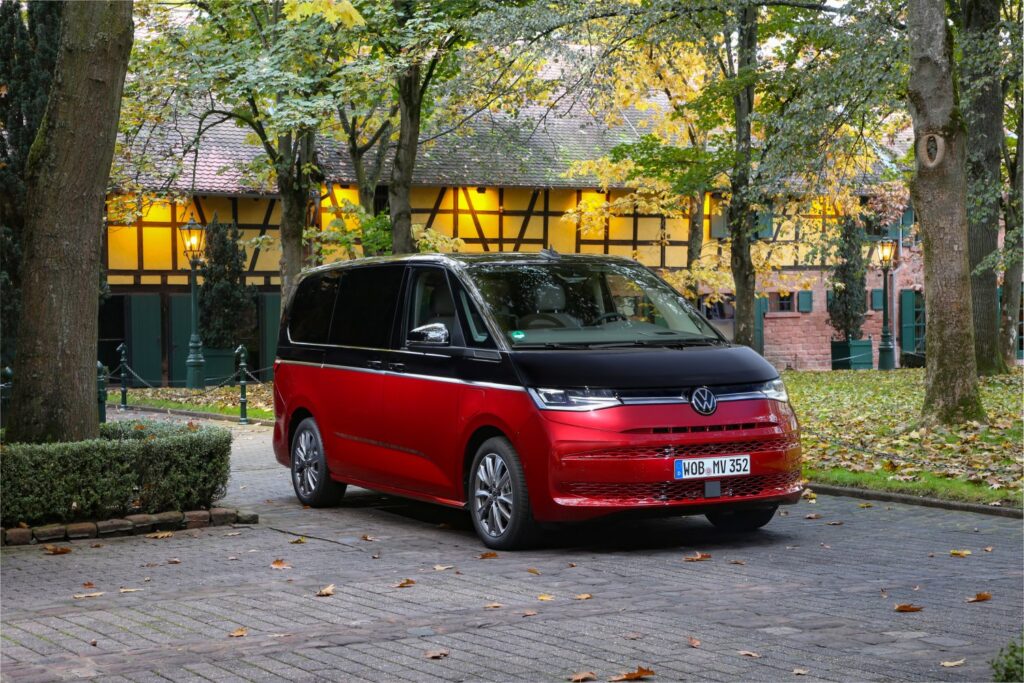
The Volkswagen Multivan (T7) Long represents the latest evolution of a vehicle lineage that has defined versatility and passenger transport for decades. Introduced in 2022, this seventh-generation Multivan marks a significant departure from its Transporter-derived predecessors, transitioning to Volkswagen Group’s MQB platform. This strategic shift underpins a more car-like driving experience, enhanced comfort, and integration of advanced technologies, while retaining the famed practicality that characterizes the Multivan nameplate. The specific variant under review, the Volkswagen Multivan (T7) Long 2.0 TDI (150 Hp) DSG, combines a powerful yet efficient diesel engine with a smooth automatic transmission and an extended wheelbase, catering to families and businesses seeking premium space and capability in markets where it is predominantly sold, such as Europe.
Unlike the iconic Volkswagen vans sold in the United States, the Multivan (T7) is not offered in the North American market. Instead, it serves as a sophisticated alternative to traditional minivans and large SUVs in Europe and other global regions. Its design philosophy emphasizes a blend of executive transport and family hauler, distinguished by its flexible interior, refined driving dynamics, and a strong focus on passenger comfort and safety. The “Long” designation signifies an extended wheelbase version, maximizing interior volume and cargo capacity, making it a highly compelling option for those requiring substantial space without compromising on modern automotive features.
Engine and Performance of the Volkswagen Multivan (T7) Long
At the heart of this particular Volkswagen Multivan (T7) Long is a robust and highly efficient 2.0-liter TDI (Turbocharged Direct Injection) diesel engine, bearing the internal code DNAA. This inline four-cylinder powerplant delivers a respectable 150 horsepower (Hp) at a broad range of 3000-3750 revolutions per minute (rpm). More critically for a vehicle of this size and purpose, the engine produces a substantial 265.52 pound-feet (360 Nm) of torque, available from a low 1600 rpm and extending up to 2750 rpm. This wide torque band ensures strong pulling power and effortless acceleration, whether navigating city streets or cruising on the highway, even with a full complement of passengers and cargo.
Power is channeled to the front wheels through a sophisticated 7-speed DSG (Direct Shift Gearbox) automatic transmission. Volkswagen’s DSG system is renowned for its rapid, seamless gear changes, contributing to both driving refinement and fuel efficiency. The combination allows the Multivan (T7) Long to accelerate from 0 to 60 mph in a brisk 11 seconds, with 0 to 100 km/h taking 11.6 seconds. Top speed is rated at 118.06 mph (190 km/h), demonstrating its capability for sustained highway speeds.
Fuel economy is a strong suit for the 2.0 TDI powertrain, especially considering the vehicle’s size. Based on the NEDC cycle, the combined fuel consumption is an impressive 43.6 – 44.4 US miles per gallon (5.3-5.4 l/100 km). Urban driving yields 37.9 – 39.2 US mpg (6-6.2 l/100 km), while extra-urban figures reach 47 – 48 US mpg (4.9-5 l/100 km). CO2 emissions are kept in check at 141-143 g/km, reflecting Volkswagen’s commitment to environmental responsibility. The inclusion of a Start & Stop system and a particulate filter further enhances its efficiency and compliance with stringent emission standards.
Design and Features
Exterior and Interior Design of the Volkswagen Multivan (T7) Long
The Volkswagen Multivan (T7) Long adopts a modern, sleek minivan aesthetic, moving away from the more commercial van appearance of earlier generations. Its exterior is characterized by clean lines, a distinctive front fascia with integrated LED lighting, and a well-proportioned silhouette that belies its substantial dimensions. With a length of 203.66 inches (5173 mm), a width of 76.42 inches (1941 mm), and a height of 75.08 inches (1907 mm), the Long variant offers an imposing road presence and an exceptionally spacious interior. The extended 122.99-inch (3124 mm) wheelbase is key to its generous cabin volume.
Inside, the Multivan (T7) Long is designed as a sophisticated and highly versatile space for up to seven occupants. The seating configuration is incredibly flexible, featuring individual, lightweight seats that can be easily removed, slid, or rotated to create various layouts – from a conventional forward-facing setup to a conference-style arrangement. This modularity is a hallmark of the Multivan’s appeal, allowing owners to adapt the interior for passenger transport, cargo hauling, or even a mobile office. The minimum trunk space starts at a substantial 67.1 cubic feet (1900 liters) and expands to an cavernous 123.6 cubic feet (3500 liters) with seats removed or reconfigured, making it immensely practical for diverse needs.
Technology and Safety
As a modern vehicle on the MQB platform, the Multivan (T7) Long is equipped with a comprehensive suite of contemporary features. While specific infotainment and driver-assistance systems are not detailed in the provided data, one can expect a large touchscreen infotainment system, digital instrument cluster, and a host of advanced driver-assistance systems (ADAS) standard or available. These would typically include adaptive cruise control, lane-keeping assist, front assist with autonomous emergency braking, and parking assistance, all contributing to enhanced safety and driving convenience. The vehicle’s robust chassis, coupled with front ventilated disc brakes and rear disc brakes, and standard ABS, ensures strong stopping power and stability. Electric power steering provides precise control and ease of maneuverability, especially important for a vehicle of this size.
Technical Specifications
| Volkswagen Multivan (T7) Long 2.0 TDI (150 Hp) DSG (2022) | |
|---|---|
| General Information | |
| Brand | Volkswagen |
| Model | Multivan |
| Generation | Multivan (T7) Long |
| Type (Engine) | 2.0 TDI (150 Hp) DSG |
| Start of Production | 2022 year |
| Powertrain Architecture | Internal Combustion engine |
| Body Type | Minivan |
| Seats | 7 |
| Doors | 5 |
| Performance Specifications | |
| Fuel Consumption (Urban, NEDC) | 37.9 – 39.2 US mpg (6-6.2 l/100 km) |
| Fuel Consumption (Extra Urban, NEDC) | 47 – 48 US mpg (4.9-5 l/100 km) |
| Fuel Consumption (Combined, NEDC) | 43.6 – 44.4 US mpg (5.3-5.4 l/100 km) |
| CO2 Emissions (NEDC) | 141-143 g/km |
| Fuel Type | Diesel |
| Acceleration 0 – 60 mph | 11 seconds |
| Acceleration 0 – 62 mph (0-100 km/h) | 11.6 seconds |
| Maximum Speed | 118.06 mph (190 km/h) |
| Weight-to-Power Ratio | 13.8 kg/Hp (72.6 Hp/tonne) |
| Weight-to-Torque Ratio | 5.7 kg/Nm (174.3 Nm/tonne) |
| Engine Specifications | |
| Power | 150 Hp @ 3000-3750 rpm |
| Power per Liter | 76.2 Hp/l |
| Torque | 265.52 lb.-ft. (360 Nm) @ 1600-2750 rpm |
| Engine Layout | Front, Transverse |
| Engine Model/Code | DNAA |
| Engine Displacement | 120.09 cu. in. (1968 cm3 / 2.0 l) |
| Number of Cylinders | 4 |
| Engine Configuration | Inline |
| Number of Valves per Cylinder | 4 |
| Fuel Injection System | Diesel Commonrail |
| Engine Aspiration | Turbocharger, Intercooler |
| Valvetrain | DOHC |
| Engine Oil Capacity | 7.82 US qt (7.4 l) |
| Engine Systems | Start & Stop System, Particulate filter |
| Space, Volume and Weights | |
| Kerb Weight | 4552.55 lbs. (2065 kg) |
| Max. Weight (GVWR) | 6283.17 lbs. (2850 kg) |
| Max Load | 1730.63 lbs. (785 kg) |
| Trunk (Boot) Space – Minimum | 67.1 cu. ft. (1900 l) |
| Trunk (Boot) Space – Maximum | 123.6 cu. ft. (3500 l) |
| Fuel Tank Capacity | 15.85 US gal (60 l) |
| Max. Roof Load | 220.46 lbs. (100 kg) |
| Permitted Trailer Load with Brakes (12%) | 4409.25 lbs. (2000 kg) |
| Permitted Trailer Load without Brakes | 1653.47 lbs. (750 kg) |
| Permitted Towbar Download | 176.37 lbs. (80 kg) |
| Dimensions | |
| Length | 203.66 in. (5173 mm) |
| Width | 76.42 in. (1941 mm) |
| Width Including Mirrors | 88.66 in. (2252 mm) |
| Height | 75.08 in. (1907 mm) |
| Wheelbase | 122.99 in. (3124 mm) |
| Front Overhang | 37.48 in. (952 mm) |
| Rear Overhang | 43.19 in. (1097 mm) |
| Minimum Turning Circle (Turning Diameter) | 39.7 ft. (12.1 m) |
| Approach Angle | 18° |
| Departure Angle | 13.2° |
| Ramp-over (Brakeover) Angle | 11.8° |
| Drivetrain, Brakes and Suspension Specs | |
| Drivetrain Architecture | Front-wheel drive with Internal Combustion Engine |
| Drive Wheel | Front wheel drive |
| Number of Gears and Type of Gearbox | 7 gears, automatic transmission DSG |
| Front Brakes | Ventilated discs |
| Rear Brakes | Disc |
| Assisting Systems | ABS (Anti-lock braking system) |
| Steering Type | Steering rack and pinion |
| Power Steering | Electric Steering |
| Tire Sizes | 215/65 R16; 235/55 R17; 235/50 R18 |
| Wheel Rim Sizes | 6.5J x 16; 6.5J x 17; 7.5J x 18 |
Legacy and Market Impact of the Volkswagen Multivan (T7) Long
The Volkswagen Multivan lineage, often referred to as the T-series (Transporter), boasts a storied history dating back to the iconic Type 2 “Bus.” Each generation has built upon the legacy of versatility, reliability, and innovative space utilization. The T7 generation, and particularly the Volkswagen Multivan (T7) Long, marks a significant philosophical shift. By moving to the MQB car platform, Volkswagen aimed to elevate the driving experience and passenger comfort to levels comparable with premium passenger cars, distinguishing it further from its commercial van roots. This repositioning allows it to compete more directly with high-end minivans and even some luxury SUVs in its primary European market.
In Europe, the Multivan holds an almost legendary status, revered for its robust build quality, enduring appeal, and exceptional practicality. It consistently ranks among the top choices for large families, executive transport services, and active lifestyle enthusiasts who demand flexible seating and vast cargo capacity. Its competitors in the European market include vehicles like the Mercedes-Benz V-Class, Ford Tourneo Custom, and the more recently introduced Hyundai Staria. The Multivan (T7) Long distinguishes itself with its refined diesel powertrain, offering a compelling blend of power, torque, and fuel efficiency that remains highly valued in regions where diesel is still a popular choice for long-distance driving.
The Multivan (T7) Long’s impact is rooted in its ability to seamlessly blend the utility of a van with the comfort and technology of a modern car. Its modular interior design, advanced safety features, and efficient powertrain ensure its continued relevance in a competitive segment. While its absence from the American market means it’s not a direct competitor to US-market minivans like the Chrysler Pacifica or Honda Odyssey, its design and engineering principles showcase Volkswagen’s global approach to passenger mobility. The T7 Multivan, especially in its Long 2.0 TDI configuration, reinforces Volkswagen’s reputation for producing highly capable, durable, and sophisticated people movers that cater to a discerning international clientele. It stands as a testament to Volkswagen’s continuous innovation in adapting its beloved van concept to modern demands for efficiency, comfort, and advanced technology.