The Mitsubishi Lancer IV Hatchback 1.5 12V (90 Hp): A Practical Global Compact
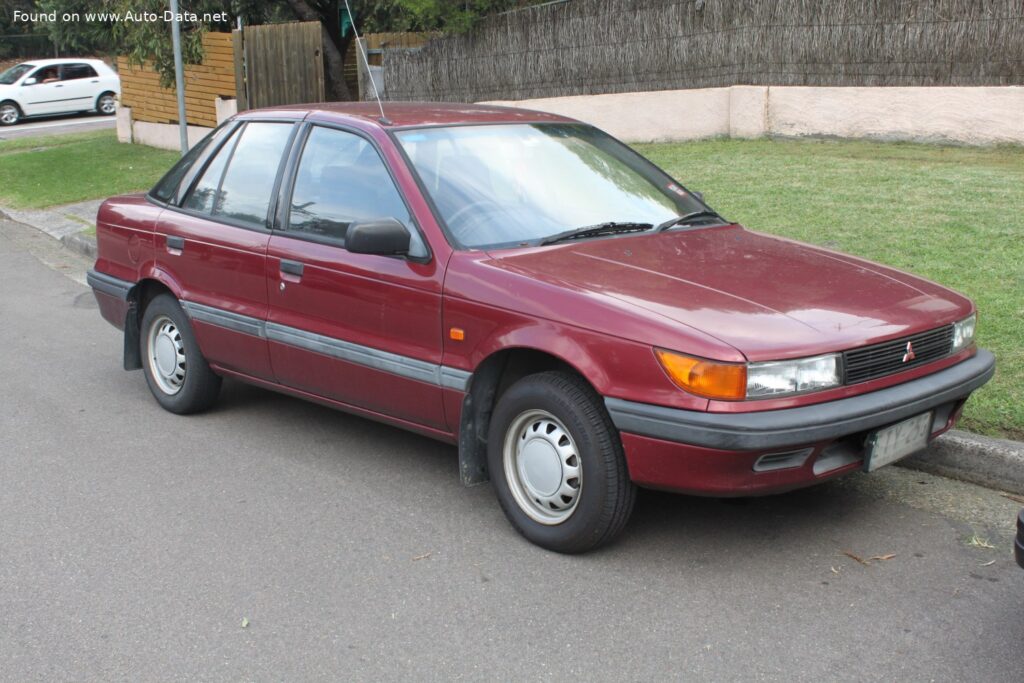
The Mitsubishi Lancer IV Hatchback 1.5 12V (90 Hp), produced from 1989 to 1992, represents a significant chapter in Mitsubishi’s history, particularly in international markets where compact hatchbacks were highly prized for their versatility and economic efficiency. While the Lancer nameplate is globally recognized, this specific fourth-generation hatchback variant, often designated as the C60 series, carved out its niche primarily in Europe, Asia, and other regions outside of North America, where the sedan body style typically dominated the Lancer’s presence. This iteration of the Lancer showcased Mitsubishi’s commitment to producing reliable, practical, and affordable transportation, embodying the engineering principles that defined Japanese automakers during this era. It served as a workhorse for families and individuals seeking a dependable compact car with a focus on fuel economy and functional design.
Positioned within the competitive compact segment, the Mitsubishi Lancer IV Hatchback 1.5 12V (90 Hp) offered a compelling package of straightforward mechanics, a comfortable ride, and ample interior space relative to its exterior dimensions. It was a testament to the brand’s global strategy, adapting its popular Lancer platform to meet diverse market demands. This article delves into the technical specifics, design philosophy, and lasting legacy of this often-overlooked yet historically important model in the Mitsubishi lineup.
Engine and Performance of the Mitsubishi Lancer IV Hatchback
At the heart of the Mitsubishi Lancer IV Hatchback 1.5 12V (90 Hp) was a robust 1.5-liter (1468 cm³) inline four-cylinder engine. This naturally aspirated gasoline powerplant featured an OHC (Overhead Camshaft) valvetrain with three valves per cylinder, a configuration that was a smart compromise between performance and efficiency for its time. Delivering a respectable 90 horsepower at 6000 rpm, the engine provided sufficient power for daily commuting and highway cruising. Its multi-port manifold injection system ensured precise fuel delivery, contributing to both its efficiency and smooth operation.
Torque output stood at 92.93 lb.-ft. (126 Nm) peaking at a relatively low 3000 rpm, which translated into good low-end responsiveness, making the Lancer feel agile in urban traffic. Power was sent to the front wheels via a reliable 5-speed manual transmission, a common and efficient choice for compact cars of this period. This powertrain architecture was designed for durability and ease of maintenance, key factors for its target market.
In terms of performance, the Lancer IV Hatchback was no speed demon, but it was competent. It could accelerate from 0 to 60 mph in a calculated 11.1 seconds, with a top speed of approximately 105.63 mph (170 km/h). These figures placed it squarely within the performance expectations for a mainstream compact hatchback of its era. Fuel economy was a strong suit, with a combined rating of 33.6 US mpg (7 l/100 km). Urban driving saw around 27.4 US mpg (8.6 l/100 km), while extra-urban cruising could achieve an impressive 45.2 US mpg (5.2 l/100 km), highlighting its efficiency for longer journeys. With a 13.21 US gallon fuel tank, the Lancer offered a practical range between fill-ups, further enhancing its appeal as an economical choice.
Design and Features
The Mitsubishi Lancer IV Hatchback featured a practical and understated design, characteristic of Japanese automotive styling in the late 1980s and early 1990s. Its 5-door hatchback body offered excellent utility, providing easy access to both the passenger cabin and the cargo area. With a length of 166.73 inches (4235 mm), a width of 65.75 inches (1670 mm), and a height of 55.31 inches (1405 mm), it was a compact vehicle, perfectly suited for navigating crowded city streets and tight parking spaces. The 96.65-inch (2455 mm) wheelbase contributed to a stable ride quality while maintaining maneuverability.
The interior was designed with practicality and comfort in mind, accommodating five occupants across its two rows of seating. While specific luxury features might have been limited in this base trim, the focus was on durable materials and ergonomic layouts that stood the test of time. The hatchback configuration was a significant advantage, offering a minimum trunk space of 11.3 cubic feet (320 liters), which could expand to a generous 33.55 cubic feet (950 liters) with the rear seats folded down. This flexibility made it an ideal choice for hauling groceries, luggage, or even larger items, significantly enhancing its utility for small families or individuals with active lifestyles.
Underneath, the Lancer employed a straightforward yet effective suspension system, utilizing coil springs at both the front and rear, providing a comfortable and predictable ride. Braking duties were handled by disc brakes at the front and drum brakes at the rear, a common setup for compact cars of this period. An important safety feature for its time, ABS (Anti-lock Braking System), was available as an assisting system, offering improved control during emergency braking. The steering system was a responsive rack and pinion setup, contributing to the car’s agile feel. The vehicle rode on 175/70 R13 tires, providing a balance of grip and ride comfort appropriate for its class.
Technical Specifications
| Category | Specification |
|---|---|
| Brand | Mitsubishi |
| Model | Lancer |
| Generation | Lancer IV Hatchback |
| Type (Engine) | 1.5 12V (90 Hp) |
| Start of Production | 1989 year |
| End of Production | 1992 year |
| Powertrain Architecture | Internal Combustion engine |
| Body Type | Hatchback |
| Seats | 5 |
| Doors | 5 |
|
Performance Specs |
|
| Fuel Consumption (Urban) | 8.6 l/100 km (27.4 US mpg) |
| Fuel Consumption (Extra Urban) | 5.2 l/100 km (45.2 US mpg) |
| Fuel Consumption (Combined) | 7 l/100 km (33.6 US mpg) |
| Fuel Type | Petrol (Gasoline) |
| Acceleration 0 – 60 mph | 11.1 sec |
| Maximum Speed | 105.63 mph (170 km/h) |
| Weight-to-Power Ratio | 12.3 kg/Hp (81.4 Hp/tonne) |
| Weight-to-Torque Ratio | 8.8 kg/Nm (114 Nm/tonne) |
|
Engine Specs |
|
| Power | 90 Hp @ 6000 rpm |
| Power per Liter | 61.3 Hp/l |
| Torque | 92.93 lb.-ft. (126 Nm) @ 3000 rpm |
| Engine Layout | Front, Transverse |
| Engine Displacement | 1.5 liters (1468 cm³ / 89.58 cu. in.) |
| Number of Cylinders | 4 |
| Engine Configuration | Inline |
| Cylinder Bore | 2.97 in. (75.5 mm) |
| Piston Stroke | 3.23 in. (82 mm) |
| Compression Ratio | 9.2:1 |
| Number of Valves per Cylinder | 3 |
| Fuel Injection System | Multi-port manifold injection |
| Engine Aspiration | Naturally aspirated engine |
| Valvetrain | OHC |
|
Space, Volume and Weights |
|
| Kerb Weight | 2436.11 lbs. (1105 kg) |
| Max. Weight | 3351.03 lbs. (1520 kg) |
| Max Load | 914.92 lbs. (415 kg) |
| Trunk (Boot) Space – Minimum | 11.3 cu. ft. (320 l) |
| Trunk (Boot) Space – Maximum | 33.55 cu. ft. (950 l) |
| Fuel Tank Capacity | 13.21 US gal (50 l) |
|
Dimensions |
|
| Length | 166.73 in. (4235 mm) |
| Width | 65.75 in. (1670 mm) |
| Height | 55.31 in. (1405 mm) |
| Wheelbase | 96.65 in. (2455 mm) |
| Front Track | 56.3 in. (1430 mm) |
| Rear (Back) Track | 56.3 in. (1430 mm) |
|
Drivetrain, Brakes and Suspension Specs |
|
| Drivetrain Architecture | Front-wheel drive (ICE drives front wheels) |
| Drive Wheel | Front wheel drive |
| Number of Gears and Type of Gearbox | 5 gears, manual transmission |
| Front Suspension | Coil spring |
| Rear Suspension | Coil spring |
| Front Brakes | Disc |
| Rear Brakes | Drum |
| Assisting Systems | ABS (Anti-lock braking system) |
| Steering Type | Steering rack and pinion |
| Tires Size | 175/70 R13 |
Legacy and Market Impact
The Mitsubishi Lancer IV Hatchback 1.5 12V (90 Hp), despite its relatively short production run from 1989 to 1992, played a crucial role in Mitsubishi’s global strategy during a period of intense competition in the compact car segment. While the Lancer nameplate is perhaps most famously associated with its high-performance Evolution variants or its more mainstream sedan forms in the United States, this practical hatchback variant solidified Mitsubishi’s reputation as a manufacturer of dependable, fuel-efficient, and well-engineered vehicles in markets where hatchbacks were the preferred choice for their versatility.
In its primary markets, such as Europe and parts of Asia, the Lancer IV Hatchback competed fiercely with established rivals like the Honda Civic, Toyota Corolla, Nissan Sunny/Pulsar, and various European compacts such as the Volkswagen Golf and Opel Kadett. Its appeal lay in its blend of Japanese reliability, competitive pricing, and a no-nonsense approach to transportation. Owners appreciated its low running costs, robust mechanicals, and the practical advantage of its expansive cargo capacity when the rear seats were folded.
The Lancer IV Hatchback contributed to Mitsubishi’s image as a brand that offered sensible, value-oriented cars before the company’s later shift towards SUVs and more specialized performance models. It represented a period when Mitsubishi was at the forefront of producing well-rounded, accessible vehicles for a broad international audience. While it may not have achieved the iconic status of some of its contemporaries, its quiet competence and widespread availability made it a significant player in the automotive landscape of its time.
Today, the Mitsubishi Lancer IV Hatchback 1.5 12V (90 Hp) is recognized by enthusiasts and collectors as a classic example of late 1980s/early 1990s Japanese engineering. Its legacy is one of steadfast reliability and practical design, embodying the qualities that many car buyers sought in a compact vehicle. It stands as a testament to Mitsubishi’s global reach and its ability to tailor its products to diverse market needs, leaving a lasting impression as a dependable compact workhorse.