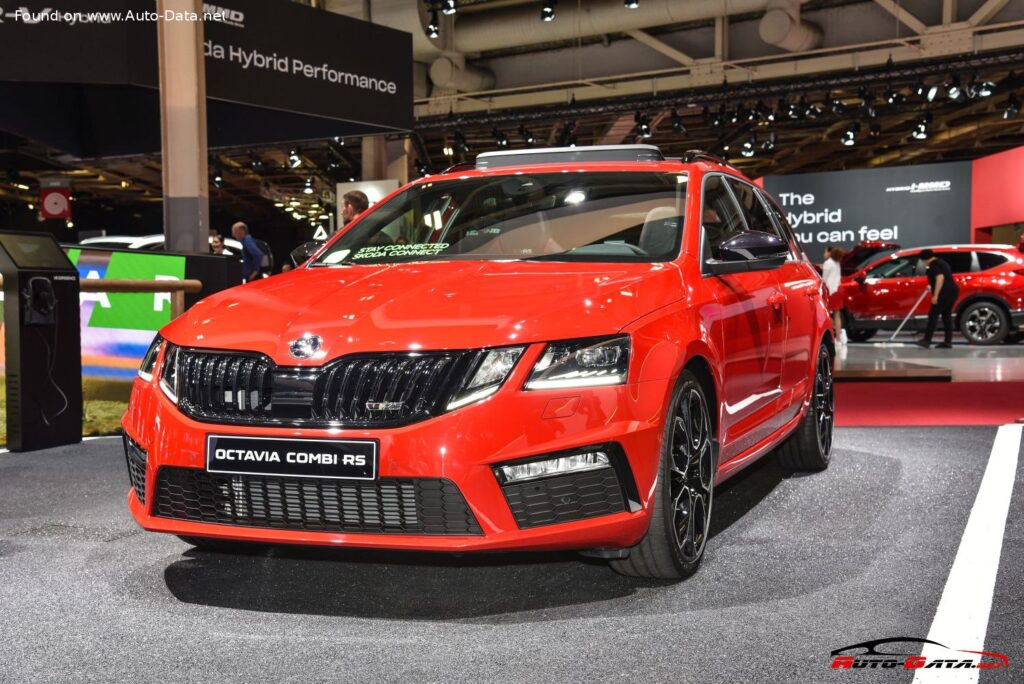
The Skoda Octavia III Combi (facelift 2017) RS 2.0 TSI (230 Hp): A European Hot Wagon
The Skoda Octavia, a cornerstone of the Czech automaker’s lineup, has long been celebrated for its blend of practicality, value, and robust engineering, largely thanks to its Volkswagen Group underpinnings. The third-generation Octavia, particularly in its facelifted 2017 iteration, further solidified this reputation. Among its diverse offerings, the Skoda Octavia III Combi (facelift 2017) RS 2.0 TSI (230 Hp) stands out as a particularly compelling proposition. This model represents the performance-oriented variant of the popular station wagon (Combi, or estate in European parlance), blending the utility of a family hauler with the exhilarating dynamics of a true sports car. While not officially sold in the United States, the Octavia RS has carved a significant niche in European markets, appealing to enthusiasts who seek a discreet yet potent vehicle capable of tackling both daily commutes and spirited drives with equal aplomb. It embodies Skoda’s “Simply Clever” philosophy, delivering intelligent design and thoughtful features alongside genuine performance credentials.
Powertrain and Dynamic Performance
At the heart of the Skoda Octavia III Combi (facelift 2017) RS 2.0 TSI (230 Hp) lies a highly regarded 2.0-liter turbocharged inline-four engine, designated by the internal code EA888 / CHHA. This powerplant is a staple across many performance models within the Volkswagen Group, known for its strong output, broad torque band, and efficiency. In this application, it produces a robust 230 horsepower, available across a wide rev range from 4700 to 6200 rpm, ensuring plentiful power delivery whether cruising or accelerating hard. Torque figures are equally impressive, with 258.15 lb-ft on tap from a low 1500 rpm all the way up to 4600 rpm. This wide torque plateau is crucial for the car’s responsive feel, providing immediate thrust without the need to constantly downshift.
The engine’s advanced features include both direct injection and multi-port manifold injection, a sophisticated system designed to optimize fuel delivery for both power and efficiency across various operating conditions. A turbocharger with an intercooler ensures dense air intake, maximizing combustion efficiency and power output. The valvetrain features a Double Overhead Camshaft (DOHC) configuration, contributing to precise valve timing and high-revving capability. Further enhancing its modern credentials, the engine incorporates a Start & Stop system, which helps reduce fuel consumption and emissions in urban driving conditions.
Performance metrics for the Octavia RS are genuinely impressive for a family station wagon. The sprint from 0 to 60 mph is dispatched in a swift 6.5 seconds, while the top speed reaches a commendable 153.48 mph. These figures place it firmly in the “hot wagon” category, capable of challenging many dedicated sports sedans. Power is delivered to the front wheels via a precise 6-speed manual transmission, offering an engaging driving experience for those who prefer full control over gear changes. The car’s weight-to-power ratio of 5.9 kg/Hp (168.3 Hp/tonne) and weight-to-torque ratio of 3.9 kg/Nm (256 Nm/tonne) underscore its athletic capabilities. Despite its performance, the Octavia RS maintains a respectable fuel economy, with a combined rating of 36.2 US mpg (6.5 l/100 km), and adheres to the stringent Euro 6 emission standard, with CO2 emissions of 149 g/km.
Refined Design and Practical Features
The Skoda Octavia III Combi (facelift 2017) RS variant retains the inherent practicality of the standard Octavia station wagon while adding distinctive sporty flair. The facelift introduced subtle but effective design updates, primarily to the front fascia, giving the car a sharper, more contemporary look. Its body type, a 5-door, 5-seat station wagon, is a testament to its dual nature as both a performance vehicle and a highly functional family car. With an overall length of 184.61 inches and a width of 71.42 inches (79.41 inches including mirrors), it strikes an excellent balance between interior space and maneuverability. The wheelbase of 105.51 inches contributes to a stable ride and generous cabin room.
Inside, the Octavia RS offers a well-appointed and ergonomic environment. The focus remains on user-friendliness and high-quality materials, typical of Skoda. The most compelling feature, however, is its cavernous cargo capacity. With the rear seats in place, the trunk offers a substantial 21.54 cubic feet (610 liters) of space. Folding the rear seats flat expands this to an enormous 61.45 cubic feet (1740 liters), making it one of the most practical vehicles in its class for hauling luggage, sports equipment, or even furniture.
Underneath its attractive exterior, the Octavia RS is engineered for dynamic handling. It features an independent McPherson strut front suspension with coil springs and an anti-roll bar, providing precise steering response and good body control. The rear utilizes an independent multi-link spring suspension with a stabilizer, enhancing ride comfort and handling stability, especially during spirited driving. Braking performance is robust, with ventilated discs at the front and solid discs at the rear, complemented by an Anti-lock Braking System (ABS) for enhanced safety. The electric power steering system, a rack and pinion setup, offers responsive and accurate feedback to the driver. Depending on the trim, the car comes equipped with 225/45 R17 or more aggressively styled 225/35 R19 tires, mounted on 7.5J x 17 or 7.5J x 19 wheel rims, respectively, further emphasizing its sporty character.
Detailed Technical Specifications
| Category | Specification |
|---|---|
| General Information | |
| Brand | Skoda |
| Model | Octavia |
| Generation | Octavia III Combi (facelift 2017) |
| Type (Engine) | RS 2.0 TSI (230 Hp) |
| Production Start | 2017 year |
| Production End | 2018 year |
| Powertrain Architecture | Internal Combustion Engine |
| Body type | Station wagon (estate) |
| Seats | 5 |
| Doors | 5 |
| Performance Specs | |
| Fuel consumption (economy) – urban | 29.8 US mpg (7.9 l/100 km) |
| Fuel consumption (economy) – extra urban | 42.8 US mpg (5.5 l/100 km) |
| Fuel consumption (economy) – combined | 36.2 US mpg (6.5 l/100 km) |
| CO2 emissions | 149 g/km |
| Fuel Type | Petrol (Gasoline) |
| Acceleration 0 – 60 mph | 6.5 sec |
| Maximum speed | 153.48 mph (247 km/h) |
| Emission standard | Euro 6 |
| Weight-to-power ratio | 5.9 kg/Hp, 168.3 Hp/tonne |
| Weight-to-torque ratio | 3.9 kg/Nm, 256 Nm/tonne |
| Engine Specs | |
| Power | 230 Hp @ 4700-6200 rpm |
| Power per liter | 115.9 Hp/l |
| Torque | 258.15 lb.-ft. (350 Nm) @ 1500-4600 rpm |
| Engine layout | Front, Transverse |
| Engine Model/Code | EA888 / CHHA |
| Engine displacement | 121.07 cu. in. (1984 cm3) |
| Number of cylinders | 4 |
| Engine configuration | Inline |
| Cylinder Bore | 3.25 in. (82.5 mm) |
| Piston Stroke | 3.65 in. (92.8 mm) |
| Compression ratio | 9.6:1 |
| Number of valves per cylinder | 4 |
| Fuel injection system | Direct injection and Multi-port manifold injection |
| Engine aspiration | Turbocharger, Intercooler |
| Valvetrain | DOHC |
| Engine oil capacity | 6.02 US qt (5.7 l) |
| Coolant | 9.09 US qt (8.6 l) |
| Engine systems | Start & Stop System |
| Space, Volume and Weights | |
| Kerb Weight | 3013.72 lbs. (1367 kg) |
| Max. weight | 4261.54 lbs. (1933 kg) |
| Max load | 1247.82 lbs. (566 kg) |
| Trunk (boot) space – minimum | 21.54 cu. ft. (610 l) |
| Trunk (boot) space – maximum | 61.45 cu. ft. (1740 l) |
| Fuel tank capacity | 13.21 US gal (50 l) |
| Max. roof load | 165.35 lbs. (75 kg) |
| Permitted trailer load with brakes (12%) | 3527.4 lbs. (1600 kg) |
| Permitted trailer load without brakes | 1587.33 lbs. (720 kg) |
| Dimensions | |
| Length | 184.61 in. (4689 mm) |
| Width | 71.42 in. (1814 mm) |
| Width including mirrors | 79.41 in. (2017 mm) |
| Height | 57.17 in. (1452 mm) |
| Wheelbase | 105.51 in. (2680 mm) |
| Front track | 60.43 in. (1535 mm) |
| Rear (Back) track | 60.79 in. (1544 mm) |
| Front overhang | 35.55 in. (903 mm) |
| Rear overhang | 43.54 in. (1106 mm) |
| Ride height (ground clearance) | 5 in. (127 mm) |
| Minimum turning circle (turning diameter) | 34.74 ft. (10.59 m) |
| Approach angle | 12.8° |
| Departure angle | 12.5° |
| Drivetrain, Brakes and Suspension Specs | |
| Drivetrain Architecture | The Internal combustion engine (ICE) drives the front wheels of the vehicle. |
| Drive wheel | Front wheel drive |
| Number of gears and type of gearbox | 6 gears, manual transmission |
| Front suspension | Independent, type McPherson with coil spring and anti-roll bar |
| Rear suspension | Independent multi-link spring suspension with stabilizer |
| Front brakes | Ventilated discs |
| Rear brakes | Disc |
| Assisting systems | ABS (Anti-lock braking system) |
| Steering type | Steering rack and pinion |
| Power steering | Electric Steering |
| Tires size | 225/45 R17; 225/35 R19 |
| Wheel rims size | 7.5J x 17; 7.5J x 19 |
Legacy, Competitors, and Market Significance
The Skoda Octavia RS has cultivated a strong following in Europe, and the 2017 facelifted Combi RS 2.0 TSI (230 Hp) model further cemented its reputation as a highly capable and intelligent performance vehicle. Within the Volkswagen Group, Skoda is positioned as the value-oriented brand, but the RS line demonstrates that value does not mean a compromise on performance or quality. It effectively competes in the burgeoning “hot wagon” segment, offering a compelling alternative to more overtly premium or less practical rivals.
Its primary competitors in the European market would include vehicles like the Ford Focus ST Estate, the Volkswagen Golf R Variant (though the Golf R is all-wheel drive and typically more powerful and expensive), and potentially even entry-level offerings from premium brands such as the Audi A4 Avant or BMW 3 Series Touring for those cross-shopping practicality, albeit at a different price point and performance envelope. The Octavia RS stands out by offering a unique blend of Golf GTI-level performance in a significantly more spacious and versatile station wagon body, often at a more accessible price.
The legacy of the Octavia RS is one of understated excellence. It’s often referred to as a “sleeper” – a car that doesn’t immediately scream performance but delivers it in spades. Its appeal lies in its ability to fulfill multiple roles: a comfortable and economical daily driver, a capacious family vehicle, and an engaging sports car when the mood strikes. The integration of advanced VW Group technology, coupled with Skoda’s renowned practicality and robust build quality, has made the Octavia RS a consistent favorite. It represents a smart choice for buyers who appreciate driving dynamics and utility without needing a badge that screams “performance.” The 2017 facelifted model, with its refined aesthetics and potent 2.0 TSI engine, perfectly encapsulated this ethos, ensuring its place as a significant and respected model in the European automotive landscape. Its success also underscores the global demand for practical vehicles that don’t skimp on driving excitement, even if they remain largely unknown to the American market.