The Renault Espace I (J11/13, Phase II 1988): A Pioneer’s Evolution
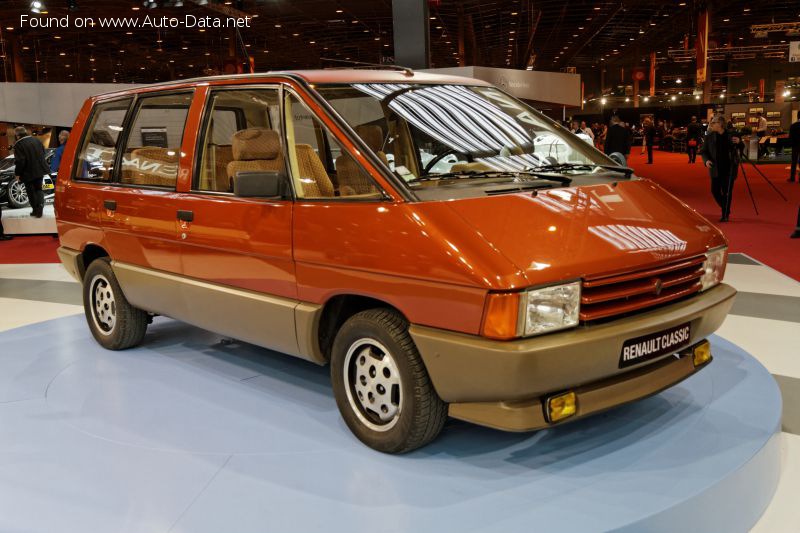
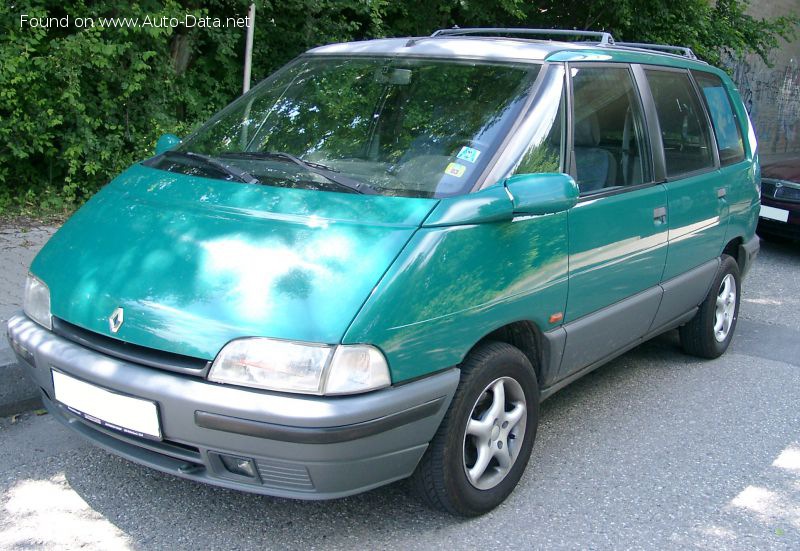
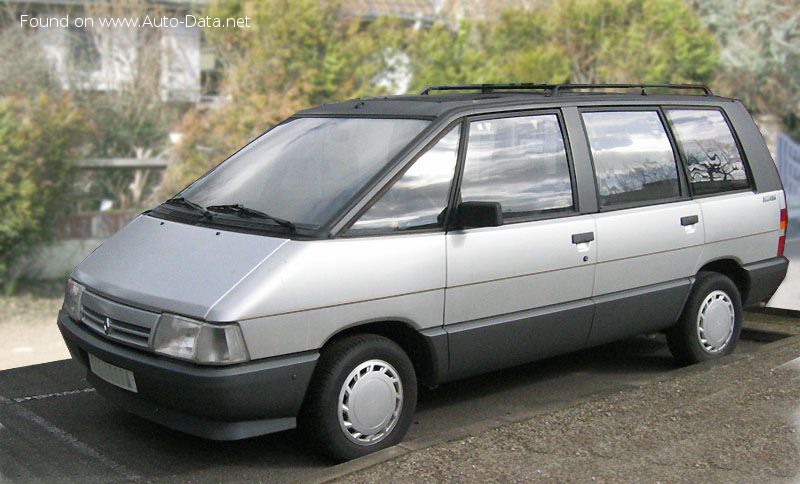
The Renault Espace I (J11/13, Phase II 1988) 2.0i (120 Hp) Quadra represents a significant evolutionary step for a vehicle that fundamentally reshaped the European automotive landscape. Launched in 1984, the original Espace is widely credited with inventing the modern European multi-purpose vehicle (MPV) segment, offering unprecedented versatility and passenger comfort in a family-oriented package. The Phase II iteration, introduced in 1988, brought a series of refinements, most notably a refreshed exterior design, updated interior ergonomics, and the introduction of advanced powertrain options, including the innovative Quadra all-wheel-drive system featured in this particular model. While never officially sold in the United States, the Espace’s influence permeated global automotive design, inspiring a generation of minivans and MPVs worldwide, including those that eventually found their way to American shores. This specific variant, with its 2.0-liter engine and all-wheel-drive capability, epitomized Renault’s commitment to innovation, blending family practicality with enhanced driving dynamics and capability, particularly relevant in diverse European climates and terrains.
Engine and Performance of the Renault Espace I (J11/13, Phase II 1988)
Under the hood, the Renault Espace I (J11/13, Phase II 1988) 2.0i (120 Hp) Quadra was powered by Renault’s robust J7R inline-four cylinder engine. This naturally aspirated 2.0-liter (1995 cm3 or 121.74 cu. in.) gasoline powerplant was designed for a balance of reliable performance and reasonable fuel efficiency, crucial for a family-oriented vehicle. It delivered a respectable 120 horsepower at 5500 revolutions per minute (rpm), making it one of the more potent options in the Espace lineup at the time. Torque output stood at 123.91 lb.-ft. (168 Nm) at 4500 rpm, providing ample pulling power for a fully loaded vehicle or for navigating varied driving conditions. The engine featured a multi-port manifold injection system, which was a relatively sophisticated fuel delivery method for its era, ensuring precise fuel metering and improved combustion efficiency compared to carbureted setups. With a compression ratio of 10:1 and two valves per cylinder, the engine was a durable and well-proven unit in Renault’s portfolio.
A standout feature of this particular Espace was its “Quadra” all-wheel-drive system, a groundbreaking inclusion for a family MPV in the late 1980s. Paired with a 5-speed manual transmission, the Quadra system offered enhanced traction and stability, especially beneficial in adverse weather conditions or on unpaved roads, a common requirement for many European families. This capability significantly broadened the Espace’s appeal beyond mere suburban utility. In terms of performance, the Espace I 2.0i Quadra could accelerate from 0 to 60 mph in a competitive 10.8 seconds, reaching a maximum speed of 108.74 mph (175 km/h). These figures demonstrated that practicality didn’t necessarily mean sacrificing dynamic capability. Fuel economy for the combined cycle was rated at 24.2 US mpg (9.7 l/100 km), which was considered acceptable for an all-wheel-drive vehicle of its size and power in that period, highlighting the efficiency gains achieved with the fuel injection system.
Design and Features
The design of the Renault Espace I (J11/13, Phase II 1988) was revolutionary for its time, truly embodying the “monospace” concept – a single volume design that maximized interior space. Its distinctive wedge-shaped profile, characterized by a steeply raked windshield and large glass areas, was both aerodynamic (with a drag coefficient of 0.34) and provided excellent outward visibility. The Espace broke away from traditional car design by featuring a unique construction method: a fiberglass body mounted on a galvanized steel chassis. This approach offered advantages in terms of corrosion resistance and allowed for more complex, lightweight body panels, contributing to its relatively low curb weight of 2843.96 lbs. (1290 kg).
As a minivan or MPV, the Espace was primarily designed for passenger and cargo flexibility. It offered a generous seven-seat configuration, with innovative removable and swiveling rear seats that allowed for numerous interior layouts. This modularity was a key selling point, enabling owners to transform the vehicle from a people-carrier to a cargo hauler with ease. The minimum trunk space of 20.48 cu. ft. (580 l) could expand to an impressive 108.06 cu. ft. (3060 l) with the rear seats removed, rivaling many commercial vans.
Dimensions for the Espace I Phase II were quite compact by modern minivan standards, measuring 171.85 inches (4365 mm) in length, 69.96 inches (1777 mm) in width, and 65.75 inches (1670 mm) in height. Its 101.57-inch (2580 mm) wheelbase contributed to a stable ride while maintaining a manageable turning circle of 40.68 ft. (12.4 m). Safety for its era was addressed through its robust steel chassis and the inherent strength of its body structure, along with standard features like front ventilated disc brakes and rear ventilated disc brakes, ensuring confident stopping power. The independent McPherson strut front suspension and rack-and-pinion steering provided a comfortable and predictable driving experience, further enhancing its family-friendly appeal.
Technical Specifications
| General Information | |
| Brand | Renault |
| Model | Espace |
| Generation | Espace I (J11/13, Phase II 1988) |
| Type (Engine) | 2.0i (120 Hp) Quadra |
| Start of Production | 1988 year |
| End of Production | 1991 year |
| Powertrain Architecture | Internal Combustion engine |
| Body Type | Minivan, MPV |
| Seats | 7 |
| Doors | 5 |
| Performance Specs | |
| Fuel Consumption (Economy) – Urban | 20.1 US mpg (11.7 l/100 km) |
| Fuel Consumption (Economy) – Extra Urban | 30.9 US mpg (7.6 l/100 km) |
| Fuel Consumption (Economy) – Combined | 24.2 US mpg (9.7 l/100 km) |
| Fuel Type | Petrol (Gasoline) |
| Acceleration 0 – 60 mph | 10.8 sec |
| Acceleration 0 – 62 mph (0-100 km/h) | 11.4 sec |
| Maximum Speed | 108.74 mph (175 km/h) |
| Weight-to-Power Ratio | 10.8 kg/Hp, 93 Hp/tonne |
| Weight-to-Torque Ratio | 7.7 kg/Nm, 130.2 Nm/tonne |
| Engine Specs | |
| Power | 120 Hp @ 5500 rpm |
| Power per Liter | 60.2 Hp/l |
| Torque | 123.91 lb.-ft. (168 Nm) @ 4500 rpm |
| Engine Layout | Front, Longitudinal |
| Engine Model/Code | J7R |
| Engine Displacement | 2.0 l (1995 cm3 / 121.74 cu. in.) |
| Number of Cylinders | 4 |
| Engine Configuration | Inline |
| Cylinder Bore | 3.46 in. (88 mm) |
| Piston Stroke | 3.23 in. (82 mm) |
| Compression Ratio | 10:1 |
| Number of Valves per Cylinder | 2 |
| Fuel Injection System | Multi-port manifold injection |
| Engine Aspiration | Naturally aspirated engine |
| Engine Oil Capacity | 6.55 US qt (6.2 l) |
| Coolant Capacity | 7.61 US qt (7.2 l) |
| Space, Volume and Weights | |
| Kerb Weight | 2843.96 lbs. (1290 kg) |
| Max. Weight | 4321.06 lbs. (1960 kg) |
| Max Load | 1477.1 lbs. (670 kg) |
| Trunk (boot) Space – Minimum | 20.48 cu. ft. (580 l) |
| Trunk (boot) Space – Maximum | 108.06 cu. ft. (3060 l) |
| Fuel Tank Capacity | 15.32 US gal (58 l) |
| Max. Roof Load | 154.32 lbs. (70 kg) |
| Permitted Trailer Load with Brakes (12%) | 3968.32 lbs. (1800 kg) |
| Permitted Trailer Load without Brakes | 1322.77 lbs. (600 kg) |
| Dimensions | |
| Length | 171.85 in. (4365 mm) |
| Width | 69.96 in. (1777 mm) |
| Height | 65.75 in. (1670 mm) |
| Wheelbase | 101.57 in. (2580 mm) |
| Front Track | 57.99 in. (1473 mm) |
| Rear (Back) Track | 58.86 in. (1495 mm) |
| Front Overhang | 36.22 in. (920 mm) |
| Rear Overhang | 34.06 in. (865 mm) |
| Ride Height (Ground Clearance) | 5.43 in. (138 mm) |
| Drag Coefficient (Cd) | 0.34 |
| Minimum Turning Circle (Turning Diameter) | 40.68 ft. (12.4 m) |
| Drivetrain, Brakes and Suspension Specs | |
| Drive Wheel | All-wheel drive (4×4) |
| Number of Gears and Type of Gearbox | 5 gears, manual transmission |
| Front Suspension | Independent type McPherson |
| Front Brakes | Ventilated discs |
| Rear Brakes | Ventilated discs |
| Steering Type | Steering rack and pinion |
| Tires Size | 185/65 R14 |
| Wheel Rims Size | 14 |
Legacy and Market Impact
The Renault Espace I, including its refined Phase II iteration, left an indelible mark on the automotive industry, particularly in Europe. It wasn’t just another car; it was a paradigm shift, effectively creating the European MPV segment. Prior to the Espace, large families or those needing versatile cargo space often resorted to station wagons or rudimentary panel vans. The Espace offered a compelling alternative, combining the seating capacity and utility of a van with the comfort, driving dynamics, and styling of a passenger car. Its innovative fiberglass body on a galvanized steel chassis was not only a manufacturing novelty but also contributed to its longevity and resistance to rust, a significant concern in many European climates.
In its primary European market, the Espace quickly garnered a reputation for its spaciousness, practicality, and forward-thinking design. While it faced initial skepticism from some traditionalists, its unique proposition resonated strongly with families seeking a more adaptable and comfortable vehicle. Its direct competitors were initially few, as it had largely pioneered the segment. However, over time, other manufacturers, inspired by its success, introduced their own MPVs, such as the Fiat Ulysse/Lancia Zeta/Peugeot 806/Citroën Evasion “Eurovans,” and later, the Ford Galaxy/Volkswagen Sharan/SEAT Alhambra trio. Notably, the Chrysler Voyager, which arrived in Europe later in the 1980s, offered a similar concept, though its development was independent. The Espace’s enduring appeal led to multiple generations, with the nameplate continuing well into the 21st century, adapting from a traditional MPV to a crossover-SUV in its later iterations.
The 2.0i (120 Hp) Quadra variant of the Espace I Phase II specifically highlighted Renault’s ambition to cater to a broader range of customer needs, offering enhanced capability beyond the standard front-wheel-drive models. The inclusion of all-wheel drive in a family MPV was a testament to Renault’s innovative spirit and foresight, anticipating the demand for versatile vehicles capable of handling diverse conditions. The Espace’s success cemented Renault’s position as a leader in innovative family transport and its influence can still be seen in the design and functionality of modern family vehicles globally, making it a true classic and a milestone in automotive history.