The Volkswagen Multivan (T7) Long: A New Era of European Versatility
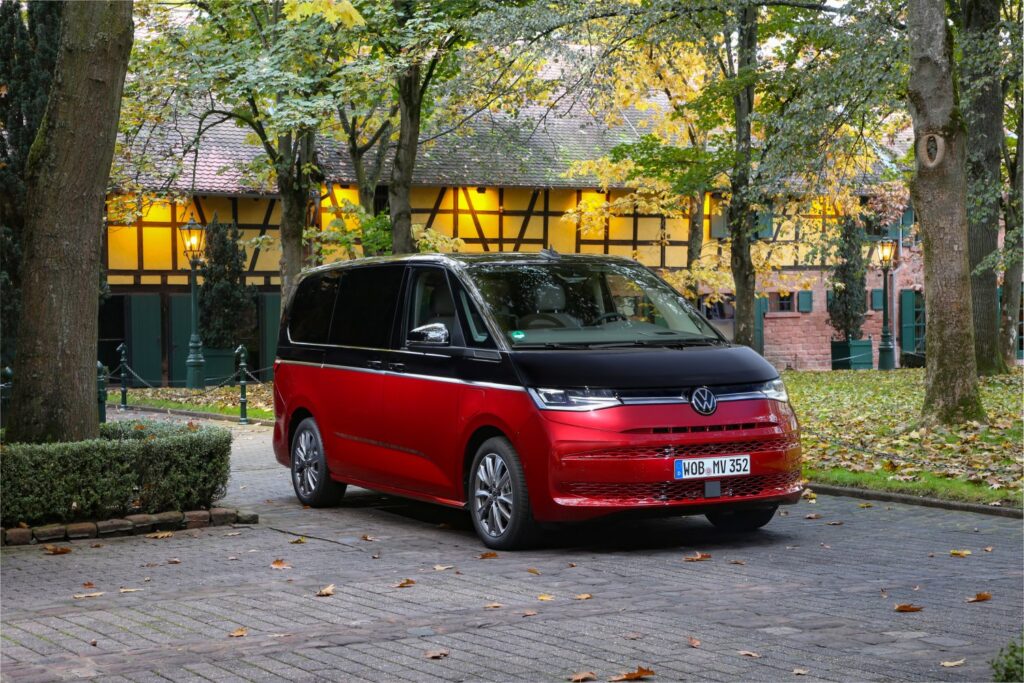
The Volkswagen Multivan (T7) Long 2.0 TSI (204 Hp) DSG represents the seventh generation of Volkswagen Commercial Vehicles’ iconic multi-purpose vehicle (MPV) line, a lineage that traces its roots back to the legendary Type 2 “Bus.” Launched in November 2021, the T7 generation marks a significant departure from its predecessors by transitioning to Volkswagen Group’s highly adaptable MQB (Modular Transverse Matrix) platform. This shift brings a host of modern advancements in technology, efficiency, and driving dynamics, positioning the Multivan as a sophisticated and versatile family hauler or executive shuttle primarily for the European and Asian markets, where large, adaptable minivans remain highly valued.
This specific variant, the Long 2.0 TSI (204 Hp) with a DSG automatic transmission, embodies the pinnacle of gasoline-powered performance and practicality within the T7 range. Designed to comfortably accommodate up to seven occupants with expansive cargo capabilities, the Volkswagen Multivan (T7) Long combines the generous interior space expected of its segment with the refined driving experience and advanced features typically found in modern passenger cars. Its role in its primary markets is to offer a premium, highly flexible transport solution for both private and commercial users, distinguishing itself through thoughtful design and robust engineering.
Powertrain and Performance of the Volkswagen Multivan (T7) Long
At the heart of this particular Volkswagen Multivan (T7) Long model is the highly regarded EA888 engine, a 2.0-liter (1984 cm3 or 121.07 cu. in.) turbocharged and intercooled inline-four gasoline engine. Known for its robust performance and efficiency across numerous Volkswagen Group vehicles, this powerplant delivers a strong 204 horsepower (Hp) at a broad range of 5000-6500 rpm. Torque output is equally impressive, peaking at 236.02 lb.-ft. (320 Nm) available from a low 1600 rpm and sustained up to 4300 rpm, ensuring excellent responsiveness and pulling power, even when the vehicle is fully loaded.
The engine’s advanced architecture features a Double Overhead Camshaft (DOHC) valvetrain with four valves per cylinder and a direct fuel injection system, optimizing combustion for both power and fuel economy. Environmental considerations are addressed through a standard Start & Stop System and a particulate filter, contributing to its CO2 emissions rating of 175 g/km (NEDC). Power is seamlessly delivered to the front wheels via a sophisticated 7-speed DSG (Direct Shift Gearbox) automatic transmission. This dual-clutch unit is renowned for its rapid, smooth gear changes, enhancing both driving pleasure and efficiency.
In terms of raw performance, the Multivan (T7) Long 2.0 TSI is surprisingly agile for a vehicle of its size. It can accelerate from 0 to 60 mph in a calculated 8.9 seconds (0-100 km/h in 9.4 seconds), and reach a top speed of 124.27 mph (200 km/h). Fuel efficiency is competitive for its class, with a combined NEDC rating of 30.5 US mpg (7.7 l/100 km). Urban driving yields approximately 24.8 US mpg (9.5 l/100 km), while extra-urban conditions can see up to 35.6 US mpg (6.6 l/100 km), underscoring its capability as a long-distance cruiser. The vehicle’s weight-to-power ratio stands at 9.9 kg/Hp, or 100.8 Hp per tonne, demonstrating its well-balanced engineering for its intended purpose.
Design, Versatility, and Modern Features of the Volkswagen Multivan (T7) Long
The design of the Volkswagen Multivan (T7) Long is a modern interpretation of its classic silhouette, blending practicality with contemporary aesthetics. As a minivan with five doors and seating for seven, its long-wheelbase configuration is a key differentiator. Measuring 203.66 inches (5173 mm) in length, 76.42 inches (1941 mm) in width (88.66 inches or 2252 mm including mirrors), and 75.08 inches (1907 mm) in height, the T7 Long offers substantial interior volume. The generous 122.99-inch (3124 mm) wheelbase is instrumental in providing exceptional passenger comfort and cargo capacity.
The interior is where the Multivan truly shines, offering unparalleled versatility. The seating system has been completely redesigned, featuring lighter, removable individual seats that can slide and be reconfigured to suit various needs, from a spacious six-seater with a central table to a vast cargo van. The “Long” version maximizes this flexibility, offering a minimum trunk space of 67.1 cu. ft. (1900 liters), which can expand to an enormous 123.6 cu. ft. (3500 liters) with the rear seats removed. This adaptability makes it ideal for large families, active lifestyle enthusiasts, or as a premium shuttle service vehicle.
The T7 also benefits from the MQB platform’s inherent advantages in vehicle dynamics and safety. It features a rack and pinion steering system with electric power steering, providing precise control and ease of maneuverability, especially given its minimum turning circle of 39.7 ft (12.1 m). Braking is handled by ventilated discs at the front and solid discs at the rear, supported by an Anti-lock Braking System (ABS) for assured stopping power. The robust chassis and suspension setup, combined with available tire sizes ranging from 215/65 R16 to 235/50 R18, ensure a comfortable ride and stable handling characteristics, even when traversing various terrains or towing. With a permitted trailer load of 4409.25 lbs (2000 kg) with brakes, its utility extends beyond just passenger transport.
Detailed Technical Specifications
| Category | Specification |
|---|---|
| General Information | |
| Brand | Volkswagen |
| Model | Multivan |
| Generation | Multivan (T7) Long |
| Type (Engine) | 2.0 TSI (204 Hp) DSG |
| Start of Production | November, 2021 year |
| Powertrain Architecture | Internal Combustion Engine |
| Body type | Minivan |
| Seats | 7 |
| Doors | 5 |
| Performance Specs | |
| Fuel Consumption (Urban, NEDC) | 24.8 US mpg (9.5 l/100 km) |
| Fuel Consumption (Extra Urban, NEDC) | 35.6 US mpg (6.6 l/100 km) |
| Fuel Consumption (Combined, NEDC) | 30.5 US mpg (7.7 l/100 km) |
| CO2 Emissions (NEDC) | 175 g/km |
| Fuel Type | Petrol (Gasoline) |
| Acceleration 0 – 60 mph (Calculated) | 8.9 sec |
| Acceleration 0 – 100 km/h | 9.4 sec |
| Maximum Speed | 124.27 mph (200 km/h) |
| Weight-to-power ratio | 9.9 kg/Hp, 100.8 Hp/tonne |
| Weight-to-torque ratio | 6.3 kg/Nm, 158.1 Nm/tonne |
| Engine Specs | |
| Power | 204 Hp @ 5000-6500 rpm |
| Power per liter | 102.8 Hp/l |
| Torque | 236.02 lb.-ft. (320 Nm) @ 1600-4300 rpm |
| Engine Layout | Front, Transverse |
| Engine Model/Code | EA888 |
| Engine Displacement | 121.07 cu. in. (1984 cm3) |
| Number of Cylinders | 4 |
| Engine Configuration | Inline |
| Number of Valves per Cylinder | 4 |
| Fuel Injection System | Direct injection |
| Engine Aspiration | Turbocharger, Intercooler |
| Valvetrain | DOHC |
| Engine Systems | Start & Stop System, Particulate filter |
| Space, Volume and Weights | |
| Kerb Weight | 4462.16 – 4660.57 lbs (2024-2114 kg) |
| Max. Weight | 6283.17 lbs (2850 kg) |
| Max. Load | 1622.6 – 1821.02 lbs (736-826 kg) |
| Trunk (boot) space – minimum | 67.1 cu. ft. (1900 l) |
| Trunk (boot) space – maximum | 123.6 cu. ft. (3500 l) |
| Fuel Tank Capacity | 15.85 US gal (60 l) |
| Max. Roof Load | 220.46 lbs (100 kg) |
| Permitted Trailer Load with Brakes (12%) | 4409.25 lbs (2000 kg) |
| Permitted Trailer Load without Brakes | 1653.47 lbs (750 kg) |
| Permitted Towbar Download | 176.37 lbs (80 kg) |
| Dimensions | |
| Length | 203.66 in. (5173 mm) |
| Width | 76.42 in. (1941 mm) |
| Width Including Mirrors | 88.66 in. (2252 mm) |
| Height | 75.08 in. (1907 mm) |
| Wheelbase | 122.99 in. (3124 mm) |
| Front Overhang | 37.48 in. (952 mm) |
| Rear Overhang | 43.19 in. (1097 mm) |
| Minimum Turning Circle (Turning Diameter) | 39.7 ft (12.1 m) |
| Approach Angle | 18° |
| Departure Angle | 13.2° |
| Ramp-over (Brakeover) Angle | 11.8° |
| Drivetrain, Brakes and Suspension Specs | |
| Drivetrain Architecture | Front wheel drive, Internal Combustion engine |
| Drive Wheel | Front wheel drive |
| Number of Gears and Type of Gearbox | 7 gears, automatic transmission DSG |
| Front Brakes | Ventilated discs |
| Rear Brakes | Disc |
| Assisting Systems | ABS (Anti-lock braking system) |
| Steering Type | Steering rack and pinion |
| Power Steering | Electric Steering |
| Tires Size | 215/65 R16; 235/55 R17; 235/50 R18 |
| Wheel Rims Size | 6.5J x 16; 6.5J x 17; 7.5J x 18 |
Legacy and Market Impact of the Volkswagen Multivan (T7) Long
The Volkswagen Multivan (T7) Long carries a significant legacy, building upon generations of Volkswagen ‘Bus’ and Transporter models that have defined versatility and practicality for decades. While the T7 Multivan is distinct from the T7 Transporter (which remains a commercial vehicle), it embodies the passenger-focused evolution of that heritage. In its primary European market, the Multivan holds a revered status, often seen as the benchmark for premium MPVs. Its transition to the MQB platform for the T7 generation was a strategic move by Volkswagen to enhance its appeal by integrating more car-like driving dynamics, advanced driver-assistance systems, and improved fuel efficiency, aligning it more closely with modern passenger vehicles.
Competitors in the European MPV segment include vehicles like the Mercedes-Benz V-Class, Ford Tourneo Custom, and various offerings from the Stellantis group (such as the Peugeot Traveller, Citroën Spacetourer, and Opel Zafira Life), often rebadged by Toyota as the Proace Verso. The Multivan distinguishes itself with Volkswagen’s reputation for robust build quality, strong resale values, and a highly flexible interior that is easy to reconfigure. Its premium positioning means it often commands a higher price point than some rivals, but this is justified by its sophisticated engineering, comprehensive feature set, and the brand’s enduring appeal.
The T7 Multivan’s impact extends beyond just family transport. Its spacious and adaptable interior makes it a popular choice for corporate shuttle services, luxury taxi operators, and even as a base for bespoke camper conversions, continuing the tradition of its predecessors. The availability of a powerful yet efficient 2.0 TSI engine combined with the smooth DSG transmission ensures that it can cater to drivers seeking a refined and capable vehicle for long journeys or daily commutes. The “Long” variant specifically addresses the demand for maximum interior space, whether for additional passengers, extensive luggage, or specialized equipment.
In a market increasingly dominated by SUVs, the Volkswagen Multivan (T7) Long stands as a testament to the enduring relevance and superior practicality of the minivan form factor. It offers a compelling blend of passenger comfort, cargo versatility, and modern technology, ensuring its continued importance in its segment and reinforcing Volkswagen’s leadership in multi-purpose vehicle design and engineering. Its absence from the North American market highlights differing regional preferences, but globally, the Multivan (T7) Long remains a highly respected and impactful vehicle.