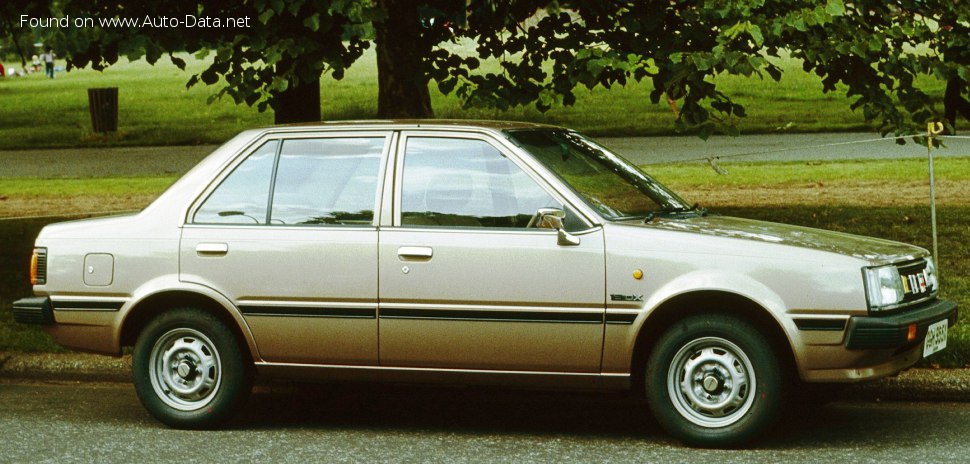
Introduction to the Nissan Sunny I (B11)
The Nissan Sunny I (B11) represents a pivotal generation in the history of Nissan’s long-running compact car series. Introduced in 1982, the B11 generation marked a significant departure from its predecessors by adopting a front-wheel-drive (FWD) layout, a move that was rapidly becoming the industry standard for small, efficient vehicles. This shift profoundly influenced the car’s packaging, interior space, and driving dynamics, positioning it as a highly competitive offering in the global compact segment. Known for its practicality, fuel efficiency, and robust reliability, the Sunny B11 was marketed globally under various names, including Sentra in North America, Pulsar in some markets, and Sunny in its native Japan, Europe, and many Asian countries. The specific variant discussed here, the 1.3 (60 Hp) sedan, was a cornerstone of the lineup, emphasizing economical and dependable transportation for everyday use. Its production spanned from 1982 to 1987, solidifying its reputation during an era of increasing demand for affordable and efficient automobiles.
Engine and Performance of the Nissan Sunny I (B11) 1.3
Powertrain Architecture and Drivetrain
The heart of the Nissan Sunny I (B11) 1.3 (60 Hp) was its straightforward and dependable internal combustion engine. This particular variant featured a 1.3-liter (approximately 79 cubic inches) petrol (gasoline) engine, designed for maximum efficiency and longevity rather than outright performance. As a naturally aspirated engine, it delivered power smoothly and predictably, without the added complexity or cost of turbocharging. The engine’s modest output of 60 horsepower (Hp) was channeled exclusively to the front wheels, a defining characteristic of the B11 generation’s powertrain architecture. This front-wheel-drive setup was a major engineering decision for Nissan, moving away from the rear-wheel-drive layouts of earlier Sunny models. The FWD configuration offered several advantages, including improved traction in adverse weather conditions, better fuel economy due to reduced drivetrain losses, and more efficient packaging that allowed for a larger passenger compartment relative to the car’s overall footprint.
While 60 Hp might seem modest by today’s standards, it was entirely adequate for the Sunny B11’s intended purpose in the early to mid-1980s. This car was designed as a reliable commuter and family vehicle, excelling in urban environments and offering sufficient capability for highway travel. The focus was squarely on economical operation, ease of maintenance, and a low cost of ownership. The engine’s design reflected Nissan’s commitment to producing durable machinery, contributing significantly to the Sunny’s reputation for unwavering reliability. The precise details of the transmission (manual or automatic) are not specified in the provided data, but typically, vehicles of this class and era would have been offered with a manual gearbox as standard, with an automatic option available for convenience.
Design and Features of the Nissan Sunny I (B11) Sedan
Exterior and Interior Aesthetics
The Nissan Sunny I (B11) sedan, produced from 1982 to 1987, embodied the design philosophy prevalent in compact cars of its era: functional, practical, and understated. Its body type was a classic 4-door sedan, a popular configuration globally for families and individuals seeking conventional, accessible transportation. The exterior design was characterized by clean, angular lines and a relatively boxy silhouette, a common aesthetic for the early 1980s. This design prioritized interior volume and aerodynamic efficiency (for the time) over stylistic flair. The four doors provided easy access for all occupants, while the sedan trunk offered ample and secure cargo space, making it a versatile choice for daily errands or longer trips.
Inside, the Sunny B11 was designed with practicality and durability in mind. It offered seating for five occupants, with a comfortable, if not luxurious, cabin environment. The FWD layout significantly improved interior packaging, particularly for rear-seat legroom, making the B11 feel more spacious than its compact exterior might suggest. Materials used in the interior were robust and hard-wearing, chosen to withstand years of daily use. While advanced infotainment systems were decades away, the B11 would have featured a straightforward dashboard layout with easily accessible controls for heating, ventilation, and a basic radio. Safety features for the era were primarily passive, including seatbelts for all occupants and a structurally sound body designed to offer a degree of occupant protection in the event of a collision. The emphasis was on reliability, low maintenance, and a comfortable, no-frills driving and riding experience that appealed to a broad segment of the market seeking dependable transportation.
Technical Specifications: Nissan Sunny I (B11) 1.3 (60 Hp) Sedan
| Category | Specification |
|---|---|
| Brand | Nissan |
| Model | Sunny |
| Generation | Sunny I (B11) |
| Type (Engine) | 1.3 (60 Hp) |
| Start of Production | 1982 year |
| End of Production | 1987 year |
| Powertrain Architecture | Internal Combustion engine |
| Body type | Sedan |
| Seats | 5 |
| Doors | 4 |
| Fuel Type | Petrol (Gasoline) |
| Power | 60 Hp |
| Engine aspiration | Naturally aspirated engine |
| Drivetrain Architecture | The Internal combustion engine (ICE) drives the front wheels of the vehicle. |
| Drive wheel | Front wheel drive |
Legacy and Market Impact of the Nissan Sunny I (B11)
The Nissan Sunny I (B11) left a lasting legacy as a quintessential example of a reliable, economical, and globally successful compact car from the 1980s. Its introduction marked a significant strategic shift for Nissan, fully embracing the front-wheel-drive architecture for its high-volume compact segment. This move was crucial in allowing Nissan to compete effectively with rivals like the Toyota Corolla, Honda Civic, and Mazda 323, all of which were also transitioning or had already transitioned to FWD layouts. In Europe, it faced competition from models such as the Ford Escort and Volkswagen Jetta, where its Japanese reputation for reliability and value often gave it an edge.
In its primary markets, including Japan, Europe, and various Asian nations, the Sunny B11 was lauded for its fuel efficiency, low maintenance costs, and unwavering dependability. These attributes made it an incredibly popular choice for first-time car buyers, small families, and fleet operators. Its robust mechanicals and simple design ensured that it remained a common sight on roads for many years after its production ceased, a testament to its built-in durability.
The B11 generation also played a crucial role in enhancing Nissan’s global brand image. As the Sentra in North America, it helped establish Nissan as a credible competitor in the crucial compact car market, known for offering well-built, value-oriented vehicles. While the 1.3-liter, 60 Hp variant might have been less common in the US market, which typically received larger engine options (like the 1.5L and 1.6L), its underlying engineering principles and design ethos were shared across the B11 lineup.
The Sunny B11’s impact extended beyond just sales figures; it helped solidify the perception of Japanese automakers as leaders in producing high-quality, practical, and long-lasting small cars. It paved the way for subsequent generations of the Sunny/Sentra, each building upon the foundation of reliability and efficiency established by the B11. Even today, the B11 is remembered fondly by enthusiasts and former owners as a straightforward, honest car that simply got the job done, day in and day out, embodying the essence of dependable automotive transportation from the 1980s. Its conservative styling belied a sophisticated engineering package for its time, proving that innovation in packaging and drivetrain layout could be just as impactful as raw power or luxury features.