The Renault Megane II (Phase II, 2006): A Distinctive European Compact
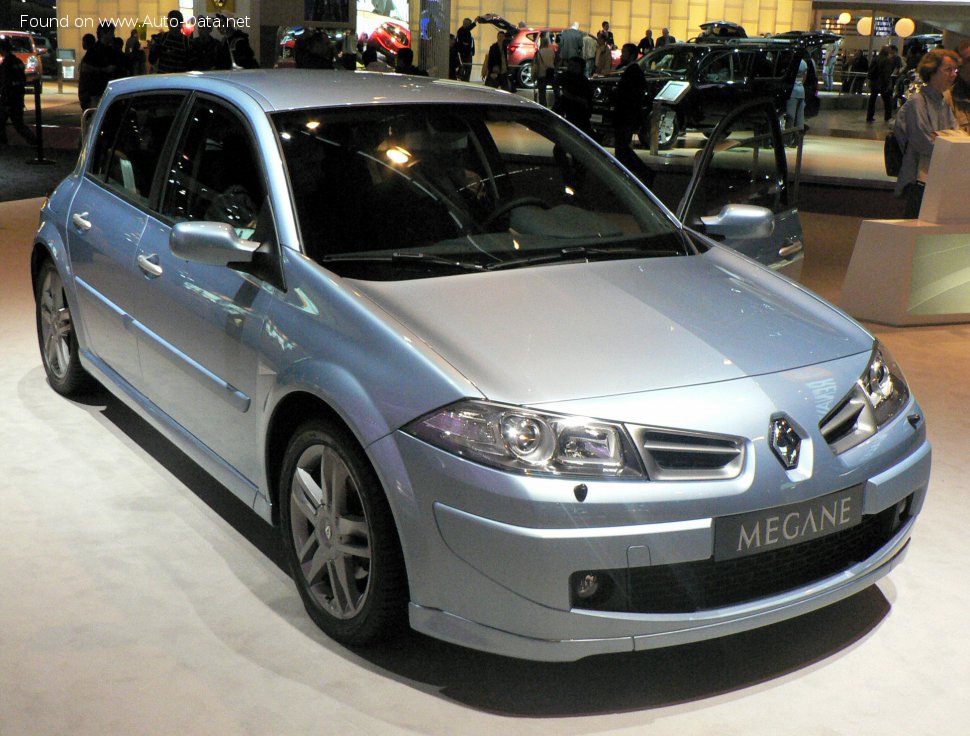
The Renault Megane II (Phase II, 2006) 1.6 16V (112 Hp) represents a significant chapter in the history of the compact car segment, particularly within the European automotive landscape. Introduced in 2002, the second-generation Megane quickly became recognized for its bold, unconventional styling and a strong emphasis on safety and innovation. The “Phase II” designation indicates a mid-cycle refresh, which arrived in 2006, bringing subtle yet impactful updates to its aesthetics, technology, and powertrain offerings, ensuring its competitiveness through to the end of its production run in 2008.
As an international automotive expert, it’s crucial to highlight that the Renault Megane was never officially sold in the United States market. Its primary focus was Europe, where it competed fiercely in the C-segment (known as the compact car segment in the US) against formidable rivals like the Volkswagen Golf, Ford Focus, and Opel Astra. This particular variant, the 1.6 16V with 112 horsepower, was a popular choice, striking a balance between everyday usability, fuel efficiency, and adequate performance for European roads and driving conditions. It embodied Renault’s commitment to distinctive design, practicality, and advanced safety features, carving out a unique identity in a highly competitive class.
Engine and Performance of the Renault Megane II (Phase II, 2006)
Powering this specific iteration of the Renault Megane II (Phase II, 2006) is the venerable K4M engine, a 1.6-liter (1598 cubic centimeters or 97.52 cubic inches) naturally aspirated inline four-cylinder unit. This engine, known for its reliability and widespread use across various Renault and Nissan models, features a DOHC (Double Overhead Camshaft) valvetrain with four valves per cylinder, totaling 16 valves. It delivers a respectable 112 horsepower at 6000 rpm, translating to a power-per-liter output of 70.1 Hp/l, which was competitive for its class and era.
Torque figures for the 1.6 16V engine stand at 152 Nm (112.11 lb.-ft.) at 4200 rpm. This torque delivery, combined with a 5-speed manual transmission, provides a responsive driving experience in urban environments and sufficient capability for highway cruising. The powertrain architecture features a front, transverse engine layout, driving the front wheels, a standard configuration for compact hatchbacks prioritizing interior space and manufacturing efficiency.
In terms of acceleration, the Megane II 1.6 16V manages to sprint from 0 to 60 mph in a calculated 10.4 seconds (or 0-100 km/h in 10.9 seconds), with a top speed of 119.3 mph (192 km/h). While not a performance leader, these figures underscore its role as a practical, everyday vehicle. Fuel efficiency was a key consideration for European buyers, and this model delivered a combined fuel economy of 6.9 liters per 100 kilometers, equating to an impressive 34.1 US miles per gallon. Its CO2 emissions of 164 g/km and Euro 4 emission standard compliance reflected the environmental considerations of the mid-2000s. The engine’s compression ratio of 10:1 and multi-port manifold injection system further optimized its performance and efficiency.
Design and Features
The Renault Megane II (Phase II, 2006) maintained the groundbreaking design language introduced with the second generation. Its most striking feature was arguably the distinctive “bustle back” rear end, particularly prominent on the 5-door hatchback body type. This bold aesthetic, characterized by its sharply raked rear window and prominent tailgate, was a deliberate departure from conventional compact car design, aiming to make a statement and stand out in a crowded market. The Phase II facelift subtly refined this design, with minor tweaks to the front grille, headlights, and bumper designs, giving it a slightly more modern and cohesive appearance.
The Megane II hatchback offered a practical and spacious interior, seating five occupants comfortably across its two rows. The five-door configuration ensured easy access for passengers and cargo. With a length of 165.71 inches (4209 mm) and a width of 69.96 inches (1777 mm), it was a well-proportioned compact car. Cargo capacity was generous for its class, offering a minimum trunk space of 11.65 cubic feet (330 liters), which could expand significantly to 42.02 cubic feet (1190 liters) with the rear seats folded down, making it highly versatile for family use or hauling goods.
Beyond aesthetics, Renault placed a strong emphasis on safety and innovative features. The Megane II was one of the first cars in its segment to achieve a 5-star Euro NCAP safety rating, setting a benchmark for passive safety. Standard safety features for its time included ABS (Anti-lock Braking System), and the car often featured multiple airbags. Comfort and convenience features, typical for European compacts, included electric power steering, which offered a lighter feel for urban maneuvering, and an independent McPherson strut front suspension combined with a torsion beam rear setup, providing a good balance of ride comfort and handling dynamics. The use of ventilated discs for the front brakes and disc brakes at the rear ensured effective stopping power.
Technical Specifications: Renault Megane II (Phase II, 2006) 1.6 16V (112 Hp)
| Category | Specification | US Equivalent / Notes |
|---|---|---|
| General Information | ||
| Brand | Renault | |
| Model | Megane | |
| Generation | Megane II (Phase II, 2006) | |
| Type (Engine) | 1.6 16V (112 Hp) | |
| Production Years | 2006 – 2008 | |
| Powertrain Architecture | Internal Combustion Engine | |
| Body Type | Hatchback | |
| Seats / Doors | 5 / 5 | |
| Performance Specifications | ||
| Fuel Consumption (Urban) | 9.1 l/100 km | 25.8 US mpg |
| Fuel Consumption (Extra Urban) | 5.6 l/100 km | 42 US mpg |
| Fuel Consumption (Combined) | 6.9 l/100 km | 34.1 US mpg |
| CO2 Emissions | 164 g/km | |
| Fuel Type | Petrol (Gasoline) | |
| Acceleration 0-60 mph | 10.4 sec | |
| Acceleration 0-100 km/h | 10.9 sec | |
| Maximum Speed | 192 km/h | 119.3 mph |
| Emission Standard | Euro 4 | |
| Weight-to-Power Ratio | 10.5 kg/Hp | 95.3 Hp/tonne |
| Weight-to-Torque Ratio | 7.7 kg/Nm | 129.4 Nm/tonne |
| Engine Specifications | ||
| Power | 112 Hp @ 6000 rpm | |
| Power per liter | 70.1 Hp/l | |
| Torque | 152 Nm @ 4200 rpm | 112.11 lb.-ft. |
| Engine Layout | Front, Transverse | |
| Engine Model/Code | K4M | |
| Engine Displacement | 1598 cm³ | 1.6 Liters (97.52 cu. in.) |
| Number of Cylinders | 4 | Inline configuration |
| Cylinder Bore | 79.5 mm | 3.13 in. |
| Piston Stroke | 80.5 mm | 3.17 in. |
| Compression Ratio | 10:1 | |
| Valves per Cylinder | 4 | |
| Fuel Injection System | Multi-port manifold injection | |
| Engine Aspiration | Naturally aspirated | |
| Valvetrain | DOHC | |
| Engine Oil Capacity | 4.8 l | 5.07 US qt |
| Coolant Capacity | 6.5 l | 6.87 US qt |
| Space, Volume and Weights | ||
| Kerb Weight | 1175 kg | 2590.43 lbs. |
| Max. Weight | 1725 kg | 3802.97 lbs. |
| Max Load | 550 kg | 1212.54 lbs. |
| Trunk (Boot) Space – Minimum | 330 l | 11.65 cu. ft. |
| Trunk (Boot) Space – Maximum | 1190 l | 42.02 cu. ft. |
| Fuel Tank Capacity | 60 l | 15.85 US gal |
| Max. Roof Load | 80 kg | 176.37 lbs. |
| Permitted Trailer Load with Brakes (12%) | 1300 kg | 2866.01 lbs. |
| Permitted Trailer Load without Brakes | 650 kg | 1433 lbs. |
| Permitted Towbar Download | 75 kg | 165.35 lbs. |
| Dimensions | ||
| Length | 4209 mm | 165.71 in. |
| Width | 1777 mm | 69.96 in. |
| Width (incl. mirrors) | 2026 mm | 79.76 in. |
| Height | 1458 mm | 57.4 in. |
| Wheelbase | 2625 mm | 103.35 in. |
| Front Track | 1518 mm | 59.76 in. |
| Rear Track | 1514 mm | 59.61 in. |
| Front Overhang | 842 mm | 33.15 in. |
| Rear Overhang | 742 mm | 29.21 in. |
| Minimum Turning Circle | 10.5 m | 34.45 ft. |
| Drivetrain, Brakes and Suspension | ||
| Drivetrain Architecture | Internal combustion engine drives the front wheels. | |
| Drive Wheel | Front-wheel drive | |
| Gearbox | 5 gears, manual transmission | |
| Front Suspension | Independent type McPherson | |
| Rear Suspension | Torsion beam | |
| Front Brakes | Ventilated discs | |
| Rear Brakes | Disc | |
| Assisting Systems | ABS (Anti-lock braking system) | |
| Steering Type | Steering rack and pinion | |
| Power Steering | Electric Steering | |
| Tire Size | 195/65 R15 | |
| Wheel Rims Size | 6J x 15 | |
Legacy and Market Impact of the Renault Megane II
The Renault Megane II, including its Phase II iteration, left a significant mark on the European compact car segment. Its most enduring legacy is undoubtedly its bold and often polarizing design. At a time when many competitors adhered to more conservative styling cues, Renault dared to be different, and the Megane II’s distinctive “bustle back” hatchback became an instant conversation starter. This design approach, spearheaded by Patrick Le Quément, Renault’s design chief, helped the Megane stand out from rivals such as the more conventional Volkswagen Golf, the dynamic Ford Focus, and the reliable Opel Astra. While not universally loved, its uniqueness contributed to its strong sales performance in Europe, demonstrating that daring design could indeed translate into commercial success.
Beyond aesthetics, the Megane II was instrumental in solidifying Renault’s reputation for safety. It was one of the first mass-market vehicles to achieve a full five-star rating in the stringent Euro NCAP crash tests, a benchmark that many manufacturers subsequently strived to meet. This focus on occupant protection, coupled with innovative features like the “key card” hands-free entry and start system (a novelty for its class at the time), positioned the Megane II as a technologically forward-thinking and secure option for families and individual buyers alike.
The 1.6 16V engine, as featured in the Renault Megane II (Phase II, 2006), was a workhorse for the brand, offering a balance of performance, economy, and proven reliability that appealed to a broad demographic. It represented a sensible choice for buyers seeking a practical daily driver without excessive running costs. The car’s overall package of distinctive design, high safety standards, and practical utility ensured its strong market presence throughout its production run. While the Megane II paved the way for more conventional styling in its successor, the Megane III, its impact on automotive design and safety standards in the compact segment remains a testament to Renault’s innovative spirit in the early to mid-2000s.