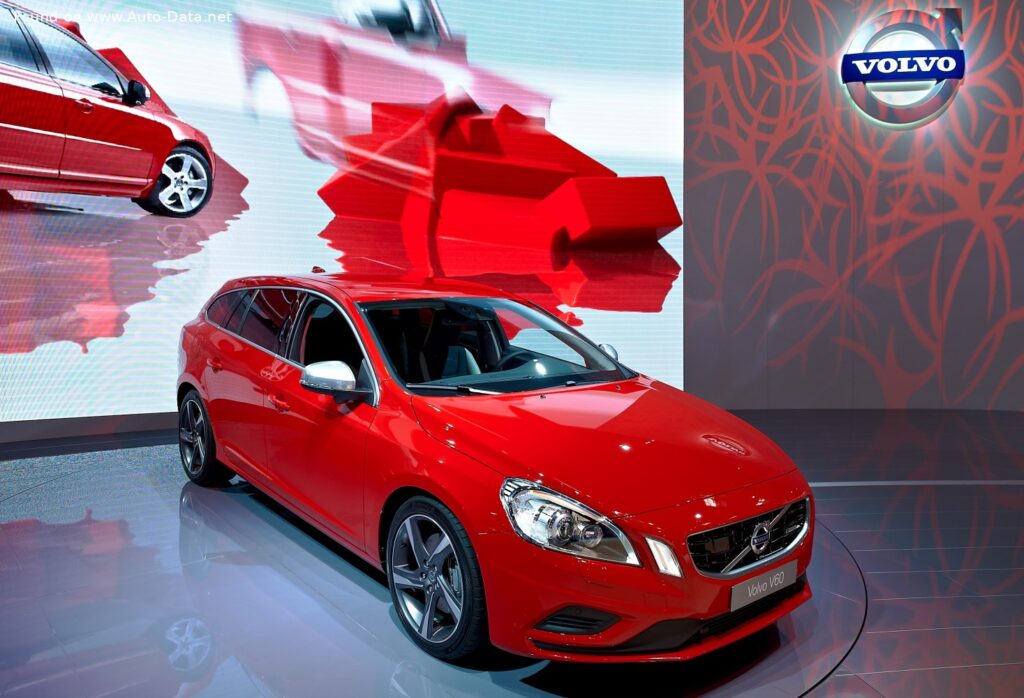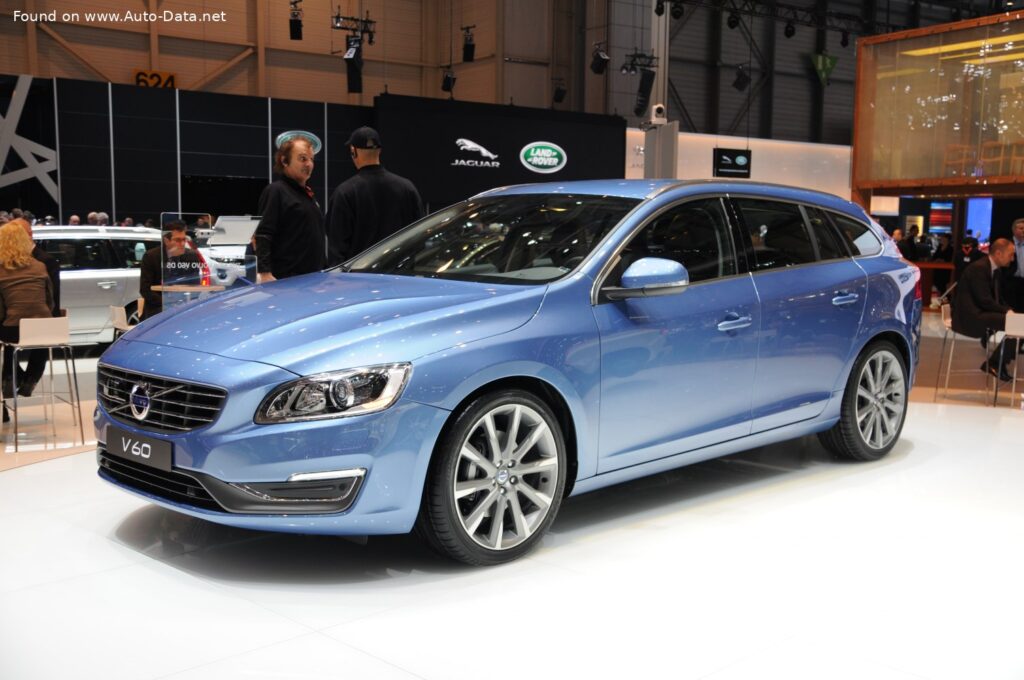
The Volvo V60 I (2013 Facelift): A Refined European Premium Wagon
The Volvo V60 I, particularly in its 2013 facelifted iteration, represents a significant chapter in Volvo’s modern history, solidifying its position in the premium compact executive segment. Launched in 2010, the V60 was Volvo’s answer to the evolving demands for a more dynamically styled and driver-focused wagon, moving away from the boxy estates of its past while retaining the brand’s core values of safety and practicality. The 2013 facelift, which ran until 2015 for this specific generation, brought a host of aesthetic and technological updates, harmonizing its design with Volvo’s newer models and enhancing its appeal in a competitive European market dominated by German rivals. This article will delve into the specifications and market impact of a particular variant, the Volvo V60 I (2013 facelift) 1.6 T3 (150 Hp) Automatic, a powertrain configuration primarily targeted at European markets emphasizing efficiency and manageable performance.
Engine and Performance: The 1.6 T3 Powertrain in the Volvo V60 I (2013 Facelift)
The heart of this particular Volvo V60 variant is its 1.6-liter T3 gasoline engine, a turbocharged inline-four unit designed to deliver a balance of performance and fuel efficiency. Coded as B4164T3, this direct-injection powerplant generates a respectable 150 horsepower at 5700 rpm. Its turbocharged nature, complemented by an intercooler, ensures a broad torque band, peaking at 177.01 lb.-ft. (240 Nm) available from a low 1600 rpm all the way up to 4000 rpm. This characteristic makes for a flexible and responsive driving experience, particularly well-suited for urban commuting and highway cruising where accessible torque is more beneficial than outright peak power.
Paired with a 6-speed automatic transmission, the 1.6 T3 engine drives the front wheels, providing smooth and effortless shifts. The combination allows the V60 to accelerate from 0 to 60 mph in a calculated 9.9 seconds (0-100 km/h in 10.4 seconds), a performance figure that, while not blistering, is entirely adequate for a family-oriented premium wagon. Fuel economy figures reflect its European market focus on efficiency: 23.8 US mpg in urban driving, 39.9 US mpg on the extra-urban cycle, and a combined 31.8 US mpg. These figures, alongside CO2 emissions of 171 g/km and compliance with the Euro 5 emission standard, underscore Volvo’s commitment to environmental responsibility during this era. The engine’s modest displacement also contributed to lower taxation in many European countries, making it an attractive proposition for a wide range of buyers.
Design and Features: Elegance Meets Practicality
The Volvo V60 I (2013 facelift) maintained its distinctive station wagon (or estate) body type, a hallmark of Volvo’s heritage, but with a decidedly more dynamic and sculpted aesthetic. The 2013 facelift introduced a series of subtle yet impactful changes, including a wider grille, revised headlights that integrated into the front fascia, and updated bumpers. These modifications gave the V60 a more contemporary and cohesive look, aligning it with the styling cues of its larger S60 sedan sibling and other models in Volvo’s updated lineup. The V60’s design eschewed the traditional boxy wagon shape for a sleek, coupé-like profile, which, while visually appealing, slightly impacted ultimate cargo capacity compared to some rivals.
Inside, the V60 offered a typically Scandinavian interior: minimalist, ergonomic, and crafted with high-quality materials. It comfortably seated five occupants, with supportive seats that were a Volvo hallmark. Key features for its time included a floating center console, a digital instrument cluster (introduced with the facelift), and advanced infotainment options. Safety, as always with Volvo, was paramount. While specific advanced driver-assistance systems (ADAS) vary by trim and optional packages, the V60 platform was equipped with a strong chassis, multiple airbags, and an array of passive safety features. The presence of ABS (Anti-lock Braking System) was standard, ensuring controlled braking in emergency situations. With a length of 182.48 inches, a width of 71.85 inches, and a height of 58.43 inches, the V60 was a well-proportioned vehicle, offering a good balance between maneuverability and interior space. Its trunk capacity of 15.19 cubic feet (430 liters) was adequate for daily use, reinforcing its role as a versatile family vehicle.
Technical Specifications: Volvo V60 I (2013 facelift) 1.6 T3 (150 Hp) Automatic
| Category | Specification | US Equivalent / Notes |
|---|---|---|
| General Information | ||
| Brand | Volvo | |
| Model | V60 | |
| Generation | V60 I (2013 facelift) | |
| Type (Engine) | 1.6 T3 (150 Hp) Automatic | |
| Start of production | 2013 year | |
| End of production | 2015 year | |
| Powertrain Architecture | Internal Combustion engine | |
| Body type | Station wagon (estate) | |
| Seats | 5 | |
| Doors | 5 | |
| Performance Specs | ||
| Fuel consumption (economy) – urban | 9.9 l/100 km | 23.8 US mpg |
| Fuel consumption (economy) – extra urban | 5.9 l/100 km | 39.9 US mpg |
| Fuel consumption (economy) – combined | 7.4 l/100 km | 31.8 US mpg |
| CO2 emissions | 171 g/km | |
| Fuel Type | Petrol (Gasoline) | |
| Acceleration 0 – 60 mph | 9.9 sec | Calculated |
| Acceleration 0 – 100 km/h | 10.4 sec | |
| Emission standard | Euro 5 | |
| Weight-to-power ratio | 11.1 kg/Hp | 24.47 lbs/Hp |
| Weight-to-torque ratio | 6.9 kg/Nm | |
| Engine Specs | ||
| Power | 150 Hp @ 5700 rpm. | |
| Power per liter | 94 Hp/l | |
| Torque | 240 Nm @ 1600-4000 rpm. | 177.01 lb.-ft. @ 1600-4000 rpm. |
| Engine layout | Front, Transverse | |
| Engine Model/Code | B4164T3 | |
| Engine displacement | 1596 cm³ | 97.39 cu. in. |
| Number of cylinders | 4 | |
| Engine configuration | Inline | |
| Cylinder Bore | 79 mm | 3.11 in. |
| Piston Stroke | 81.4 mm | 3.2 in. |
| Fuel injection system | Direct injection | |
| Engine aspiration | Turbocharger, Intercooler | |
| Engine oil capacity | 4.1 l | 4.33 US qt |
| Coolant | 9.2 l | 9.72 US qt |
| Space, Volume and Weights | ||
| Kerb Weight | 1662 kg | 3664.08 lbs. |
| Max. weight | 2110 kg | 4651.75 lbs. |
| Max load | 448 kg | 987.67 lbs. |
| Trunk (boot) space – minimum | 430 l | 15.19 cu. ft. |
| Fuel tank capacity | 67.5 l | 17.83 US gal |
| Dimensions | ||
| Length | 4635 mm | 182.48 in. |
| Width | 1825 mm | 71.85 in. |
| Height | 1484 mm | 58.43 in. |
| Wheelbase | 2776 mm | 109.29 in. |
| Front track | 1588 mm | 62.52 in. |
| Rear (Back) track | 1585 mm | 62.4 in. |
| Minimum turning circle (turning diameter) | 11.3 m | 37.07 ft. |
| Drivetrain, Brakes and Suspension Specs | ||
| Drivetrain Architecture | The Internal combustion engine (ICE) drives the front wheels of the vehicle. | |
| Drive wheel | Front wheel drive | |
| Number of gears and type of gearbox | 6 gears, automatic transmission | |
| Assisting systems | ABS (Anti-lock braking system) | |
| Steering type | Steering rack and pinion | |
Legacy and Market Impact of the Volvo V60 I (2013 Facelift)
The Volvo V60 I, particularly after its 2013 facelift, carved out a distinct niche in the highly competitive premium compact executive segment. While Volvo has a strong presence in the North American market, this specific 1.6 T3 engine variant was primarily optimized for European markets, where smaller displacement, turbocharged engines are favored due to fuel efficiency regulations and tax structures. In Europe, it competed directly with established players like the BMW 3 Series Touring, Audi A4 Avant, and Mercedes-Benz C-Class Estate, as well as the Volkswagen Passat Estate.
The V60 distinguished itself through its unique blend of Scandinavian design, renowned safety features, and a more engaging driving experience than previous Volvo wagons. It appealed to buyers who sought a premium vehicle that offered practicality without sacrificing style or dynamic appeal. The 1.6 T3 variant, with its efficient yet capable powertrain, was particularly popular among fleet buyers and private owners looking for a cost-effective entry into the premium segment. Its compliance with Euro 5 emissions standards also highlighted Volvo’s early commitment to reducing its environmental footprint.
The V60’s legacy is one of successful transformation for Volvo. It demonstrated that the brand could evolve its design language, offering sleek and sporty vehicles while retaining its core values. The V60 helped solidify Volvo’s image as a modern, design-conscious premium automaker. While the specific 1.6 T3 engine might not have been a dominant force in the US market, the V60 platform itself laid crucial groundwork for subsequent generations of Volvo vehicles, influencing their design, technology, and market positioning globally. Its success paved the way for future V60 models and reinforced the enduring appeal of the premium station wagon, even in an era increasingly dominated by SUVs.