The Volkswagen Transporter (T5, facelift 2009) Panel Van: A European Workhorse
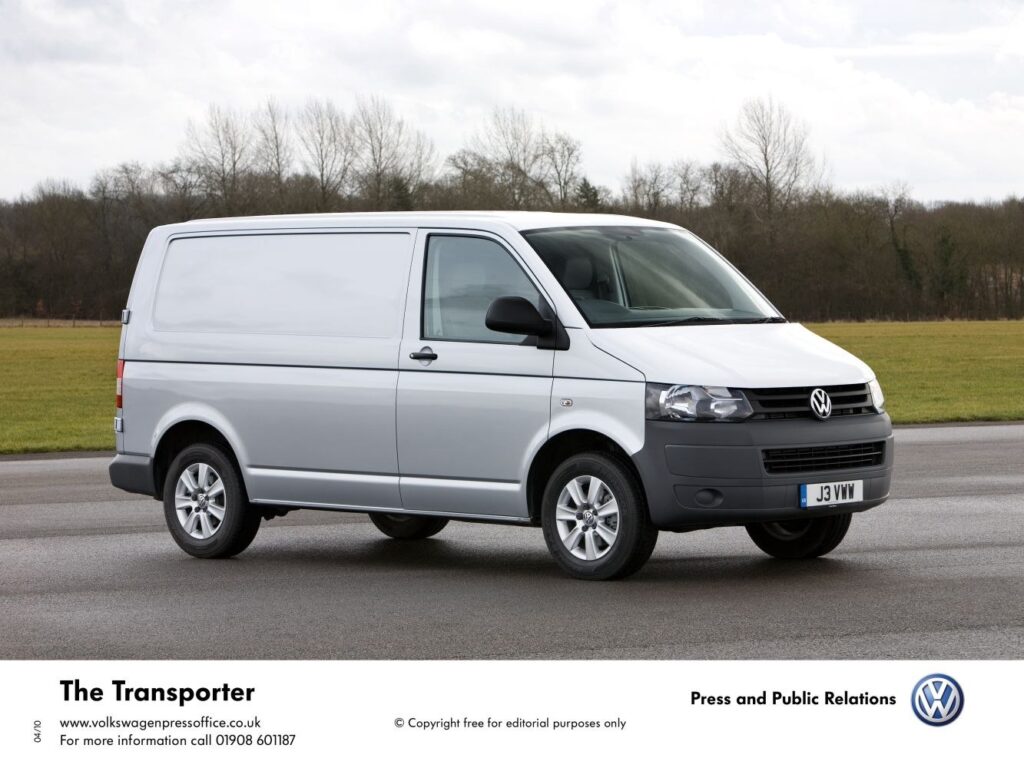
The Volkswagen Transporter, specifically the T5 generation that received a significant facelift in 2009, stands as a cornerstone in the global light commercial vehicle market, particularly prominent across Europe and other international territories. Known for its blend of utility, reliability, and increasingly sophisticated engineering, the Volkswagen Transporter (T5, facelift 2009) Panel Van variant represents a highly adaptable solution for businesses and tradespeople. Produced from 2011 to 2015 in this specific configuration, the L2H2 (long wheelbase, high roof) model with the potent 2.0 TSI (204 Hp) DSG powertrain offered a compelling combination of performance and practicality for its segment. While not directly sold in the United States under the Transporter name during this period, its technological advancements and market influence were globally recognized, setting benchmarks for efficiency and driver comfort in the commercial van sector.
Engine and Performance: The 2.0 TSI Powerhouse in the Volkswagen Transporter (T5, facelift 2009) Panel Van
At the heart of this particular Volkswagen Transporter (T5, facelift 2009) Panel Van lies a sophisticated 2.0-liter TSI gasoline engine, designated with the EA888/CJKA code. This inline four-cylinder unit, transversely mounted at the front, is a prime example of Volkswagen’s commitment to advanced powertrain technology. Featuring direct fuel injection, a turbocharger, and an intercooler, the engine delivers a robust 204 horsepower at a broad range of 4200-6000 rpm. Torque output is equally impressive, peaking at 258.15 lb.-ft. (350 Nm) available from a low 1500 rpm and sustained up to 4000 rpm, providing excellent pulling power crucial for a commercial vehicle.
Power is efficiently transferred to the front wheels via a state-of-the-art 7-speed DSG (Direct-Shift Gearbox) automatic transmission. This dual-clutch system is renowned for its rapid and seamless gear changes, contributing significantly to both the vehicle’s performance and its fuel economy. Despite its commercial vehicle designation and substantial size, this Transporter variant could accelerate from 0 to 60 mph in a swift 8.1 seconds, with a top speed reaching 120.55 mph (194 km/h). This level of performance was uncommon for a panel van of its class, making it particularly appealing for applications requiring both speed and cargo capacity.
Fuel efficiency, while secondary to utility for many commercial buyers, was still a key consideration. The 2.0 TSI engine, combined with the DSG transmission, achieved a combined fuel consumption (NEDC) of 23.3-24 US mpg (9.8-10.1 l/100 km). Urban consumption was rated at 17.4-17.8 US mpg (13.2-13.5 l/100 km), and extra-urban figures were more impressive at 29-30.2 US mpg (7.8-8.1 l/100 km). CO2 emissions ranged from 228-236 g/km, adhering to the Euro 5 emission standard prevalent during its production years.
Design and Features: Practicality Meets Modernity
The Volkswagen Transporter (T5, facelift 2009) Panel Van, in its L2H2 configuration, was designed from the ground up for maximum utility and durability. Its panel van body type, characterized by its enclosed cargo area and lack of rear windows, is optimized for secure and voluminous transport. With 4-5 doors and seating for 2-3 occupants, the cabin prioritized functionality for the driver and a passenger or two. The L2H2 designation specifically refers to a long wheelbase (3400 mm or 133.86 inches) and a high roof (2176 mm or 85.67 inches), which translated into an enormous maximum trunk (cargo) space of 7800 liters (275.45 cubic feet). This generous volume, combined with a maximum payload capacity of 2140.69 – 2178.17 lbs. (971-988 kg), made it an exceptionally capable hauler.
The exterior design of the facelifted T5 introduced a sharper, more contemporary look, aligning it with Volkswagen’s passenger car lineup of the era. Despite its utilitarian purpose, the design exuded a sense of robustness and professionalism. Dimensionally, the van measured 208.35 inches (5292 mm) in length and 74.96 inches (1904 mm) in width (89.88 inches or 2283 mm including mirrors), providing a substantial road presence. The ride height of 7.91 inches (201 mm) offered decent ground clearance for navigating varied terrain often encountered in commercial operations.
Underneath, the Transporter featured an independent McPherson strut front suspension with coil springs and an anti-roll bar, paired with an independent coil spring rear suspension with transverse stabilizer and trailing arms. This setup provided a comfortable ride for a commercial vehicle while maintaining excellent stability, even when fully loaded. Braking duties were handled by ventilated discs all around—340×32.5 mm at the front and 294×22 mm at the rear—ensuring strong and consistent stopping power, assisted by ABS (Anti-lock Braking System) for enhanced safety. Hydraulic rack and pinion steering provided precise control, and a minimum turning circle of 43.31 feet (13.2 meters) aided maneuverability in urban environments.
Technical Specifications
| Category | Specification | US/Imperial Equivalent |
|---|---|---|
| General Information | ||
| Brand | Volkswagen | |
| Model | Transporter (T5, facelift 2009) Panel Van | |
| Type (Engine) | 2.0 TSI (204 Hp) DSG L2H2 | |
| Production Years | 2011 – 2015 | |
| Body Type | Van | |
| Seats | 2-3 | |
| Doors | 4-5 | |
| Performance Specs | ||
| Fuel Consumption (Urban NEDC) | 13.2-13.5 l/100 km | 17.4 – 17.8 US mpg |
| Fuel Consumption (Extra Urban NEDC) | 7.8-8.1 l/100 km | 29 – 30.2 US mpg |
| Fuel Consumption (Combined NEDC) | 9.8-10.1 l/100 km | 23.3 – 24 US mpg |
| CO2 Emissions (NEDC) | 228-236 g/km | |
| Fuel Type | Petrol (Gasoline) | |
| Acceleration 0-60 mph | 8.1 sec | |
| Maximum Speed | 194 km/h | 120.55 mph |
| Emission Standard | Euro 5 | |
| Weight-to-Power Ratio | 8.9 kg/Hp | 112.6 Hp/tonne |
| Weight-to-Torque Ratio | 5.2 kg/Nm | 193.2 Nm/tonne |
| Engine Specs | ||
| Power | 204 Hp @ 4200-6000 rpm | |
| Torque | 350 Nm @ 1500-4000 rpm | 258.15 lb.-ft. @ 1500-4000 rpm |
| Engine Layout | Front, Transverse | |
| Engine Model/Code | EA888 / CJKA | |
| Engine Displacement | 1984 cm3 | 121.07 cu. in. |
| Number of Cylinders | 4 | |
| Engine Configuration | Inline | |
| Cylinder Bore | 82.5 mm | 3.25 in. |
| Piston Stroke | 92.8 mm | 3.65 in. |
| Compression Ratio | 9.8:1 | |
| Valves per Cylinder | 4 | |
| Fuel Injection System | Direct injection | |
| Engine Aspiration | Turbocharger, Intercooler | |
| Valvetrain | DOHC | |
| Engine Oil Capacity | 5.7 l | 6.02 US qt |
| Coolant Capacity | 11 l | 11.62 US qt |
| Space, Volume and Weights | ||
| Kerb Weight | 1812-2229 kg | 3994.78 – 4914.1 lbs. |
| Max. Weight (GVWR) | 2800-3200 kg | 6172.94 – 7054.79 lbs. |
| Max Load | 971-988 kg | 2140.69 – 2178.17 lbs. |
| Trunk (Cargo) Space – Max. | 7800 l | 275.45 cu. ft. |
| Fuel Tank Capacity | 80 l | 21.13 US gal |
| Permitted Trailer Load (with brakes) | 2500 kg | 5511.56 lbs. |
| Permitted Trailer Load (without brakes) | 750 kg | 1653.47 lbs. |
| Permitted Towbar Download | 100 kg | 220.46 lbs. |
| Dimensions | ||
| Length | 5292 mm | 208.35 in. |
| Width | 1904 mm | 74.96 in. |
| Width (incl. mirrors) | 2283 mm | 89.88 in. |
| Height | 2176 mm | 85.67 in. |
| Wheelbase | 3400 mm | 133.86 in. |
| Front Overhang | 896 mm | 35.28 in. |
| Rear Overhang | 996 mm | 39.21 in. |
| Ride Height (Ground Clearance) | 201 mm | 7.91 in. |
| Minimum Turning Circle | 13.2 m | 43.31 ft. |
| Approach Angle | 21° | |
| Departure Angle | 17° | |
| Ramp-over (Brakeover) Angle | 12° | |
| Drivetrain, Brakes and Suspension | ||
| Drivetrain Architecture | Front-wheel drive, Internal Combustion Engine | |
| Drive Wheel | Front wheel drive | |
| Gearbox | 7 gears, automatic (DSG) | |
| Front Suspension | Independent, McPherson with coil spring and anti-roll bar | |
| Rear Suspension | Independent coil spring, Transverse stabilizer, Trailing arm | |
| Front Brakes | Ventilated discs, 340×32.5 mm | |
| Rear Brakes | Ventilated discs, 294×22 mm | |
| Assisting Systems | ABS (Anti-lock braking system) | |
| Steering Type | Steering rack and pinion | |
| Power Steering | Hydraulic Steering | |
| Tires Size | 215/60 R17; 235/55 R17; 255/45 R18 | |
| Wheel Rims Size | 7J x 17; 8J x 18 |
Legacy and Market Impact
The Volkswagen Transporter series boasts a rich heritage dating back to the iconic T1 “Bus” in the 1950s, establishing itself as a global symbol of versatility and reliability. The T5 generation, particularly after its 2009 facelift, continued this legacy, adapting to modern demands for efficiency, comfort, and advanced technology in the commercial vehicle sector. In Europe, the Volkswagen Transporter (T5, facelift 2009) Panel Van was a dominant force, competing fiercely with rivals such as the Ford Transit Custom, Mercedes-Benz Vito, Renault Trafic, and Fiat Ducato. Its reputation for robust build quality, strong residual values, and a comprehensive range of configurations made it a preferred choice for countless businesses, from small independent contractors to large fleet operators.
The introduction of the 2.0 TSI engine with the DSG transmission in a panel van was a significant move, offering a level of driving refinement and performance previously more associated with passenger cars. This differentiated the Transporter from many of its more utilitarian competitors, appealing to drivers who spent long hours behind the wheel and appreciated the blend of power, smooth shifting, and car-like handling. While the Transporter line, including the T5, was not extensively marketed in the United States under its original name (following the discontinuation of the Eurovan, a rebadged T4, in 2003), its global influence on commercial vehicle design and engineering was undeniable. Elements of its design philosophy and powertrain technology could be seen in other segments and markets, demonstrating Volkswagen’s leadership in the light commercial vehicle space.
The T5 facelift generation solidified the Transporter’s position as a benchmark for what a modern commercial van could offer. Its ability to combine substantial cargo capacity with advanced powertrain options, improved safety features, and enhanced driver ergonomics ensured its continued success and enduring appeal. Even after its production concluded in 2015, making way for the T6, the T5 facelift remains a highly respected and sought-after vehicle in the used commercial vehicle market, a testament to its robust engineering and lasting impact.