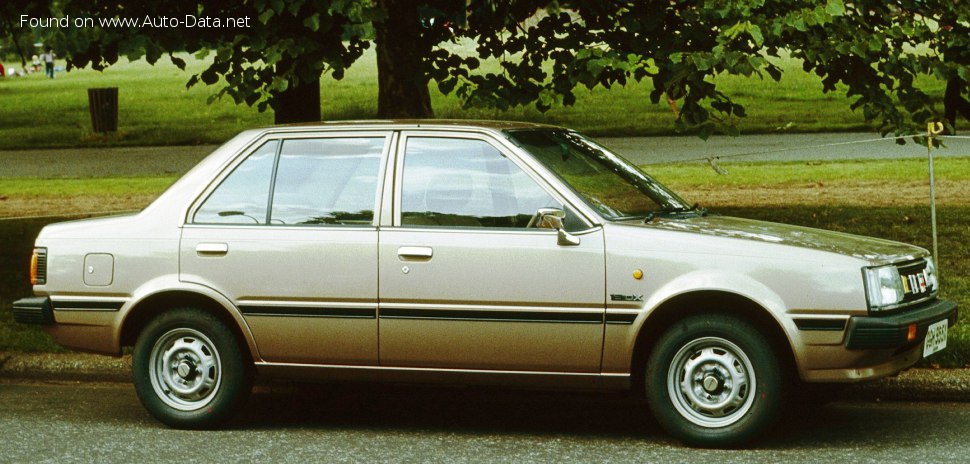
The Nissan Sunny I (B11) 1.5 (75 Hp): A Global Compact Workhorse of the 1980s
The Nissan Sunny I, specifically the B11 generation produced from 1982 to 1986, represented a pivotal moment for Nissan’s compact car lineup. Known globally as the Sunny, and in various markets under different monikers such as the Nissan Sentra in North America, this iteration marked a significant shift towards a more modern, front-wheel-drive (FWD) architecture. The Nissan Sunny I (B11) 1.5 (75 Hp) sedan, the focus of this analysis, was a quintessential example of Nissan’s commitment to delivering reliable, economical, and practical transportation for the masses during a period of evolving automotive design and consumer demands. It carved out a substantial niche in the highly competitive compact segment, offering a sensible blend of efficiency and utility that resonated with buyers worldwide.
Stepping into the 1980s, the automotive industry was increasingly embracing front-wheel drive for its packaging efficiency, improved interior space, and enhanced traction in adverse conditions. The B11 Sunny was a direct response to these trends, moving away from its rear-wheel-drive predecessors. This particular variant, equipped with a 1.5-liter engine producing 75 horsepower, epitomized the B11’s core values: dependable performance, straightforward engineering, and cost-effective operation. Its unpretentious design and robust build quality quickly established its reputation as a no-nonsense vehicle, perfectly suited for daily commuting and family duties across diverse international markets.
Engine & Performance of the Nissan Sunny I (B11)
The heart of the Nissan Sunny I (B11) 1.5 (75 Hp) sedan was its naturally aspirated 1.5-liter internal combustion engine. This powerplant, while not designed for exhilarating speed, was engineered for maximum reliability and fuel economy, characteristics highly valued by consumers in the early to mid-1980s. Producing a modest 75 horsepower, the engine delivered adequate power for urban driving and highway cruising, especially considering the vehicle’s relatively light curb weight and the prevailing performance expectations of the era’s compact cars.
The engine’s naturally aspirated design meant a simpler, more robust construction, contributing to its legendary durability and ease of maintenance. Paired with a front-wheel-drive architecture, the powertrain layout was optimized for efficient power transfer, ensuring that the 75 horses were effectively utilized. This configuration also contributed to the vehicle’s predictable handling characteristics and improved traction, making it a safe and manageable car for a wide range of drivers. The focus was squarely on practicality and longevity rather than raw power, a strategy that paid dividends in terms of owner satisfaction and the car’s enduring reputation.
Fuel type for this model was Petrol (Gasoline), aligning with the global standard for compact passenger vehicles. The engine’s design prioritized efficient combustion, helping owners keep running costs down at a time when fuel prices were a significant consideration. The combination of a reliable engine, a proven front-wheel-drive system, and a focus on fuel efficiency made the Sunny B11 a compelling choice for buyers seeking a dependable and economical mode of transport.
Design & Features: The Practicality of the Nissan Sunny I (B11)
The design philosophy behind the Nissan Sunny I (B11) was one of unpretentious functionality and practical utility. As a 4-door sedan with seating for five, it adhered to the classic proportions of a family compact car of the 1980s. The exterior styling was characterized by clean, angular lines and a somewhat boxy silhouette, a common aesthetic during that period before more aerodynamic, rounded forms became prevalent. While not overtly flashy, the design was tasteful and understated, aiming for broad appeal and a timeless quality that would not quickly fall out of fashion.
The move to a front-wheel-drive platform allowed Nissan engineers to maximize interior space. The absence of a transmission tunnel running through the cabin, common in rear-wheel-drive cars, freed up valuable legroom for rear passengers and allowed for a flatter floor, enhancing comfort for all occupants. The sedan body type offered a conventional trunk, providing ample cargo capacity for groceries, luggage, or other daily essentials, reinforcing its role as a practical family vehicle.
Inside, the Sunny B11 prioritized ergonomics and durability. While lacking the advanced infotainment systems and luxurious materials of modern vehicles, the cabin was thoughtfully laid out with easy-to-read gauges and controls that were intuitive to operate. Materials were chosen for their hard-wearing qualities, designed to withstand years of daily use. Features were generally straightforward, focusing on essentials like heating and ventilation, basic audio systems, and comfortable, supportive seating. Safety features, typical for the era, would have included three-point seatbelts for front occupants and lap belts for rear passengers, along with a robust body structure designed to offer a degree of passive protection.
Technical Specifications: Nissan Sunny I (B11) 1.5 (75 Hp) Sedan
| General Information | |
|---|---|
| Brand | Nissan |
| Model | Sunny |
| Generation | Sunny I (B11) |
| Type (Engine) | 1.5 (75 Hp) |
| Start of production | 1982 year |
| End of production | 1986 year |
| Powertrain Architecture | Internal Combustion engine |
| Body type | Sedan |
| Seats | 5 |
| Doors | 4 |
| Performance Specs | |
| Fuel Type | Petrol (Gasoline) |
| Power | 75 Hp |
| Engine Aspiration | Naturally aspirated engine |
| Drivetrain, Brakes and Suspension Specs | |
| Drivetrain Architecture | The Internal combustion engine (ICE) drives the front wheels of the vehicle. |
| Drive wheel | Front wheel drive |
Legacy & Market Impact of the Nissan Sunny I (B11)
The Nissan Sunny I (B11) left an indelible mark on the compact car segment, cementing Nissan’s reputation as a purveyor of reliable and economical vehicles. Its production run from 1982 to 1986 placed it squarely in a period of intense competition, with rivals like the Honda Civic, Toyota Corolla, Mazda 323, and the Ford Escort vying for market share. The Sunny B11 held its own by offering a compelling package of affordability, practicality, and, crucially, legendary reliability that often outlasted its contemporaries.
The B11 generation was instrumental in Nissan’s global strategy, serving as a versatile platform that could be adapted for various markets. In North America, it was known as the Sentra, a nameplate that would go on to become a cornerstone of Nissan’s U.S. sales for decades. This strategic rebranding and adaptation highlighted the B11’s fundamental soundness and its ability to meet diverse consumer needs, from the bustling streets of Tokyo to the suburban highways of America.
Its historical significance lies not in groundbreaking innovation but in its embodiment of automotive evolution during the 1980s. The transition to front-wheel drive was a major engineering undertaking for Nissan, and the B11 Sunny successfully demonstrated the benefits of this layout, paving the way for future generations of Nissan compacts. It became a workhorse for countless families and businesses, praised for its low running costs, ease of maintenance, and ability to simply get the job done, day in and day out.
Today, while many examples of the Sunny B11 have faded into history, its legacy endures through the subsequent generations of Nissan’s compact cars that built upon its foundation of dependability and value. It stands as a testament to an era when automotive design prioritized function over form, and when a simple, well-engineered car could make a profound impact on the daily lives of millions. The Nissan Sunny I (B11) 1.5 (75 Hp) was more than just a car; it was a global symbol of accessible and trustworthy transportation.