The Seat Ibiza IV ST 1.2 TDI (75 Hp): A Practical European Compact
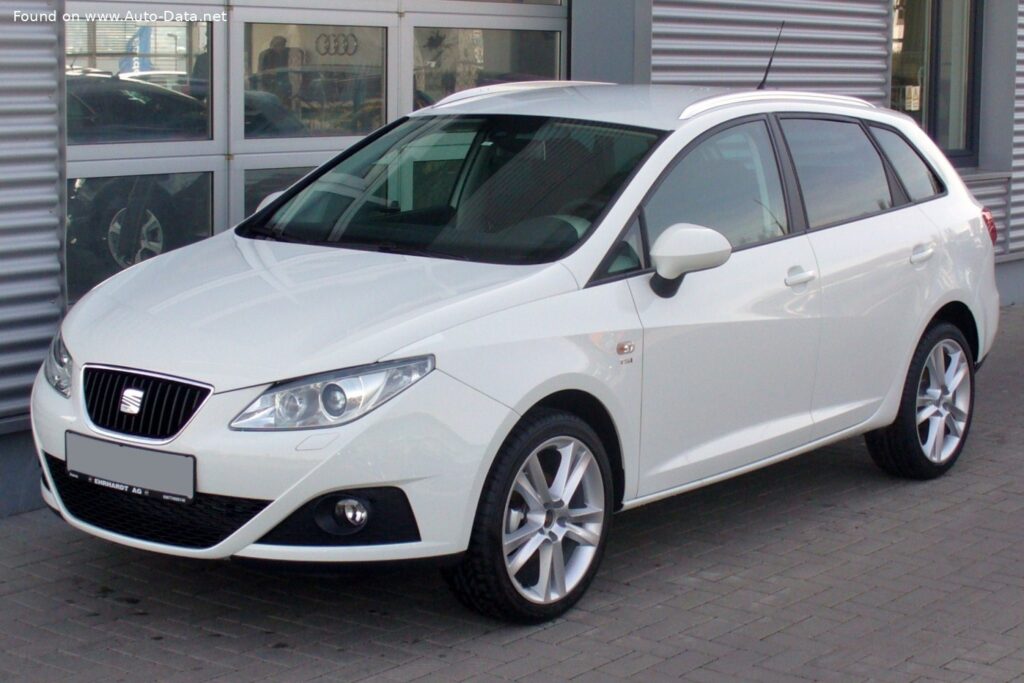
The Seat Ibiza IV ST 1.2 TDI (75 Hp) represents a significant offering from the Spanish automaker Seat, a brand within the Volkswagen Group, during its production run from 2010 to 2012. As part of the fourth generation of the popular Ibiza model line, the “ST” designation signifies “Sport Tourer,” Seat’s term for a station wagon or estate body style. This particular variant, powered by a highly efficient 1.2-liter TDI diesel engine, was specifically designed to cater to the discerning European market, where compact dimensions, fuel economy, and versatile cargo space are paramount. While the Seat brand itself is not officially sold in the United States, the Ibiza IV ST played a crucial role in its segment across Europe, offering a compelling blend of practicality, Volkswagen Group engineering, and Seat’s characteristic sporty styling. This model aimed to provide an accessible entry point into the compact estate segment, emphasizing low running costs and everyday usability without sacrificing dynamic appeal.
Engine and Performance of the Seat Ibiza IV ST 1.2 TDI (75 Hp)
At the heart of the Seat Ibiza IV ST 1.2 TDI (75 Hp) lies a compact yet remarkably efficient powertrain, a testament to Volkswagen Group’s expertise in diesel technology. This model is equipped with a 1.2-liter (1199 cm3 or 73.17 cu. in.) inline three-cylinder TDI (Turbocharged Direct Injection) diesel engine, designated with the code CFWA. Despite its modest displacement, this engine is a sophisticated unit featuring a DOHC (Double Overhead Camshaft) valvetrain with 4 valves per cylinder, a common rail fuel injection system, and a turbocharger with an intercooler to maximize power output and efficiency.
The engine delivers a peak power output of 75 horsepower (Hp) at 4000 rpm, which translates to a power-per-liter ratio of 62.6 Hp/l. More significantly for a diesel, it produces a robust 132.76 lb.-ft. (180 Nm) of torque available across a broad rev range, from 1500 to 3450 rpm. This low-end torque is crucial for effortless urban driving and highway cruising, providing adequate pulling power despite the relatively low horsepower figure. The engine layout is front, transverse, driving the front wheels through a precise 5-speed manual transmission, a common and reliable setup for compact vehicles.
In terms of performance, the Ibiza IV ST 1.2 TDI (75 Hp) is not built for speed but for economical and practical transportation. It accelerates from 0 to 60 mph in a calculated 13.8 seconds (0-100 km/h in 14.5 seconds) and can reach a maximum speed of 104.39 mph (168 km/h). These figures are perfectly adequate for its intended use as a family-friendly compact station wagon.
However, where this powertrain truly shines is in its fuel economy and environmental credentials. With a combined fuel consumption rating (NEDC) of an impressive 60.3 US mpg (3.9 l/100 km), it was one of the most frugal vehicles in its class. Urban driving yields 48 US mpg (4.9 l/100 km), while extra-urban cruising can achieve an outstanding 69.2 US mpg (3.4 l/100 km). Furthermore, the engine meets the stringent Euro 5 emission standard, emitting just 102 g/km of CO2, thanks in part to its particulate filter system. This combination of efficiency and low emissions made it an attractive choice for European consumers facing high fuel prices and increasing environmental regulations.
Design and Features
The Seat Ibiza IV ST 1.2 TDI (75 Hp) distinguishes itself with its station wagon (estate) body type, offering enhanced versatility over its hatchback siblings. Measuring 166.42 inches (4227 mm) in length, 66.65 inches (1693 mm) in width, and 56.89 inches (1445 mm) in height, the Ibiza ST maintains a compact footprint while maximizing interior space. Its wheelbase of 97.2 inches (2469 mm) contributes to stable handling and a comfortable ride for a vehicle in its class. The design ethos of the Ibiza IV generation, penned by Luc Donckerwolke, was characterized by sharp lines, a distinctive “arrow design” front end, and a dynamic profile that gave it a more aggressive and youthful appearance compared to some of its more staid competitors.
Inside, the Ibiza IV ST offers seating for five occupants and five doors for easy access. The primary advantage of the ST variant is its cargo capacity. With a minimum trunk (boot) space of 15.19 cu. ft. (430 liters), it provided significantly more utility than the standard Ibiza hatchback, making it suitable for small families or individuals requiring extra luggage room. The rear seats could typically fold down to further expand this capacity, though specific folded volume data is not provided.
From a chassis and safety perspective, the Ibiza IV ST was built on the robust Volkswagen Group PQ25 platform, shared with models like the VW Polo and Skoda Fabia. It featured an independent McPherson strut front suspension with coil springs and an anti-roll bar, paired with a semi-dependent beam rear suspension with a stabilizer for lateral stability. This setup provided a good balance of ride comfort and agile handling, characteristic of Seat’s “auto emoción” philosophy. Braking performance was handled by 256×22 mm ventilated discs at the front and 200×40 mm drum brakes at the rear, complemented by an Anti-lock Braking System (ABS) for enhanced safety. The steering system utilized a rack and pinion setup with electric power steering, offering light and precise control, particularly beneficial in urban environments. The vehicle was typically equipped with tires sized 175/70 R14 or 185/60 R15 on 5J x 14 or 6J x 15 wheel rims, respectively.
Technical Specifications
| Category | Specification | Metric Value | US/Imperial Value |
|---|---|---|---|
| General Information | |||
| Brand | Seat | ||
| Model | Ibiza | ||
| Generation | Ibiza IV ST | ||
| Type (Engine) | 1.2 TDI (75 Hp) | ||
| Start of Production | 2010 year | ||
| End of Production | 2012 year | ||
| Powertrain Architecture | Internal Combustion engine | ||
| Body type | Station wagon (estate) | ||
| Seats | 5 | ||
| Doors | 5 | ||
| Performance Specifications | |||
| Fuel consumption (economy) – urban (NEDC) | 4.9 l/100 km | 48 US mpg | |
| Fuel consumption (economy) – extra urban (NEDC) | 3.4 l/100 km | 69.2 US mpg | |
| Fuel consumption (economy) – combined (NEDC) | 3.9 l/100 km | 60.3 US mpg | |
| CO2 emissions (NEDC) | 102 g/km | ||
| Fuel Type | Diesel | ||
| Acceleration 0 – 100 km/h | 14.5 sec | ||
| Acceleration 0 – 62 mph | 14.5 sec | ||
| Acceleration 0 – 60 mph (Calculated) | 13.8 sec | ||
| Maximum speed | 168 km/h | 104.39 mph | |
| Emission standard | Euro 5 | ||
| Weight-to-power ratio | 14.9 kg/Hp | 67.3 Hp/tonne | |
| Weight-to-torque ratio | 6.2 kg/Nm | 161.4 Nm/tonne | |
| Engine Specifications | |||
| Power | 75 Hp @ 4000 rpm | ||
| Power per liter | 62.6 Hp/l | ||
| Torque | 180 Nm @ 1500-3450 rpm | 132.76 lb.-ft. @ 1500-3450 rpm | |
| Engine layout | Front, Transverse | ||
| Engine Model/Code | CFWA | ||
| Engine displacement | 1199 cm3 | 73.17 cu. in. | |
| Number of cylinders | 3 | ||
| Engine configuration | Inline | ||
| Cylinder Bore | 79.5 mm | 3.13 in. | |
| Piston Stroke | 80.5 mm | 3.17 in. | |
| Compression ratio | 16.5:1 | ||
| Number of valves per cylinder | 4 | ||
| Fuel injection system | Diesel Commonrail | ||
| Engine aspiration | Turbocharger, Intercooler | ||
| Valvetrain | DOHC | ||
| Engine oil capacity | 4.3 l | 4.54 US qt | |
| Coolant | 8 l | 8.45 US qt | |
| Engine systems | Particulate filter | ||
| Space, Volume and Weights | |||
| Kerb Weight | 1115 kg | 2458.15 lbs. | |
| Max. weight | 1630 kg | 3593.53 lbs. | |
| Max load | 515 kg | 1135.38 lbs. | |
| Trunk (boot) space – minimum | 430 l | 15.19 cu. ft. | |
| Fuel tank capacity | 45 l | 11.89 US gal | |
| Permitted trailer load with brakes (12%) | 1000 kg | 2204.62 lbs. | |
| Dimensions | |||
| Length | 4227 mm | 166.42 in. | |
| Width | 1693 mm | 66.65 in. | |
| Height | 1445 mm | 56.89 in. | |
| Wheelbase | 2469 mm | 97.2 in. | |
| Front track | 1465 mm | 57.68 in. | |
| Rear (Back) track | 1457 mm | 57.36 in. | |
| Minimum turning circle (turning diameter) | 10.48 m | 34.38 ft. | |
| Drivetrain, Brakes and Suspension Specifications | |||
| Drivetrain Architecture | The Internal combustion engine (ICE) drives the front wheels of the vehicle. | ||
| Drive wheel | Front wheel drive | ||
| Number of gears and type of gearbox | 5 gears, manual transmission | ||
| Front suspension | Independent, type McPherson with coil spring and anti-roll bar | ||
| Rear suspension | Semi-dependent beam with stabilizer lateral stability | ||
| Front brakes | Ventilated discs | 256×22 mm | |
| Rear brakes | Drum | 200×40 mm | |
| Assisting systems | ABS (Anti-lock braking system) | ||
| Steering type | Steering rack and pinion | ||
| Power steering | Electric Steering | ||
| Tires size | 175/70 R14; 185/60 R15 | ||
| Wheel rims size | 5J x 14; 6J x 15 | ||
Legacy and Market Impact of the Seat Ibiza IV ST 1.2 TDI (75 Hp)
The Seat Ibiza IV ST 1.2 TDI (75 Hp) carved out a specific niche in the highly competitive European compact car market, embodying Seat’s strategy of offering Volkswagen Group engineering with a distinctive Spanish flair and a focus on sportiness. As a core model for the brand, the Ibiza was critical to Seat’s sales volume, and the ST (Sport Tourer) variant extended its appeal to customers requiring more practicality than the standard hatchback.
In its primary markets, particularly in Spain, Germany, the UK, and Italy, the Ibiza ST competed against a strong lineup of European compact estates. Key rivals included the Skoda Fabia Combi (sharing the same platform and many mechanicals), the Renault Clio Estate, the Peugeot 207 SW, and to some extent, even smaller offerings like the Dacia Logan MCV. What set the Ibiza ST apart was its more dynamic styling and perceived sportier driving characteristics, aligning with Seat’s “auto emoción” brand identity. While its 75 Hp 1.2 TDI engine was not a performance powerhouse, it was perfectly suited for the urban and inter-city driving prevalent in Europe, where its exceptional fuel economy and low emissions were highly valued.
The Ibiza IV ST, particularly with this efficient diesel engine, gained a reputation as a sensible and economical choice for young families or individuals who needed extra cargo space but didn’t want the larger footprint or higher running costs of a full-size estate. Its relatively light kerb weight of 2458.15 lbs. (1115 kg) contributed to both its agility and its impressive fuel efficiency figures. The ability to tow up to 2204.62 lbs. (1000 kg) with brakes also added to its utility, allowing for small trailers or caravans.
The production period from 2010 to 2012 marked a time when diesel engines were still highly favored in Europe for their efficiency and torque. The Euro 5 emission standard compliance of the 1.2 TDI (75 Hp) model ensured it met the environmental regulations of its era, contributing to lower road taxes and incentives in various European countries. While diesel’s popularity has waned in recent years, this particular model represents a period when compact, efficient diesels were at the forefront of automotive technology for the mass market. Its blend of practical body style, segment-leading fuel economy, and distinctive design ensured the Seat Ibiza IV ST 1.2 TDI (75 Hp) remained a relevant and competitive option, solidifying Seat’s position as a vibrant and practical choice within the Volkswagen Group’s diverse portfolio.