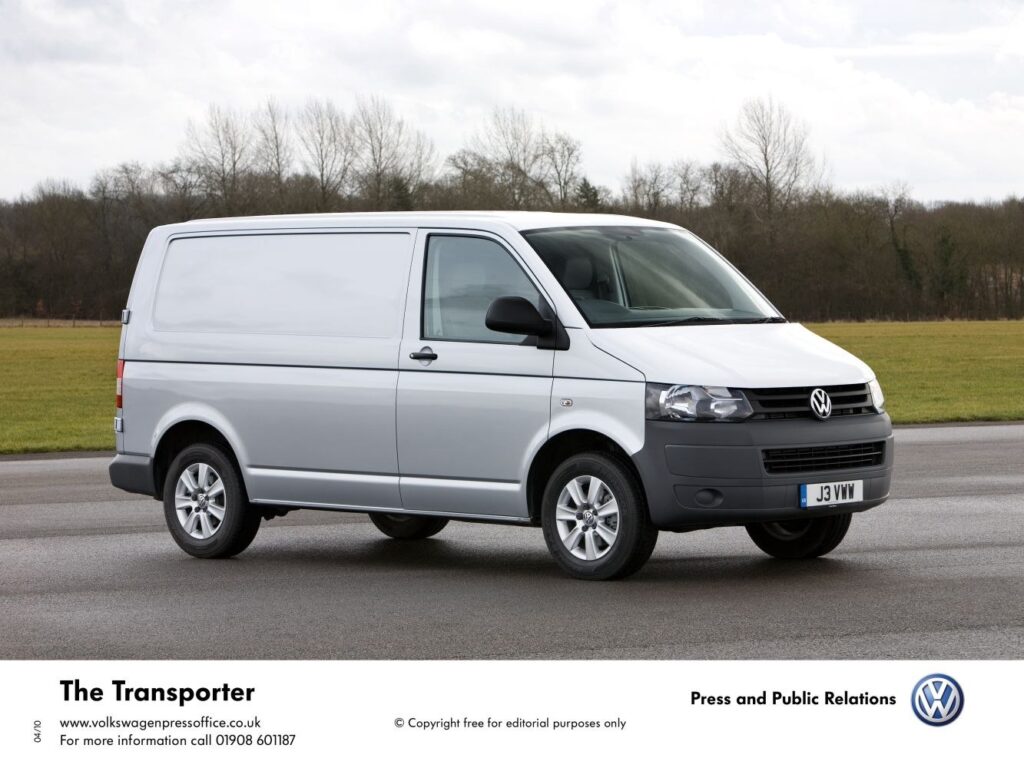
Volkswagen Transporter (T5, facelift 2009) Panel Van 2.0 TSI (204 Hp) DSG L2H3: A European Workhorse with Modern Muscle
The Volkswagen Transporter, in its fifth generation (T5) and specifically the facelifted model introduced in 2009, represents a critical pillar in Volkswagen’s robust commercial vehicle lineup. While not a common sight on American roads in its panel van configuration, the Transporter is an iconic and ubiquitous presence across Europe and other international markets, revered for its versatility, durability, and sophisticated engineering. The variant under examination, the Volkswagen Transporter (T5, facelift 2009) Panel Van 2.0 TSI (204 Hp) DSG L2H3, produced between 2011 and 2015, stands out as a high-performance, long-wheelbase, high-roof (L2H3) model, combining substantial cargo capacity with a surprisingly potent gasoline engine and an advanced automatic transmission. This specific iteration highlights Volkswagen’s commitment to offering commercial vehicle operators not just practicality, but also driving refinement and efficiency, a stark contrast to many utilitarian vans of its era.
The T5 generation, launched in 2003, built upon the legendary heritage of its predecessors, evolving the concept of a multi-purpose van for the 21st century. The 2009 facelift brought significant enhancements, including updated styling, improved interiors, and a new range of more efficient engines, including the direct-injection TSI gasoline units and common-rail TDI diesel engines. The Panel Van configuration, with its enclosed cargo area, serves as the backbone for countless businesses, from logistics and construction to mobile service operations, across its primary markets. The L2H3 designation signifies a longer wheelbase and a higher roof, maximizing cargo volume to an impressive 328.43 cubic feet, making it an ideal solution for businesses requiring substantial carrying capacity without sacrificing maneuverability.
Engine and Performance: Powering the Volkswagen Transporter (T5, facelift 2009) Panel Van
Under the hood of this particular Transporter T5 variant lies Volkswagen’s acclaimed 2.0-liter TSI (Turbocharged Stratified Injection) gasoline engine, a powerplant more commonly associated with performance-oriented passenger cars than commercial vans. Designated with the engine code EA888 / CJKA, this inline four-cylinder engine is a testament to modern automotive engineering, delivering a robust 204 horsepower at a broad range of 4200-6000 rpm. This impressive power output for a van translates to a power-per-liter figure of 102.8 Hp/l, showcasing its high-tech design.
Crucially for a commercial vehicle, torque delivery is equally vital, and the 2.0 TSI does not disappoint. It generates a substantial 258.15 lb.-ft. of torque, available from a remarkably low 1500 rpm and sustained up to 4000 rpm. This wide torque band ensures strong pulling power from a standstill and excellent flexibility for navigating urban environments or maintaining speed on highways, even when fully laden. The engine’s advanced features include direct fuel injection, a turbocharger with an intercooler, and a DOHC (Double Overhead Camshaft) valvetrain with 4 valves per cylinder, all contributing to its potent and efficient operation. With a compression ratio of 9.8:1 and a bore of 3.25 inches paired with a stroke of 3.65 inches, the engine is designed for optimal combustion and responsiveness.
Mating this powerful engine is a sophisticated 7-speed automatic DSG (Direct-Shift Gearbox) transmission. This dual-clutch transmission is renowned for its rapid, smooth, and efficient gear changes, providing a driving experience that is a significant cut above traditional automatic or manual transmissions found in many commercial vehicles. The combination of the 2.0 TSI engine and the DSG gearbox allows this large panel van to achieve an unexpectedly brisk acceleration from 0 to 60 mph in just 8.4 seconds, with a top speed of 114.95 mph. These figures underscore its capabilities not just as a work vehicle, but as one that can confidently keep pace with passenger car traffic.
Despite its performance, Volkswagen also aimed for reasonable efficiency for its class. The Transporter 2.0 TSI L2H3 achieved a combined fuel economy (NEDC standard) of 23.1 – 22.4 US mpg (10.2-10.5 l/100 km) and CO2 emissions between 238-245 g/km, meeting Euro 5 emission standards. While these figures might seem high by modern passenger car standards, for a large, powerful commercial van, they represent a strong balance of utility and performance. The 21.13 US gallon fuel tank provides a practical operating range for commercial users.
Design and Features: Practicality Meets Volkswagen Refinement
The Volkswagen Transporter T5 facelift Panel Van, especially in its L2H3 configuration, is designed first and foremost for maximum utility. Its body type is a classic van, featuring 4 to 5 doors for access to the cabin and the expansive cargo area, and typically seating 2 or 3 occupants in the front. The exterior design of the facelifted T5 introduced a sharper, more contemporary look compared to its pre-facelift iteration, aligning it with Volkswagen’s passenger car design language of the time. This included revised headlights, a new grille, and updated bumpers, giving the workhorse a more polished appearance.
Measuring an overall length of 208.35 inches, a width of 74.96 inches (89.88 inches including mirrors), and a substantial height of 97.48 inches, the L2H3 variant is built to accommodate significant loads. The extended 133.86-inch wheelbase contributes to better stability and ride quality, particularly when loaded. The high roof provides ample interior standing room for workers within the cargo area, facilitating easier loading, unloading, and organization of goods. The maximum cargo volume of 328.43 cubic feet (9300 liters) is a key selling point for businesses needing to transport bulky items.
Beyond its spaciousness, the Transporter T5 incorporates robust engineering for its demanding role. It features independent suspension front and rear: a McPherson strut setup with a coil spring and anti-roll bar at the front, and an independent coil spring system with a transverse stabilizer and trailing arm at the rear. This sophisticated suspension design, unusual for many commercial vans, contributes to the Transporter’s renowned car-like ride and handling characteristics, enhancing driver comfort during long workdays.
Braking performance is handled by ventilated discs both front (13.39 x 1.28 inches) and rear (11.57 x 0.87 inches), complemented by an Anti-lock Braking System (ABS) for enhanced safety. The hydraulic rack and pinion steering provides precise control, while a ground clearance of 7.91 inches offers decent capability for light off-road or construction site access. Standard tire sizes ranged from 215/60 R17 to 255/45 R18, mounted on 7J x 17 or 8J x 18 wheel rims, further contributing to its stable and confident road presence.
The cabin, while functional, adheres to Volkswagen’s standards of ergonomics and material quality for a commercial vehicle. Features would typically include robust upholstery, practical storage solutions, and an intuitive layout for controls. Safety, though not as comprehensive as modern passenger cars, would include standard airbags and the aforementioned ABS, reflecting the Euro 5 emission standard era’s requirements.
Technical Specifications
| Category | Specification | US Equivalent / Notes |
|---|---|---|
| General Information | ||
| Brand | Volkswagen | |
| Model | Transporter | |
| Generation | Transporter (T5, facelift 2009) Panel Van | |
| Engine Type | 2.0 TSI (204 Hp) DSG L2H3 | |
| Production Start | 2011 | |
| Production End | 2015 | |
| Powertrain Architecture | Internal Combustion Engine | |
| Body Type | Van | |
| Seats | 2-3 | |
| Doors | 4-5 | |
| Performance Specs | ||
| Fuel Consumption (Urban, NEDC) | 13.4-13.7 l/100 km | 17.6 – 17.2 US mpg |
| Fuel Consumption (Extra Urban, NEDC) | 8.4-8.7 l/100 km | 28 – 27 US mpg |
| Fuel Consumption (Combined, NEDC) | 10.2-10.5 l/100 km | 23.1 – 22.4 US mpg |
| CO2 Emissions (NEDC) | 238-245 g/km | |
| Fuel Type | Petrol (Gasoline) | |
| Acceleration 0-62 mph (0-100 km/h) | 8.8 sec | 0-60 mph: 8.4 sec (Calculated) |
| Maximum Speed | 185 km/h | 114.95 mph |
| Emission Standard | Euro 5 | |
| Weight-to-Power Ratio | 8.9 kg/Hp | 112.6 Hp/tonne |
| Weight-to-Torque Ratio | 5.2 kg/Nm | 193.2 Nm/tonne |
| Engine Specs | ||
| Power | 204 Hp @ 4200-6000 rpm | |
| Power per Liter | 102.8 Hp/l | |
| Torque | 350 Nm @ 1500-4000 rpm | 258.15 lb.-ft. @ 1500-4000 rpm |
| Engine Layout | Front, Transverse | |
| Engine Model/Code | EA888 / CJKA | |
| Engine Displacement | 1984 cm3 | 121.07 cu. in. (2.0 Liters) |
| Number of Cylinders | 4 | |
| Engine Configuration | Inline | |
| Cylinder Bore | 82.5 mm | 3.25 in. |
| Piston Stroke | 92.8 mm | 3.65 in. |
| Compression Ratio | 9.8:1 | |
| Valves per Cylinder | 4 | |
| Fuel Injection System | Direct injection | |
| Engine Aspiration | Turbocharger, Intercooler | |
| Valvetrain | DOHC | |
| Engine Oil Capacity | 5.7 l | 6.02 US qt |
| Coolant Capacity | 11 l | 11.62 US qt |
| Space, Volume and Weights | ||
| Kerb Weight | 1812-2229 kg | 3994.78 – 4914.1 lbs. |
| Max. Weight (GVWR) | 2800-3200 kg | 6172.94 – 7054.79 lbs. |
| Max Load (Payload) | 971-988 kg | 2140.69 – 2178.17 lbs. |
| Trunk (Cargo) Space – Max | 9300 l | 328.43 cu. ft. |
| Fuel Tank Capacity | 80 l | 21.13 US gal |
| Permitted Trailer Load with Brakes (12%) | 2500 kg | 5511.56 lbs. |
| Permitted Trailer Load without Brakes | 750 kg | 1653.47 lbs. |
| Permitted Towbar Download | 100 kg | 220.46 lbs. |
| Dimensions | ||
| Length | 5292 mm | 208.35 in. |
| Width | 1904 mm | 74.96 in. |
| Width (incl. mirrors) | 2283 mm | 89.88 in. |
| Height | 2476 mm | 97.48 in. |
| Wheelbase | 3400 mm | 133.86 in. |
| Front Overhang | 896 mm | 35.28 in. |
| Rear Overhang | 996 mm | 39.21 in. |
| Ride Height (Ground Clearance) | 201 mm | 7.91 in. |
| Minimum Turning Circle | 13.2 m | 43.31 ft. |
| Approach Angle | 21° | |
| Departure Angle | 17° | |
| Ramp-over (Brakeover) Angle | 12° | |
| Drivetrain, Brakes, and Suspension | ||
| Drivetrain Architecture | Front-wheel drive, Internal Combustion Engine | |
| Drive Wheel | Front wheel drive | |
| Gearbox Type | 7 gears, automatic transmission DSG | |
| Front Suspension | Independent, McPherson with coil spring and anti-roll bar | |
| Rear Suspension | Independent coil spring, Transverse stabilizer, Trailing arm | |
| Front Brakes | Ventilated discs, 340×32.5 mm | 13.39 x 1.28 in. |
| Rear Brakes | Ventilated discs, 294×22 mm | 11.57 x 0.87 in. |
| Assisting Systems | ABS (Anti-lock braking system) | |
| Steering Type | Steering rack and pinion | |
| Power Steering | Hydraulic Steering | |
| Tire Sizes | 215/60 R17; 235/55 R17; 255/45 R18 | |
| Wheel Rim Sizes | 7J x 17; 8J x 18 |
Legacy and Market Impact
The Volkswagen Transporter T5, especially its facelifted iteration, continued the venerable lineage of a vehicle that has been a cornerstone of commercial transport globally for decades. While the Transporter name evokes images of the iconic “Bus” or “Microbus” in the United States, this specific T5 Panel Van was primarily a European and international market offering, where it competed fiercely in the highly competitive medium-to-large panel van segment. Its main rivals included the Ford Transit Custom, Mercedes-Benz Vito, Renault Trafic, Opel Vivaro (Vauxhall Vivaro in the UK), and the Citroën Jumpy/Peugeot Expert.
What set the Transporter apart, particularly this 2.0 TSI DSG L2H3 variant, was its blend of passenger car-like refinement, advanced powertrain technology, and robust commercial capability. Most competitors in this segment offered more traditional diesel powertrains, or less sophisticated gasoline engines and manual transmissions. The option of a powerful 204 Hp TSI engine paired with a 7-speed DSG gearbox provided a driving experience that was significantly more dynamic and comfortable than many of its contemporaries. This made it a popular choice for businesses that valued driver comfort, faster journey times, and a more premium image.
The T5 generation, overall, solidified the Transporter’s reputation for reliability, strong residual values, and extreme versatility. Its modular platform allowed for a vast array of configurations, from basic panel vans to luxury Caravelle/Multivan passenger carriers and highly customized camper vans (California). The L2H3 Panel Van, with its massive cargo volume and impressive payload capacity (up to 2178.17 lbs.), alongside a substantial towing capability (up to 5511.56 lbs. with brakes), proved itself as a highly adaptable workhorse. It was capable of handling demanding logistical tasks while offering a driving experience often praised for its car-like handling and stability, a direct result of its sophisticated independent suspension setup.
The T5’s legacy is one of continued evolution and refinement, demonstrating how a commercial vehicle can integrate advanced technology and driving dynamics without compromising on its core utility. It set a benchmark for what a premium commercial van could offer, influencing subsequent designs and powertrain choices in the segment. Its success paved the way for the even more advanced T6 generation, ensuring the Transporter’s enduring status as a leader in its class. For businesses in Europe and beyond, the Volkswagen Transporter T5 facelift Panel Van 2.0 TSI (204 Hp) DSG L2H3 was not just a means of transport; it was a reliable, capable, and surprisingly enjoyable mobile office and cargo carrier.