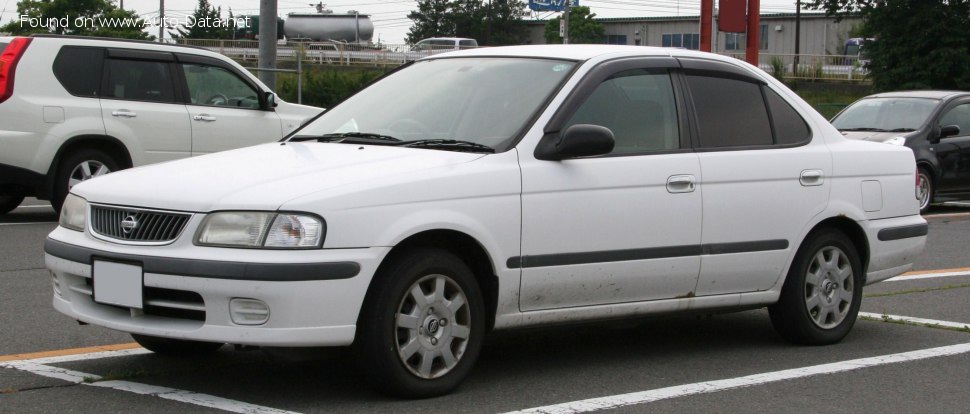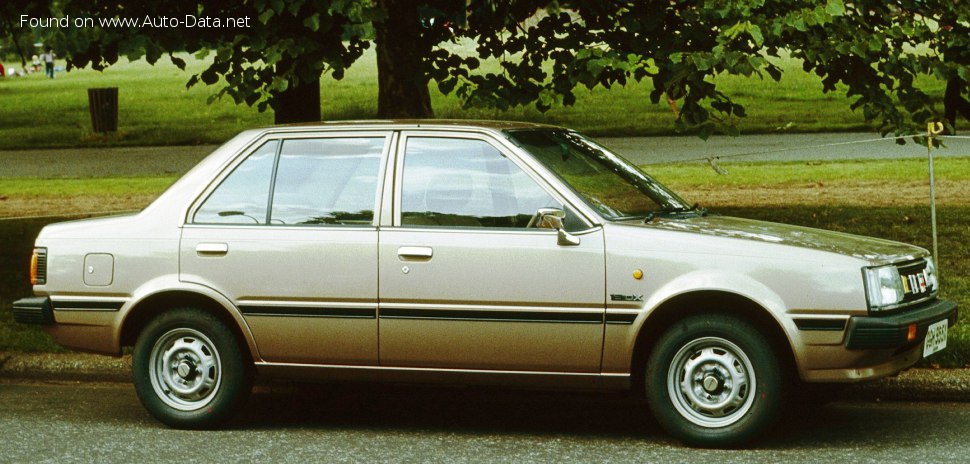
The Nissan Sunny I (B11) 1.7 D (54 Hp): A Global Workhorse of the Early 1980s
The Nissan Sunny, known as the Pulsar in some markets, holds a significant place in automotive history as one of Nissan’s most enduring and globally recognized nameplates. The first generation of the Sunny to adopt front-wheel drive, the B11 series, launched in 1982, marked a pivotal shift for the model line. This era saw Japanese manufacturers increasingly embrace the efficiency and packaging advantages of front-wheel drive for their compact offerings. Among the various powertrains available, the Nissan Sunny I (B11) 1.7 D (54 Hp) variant stood out as a particularly economical and robust option, primarily targeting European and Asian markets where diesel power in compact cars was gaining traction for its fuel efficiency and durability. Produced from 1982 to 1986, this four-door sedan exemplified Nissan’s commitment to delivering practical, reliable, and affordable transportation to a global audience.
Engineering for Efficiency: The 1.7 D Powertrain in the Nissan Sunny I (B11)
At the heart of the Nissan Sunny I (B11) 1.7 D (54 Hp) was its naturally aspirated diesel engine, codenamed CD17. This inline four-cylinder unit, with a displacement of 1,681 cubic centimeters (102.58 cubic inches), was designed for maximum fuel economy and longevity rather than outright performance. It produced a modest 54 horsepower at 4,800 revolutions per minute and 73.76 pound-feet of torque. While these figures might seem low by modern standards, they were competitive for a compact diesel engine of the early 1980s, especially one focused on economy.
The CD17 engine featured a precombustion chamber injection system, a common design for indirect injection diesels of its time, known for smoother operation and quieter running compared to direct injection systems of the era. With a high compression ratio of 22.2:1 and two valves per cylinder, the engine was engineered for efficient combustion and robust performance under varying conditions. Power was delivered to the front wheels via a five-speed manual transmission, a setup that allowed the driver to optimize the engine’s limited powerband and further enhance fuel efficiency. The powertrain architecture, with the engine mounted transversely at the front, was a hallmark of the B11 generation’s transition to front-wheel drive, providing improved interior space and handling characteristics for a compact vehicle.
Fuel economy was a primary selling point for the 1.7 D variant. Nissan quoted impressive figures for its time: an urban economy of 33.6 US miles per gallon, an extra-urban (highway) economy of 50 US miles per gallon, and a combined cycle average of 39.2 US miles per gallon. These numbers underscored the Sunny 1.7 D’s role as a cost-effective choice for daily commuting and longer journeys, particularly appealing in markets with higher fuel prices.
Design and Features: Practicality Personified
The Nissan Sunny I (B11) adopted a straightforward, functional design typical of compact sedans from the early 1980s. Its four-door sedan body type offered practical access for five occupants, making it an ideal family car or a reliable daily driver. The design prioritized interior volume and ease of manufacturing over flamboyant styling, resulting in a clean, uncluttered aesthetic. The B11 generation was Nissan’s first compact car to fully embrace a “boxy but roomy” philosophy, a design trend prevalent among Japanese manufacturers at the time, aiming to maximize usable space within a compact footprint.
Inside, the Sunny B11 offered a comfortable and unpretentious cabin. While specific luxury features were sparse in this economy-focused diesel variant, the emphasis was on durability and user-friendliness. The dashboard layout was logical, with easily accessible controls and clear instrumentation. Seating for five was standard, with durable cloth upholstery designed to withstand years of use. For its era, the B11 Sunny provided a respectable amount of head and legroom for its class, a testament to its efficient front-wheel-drive packaging.
In terms of chassis and braking, the Sunny B11 featured an independent McPherson strut front suspension, providing a good balance of ride comfort and predictable handling. The braking system utilized ventilated discs at the front for effective stopping power and traditional drum brakes at the rear, a common and cost-effective setup for compact cars of the period. Steering was a cone worm with recirculation balls type, aided by hydraulic power steering, making low-speed maneuvers easier despite the car’s light curb weight of 1,851.88 pounds. Standard tire sizes were 155/80 R13 or 175/70 R13, mounted on 5J 13-inch wheel rims, contributing to its economical running costs and comfortable ride.
Technical Specifications
| Category | Specification |
|---|---|
| Brand | Nissan |
| Model | Sunny |
| Generation | Sunny I (B11) |
| Type (Engine) | 1.7 D (54 Hp) |
| Start of Production | 1982 year |
| End of Production | 1986 year |
| Powertrain Architecture | Internal Combustion engine |
| Body Type | Sedan |
| Seats | 5 |
| Doors | 4 |
| Performance Specs | |
| Fuel Consumption (Urban) | 33.6 US mpg |
| Fuel Consumption (Extra Urban) | 50 US mpg |
| Fuel Consumption (Combined) | 39.2 US mpg |
| Fuel Type | Diesel |
| Weight-to-Power Ratio | 15.6 kg/Hp, 64.3 Hp/tonne |
| Weight-to-Torque Ratio | 8.4 kg/Nm, 119 Nm/tonne |
| Engine Specs | |
| Power | 54 Hp @ 4800 rpm |
| Power per Liter | 32.1 Hp/l |
| Torque | 73.76 lb.-ft. (100 Nm) |
| Engine Layout | Front, Transverse |
| Engine Model/Code | CD17 |
| Engine Displacement | 102.58 cu. in. (1681 cm3) |
| Number of Cylinders | 4 |
| Engine Configuration | Inline |
| Cylinder Bore | 3.15 in. (80 mm) |
| Piston Stroke | 3.29 in. (83.6 mm) |
| Compression Ratio | 22.2:1 |
| Number of Valves per Cylinder | 2 |
| Fuel Injection System | Precombustion chamber injection |
| Engine Aspiration | Naturally aspirated engine |
| Engine Oil Capacity | 4.33 US qt (4.1 l) |
| Space, Volume and Weights | |
| Kerb Weight | 1851.88 lbs. (840 kg) |
| Max. Weight | 2832.94 lbs. (1285 kg) |
| Max Load | 981.06 lbs. (445 kg) |
| Drivetrain, Brakes and Suspension Specs | |
| Drivetrain Architecture | Front-wheel drive, Internal Combustion Engine |
| Drive Wheel | Front wheel drive |
| Number of Gears and Type of Gearbox | 5 gears, manual transmission |
| Front Suspension | Independent type McPherson |
| Front Brakes | Ventilated discs |
| Rear Brakes | Drum |
| Steering Type | Cone worm with recirculation balls |
| Power Steering | Hydraulic Steering |
| Tires Size | 155/80 R13; 175/70 R13 |
| Wheel Rims Size | 5J 13 |
Legacy and Market Impact of the Nissan Sunny I (B11)
The Nissan Sunny I (B11) generation, including its 1.7 D variant, played a crucial role in Nissan’s global strategy during the 1980s. While the diesel version was not typically sold in the United States, it was a significant player in markets like Europe, Asia, and parts of Africa, where fuel economy and diesel reliability were highly valued. In these regions, the Sunny 1.7 D competed against other compact diesel offerings from manufacturers like Volkswagen (Golf/Jetta Diesel), Opel (Kadett Diesel), and Ford (Escort Diesel), often distinguishing itself with a reputation for robust build quality and exceptional longevity.
The B11 Sunny’s shift to front-wheel drive was a forward-thinking move that allowed it to keep pace with evolving automotive trends and customer expectations for improved interior packaging and driving dynamics in compact cars. Its simple, durable mechanicals, especially the CD17 diesel engine, cemented its reputation as a highly dependable vehicle. This reliability, combined with its outstanding fuel efficiency, made it a popular choice for budget-conscious buyers and fleet operators alike.
The Nissan Sunny I (B11) 1.7 D (54 Hp) might not be remembered for groundbreaking performance or luxurious appointments, but its legacy is one of unwavering practicality and economic transportation. It represented a period when Nissan, and Japanese manufacturers in general, were solidifying their global presence by offering well-engineered, reliable, and efficient vehicles that met the diverse needs of international markets. The B11 Sunny laid foundational groundwork for subsequent generations of Nissan’s compact cars, proving that a focus on core competencies like efficiency and durability could lead to widespread commercial success and lasting consumer trust.