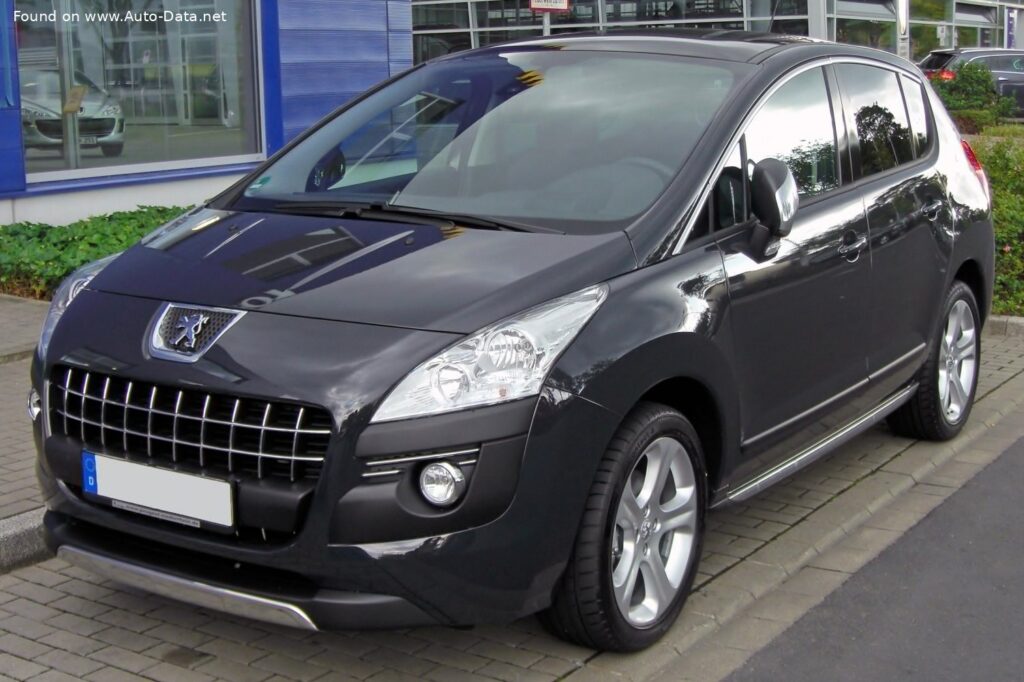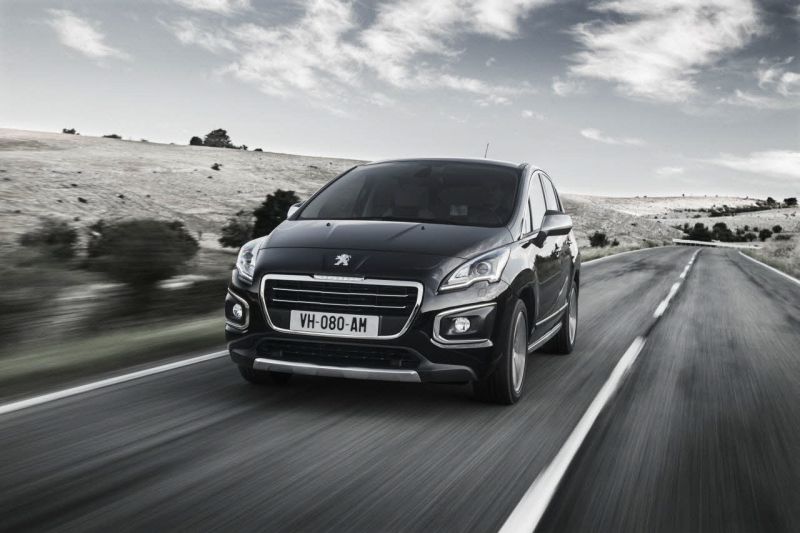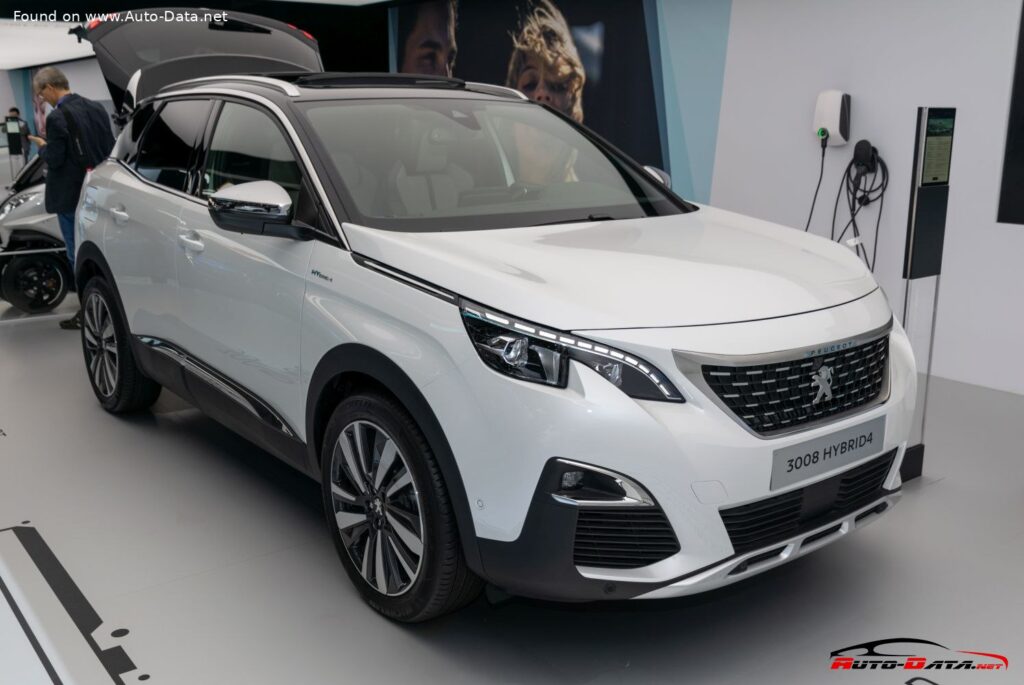
Introduction to the Peugeot 3008 II (Phase I, 2016) 1.6 BlueHDi (120 Hp) VLC S&S
The
Peugeot 3008 II (Phase I, 2016) 1.6 BlueHDi (120 Hp) VLC S&S
represents a pivotal moment for the French automaker, marking a dramatic shift from its first-generation MPV (Multi-Purpose Vehicle) roots to a stylish and highly competitive compact SUV. Launched in 2016, this second-generation 3008, specifically the Phase I model, quickly garnered international acclaim, including the prestigious European Car of the Year award in 2017. While not officially sold in the United States market, the 3008 II was designed primarily for European and Asian markets, where it made a significant impact in the burgeoning compact SUV segment. This particular variant, powered by the efficient 1.6-liter BlueHDi diesel engine, epitomized Peugeot’s commitment to combining distinctive design, innovative technology, and impressive fuel economy, making it a compelling choice for families and individuals seeking a versatile and modern vehicle.
Peugeot strategically repositioned the 3008 to capitalize on the global surge in SUV popularity, moving away from the more utilitarian design of its predecessor. The 2016 model introduced a bold, sculptural exterior and a revolutionary interior concept, signaling a more premium and aspirational direction for the brand. Its role in the European market was to challenge established players like the Nissan Qashqai, Volkswagen Tiguan, and Hyundai Tucson, offering a unique blend of French flair and practical utility.
Engine & Performance of the Peugeot 3008 II
Powertrain and Efficiency
Under the hood, the
Peugeot 3008 II (Phase I, 2016) 1.6 BlueHDi (120 Hp) VLC S&S
is equipped with a highly optimized 1.6-liter (1560 cm³ or 95.2 cu. in.) BlueHDi diesel engine. This inline four-cylinder unit, internally coded BHZ DV6FC, delivers a respectable 120 horsepower at 3500 rpm and a robust 221.27 lb.-ft. (300 Nm) of torque peaking at a low 1750 rpm. The engine’s layout is front, transverse, driving the front wheels through a precise 6-speed manual transmission. This configuration is ideal for maximizing fuel efficiency and providing ample torque for everyday driving conditions, whether navigating urban streets or cruising on highways.
Peugeot’s BlueHDi technology is central to this powertrain, incorporating an advanced selective catalytic reduction (SCR) system and a particulate filter to meet stringent Euro 6 emission standards. This commitment to environmental performance results in remarkably low CO2 emissions of just 100 g/km. Further enhancing efficiency is the Start & Stop (S&S) system, which automatically shuts off the engine when the vehicle is stationary and restarts it seamlessly when the driver is ready to move, significantly reducing fuel consumption and emissions in city traffic.
Performance figures for the 1.6 BlueHDi are competitive for its class. The SUV accelerates from 0 to 60 mph in a calculated 10.6 seconds (0-100 km/h in 11.2-12.4 seconds) and achieves a top speed of 117.44 mph (189 km/h). While not a performance-oriented vehicle, its low-end torque provides confident acceleration and overtaking capability. Fuel economy is a standout feature, with a combined rating of 61.9 US mpg (3.8 l/100 km), an urban rating of 56 US mpg (4.2 l/100 km), and an impressive extra-urban rating of 67.2 US mpg (3.5 l/100 km). These figures underscore the efficiency benefits of modern diesel powertrains in the European market.
Design & Features
Exterior and Interior Innovation
The
Peugeot 3008 II (Phase I, 2016)
introduced a revolutionary design language for Peugeot, transforming the previous generation’s somewhat conservative MPV styling into a distinctive and aggressive SUV aesthetic. Its five-door, five-seat SUV body type features sharp lines, a prominent grille, and a sculpted profile that gives it a robust yet elegant presence. The vehicle measures 175.08 inches in length, 72.48 inches in width (82.6 inches including mirrors), and 63.58 inches in height, with a wheelbase of 105.31 inches. A generous ground clearance of 8.62 inches (219 mm) contributes to its SUV credentials, offering better visibility and light off-road capability.
Perhaps the most impactful feature of the 3008 II is its interior, centered around Peugeot’s innovative i-Cockpit. This design philosophy places a small, flattened steering wheel, a high-mounted 12.3-inch digital instrument cluster (allowing the driver to view information over the steering wheel), and a central touchscreen display. This setup aims to provide a more engaging and intuitive driving experience, reducing eye strain and enhancing ergonomics. The cabin materials and finish marked a significant step up for Peugeot, giving the 3008 a more premium feel, which was crucial for competing in its segment.
Practicality is also a strong suit for the 3008 II. It offers a substantial trunk (boot) space of 18.36 cubic feet (520 liters) with the rear seats up, expanding to a cavernous 52.34 cubic feet (1482 liters) when the seats are folded down. This makes it highly versatile for family trips, grocery runs, or transporting larger items. Safety features for the era include standard ABS (Anti-lock Braking System), and depending on the trim, a range of driver-assistance systems would have been available, reflecting the growing importance of active and passive safety in modern vehicles. The vehicle rides on an independent McPherson strut front suspension and a semi-independent coil spring rear suspension, providing a comfortable yet composed ride. Braking is handled by ventilated discs at the front and disc brakes at the rear.
Technical Specifications
| Category | Specification |
|---|---|
| General Information | |
| Brand | Peugeot |
| Model | 3008 |
| Generation | 3008 II (Phase I, 2016) |
| Engine Type | 1.6 BlueHDi (120 Hp) VLC S&S |
| Production Start | 2016 |
| Production End | 2018 |
| Powertrain Architecture | Internal Combustion Engine |
| Body Type | SUV |
| Seats | 5 |
| Doors | 5 |
| Performance Specs | |
| Fuel Type | Diesel |
| Fuel Consumption (Urban) | 4.2 l/100 km (56 US mpg) |
| Fuel Consumption (Extra Urban) | 3.5 l/100 km (67.2 US mpg) |
| Fuel Consumption (Combined) | 3.8 l/100 km (61.9 US mpg) |
| CO2 Emissions | 100 g/km |
| Acceleration 0-60 mph | 10.6 sec |
| Acceleration 0-100 km/h | 11.2-12.4 sec |
| Maximum Speed | 117.44 mph (189 km/h) |
| Emission Standard | Euro 6 |
| Weight-to-Power Ratio | 10.9 kg/Hp (92 Hp/tonne) |
| Weight-to-Torque Ratio | 4.3 kg/Nm (230.1 Nm/tonne) |
| Engine Specs | |
| Power | 120 Hp @ 3500 rpm |
| Power per liter | 76.9 Hp/l |
| Torque | 221.27 lb.-ft. (300 Nm) @ 1750 rpm |
| Engine Layout | Front, Transverse |
| Engine Model/Code | BHZ DV6FC |
| Engine Displacement | 1560 cm³ (95.2 cu. in.) |
| Number of Cylinders | 4 |
| Engine Configuration | Inline |
| Cylinder Bore | 2.95 in. (75 mm) |
| Piston Stroke | 3.48 in. (88.3 mm) |
| Valves per Cylinder | 2 |
| Fuel Injection System | Diesel Commonrail |
| Engine Aspiration | Turbocharger, Intercooler |
| Engine Oil Capacity | 3.75 l (3.96 US qt) |
| Engine Systems | Start & Stop System, Particulate filter |
| Space, Volume and Weights | |
| Kerb Weight | 2874.83 lbs. (1304 kg) |
| Max. Weight | 4365.15 lbs. (1980 kg) |
| Max Load | 1490.32 lbs. (676 kg) |
| Trunk (Boot) Space – Minimum | 18.36 cu. ft. (520 l) |
| Trunk (Boot) Space – Maximum | 52.34 cu. ft. (1482 l) |
| Fuel Tank Capacity | 14 US gal (53 l) |
| Permitted Trailer Load with Brakes (12%) | 3086.47 lbs. (1400 kg) |
| Dimensions | |
| Length | 175.08 in. (4447 mm) |
| Width | 72.48 in. (1841 mm) |
| Width with Mirrors Folded | 75.04 in. (1906 mm) |
| Width Including Mirrors | 82.6 in. (2098 mm) |
| Height | 63.58 in. (1615 mm) |
| Wheelbase | 105.31 in. (2675 mm) |
| Front Track | 62.17 – 63.03 in. (1579-1601 mm) |
| Rear (Back) Track | 62.48 – 63.39 in. (1587-1610 mm) |
| Front Overhang | 36.34 in. (923 mm) |
| Rear Overhang | 33.43 in. (849 mm) |
| Ride Height (Ground Clearance) | 8.62 in. (219 mm) |
| Minimum Turning Circle (Turning Diameter) | 35.01 ft. (10.67 m) |
| Approach Angle | 20° |
| Departure Angle | 29° |
| Drivetrain, Brakes and Suspension Specs | |
| Drivetrain Architecture | Front-wheel drive, Internal Combustion Engine |
| Drive Wheel | Front wheel drive |
| Number of Gears and Type of Gearbox | 6 gears, manual transmission |
| Front Suspension | Independent, McPherson with coil spring and anti-roll bar |
| Rear Suspension | Semi-independent, coil spring |
| Front Brakes | Ventilated discs |
| Rear Brakes | Disc |
| Assisting Systems | ABS (Anti-lock braking system) |
| Steering Type | Steering rack and pinion |
| Power Steering | Electric Steering |
| Tires Size | 215/65 R17; 205/55 R19 |
| Wheel Rims Size | 17; 19 |
Legacy & Market Impact
The
Peugeot 3008 II (Phase I, 2016) 1.6 BlueHDi (120 Hp) VLC S&S
left an indelible mark on both Peugeot and the wider European automotive landscape. Its strategic shift from an MPV to an SUV, coupled with its striking design and innovative i-Cockpit interior, proved to be a masterstroke. The vehicle’s success was immediately evident, culminating in it being crowned European Car of the Year for 2017, a testament to its all-around appeal and competitive edge. This award significantly boosted Peugeot’s brand image, helping to position it as a more premium and technologically advanced automaker.
In the highly competitive European compact SUV segment, the 3008 II faced formidable rivals. Key competitors included the ubiquitous Nissan Qashqai, the refined Volkswagen Tiguan, the practical Hyundai Tucson, and the stylish Renault Kadjar. What set the 3008 apart was its bold personality and unique interior architecture, which resonated strongly with consumers looking for something different from the often conservative offerings of its German and Japanese rivals. The 1.6 BlueHDi variant, in particular, played a crucial role by offering an outstanding balance of performance and fuel efficiency, a highly desirable trait in markets with high fuel prices and strict emission regulations.
The 3008 II’s success also paved the way for Peugeot’s subsequent models, influencing the design and technological direction of vehicles like the 5008 SUV and the latest 208 and 2008 models. It demonstrated that Peugeot could successfully reinvent its products and compete at a higher level, attracting new customers to the brand. Its robust sales figures and critical acclaim cemented its reputation as a benchmark for modern compact SUVs, showcasing how a well-executed design and a focus on driver experience could lead to significant market impact. The 1.6 BlueHDi (120 Hp) VLC S&S model, with its blend of economy, practicality, and distinctive style, remains a shining example of Peugeot’s engineering prowess and design ambition in the mid-2010s.