Toyota Corsa Hatchback (L40) 1.5 d (67 Hp): A Detailed Overview
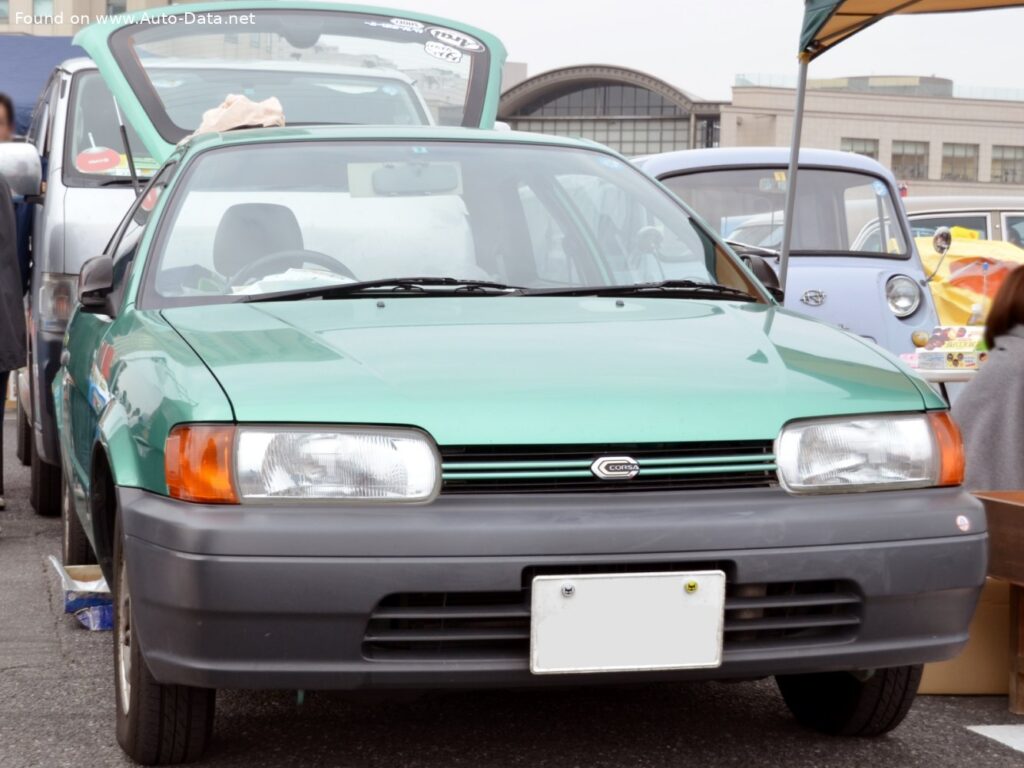
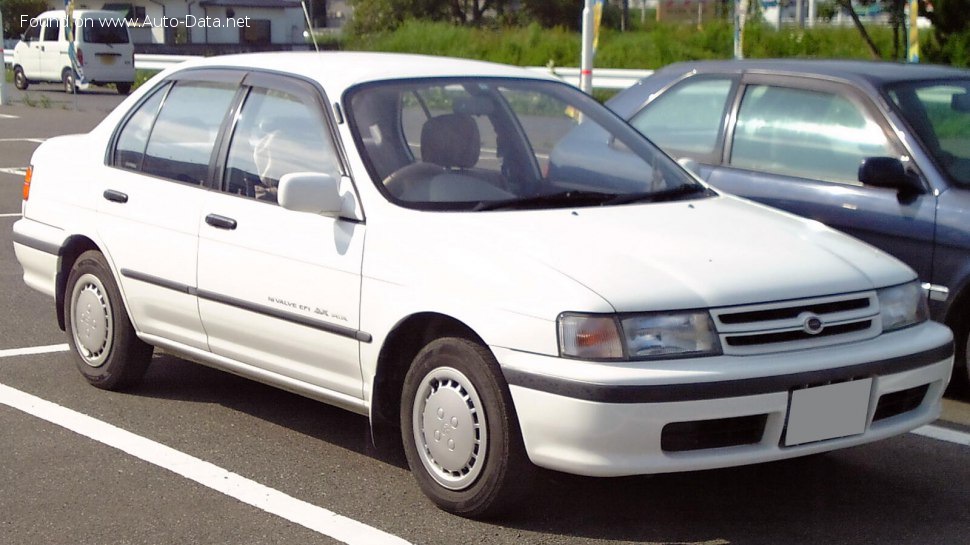
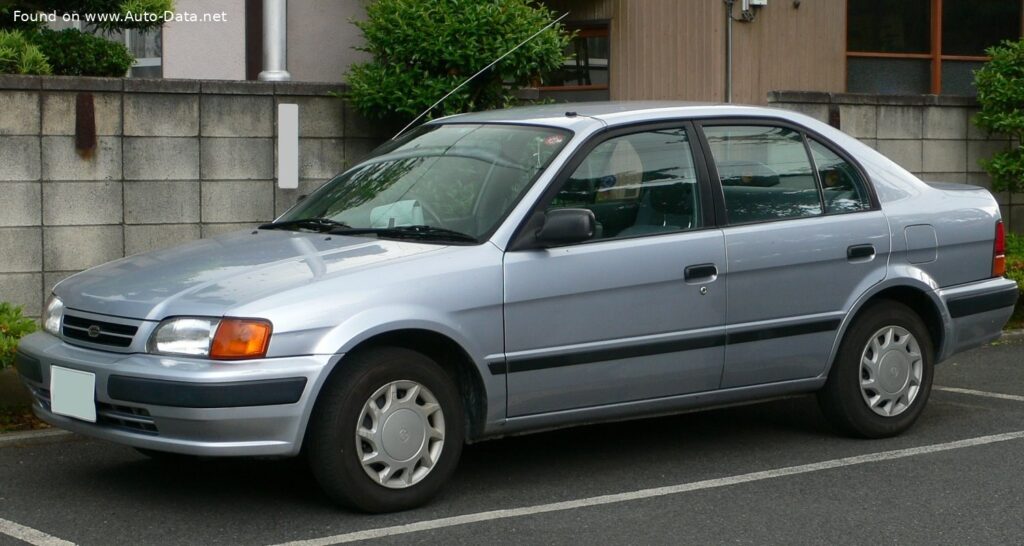
The Toyota Corsa Hatchback (L40) 1.5 d (67 Hp) represents a significant chapter in Toyota’s history of producing reliable, efficient, and compact vehicles. Launched in 1990, the L40 generation Corsa, closely related to the Toyota Tercel and Corolla II in other markets, was primarily aimed at the Japanese domestic market (JDM) and select export markets, notably not sold in the United States. This particular variant, powered by a 1.5-liter turbodiesel engine, underscored Toyota’s commitment to fuel economy and practical urban mobility during the early 1990s. As a three-door hatchback, it offered a blend of compact dimensions, five-seat capacity, and a frugal powertrain, making it a popular choice for budget-conscious consumers and those prioritizing operational efficiency.
Engine and Performance of the Toyota Corsa Hatchback (L40) 1.5 d (67 Hp)
At the heart of the Toyota Corsa Hatchback (L40) 1.5 d (67 Hp) was its robust and economical 1N-T engine, a 1.5-liter (1453 cm3 or 88.67 cubic inches) inline-four turbodiesel unit. This powertrain was configured in a front, transverse layout, driving the front wheels, a common and efficient setup for compact cars of its era. Despite its modest displacement, the engine delivered a respectable 67 horsepower at 4500 rpm, translating to a power-per-liter output of 46.1 horsepower per liter. More importantly for a diesel, it produced a healthy 137 Nm (101.05 lb-ft) of torque at a low 2600 rpm. This low-end torque was crucial for urban driving, providing ample pull for city traffic and making the car feel more responsive than its horsepower figure might suggest.
The inclusion of a turbocharger significantly boosted the engine’s performance and efficiency, a notable feature for a compact diesel in 1990. With a high compression ratio of 22:1 and a Diesel Commonrail fuel injection system, the engine was designed for optimal combustion and fuel economy. The DOHC (Double Overhead Camshaft) valvetrain was also a sophisticated touch for a compact diesel of this period, contributing to better engine breathing and overall efficiency.
Fuel efficiency was a standout characteristic of this Corsa variant. Toyota engineered it to deliver impressive mileage, particularly in extra-urban conditions, where it achieved approximately 56 US mpg (4.2 liters per 100 km). Even in urban environments, it managed a commendable 31.4 US mpg (7.5 liters per 100 km), making it an exceptionally economical vehicle to operate. With a low curb weight of just 1851.88 lbs (840 kg), the Corsa boasted an excellent weight-to-power ratio of 12.5 kg per horsepower (79.8 horsepower per tonne) and an even more impressive weight-to-torque ratio of 6.1 kg per Nm (163.1 Nm per tonne), further enhancing its perceived performance and agility.
Design and Features
The Toyota Corsa Hatchback (L40) adopted a pragmatic and functional design typical of compact Japanese cars from the early 1990s. As a 3-door hatchback, it prioritized practicality and maneuverability in congested urban settings. Its exterior dimensions were compact, measuring 154.72 inches (3930 mm) in length, 64.76 inches (1645 mm) in width, and 53.74 inches (1365 mm) in height, with a wheelbase of 93.7 inches (2380 mm). These dimensions contributed to a tight turning circle of 29.53 feet (9 meters), making it exceptionally easy to navigate tight city streets and parking spaces.
Inside, the Corsa offered seating for five occupants, a testament to Toyota’s efficient packaging despite its small footprint. While specific interior features like air conditioning or power windows might have been optional depending on the trim level and market, the basic design focused on durability and user-friendliness. From a safety perspective, the inclusion of ABS (Anti-lock Braking System) as an assisting system was a significant feature for a compact car in 1990, offering improved braking control under challenging conditions. The car was equipped with disc brakes at the front and drum brakes at the rear, a standard setup for many compacts of the era, providing adequate stopping power for its size and performance. The 155/80 SR13 tire size further emphasized its economical and practical nature, balancing grip with low rolling resistance.
Technical Specifications
| Category | Specification | US/Imperial Equivalent |
|---|---|---|
| General Information | ||
| Brand | Toyota | |
| Model | Corsa | |
| Generation | Corsa Hatchback (L40) | |
| Type (Engine) | 1.5 d (67 Hp) | |
| Start of production | 1990 year | |
| End of production | 1994 year | |
| Powertrain Architecture | Internal Combustion engine | |
| Body type | Hatchback | |
| Seats | 5 | |
| Doors | 3 | |
| Performance Specs | ||
| Fuel consumption (economy) – urban | 7.5 l/100 km | 31.4 US mpg |
| Fuel consumption (economy) – extra urban | 4.2 l/100 km | 56 US mpg |
| Fuel Type | Diesel | |
| Weight-to-power ratio | 12.5 kg/Hp, 79.8 Hp/tonne | |
| Weight-to-torque ratio | 6.1 kg/Nm, 163.1 Nm/tonne | |
| Engine Specs | ||
| Power | 67 Hp @ 4500 rpm | |
| Power per liter | 46.1 Hp/l | |
| Torque | 137 Nm @ 2600 rpm | 101.05 lb-ft @ 2600 rpm |
| Engine layout | Front, Transverse | |
| Engine Model/Code | 1N-T | |
| Engine displacement | 1453 cm3 | 88.67 cu. in. (1.5 liters) |
| Number of cylinders | 4 | |
| Engine configuration | Inline | |
| Cylinder Bore | 74 mm | 2.91 in. |
| Piston Stroke | 84.5 mm | 3.33 in. |
| Compression ratio | 22:1 | |
| Fuel injection system | Diesel Commonrail | |
| Engine aspiration | Turbocharger | |
| Valvetrain | DOHC | |
| Engine oil capacity | 3.8 l | 4.02 US qt |
| Engine oil specification | Not specified | |
| Coolant | 5.3 l | 5.6 US qt |
| Space, Volume and Weights | ||
| Kerb Weight | 840 kg | 1851.88 lbs. |
| Dimensions | ||
| Length | 3930 mm | 154.72 in. |
| Width | 1645 mm | 64.76 in. |
| Height | 1365 mm | 53.74 in. |
| Wheelbase | 2380 mm | 93.7 in. |
| Front track | 1400 mm | 55.12 in. |
| Rear (Back) track | 1430 mm | 56.3 in. |
| Minimum turning circle (turning diameter) | 9 m | 29.53 ft. |
| Drivetrain, Brakes and Suspension Specs | ||
| Drivetrain Architecture | Internal combustion engine drives the front wheels | |
| Drive wheel | Front wheel drive | |
| Front brakes | Disc | |
| Rear brakes | Drum | |
| Assisting systems | ABS (Anti-lock braking system) | |
| Tires size | 155/80 SR13 | |
Legacy and Market Impact
The Toyota Corsa Hatchback (L40) 1.5 d (67 Hp), while not a household name in the North American market, played a crucial role in Toyota’s global strategy, particularly in Japan and parts of Asia and Europe where compact, fuel-efficient diesels were highly valued. During its production run from 1990 to 1994, it cemented Toyota’s reputation for building reliable and economical vehicles. In its primary markets, the Corsa competed against other compact hatchbacks like the Nissan Pulsar (known as Sentra in some markets), Honda Civic, and Mazda Familia (323). Its diesel variant offered a distinct advantage in fuel economy over many gasoline-powered rivals, appealing to a segment of buyers focused on long-term running costs.
The L40 Corsa, alongside its siblings the Tercel and Corolla II, exemplified Toyota’s mastery of the subcompact segment. It was a no-frills, dependable workhorse designed for daily commuting and urban practicality. Its modest power output was offset by its lightweight construction and the torquey nature of its turbodiesel engine, providing adequate performance for its intended purpose. The inclusion of features like a DOHC valvetrain and a turbocharger in a small diesel engine underscored Toyota’s engineering prowess, pushing the boundaries of efficiency and refinement in compact powertrains.
Historically, the Corsa L40’s diesel variant highlighted a period when manufacturers were increasingly exploring diesel technology for passenger cars, particularly outside North America. Its impressive fuel economy figures helped establish benchmarks for compact diesel efficiency in the early 1990s. While global automotive trends have shifted, the legacy of vehicles like the Toyota Corsa L40 diesel reminds us of a time when straightforward, robust engineering and exceptional fuel efficiency were paramount for a significant portion of the international car market. It remains a testament to Toyota’s enduring commitment to diverse powertrain solutions and practical automotive design.