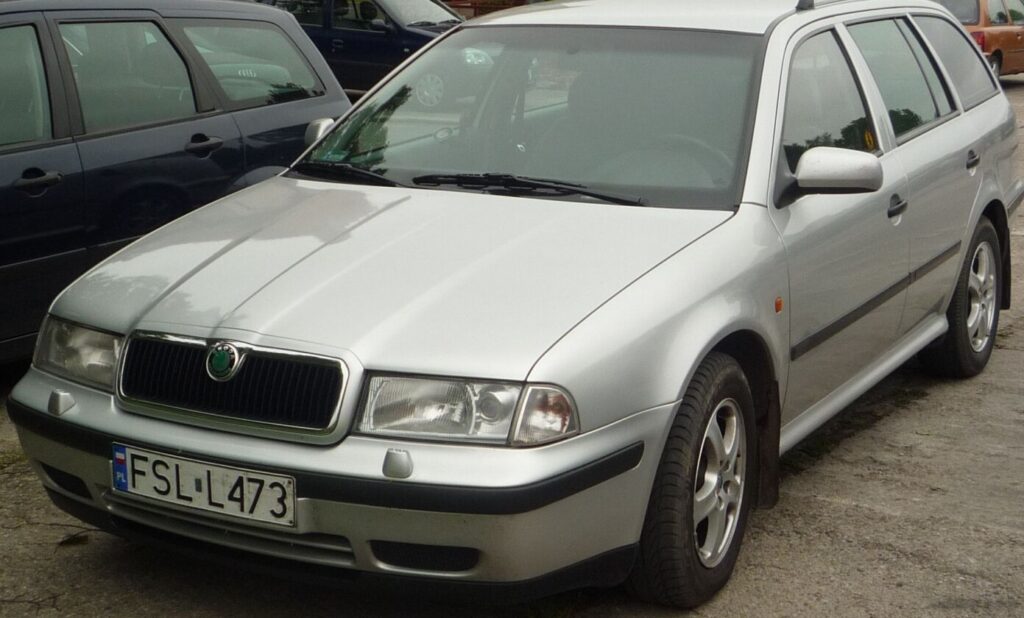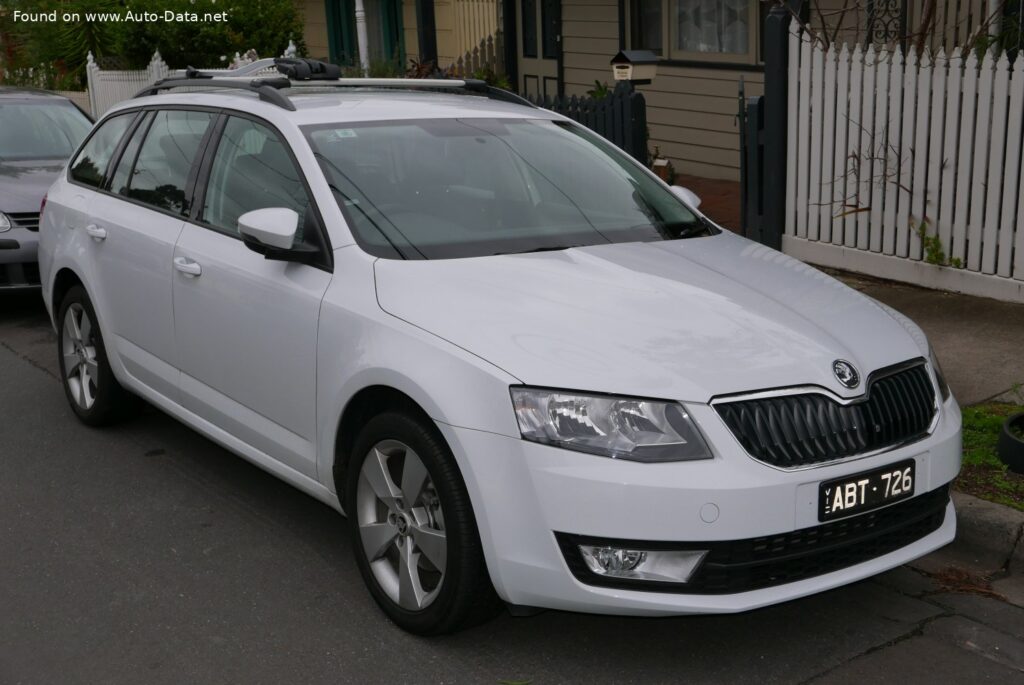
Skoda Octavia III Combi RS 2.0 TDI (184 Hp): A Practical Performer
The Skoda Octavia III Combi RS 2.0 TDI (184 Hp) represents a compelling blend of performance, practicality, and fuel efficiency within the European compact family car segment. Produced by the Czech automaker Skoda, a subsidiary of the Volkswagen Group, this particular model was part of the third-generation Octavia lineup, manufactured from 2013 to 2017. While Skoda vehicles are not officially sold in the United States, the Octavia has carved out a significant niche in its primary markets, particularly in Europe, as a value-oriented alternative to its Volkswagen Group siblings like the Golf and Leon. The “Combi” designation signifies its station wagon (estate) body style, offering enhanced utility, while “RS” denotes its sport-oriented trim, promising an engaging driving experience. This diesel-powered RS variant was especially popular for its ability to deliver spirited performance alongside remarkable fuel economy, making it a “hot wagon” for the discerning European driver.
Engine & Performance
At the heart of the Skoda Octavia III Combi RS 2.0 TDI (184 Hp) lies a robust and efficient 2.0-liter (1968 cm3 or 120.09 cu. in.) turbocharged, common-rail diesel engine. This inline four-cylinder powerplant, identified by codes such as EA288 / CUNA, CUPA, DJGA, is a testament to Volkswagen Group’s expertise in diesel technology. It features a DOHC (Double Overhead Camshaft) valvetrain and is equipped with both a turbocharger and an intercooler, ensuring optimal air intake and combustion efficiency.
The engine generates a respectable 184 horsepower (Hp) delivered between 3500 and 4000 revolutions per minute (rpm), making it a potent performer for its class. More impressively, it produces a substantial 280.27 lb.-ft. (380 Nm) of torque, available across a broad rev range from 1750 to 3250 rpm. This wide torque band translates into excellent real-world drivability, offering strong acceleration from low speeds and effortless overtaking capabilities.
Performance figures for the Octavia RS 2.0 TDI are quite impressive for a diesel station wagon. It can accelerate from 0 to 60 mph in a brisk 7.6 seconds, with a top speed reaching 142.92 mph (230 km/h). This level of performance is channeled to the front wheels via a precise 6-speed manual transmission, providing an engaging and direct connection between the driver and the powertrain.
Beyond its speed, the vehicle shines in its fuel economy and environmental credentials. The combined fuel consumption, according to NEDC standards, is an outstanding 52.3 US mpg (4.5 l/100 km). Even in urban environments, it achieves 45.2 US mpg (5.2 l/100 km), and on the highway, it can reach an exceptional 58.8 US mpg (4.0 l/100 km). With CO2 emissions rated at just 117 g/km, the Octavia RS 2.0 TDI meets the stringent Euro 6 emission standard, thanks in part to technologies like a Start & Stop System and a Particulate filter, which contribute to its eco-friendly profile.
Design & Features
The Skoda Octavia III Combi RS distinguishes itself with a design that marries the inherent practicality of a station wagon with sporty aesthetics. Its five-door body style and five-seat configuration make it an ideal family vehicle, while the “RS” badging and specific design elements hint at its performance capabilities. The exterior features more aggressive bumpers, a distinctive grille, and often larger alloy wheels (available in 17, 18, and 19-inch sizes, with tire options like 225/45 R17, 225/40 R18, 225/35 R19) that set it apart from standard Octavia models.
In terms of dimensions, the Octavia III Combi measures 184.45 inches in length, 71.42 inches in width (79.41 inches including mirrors), and 57.17 inches in height. Its wheelbase of 105.51 inches contributes to a stable ride and generous interior space. The vehicle’s kerb weight stands at 3068.83 lbs., with a maximum permissible weight of 4316.65 lbs., allowing for a substantial payload of 1247.82 lbs.
The Octavia Combi’s greatest asset is its cargo capacity. With the rear seats in place, it offers a cavernous 21.54 cu. ft. (610 liters) of trunk space. Folding the rear seats expands this to an impressive 61.45 cu. ft. (1740 liters), making it exceptionally versatile for transporting luggage, sports equipment, or even furniture. The fuel tank capacity of 13.21 US gallons (50 liters) provides an excellent driving range, especially given the car’s fuel efficiency.
Underneath, the Octavia RS features a sophisticated suspension setup designed to balance ride comfort with dynamic handling. It employs an independent McPherson strut system with coil springs and an anti-roll bar at the front, complemented by an independent multi-link spring suspension with a stabilizer at the rear. This configuration, often tuned for the RS models, provides a firmer, sportier feel without being overly harsh. Braking is handled by ventilated discs at the front and solid discs at the rear, ensuring strong stopping power. An Anti-lock Braking System (ABS) is standard, enhancing safety. The electric power steering system provides precise control and good feedback, making the car agile in urban environments and stable at higher speeds.
Technical Specifications
| Category | Specification |
|---|---|
| General Information | |
| Brand | Skoda |
| Model | Octavia |
| Generation | Octavia III Combi |
| Engine Type | RS 2.0 TDI (184 Hp) |
| Production Years | 2013 – 2017 |
| Powertrain Architecture | Internal Combustion engine |
| Body Type | Station wagon (estate) |
| Seats | 5 |
| Doors | 5 |
| Performance Specs | |
| Fuel Economy – Urban (NEDC) | 5.2 l/100 km (45.2 US mpg) |
| Fuel Economy – Extra Urban (NEDC) | 4.0 l/100 km (58.8 US mpg) |
| Fuel Economy – Combined (NEDC) | 4.5 l/100 km (52.3 US mpg) |
| CO2 Emissions (NEDC) | 117 g/km |
| Fuel Type | Diesel |
| Acceleration 0 – 60 mph | 7.6 seconds |
| Maximum Speed | 142.92 mph (230 km/h) |
| Emission Standard | Euro 6 |
| Weight-to-Power Ratio | 7.6 kg/Hp, 132.2 Hp/tonne |
| Weight-to-Torque Ratio | 3.7 kg/Nm, 273 Nm/tonne |
| Engine Specs | |
| Power | 184 Hp @ 3500-4000 rpm |
| Torque | 280.27 lb.-ft. (380 Nm) @ 1750-3250 rpm |
| Engine Layout | Front, Transverse |
| Engine Model/Code | EA288 / CUNA, CUPA, DJGA |
| Engine Displacement | 2.0 liters (1968 cm3 / 120.09 cu. in.) |
| Number of Cylinders | 4 |
| Engine Configuration | Inline |
| Cylinder Bore | 3.19 in. (81 mm) |
| Piston Stroke | 3.76 in. (95.5 mm) |
| Compression Ratio | 16:1 |
| Valves per Cylinder | 4 |
| Fuel Injection System | Diesel Commonrail |
| Engine Aspiration | Turbocharger, Intercooler |
| Valvetrain | DOHC |
| Engine Oil Capacity | 4.86 US qt (4.6 l) |
| Coolant Capacity | 12.26 US qt (11.6 l) |
| Engine Systems | Start & Stop System, Particulate filter |
| Space, Volume and Weights | |
| Kerb Weight | 3068.83 lbs. (1392 kg) |
| Max. Weight | 4316.65 lbs. (1958 kg) |
| Max Load | 1247.82 lbs. (566 kg) |
| Trunk (boot) Space – Minimum | 21.54 cu. ft. (610 l) |
| Trunk (boot) Space – Maximum | 61.45 cu. ft. (1740 l) |
| Fuel Tank Capacity | 13.21 US gal (50 l) |
| Max. Roof Load | 165.35 lbs. (75 kg) |
| Permitted Trailer Load with Brakes (12%) | 3527.4 lbs. (1600 kg) |
| Permitted Trailer Load without Brakes | 1609.37 lbs. (730 kg) |
| Permitted Towbar Download | 165.35 lbs. (75 kg) |
| Dimensions | |
| Length | 184.45 in. (4685 mm) |
| Width | 71.42 in. (1814 mm) |
| Width including mirrors | 79.41 in. (2017 mm) |
| Height | 57.17 in. (1452 mm) |
| Wheelbase | 105.51 in. (2680 mm) |
| Front Track | 60.43 in. (1535 mm) |
| Rear (Back) Track | 59.29 in. (1506 mm) |
| Front Overhang | 35.39 in. (899 mm) |
| Rear Overhang | 43.54 in. (1106 mm) |
| Ride Height (Ground Clearance) | 5.04 in. (128 mm) |
| Minimum Turning Circle (diameter) | 36.52 ft. (11.13 m) |
| Approach Angle | 12.8° |
| Departure Angle | 12.3° |
| Drivetrain, Brakes and Suspension Specs | |
| Drivetrain Architecture | Internal combustion engine (ICE) drives the front wheels. |
| Drive Wheel | Front wheel drive |
| Gearbox | 6 gears, manual transmission |
| Front Suspension | Independent, McPherson with coil spring and anti-roll bar |
| Rear Suspension | Independent multi-link spring suspension with stabilizer |
| Front Brakes | Ventilated discs |
| Rear Brakes | Disc |
| Assisting Systems | ABS (Anti-lock braking system) |
| Steering Type | Steering rack and pinion |
| Power Steering | Electric Steering |
| Tires Size | 225/45 R17; 225/40 R18; 225/35 R19 |
| Wheel Rims Size | 7.5J x 17; 7.5J x 18; 7.5J x 19 |
Legacy & Market Impact
The Skoda Octavia, particularly its third generation, played a pivotal role in solidifying Skoda’s transformation from a budget-focused brand to a respected manufacturer of quality, well-engineered vehicles within the Volkswagen Group. The Skoda Octavia III Combi RS 2.0 TDI (184 Hp) was a shining example of this evolution, offering a unique proposition in the European market: a highly practical station wagon with genuine performance credentials and exceptional fuel efficiency.
In its primary European markets, the Octavia RS TDI carved out a strong reputation as a “sleeper” performance car, capable of surprising more overtly sporty vehicles while still providing class-leading utility. Its appeal lay in its ability to serve as a single vehicle solution for families who needed space and economy during the week but desired driving enjoyment on the weekends. It competently competed against a range of rivals, including its platform-mate, the Volkswagen Golf GTD (especially the Variant/wagon version), and other performance-oriented compact wagons like certain diesel variants of the Ford Focus ST wagon or even some lower-tier offerings from premium German brands, which it often undercut on price while matching or exceeding on practicality.
The success of the Octavia RS TDI demonstrated a growing demand for performance diesel vehicles that didn’t compromise on everyday usability or running costs. It showcased Skoda’s ability to infuse excitement into a practical package, leveraging the Volkswagen Group’s robust engineering and high-quality components. This model contributed significantly to Skoda’s brand image, helping to dispel any lingering perceptions of the brand as merely an economical choice and instead positioning it as a producer of desirable, sophisticated, and dynamic automobiles. Its legacy is one of a smart, understated performance car that delivered on all fronts, becoming a favorite among European drivers who valued a balanced blend of speed, space, and sensibility.