The Seat Ibiza IV ST 1.2 TSI (105 Hp) DSG: A Practical European Compact
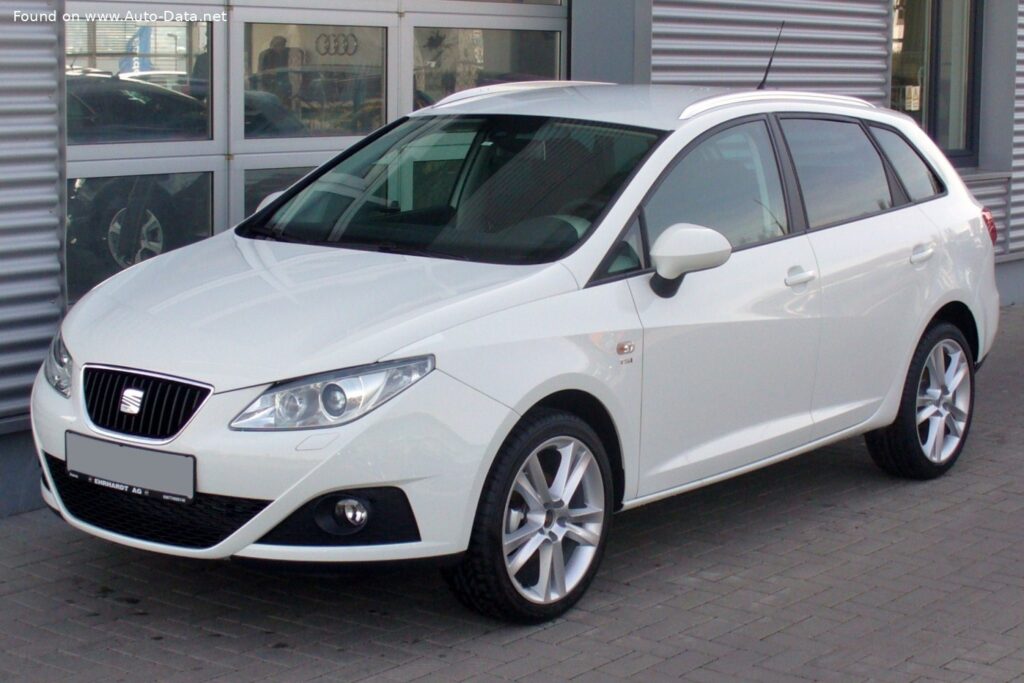
The Seat Ibiza IV ST 1.2 TSI (105 Hp) DSG represents a significant offering from the Spanish automaker SEAT within the highly competitive European subcompact (or supermini) segment. Produced between 2010 and 2012, this particular variant of the fourth-generation Ibiza distinguished itself with its “ST” designation, signifying a station wagon (estate) body style. While SEAT models were not officially sold in the United States, the Ibiza IV ST was a popular choice across Europe, blending the compact dimensions and agile handling of the standard Ibiza hatchback with enhanced practicality and cargo capacity. It was positioned as a versatile family vehicle for urban environments and longer journeys, offering an impressive balance of efficiency, performance, and utility, particularly with its advanced 1.2-liter TSI turbocharged gasoline engine paired with a sophisticated 7-speed DSG automatic transmission. This combination was a hallmark of Volkswagen Group engineering, bringing advanced powertrain technology to the mainstream compact market.
Engine and Performance: The Heart of the Seat Ibiza IV ST 1.2 TSI (105 Hp) DSG
Powertrain Architecture and Innovation
Under the hood, the Seat Ibiza IV ST 1.2 TSI (105 Hp) DSG featured a modern and highly efficient internal combustion engine, specifically the CBZB code 1.2-liter (1197 cm3 or 73.05 cu. in.) TSI gasoline unit. This inline four-cylinder engine was a prime example of the Volkswagen Group’s commitment to downsizing and turbocharging to achieve both robust performance and excellent fuel economy. With a compression ratio of 10:1, the engine utilized direct injection and was boosted by a turbocharger and intercooler, ensuring optimal power delivery across a broad RPM range. The DOHC (Double Overhead Camshaft) valvetrain with four valves per cylinder further contributed to its efficiency and responsiveness.
The engine produced a respectable 105 horsepower at 5000 rpm, translating to a power-per-liter figure of 87.7 Hp/l, which was quite competitive for its class at the time. More importantly for daily driving, the engine delivered a healthy 175 Nm (129.07 lb.-ft.) of torque, available from a remarkably low 1550 rpm and sustained up to 4100 rpm. This broad torque band was a key advantage of the TSI technology, providing strong acceleration from a standstill and effortless overtaking without needing to constantly downshift.
Transmission and Driving Dynamics
Mated to this advanced engine was a 7-speed DSG (Direct Shift Gearbox) automatic transmission. This dual-clutch unit was a significant technological highlight, offering the convenience of an automatic with the efficiency and rapid gear changes typically associated with a manual gearbox. The DSG’s ability to pre-select the next gear meant virtually seamless and incredibly quick shifts, enhancing both performance and driving comfort. Power was sent to the front wheels, adhering to the standard layout for vehicles in this segment.
In terms of raw performance, the Ibiza IV ST 1.2 TSI (105 Hp) DSG could accelerate from 0 to 60 mph in a brisk 9.5 seconds, and reach a top speed of 118.06 mph (190 km/h). These figures underscored its capability as a competent performer for both city commuting and highway cruising. The vehicle’s lightweight construction, with a curb weight of just 2403.04 lbs (1090 kg), contributed to an excellent weight-to-power ratio of 10.4 kg/Hp, or 96.3 Hp/tonne, further aiding its lively character.
Fuel Economy and Environmental Footprint
Fuel efficiency was a major selling point for this model. The combined NEDC (New European Driving Cycle) fuel consumption was an impressive 5.3 l/100 km, which translates to approximately 44.4 US mpg. Urban driving yielded 33.6 US mpg (7 l/100 km), while extra-urban conditions saw consumption drop to an outstanding 53.5 US mpg (4.4 l/100 km). With CO2 emissions rated at 124 g/km, the Ibiza IV ST 1.2 TSI met Euro 5 emission standards, reflecting its environmentally conscious design for the era. The 11.89 US gallon (45 liter) fuel tank provided a substantial range between fill-ups.
Design and Features
Body Style and Exterior Aesthetics
The Seat Ibiza IV ST adopted a 5-door station wagon (estate) body type, a practical extension of the standard Ibiza hatchback. Measuring 166.42 inches (4227 mm) in length, 66.65 inches (1693 mm) in width, and 56.89 inches (1445 mm) in height, it maintained a compact footprint suitable for navigating crowded European city streets while offering superior cargo volume. The design language of the fourth-generation Ibiza, penned by Luc Donckerwolke, was characterized by sharp lines, distinctive ‘arrow’ styling elements on the hood and flanks, and a sporty stance. The ST variant skillfully integrated the extended rear section, ensuring it looked proportionate and stylish rather than merely utilitarian. The 97.2-inch (2469 mm) wheelbase contributed to stable handling and a comfortable ride.
Interior Practicality and Comfort
Inside, the Ibiza IV ST provided seating for five occupants. The primary advantage of the station wagon body was its enhanced cargo capacity, offering a minimum trunk space of 15.19 cu. ft. (430 liters). This was a significant increase over the hatchback, making it a much more versatile option for families or individuals needing extra luggage room. While specific interior features like infotainment systems are not detailed in the provided data, a 2010-2012 European compact would typically offer air conditioning, power windows, and an audio system, with higher trims adding features like climate control and more advanced connectivity options. The cabin was designed with practicality and ergonomics in mind, featuring clear instrumentation and intuitive controls.
Chassis, Suspension, and Safety
The Ibiza IV ST’s chassis was engineered for a dynamic yet comfortable driving experience. The front suspension utilized an independent McPherson strut setup with coil springs and an anti-roll bar, providing precise steering and good road holding. The rear featured a semi-dependent beam with a stabilizer for lateral stability, a cost-effective and space-efficient solution common in this segment.
Braking performance was handled by ventilated disc brakes measuring 256×22 mm at the front and solid disc brakes measuring 232×9 mm at the rear. These were complemented by essential assisting systems such as ABS (Anti-lock Braking System), which was standard for improved safety during emergency braking. The steering system was a responsive rack and pinion setup with electric power steering, offering light effort at low speeds for easy maneuvering and more feedback at higher speeds. The vehicle could be fitted with tire sizes 185/60 R15 or 215/45 R16, mounted on 6J x 15 or 7J x 16 wheel rims, respectively, allowing for a choice between comfort and sportier handling. The minimum turning circle of 34.38 feet (10.48 m) underscored its agility in tight spaces.
Technical Specifications
| Category | Specification |
|---|---|
| General Information | |
| Brand | Seat |
| Model | Ibiza |
| Generation | Ibiza IV ST |
| Type (Engine) | 1.2 TSI (105 Hp) DSG |
| Start of production | 2010 year |
| End of production | 2012 year |
| Powertrain Architecture | Internal Combustion engine |
| Body type | Station wagon (estate) |
| Seats | 5 |
| Doors | 5 |
| Performance Specs | |
| Fuel consumption (economy) – urban (NEDC) | 7 l/100 km (33.6 US mpg) |
| Fuel consumption (economy) – extra urban (NEDC) | 4.4 l/100 km (53.5 US mpg) |
| Fuel consumption (economy) – combined (NEDC) | 5.3 l/100 km (44.4 US mpg) |
| CO2 emissions (NEDC) | 124 g/km |
| Fuel Type | Petrol (Gasoline) |
| Acceleration 0 – 60 mph (Calculated) | 9.5 sec |
| Acceleration 0 – 100 km/h | 10 sec |
| Maximum speed | 190 km/h (118.06 mph) |
| Emission standard | Euro 5 |
| Weight-to-power ratio | 10.4 kg/Hp (96.3 Hp/tonne) |
| Weight-to-torque ratio | 6.2 kg/Nm (160.6 Nm/tonne) |
| Engine Specs | |
| Power | 105 Hp @ 5000 rpm |
| Power per liter | 87.7 Hp/l |
| Torque | 175 Nm @ 1550-4100 rpm (129.07 lb.-ft.) |
| Engine layout | Front, Transverse |
| Engine Model/Code | CBZB |
| Engine displacement | 1197 cm3 (73.05 cu. in.) |
| Number of cylinders | 4 |
| Engine configuration | Inline |
| Cylinder Bore | 71 mm (2.8 in.) |
| Piston Stroke | 75.6 mm (2.98 in.) |
| Compression ratio | 10:1 |
| Number of valves per cylinder | 4 |
| Fuel injection system | Direct injection |
| Engine aspiration | Turbocharger, Intercooler |
| Valvetrain | DOHC |
| Engine oil capacity | 3.6 l (3.8 US qt) |
| Coolant | 5.6 l (5.92 US qt) |
| Space, Volume and Weights | |
| Kerb Weight | 1090 kg (2403.04 lbs) |
| Max. weight | 1605 kg (3538.42 lbs) |
| Max load | 515 kg (1135.38 lbs) |
| Trunk (boot) space – minimum | 430 l (15.19 cu. ft.) |
| Fuel tank capacity | 45 l (11.89 US gal) |
| Permitted trailer load with brakes (12%) | 1000 kg (2204.62 lbs) |
| Dimensions | |
| Length | 4227 mm (166.42 in.) |
| Width | 1693 mm (66.65 in.) |
| Height | 1445 mm (56.89 in.) |
| Wheelbase | 2469 mm (97.2 in.) |
| Front track | 1465 mm (57.68 in.) |
| Rear (Back) track | 1457 mm (57.36 in.) |
| Minimum turning circle (turning diameter) | 10.48 m (34.38 ft.) |
| Drivetrain, Brakes and Suspension Specs | |
| Drivetrain Architecture | The Internal combustion engine (ICE) drives the front wheels of the vehicle. |
| Drive wheel | Front wheel drive |
| Number of gears and type of gearbox | 7 gears, automatic transmission DSG |
| Front suspension | Independent, type McPherson with coil spring and anti-roll bar |
| Rear suspension | Semi-dependent beam with stabilizer lateral stability |
| Front brakes | Ventilated discs, 256×22 mm |
| Rear brakes | Disc, 232×9 mm |
| Assisting systems | ABS (Anti-lock braking system) |
| Steering type | Steering rack and pinion |
| Power steering | Electric Steering |
| Tires size | 185/60 R15; 215/45 R16 |
| Wheel rims size | 6J x 15; 7J x 16 |
Legacy and Market Impact
The Seat Ibiza IV ST 1.2 TSI (105 Hp) DSG carved out a distinct niche in the European automotive landscape during its production run from 2010 to 2012. As a brand, SEAT traditionally aimed to offer a sportier, more design-led alternative to its Volkswagen Group stablemates, particularly the Volkswagen Polo. The Ibiza ST embodied this philosophy by combining the youthful appeal of the Ibiza with the enhanced practicality of a compact station wagon. Its primary market was undoubtedly Europe, where compact estates are historically more popular than in North America.
In its home markets, the Ibiza ST was well-regarded for its blend of driving enjoyment, stylish design, and surprising versatility. The 1.2 TSI engine, a marvel of small-displacement turbocharging, along with the quick-shifting 7-speed DSG transmission, offered a sophisticated and efficient powertrain option that belied its modest engine size. This combination made it particularly appealing to young families or individuals who needed extra cargo space but didn’t want the larger footprint or higher running costs of a full-size family car. It offered a compelling package that balanced daily commuting needs with weekend adventures, all while keeping fuel consumption and emissions in check.
Competitors in its segment included other European compact estates such as the Skoda Fabia Combi (also from the VW Group, often positioned as a more value-oriented choice), the Renault Clio Estate, and the Peugeot 207 SW. The Ibiza ST often stood out with its sharper styling and generally more dynamic driving characteristics compared to some of its rivals. Its association with the Volkswagen Group also lent it a reputation for robust engineering and reliability.
The historical significance of the Ibiza IV ST, particularly this 1.2 TSI DSG variant, lies in its contribution to popularizing advanced powertrain technologies in the mainstream compact segment. The widespread adoption of small turbocharged engines and dual-clutch transmissions across the Volkswagen Group, of which the Ibiza was an early adopter, set a trend for efficiency and performance that continues to this day. While SEAT never made an official entry into the U.S. market, the technological advancements found in models like the Ibiza ST, such as TSI engines and DSG gearboxes, eventually made their way into numerous Volkswagen and Audi models sold stateside, influencing the broader automotive landscape. The Ibiza IV ST remains a testament to SEAT’s ability to produce practical, engaging, and technologically advanced vehicles for its core European audience.