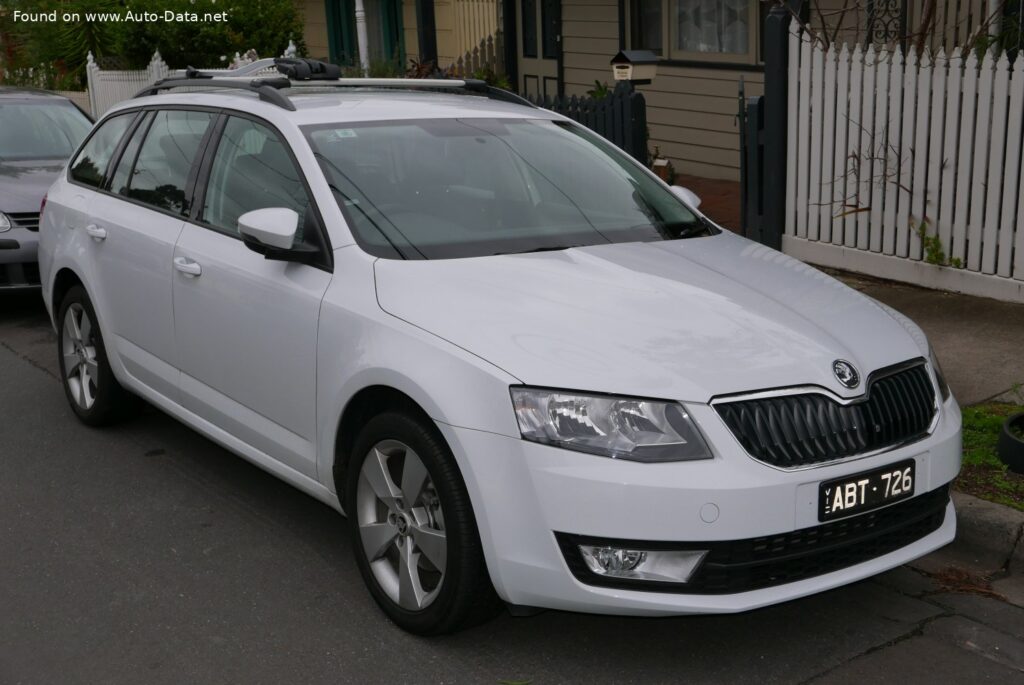
Introduction to the Skoda Octavia III Combi RS 2.0 TDI (184 Hp) DSG
The Skoda Octavia III Combi RS 2.0 TDI (184 Hp) DSG represents a compelling blend of practicality, performance, and fuel efficiency within the European automotive landscape. Produced between 2013 and 2017, this particular iteration of the third-generation Octavia Combi (Skoda’s term for a station wagon) was a flagship model in its segment, particularly appealing to drivers seeking a sporty driving experience without compromising on family-friendly utility or economical operation. While the Skoda brand, and specifically the Octavia, is not sold in the United States, it holds a significant position in its primary European markets as a value-oriented yet sophisticated offering from the Volkswagen Group.
Positioned as a performance-oriented compact station wagon, the Octavia III Combi RS carved out a niche by offering the versatility of an estate car with the dynamic capabilities typically associated with a “hot hatch.” The RS designation signifies Skoda’s commitment to delivering enhanced sportiness, and in this diesel variant, it combined brisk acceleration and high torque with remarkable fuel economy, making it a popular choice for long-distance commuters and active families alike. Its development leveraged the highly adaptable MQB platform, shared with numerous other Volkswagen Group vehicles, ensuring a solid foundation for its engineering and performance characteristics.
Engine and Performance: The Heart of the Skoda Octavia III Combi RS 2.0 TDI (184 Hp) DSG
Under the hood of the Skoda Octavia III Combi RS 2.0 TDI (184 Hp) DSG lies a robust and highly efficient 2.0-liter (1968 cm3 or 120.09 cu. in.) inline four-cylinder turbodiesel engine, identified by the EA288 / CUNA, CUPA, DJGA codes. This powerplant delivers a potent 184 horsepower at a rev range of 3500-4000 rpm, paired with a substantial 280.27 lb.-ft. of torque available between 1750-3250 rpm. This broad torque band is characteristic of modern turbodiesel engines, providing strong, accessible pulling power from low engine speeds, which is particularly beneficial for a family wagon often carrying passengers and cargo.
The engine’s advanced common rail fuel injection system, combined with a turbocharger and intercooler, ensures optimal air-fuel mixture and efficient combustion, contributing to both its performance and impressive fuel economy. With a compression ratio of 16:1 and a DOHC valvetrain featuring four valves per cylinder, the engine is designed for both durability and responsiveness. Power is sent to the front wheels through a sophisticated 6-speed automatic Direct-Shift Gearbox (DSG), renowned for its rapid and smooth gear changes, which further enhances the driving experience, whether cruising on the highway or engaging in more spirited driving.
Performance figures for the Octavia III Combi RS 2.0 TDI are quite respectable for its class. It can accelerate from 0 to 60 mph in a swift 7.6 seconds, with a top speed reaching 141.67 mph. These figures underscore its “RS” designation, allowing it to easily keep pace with many gasoline-powered performance cars. Despite its sporty capabilities, the vehicle maintains exceptional fuel efficiency, rated by the NEDC cycle at 49 US mpg combined (4.8 liters per 100 km). Urban consumption stands at 41.3 US mpg (5.7 l/100 km) and extra-urban at an impressive 54.7 US mpg (4.3 l/100 km). It also meets the stringent Euro 6 emission standard, with CO2 emissions of 126 g/km, reflecting its commitment to environmental responsibility through features like a Start & Stop System and a particulate filter.
Design and Features: Blending Sportiness with Utility
The Skoda Octavia III Combi RS is a prime example of thoughtful automotive design that balances athletic aesthetics with practical functionality. As a five-door, five-seat station wagon (Combi), it offers a capacious and versatile interior. The exterior design features distinctive RS styling cues, including a more aggressive front fascia, unique alloy wheels, and a subtle rear spoiler, all contributing to its sporty stance without being overly ostentatious. The dimensions are generous for its segment, with a length of 184.45 inches (4685 mm), a width of 71.42 inches (1814 mm, or 79.41 inches including mirrors), and a height of 57.17 inches (1452 mm). The wheelbase measures 105.51 inches (2680 mm), providing ample interior space and a stable ride.
One of the Octavia Combi’s most significant advantages is its cargo capacity. With the rear seats in place, it offers a substantial 21.54 cubic feet (610 liters) of trunk space, which expands to a cavernous 61.45 cubic feet (1740 liters) with the rear seats folded down. This makes it an ideal vehicle for families, sports enthusiasts, or anyone requiring significant hauling capability. The interior, while not explicitly detailed in the provided data, typically features sport seats, a sport steering wheel, and RS-specific trim, enhancing the performance-oriented ambiance.
The vehicle’s driving dynamics are supported by a well-engineered chassis. It features an independent McPherson strut front suspension with coil springs and an anti-roll bar, paired with an independent multi-link rear suspension with a stabilizer. This setup provides a comfortable ride while maintaining precise handling. Braking is handled by ventilated discs at the front and solid discs at the rear, augmented by an Anti-lock Braking System (ABS) for enhanced safety and control. The electric power steering system, with its rack and pinion setup, offers responsive and precise feedback. The RS model is available with various tire and wheel sizes, including 225/45 R17, 225/40 R18, and 225/35 R19, mounted on 7.5J x 17, 7.5J x 18, or 7.5J x 19 rims, respectively, contributing to both its visual appeal and road holding.
Technical Specifications
| Category | Specification |
|---|---|
| General Information | |
| Brand | Skoda |
| Model | Octavia |
| Generation | Octavia III Combi |
| Type (Engine) | RS 2.0 TDI (184 Hp) DSG |
| Start of Production | 2013 year |
| End of Production | 2017 year |
| Powertrain Architecture | Internal Combustion engine |
| Body Type | Station wagon (estate) |
| Seats | 5 |
| Doors | 5 |
| Performance Specs | |
| Fuel Consumption (Urban, NEDC) | 41.3 US mpg (5.7 l/100 km) |
| Fuel Consumption (Extra Urban, NEDC) | 54.7 US mpg (4.3 l/100 km) |
| Fuel Consumption (Combined, NEDC) | 49 US mpg (4.8 l/100 km) |
| CO2 Emissions (NEDC) | 126 g/km |
| Fuel Type | Diesel |
| Acceleration 0 – 60 mph | 7.6 sec |
| Acceleration 0 – 100 km/h | 8 sec |
| Maximum Speed | 141.67 mph (228 km/h) |
| Emission Standard | Euro 6 |
| Weight-to-Power Ratio | 7.7 kg/Hp, 130.3 Hp/tonne |
| Weight-to-Torque Ratio | 3.7 kg/Nm, 269.1 Nm/tonne |
| Engine Specs | |
| Power | 184 Hp @ 3500-4000 rpm |
| Power per Liter | 93.5 Hp/l |
| Torque | 280.27 lb.-ft. @ 1750-3250 rpm (380 Nm) |
| Engine Layout | Front, Transverse |
| Engine Model/Code | EA288 / CUNA, CUPA, DJGA |
| Engine Displacement | 2.0 liters (1968 cm3, 120.09 cu. in.) |
| Number of Cylinders | 4 |
| Engine Configuration | Inline |
| Cylinder Bore | 3.19 in. (81 mm) |
| Piston Stroke | 3.76 in. (95.5 mm) |
| Compression Ratio | 16:1 |
| Number of Valves per Cylinder | 4 |
| Fuel Injection System | Diesel Commonrail |
| Engine Aspiration | Turbocharger, Intercooler |
| Valvetrain | DOHC |
| Engine Oil Capacity | 4.86 US qt (4.6 l) |
| Coolant Capacity | 12.26 US qt (11.6 l) |
| Engine Systems | Start & Stop System, Particulate filter |
| Space, Volume and Weights | |
| Kerb Weight | 3112.93 lbs. (1412 kg) |
| Max. Weight | 4360.74 lbs. (1978 kg) |
| Max Load | 1247.82 lbs. (566 kg) |
| Trunk (boot) Space – Minimum | 21.54 cu. ft. (610 l) |
| Trunk (boot) Space – Maximum | 61.45 cu. ft. (1740 l) |
| Fuel Tank Capacity | 13.21 US gal (50 l) |
| Max. Roof Load | 165.35 lbs. (75 kg) |
| Permitted Trailer Load with Brakes (12%) | 3527.4 lbs. (1600 kg) |
| Permitted Trailer Load without Brakes | 1631.42 lbs. (740 kg) |
| Permitted Towbar Download | 165.35 lbs. (75 kg) |
| Dimensions | |
| Length | 184.45 in. (4685 mm) |
| Width | 71.42 in. (1814 mm) |
| Width including Mirrors | 79.41 in. (2017 mm) |
| Height | 57.17 in. (1452 mm) |
| Wheelbase | 105.51 in. (2680 mm) |
| Front Track | 60.43 in. (1535 mm) |
| Rear (Back) Track | 59.29 in. (1506 mm) |
| Front Overhang | 35.39 in. (899 mm) |
| Rear Overhang | 43.54 in. (1106 mm) |
| Ride Height (Ground Clearance) | 5.04 in. (128 mm) |
| Minimum Turning Circle (Turning Diameter) | 36.52 ft. (11.13 m) |
| Approach Angle | 12.8° |
| Departure Angle | 12.3° |
| Drivetrain, Brakes and Suspension Specs | |
| Drivetrain Architecture | The Internal combustion engine (ICE) drives the front wheels of the vehicle. |
| Drive Wheel | Front wheel drive |
| Number of Gears and Type of Gearbox | 6 gears, automatic transmission DSG |
| Front Suspension | Independent, type McPherson with coil spring and anti-roll bar |
| Rear Suspension | Independent multi-link spring suspension with stabilizer |
| Front Brakes | Ventilated discs |
| Rear Brakes | Disc |
| Assisting Systems | ABS (Anti-lock braking system) |
| Steering Type | Steering rack and pinion |
| Power Steering | Electric Steering |
| Tires Size | 225/45 R17; 225/40 R18; 225/35 R19 |
| Wheel Rims Size | 7.5J x 17; 7.5J x 18; 7.5J x 19 |
Legacy and Market Impact in Europe
The Skoda Octavia III Combi RS 2.0 TDI (184 Hp) DSG carved out a significant niche in the highly competitive European market, building upon Skoda’s reputation for offering robust, practical, and well-engineered vehicles at a compelling price point. As part of the Volkswagen Group, Skoda benefits from shared platforms, engines, and technologies, allowing it to deliver sophisticated products like the Octavia RS. This model, in particular, was seen as a “smart choice” for buyers who desired the performance and driving dynamics of a hot hatch but needed the expansive practicality of a station wagon.
Its legacy is defined by its ability to perfectly balance multiple desirable traits: sporty performance from its potent diesel engine and DSG transmission, exceptional fuel economy for long-distance cruising, and cavernous cargo space for families or active lifestyles. This combination made it a unique proposition, often referred to as a “performance estate” or “hot wagon,” appealing to a broad demographic. It successfully competed against rivals such as the Volkswagen Golf GTD Variant (its platform sibling, offering a slightly more premium feel at a higher price), the Ford Focus ST Wagon (when available with a diesel engine), and other performance-oriented compact wagons from brands like Peugeot or SEAT.
The Octavia RS, especially in its diesel Combi form, cemented Skoda’s image beyond just being a budget brand. It demonstrated that Skoda could deliver a genuinely engaging driving experience without sacrificing its core values of practicality and value. The strong torque of the 2.0 TDI engine, coupled with the responsive DSG gearbox, made it an effortless car to drive, whether navigating city traffic or cruising on the Autobahn. Its understated yet sporty design also appealed to those who preferred a less flashy performance car. The Octavia III Combi RS 2.0 TDI remains a highly regarded used car in Europe, celebrated for its durability, low running costs, and the sheer breadth of its capabilities, continuing to embody Skoda’s philosophy of “Simply Clever” engineering with a performance edge.