
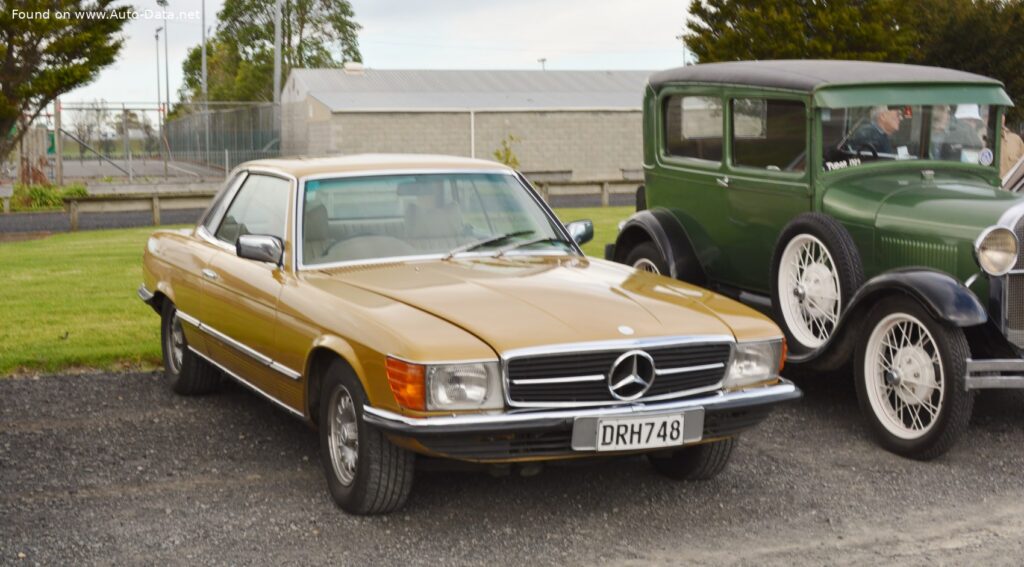
Mercedes-Benz SLC (C107) 500 SLC V8 (240 Hp) 4G-TRONIC: A Grand Tourer Icon
The Mercedes-Benz SLC (C107) 500 SLC V8 (240 Hp) 4G-TRONIC represents a pivotal, albeit brief, chapter in the storied history of Mercedes-Benz’s luxury grand touring coupes. Produced from March 1980 to September 1981, this variant of the C107 series was the most powerful iteration of the SLC line, offering a blend of sophisticated engineering, robust performance, and timeless design. The C107, a fixed-roof coupe derivative of the R107 SL roadster, carved out its own niche as a luxurious 2+2 grand tourer, designed for comfortable, high-speed travel across continents. While its primary market was Europe, its engineering prowess and luxury appeal resonated globally, establishing it as a benchmark for premium automotive craftsmanship during its production era.
Distinguished by its longer wheelbase and unique rear window treatment compared to its convertible sibling, the SLC offered enhanced interior space and a distinct aesthetic. The introduction of the 500 SLC brought a potent 5.0-liter V8 engine and an advanced 4-speed automatic transmission, elevating its performance credentials significantly. This model was not just a symbol of status but also a testament to Mercedes-Benz’s commitment to delivering unparalleled driving experiences, combining brute force with refined elegance.
Engine and Performance: The Heart of the Mercedes-Benz SLC (C107) 500 SLC V8 (240 Hp) 4G-TRONIC
At the core of the Mercedes-Benz SLC (C107) 500 SLC V8 (240 Hp) 4G-TRONIC lies a formidable M 117 E 50 / 117.960 V8 engine, a marvel of engineering for its time. This naturally aspirated, front-longitudinal powerplant boasts a displacement of 4973 cm3, or approximately 5.0 liters (303.47 cubic inches). With a compression ratio of 8.8:1 and a multi-port manifold injection system, the engine was designed for smooth, reliable power delivery. Each of its eight cylinders features two valves, operated by a Single Overhead Camshaft (SOHC) valvetrain, a configuration known for its balance of performance and durability.
The 5.0-liter V8 generates a robust 240 horsepower at 5000 rpm, translating to a power output of 48.3 horsepower per liter. More significantly for a grand tourer, it produces a substantial 296.5 lb.-ft. (402 Nm) of torque at a relatively low 3200 rpm. This ample torque ensures effortless acceleration and strong passing power, crucial for sustained high-speed cruising. Power is delivered to the rear wheels via a sophisticated 4G-TRONIC 4-speed automatic transmission, renowned for its smooth shifts and reliability, perfectly complementing the engine’s character.
Performance figures for the 500 SLC were impressive for its era. It could accelerate from 0 to 60 mph in a swift 7.4 seconds (0-100 km/h in 7.8 seconds) and achieve a maximum speed of 139.81 mph (225 km/h). Despite its size and power, the vehicle maintained a competitive weight-to-power ratio of 158.4 horsepower per ton (6.3 kg/Hp), contributing to its agile feel. Fuel economy, while not a primary concern for luxury buyers of this period, was rated at 11.4 US mpg in urban conditions and 21.6 US mpg on the extra-urban cycle, reflecting the inherent thirst of a large displacement V8 engine. With an 8-liter engine oil capacity and 13.5-liter coolant capacity, the M117 engine was engineered for sustained, high-performance operation, a hallmark of Mercedes-Benz’s commitment to reliability and longevity.
Design and Features: Elegance and Practicality
The Mercedes-Benz SLC (C107) stands out with its distinctive coupe body type, featuring two doors and a 2+2 seating configuration, offering more practicality than its two-seat SL roadster counterpart. Measuring 187.01 inches in length, 70.47 inches in width, and 52.36 inches in height, with a generous wheelbase of 110.83 inches, the SLC possesses a commanding presence on the road. Its design is characterized by classic Mercedes-Benz styling cues of the late 1970s and early 1980s, including a prominent grille, clean lines, and a robust, understated elegance.
A defining characteristic of the C107 SLC is its unique rear window treatment. Unlike the SL, which featured a soft top or removable hardtop, the SLC incorporated fixed rear windows with distinctive horizontal louvers, often referred to as “Venetian blinds” or “slats.” These not only added a unique aesthetic but also allowed the rear windows to retract fully into the bodywork, a clever engineering solution that provided an open-air feel without compromising structural rigidity. The longer wheelbase also contributed to better rear passenger legroom and a more stable ride, enhancing its grand touring capabilities.
Underneath its stylish exterior, the 500 SLC featured an advanced suspension system for its era, comprising double wishbones with a transverse stabilizer at the front and a threaded twist beam with a transverse stabilizer at the rear. This setup provided a comfortable yet controlled ride, ideal for long journeys. Stopping power was assured by ventilated discs at the front and solid discs at the rear. The hydraulic power steering, utilizing a cone worm with recirculation balls system, offered precise and effortless maneuverability. The vehicle rode on 205/70 R14 tires mounted on 6.5J x 14-inch wheel rims, providing a balance of grip and ride comfort. With a curb weight of 3340 lbs. (1515 kg) and a maximum load capacity of 1080.27 lbs. (490 kg), the SLC was built with substantiality and passenger comfort in mind, further underscored by its generous 23.78 US gallon (90-liter) fuel tank capacity, allowing for extensive range between fill-ups.
Technical Specifications: Mercedes-Benz SLC (C107) 500 SLC V8 (240 Hp) 4G-TRONIC
| Category | Specification |
|---|---|
| General Information | |
| Brand | Mercedes-Benz |
| Model | SLC (C107) |
| Type (Engine) | 500 SLC V8 (240 Hp) 4G-TRONIC |
| Production Start | March, 1980 |
| Production End | September, 1981 |
| Powertrain Architecture | Internal Combustion Engine |
| Body Type | Coupe |
| Seats | 5 |
| Doors | 2 |
| Performance Specs | |
| Fuel Consumption (Urban) | 11.4 US mpg (20.7 l/100 km) |
| Fuel Consumption (Extra Urban) | 21.6 US mpg (10.9 l/100 km) |
| Fuel Type | Petrol (Gasoline) |
| Acceleration 0-60 mph | 7.4 sec |
| Acceleration 0-100 km/h | 7.8 sec |
| Maximum Speed | 139.81 mph (225 km/h) |
| Weight-to-Power Ratio | 6.3 kg/Hp (158.4 Hp/tonne) |
| Weight-to-Torque Ratio | 3.8 kg/Nm (265.3 Nm/tonne) |
| Engine Specs | |
| Power | 240 Hp @ 5000 rpm |
| Power per Liter | 48.3 Hp/l |
| Torque | 296.5 lb.-ft. @ 3200 rpm (402 Nm @ 3200 rpm) |
| Engine Layout | Front, Longitudinal |
| Engine Model/Code | M 117 E 50 / 117.960 |
| Engine Displacement | 5.0 Liters (4973 cm3 / 303.47 cu. in.) |
| Number of Cylinders | 8 |
| Engine Configuration | V-engine |
| Cylinder Bore | 3.8 in. (96.5 mm) |
| Piston Stroke | 3.35 in. (85 mm) |
| Compression Ratio | 8.8:1 |
| Valves per Cylinder | 2 |
| Fuel Injection System | Multi-port manifold injection |
| Engine Aspiration | Naturally aspirated |
| Valvetrain | SOHC |
| Engine Oil Capacity | 8.45 US qt (8 l) |
| Coolant Capacity | 14.27 US qt (13.5 l) |
| Space, Volume and Weights | |
| Kerb Weight | 3340 lbs. (1515 kg) |
| Maximum Weight | 4420.27 lbs. (2005 kg) |
| Maximum Load | 1080.27 lbs. (490 kg) |
| Fuel Tank Capacity | 23.78 US gal (90 l) |
| Dimensions | |
| Length | 187.01 in. (4750 mm) |
| Width | 70.47 in. (1790 mm) |
| Height | 52.36 in. (1330 mm) |
| Wheelbase | 110.83 in. (2815 mm) |
| Front Track | 57.17 in. (1452 mm) |
| Rear Track | 56.69 in. (1440 mm) |
| Drivetrain, Brakes and Suspension Specs | |
| Drivetrain Architecture | Rear-wheel drive |
| Drive Wheel | Rear wheel drive |
| Gearbox Type | 4-speed automatic (4G-TRONIC) |
| Front Suspension | Double wishbone, Transverse stabilizer |
| Rear Suspension | Threaded twist beam, Transverse stabilizer |
| Front Brakes | Ventilated discs |
| Rear Brakes | Disc |
| Steering Type | Cone worm with recirculation balls |
| Power Steering | Hydraulic Steering |
| Tires Size | 205/70 R14 |
| Wheel Rims Size | 6.5J x 14 |
Legacy and Market Impact
The Mercedes-Benz SLC (C107) series, and particularly the potent 500 SLC V8, holds a unique place in automotive history. While often overshadowed by its more famous convertible sibling, the R107 SL, the SLC developed its own dedicated following due to its distinct character and enhanced practicality. It represented the epitome of a luxury grand tourer, designed for effortless, high-speed travel across Europe’s autobahns and scenic routes. Its robust construction, famously earning the “Panzerwagen” (armored car) nickname for Mercedes-Benz vehicles of this era, ensured exceptional build quality and longevity, a trait highly valued by discerning buyers.
In its primary European market, the 500 SLC competed with other high-end luxury coupes such as the BMW E24 6 Series and the Jaguar XJ-S. While the BMW offered a sportier edge and the Jaguar a more traditional British luxury experience, the Mercedes-Benz SLC stood apart with its unparalleled reputation for engineering integrity, comfort, and understated sophistication. The 5.0-liter M117 engine, in particular, gained significant recognition beyond the road car, notably powering the rally-spec 450 SLC and 500 SLC models to victories in demanding events like the Bandama Rally, showcasing the engine’s inherent robustness and performance capabilities. This motorsport heritage, though not directly tied to the road car’s sales, undoubtedly enhanced the model’s prestige.
Today, the Mercedes-Benz SLC (C107) 500 SLC V8 is regarded as a classic, appreciated by collectors and enthusiasts for its timeless design, formidable V8 power, and solid build quality. Its relatively short production run for this specific variant, from 1980 to 1981, makes it a rarer and more desirable model within the C107 lineage. It bridged the gap between the R107 SL and the subsequent, more aerodynamic C126 SEC coupes, offering a unique blend of classic Mercedes-Benz aesthetics with modern performance for its time. The SLC’s legacy is one of a comfortable, powerful, and impeccably built grand tourer, a true testament to Mercedes-Benz’s engineering excellence in an era of significant automotive transition. Its enduring appeal lies in its ability to deliver a luxurious and engaging driving experience that remains relevant even decades after its production ceased.
