Peugeot 3008 II (Phase I, 2016) 1.6 PureTech (180 Hp) Automatic S&S
The Peugeot 3008 II (Phase I, 2016) 1.6 PureTech (180 Hp) Automatic S&S represents a pivotal moment for the French automaker Peugeot in the highly competitive compact crossover SUV segment. Launched initially in 2016, this second-generation 3008 marked a significant departure from its predecessor, transforming from a more MPV-like design into a sleek, modern SUV that quickly garnered critical acclaim and commercial success across Europe and other international markets where Peugeot operates. This specific variant, featuring the potent 1.6 PureTech (180 Hp) engine paired with an automatic transmission and Start & Stop (S&S) technology, was produced between 2018 and 2020, offering a compelling blend of performance, efficiency, and sophisticated design.
While the Peugeot brand is not currently sold in the United States, the 3008 II has been a formidable player in its primary markets, redefining Peugeot’s image and setting new standards for interior design and technology in its class. Its robust sales performance and numerous accolades, including the prestigious European Car of the Year award in 2017, underscored its impact. The 3008 II (Phase I, 2016) 1.6 PureTech (180 Hp) Automatic S&S variant was positioned as a premium offering within the range, catering to drivers seeking a dynamic driving experience without compromising on fuel economy or everyday practicality.
Engine & Performance of the Peugeot 3008 II (Phase I, 2016) 1.6 PureTech (180 Hp) Automatic S&S
At the heart of this particular Peugeot 3008 II lies the advanced 1.6-liter PureTech gasoline engine, a turbocharged inline-four cylinder unit designed for both spirited performance and remarkable efficiency. This powerplant, internally designated as 5GF EP6FADTXD, delivers a robust 180 horsepower at 5500 rpm, making it one of the more powerful options in its segment. More impressively, it produces a healthy 184.39 lb.-ft. (250 Nm) of torque from a low 1650 rpm, ensuring excellent responsiveness and strong acceleration from a standstill or during in-gear overtakes. This low-end torque characteristic is particularly beneficial in urban driving conditions, allowing the SUV to feel nimble and eager.
Power is channeled to the front wheels through a smooth and efficient 8-speed automatic transmission. This modern gearbox is meticulously tuned to optimize both performance and fuel economy, providing seamless shifts that contribute to a refined driving experience. The combination of the potent PureTech engine and the sophisticated automatic transmission allows the 3008 II to accelerate from 0 to 60 mph in a quick 7.6 seconds, with a top speed reaching 137.94 mph (222 km/h). These figures place it firmly among the top performers in the compact SUV category.
Despite its performance capabilities, the 1.6 PureTech (180 Hp) Automatic S&S variant is also commendably fuel-efficient. It achieves an impressive combined fuel economy of 42 US mpg (5.6 l/100 km), with even better figures on the highway at 49 US mpg (4.8 l/100 km). Urban driving is rated at 33.6 US mpg (7 l/100 km). These figures are aided by Peugeot’s Start & Stop system, which automatically shuts off the engine when the vehicle is stationary, reducing fuel consumption and emissions in city traffic. The vehicle also adheres to the stringent Euro 6 d-TEMP emission standard, emitting just 128 g/km of CO2, highlighting Peugeot’s commitment to environmental responsibility.
Design & Features
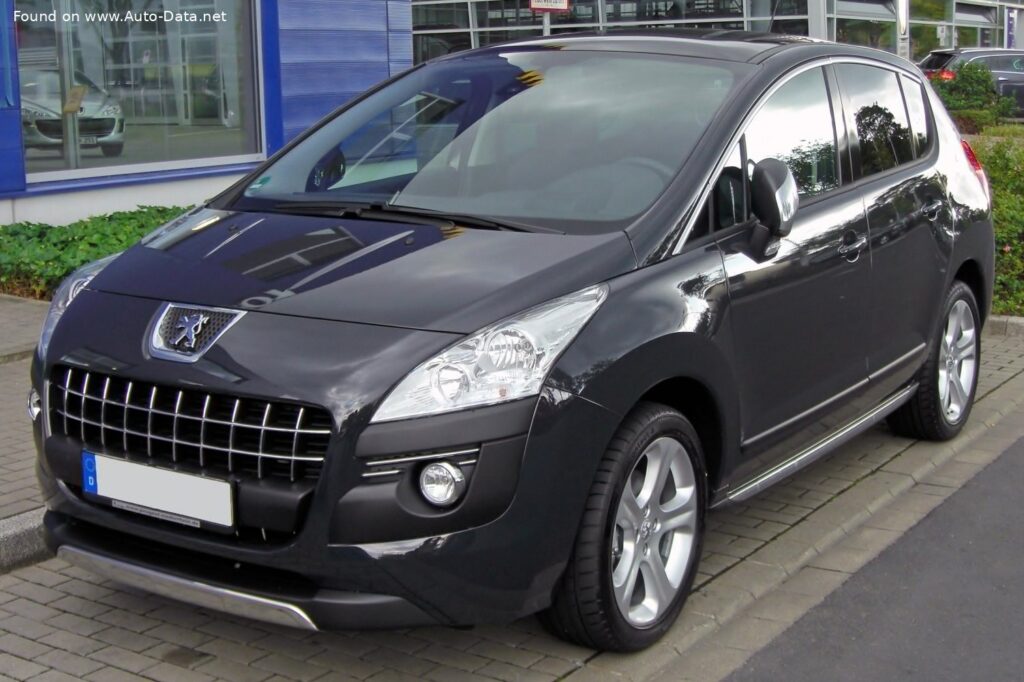
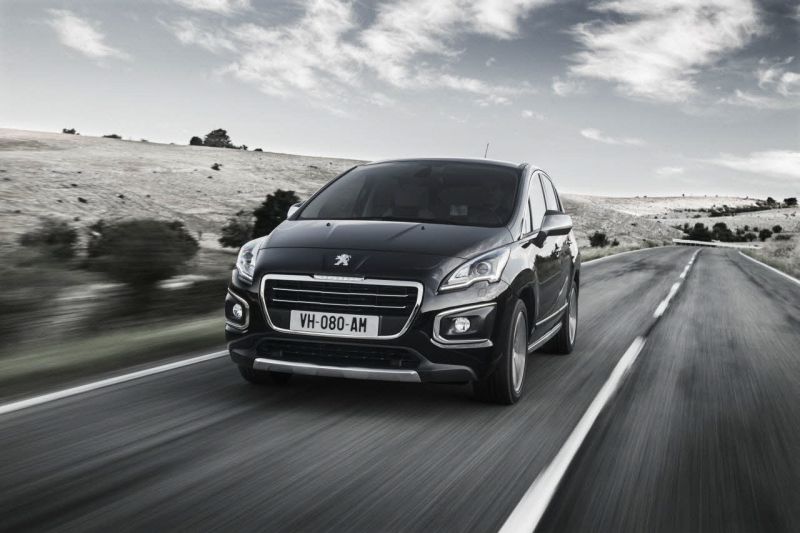
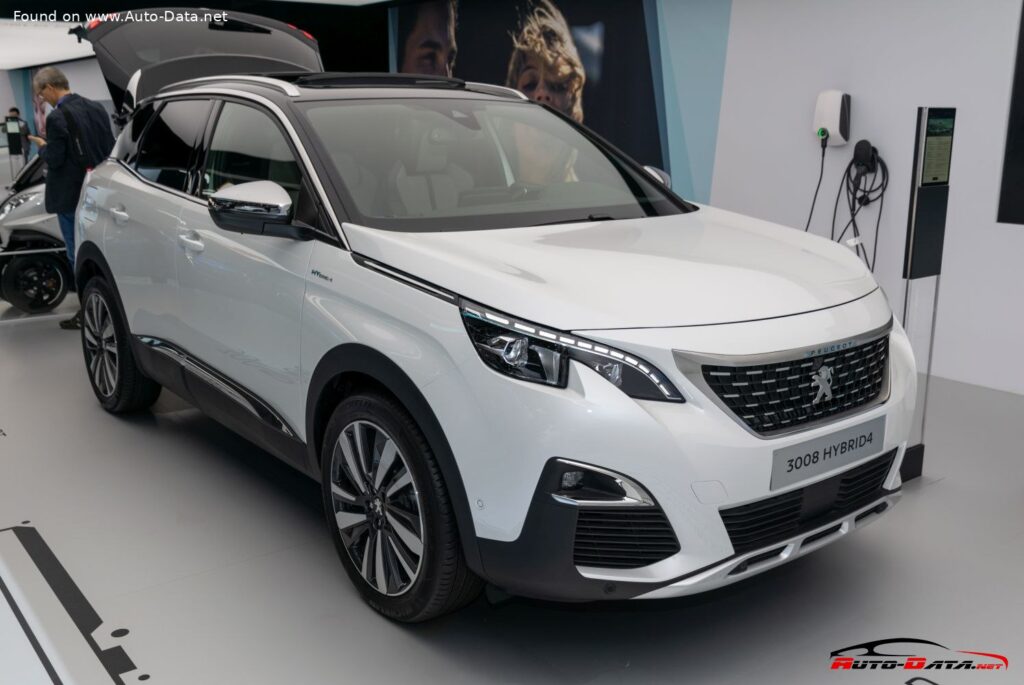
The Peugeot 3008 II (Phase I, 2016) is a five-door, five-seat SUV that completely reinvented Peugeot’s design language for its utility vehicle lineup. Its exterior is characterized by sharp, aggressive lines, a distinctive chrome-accented grille, and feline-inspired LED headlights that give it a commanding presence. The vehicle’s proportions are well-balanced, with a length of 175.08 inches (4447 mm) and a width of 72.48 inches (1841 mm), creating a substantial yet agile stance. Its ground clearance of 8.62 inches (219 mm) further emphasizes its SUV credentials, providing a confident ride height and aiding in light off-road capability, though its primary focus remains on paved roads.
Inside, the 3008 II is perhaps even more revolutionary, featuring Peugeot’s acclaimed i-Cockpit design philosophy. This innovative cabin layout includes a small-diameter steering wheel, an elevated 12.3-inch digital instrument cluster positioned above the steering wheel (allowing drivers to view information without taking their eyes far from the road), and a central touchscreen infotainment system. The interior boasts high-quality materials, tactile “toggle switches” for key functions, and a generally upscale ambiance that belies its mainstream positioning. Seating for five adults is comfortable, with ample legroom and headroom, making it suitable for family use.
Practicality is a strong suit for the 3008 II. The trunk offers a generous 18.36 cubic feet (520 liters) of cargo space with all seats in place, expanding to an impressive 52.34 cubic feet (1482 liters) when the rear seats are folded down. This flexibility allows for easy transport of luggage, groceries, or larger items. Key features for this variant include the electric power steering, which provides precise and effortless maneuverability, and a robust braking system with ventilated discs at the front and disc brakes at the rear, complemented by an Anti-lock Braking System (ABS) for enhanced safety. The suspension setup, featuring independent McPherson struts at the front and a semi-independent setup at the rear, strikes a commendable balance between ride comfort and dynamic handling.
Technical Specifications
| Category | Specification |
|---|---|
| Brand | Peugeot |
| Model | 3008 |
| Generation | 3008 II (Phase I, 2016) |
| Type (Engine) | 1.6 PureTech (180 Hp) Automatic S&S |
| Start of Production | 2018 year |
| End of Production | 2020 year |
| Powertrain Architecture | Internal Combustion engine |
| Body type | SUV |
| Seats | 5 |
| Doors | 5 |
| Performance Specs | |
| Fuel consumption (economy) – urban | 7 l/100 km (33.6 US mpg) |
| Fuel consumption (economy) – extra urban | 4.8 l/100 km (49 US mpg) |
| Fuel consumption (economy) – combined | 5.6 l/100 km (42 US mpg) |
| CO2 emissions | 128 g/km |
| Fuel Type | Petrol (Gasoline) |
| Acceleration 0 – 60 mph | 7.6 sec |
| Acceleration 0 – 100 km/h | 8 sec |
| Maximum speed | 222 km/h (137.94 mph) |
| Emission standard | Euro 6 d-TEMP |
| Weight-to-power ratio | 7.9 kg/Hp (125.9 Hp/tonne) |
| Weight-to-torque ratio | 5.7 kg/Nm (174.8 Nm/tonne) |
| Engine Specs | |
| Power | 180 Hp @ 5500 rpm |
| Power per liter | 112.6 Hp/l |
| Torque | 250 Nm @ 1650 rpm (184.39 lb.-ft. @ 1650 rpm) |
| Engine layout | Front, Transverse |
| Engine Model/Code | 5GF EP6FADTXD |
| Engine displacement | 1598 cm3 (97.52 cu. in.) |
| Number of cylinders | 4 |
| Engine configuration | Inline |
| Number of valves per cylinder | 4 |
| Fuel injection system | Direct injection |
| Engine aspiration | Turbocharger, Intercooler |
| Engine oil capacity | 4.25 l (4.49 US qt) |
| Engine systems | Start & Stop System |
| Space, Volume and Weights | |
| Kerb Weight | 1430 kg (3152.61 lbs) |
| Max. weight | 1960 kg (4321.06 lbs) |
| Max load | 530 kg (1168.45 lbs) |
| Trunk (boot) space – minimum | 520 l (18.36 cu. ft.) |
| Trunk (boot) space – maximum | 1482 l (52.34 cu. ft.) |
| Fuel tank capacity | 53 l (14 US gal) |
| Permitted trailer load with brakes (12%) | 1500 kg (3306.93 lbs) |
| Dimensions | |
| Length | 4447 mm (175.08 in.) |
| Width | 1841 mm (72.48 in.) |
| Width with mirrors folded | 1906 mm (75.04 in.) |
| Width including mirrors | 2098 mm (82.6 in.) |
| Height | 1615 mm (63.58 in.) |
| Wheelbase | 2675 mm (105.31 in.) |
| Front track | 1579-1601 mm (62.17 – 63.03 in.) |
| Rear (Back) track | 1587-1610 mm (62.48 – 63.39 in.) |
| Front overhang | 923 mm (36.34 in.) |
| Rear overhang | 849 mm (33.43 in.) |
| Ride height (ground clearance) | 219 mm (8.62 in.) |
| Minimum turning circle (turning diameter) | 10.67 m (35.01 ft.) |
| Approach angle | 20° |
| Departure angle | 29° |
| Drivetrain, Brakes and Suspension Specs | |
| Drivetrain Architecture | The Internal combustion engine (ICE) drives the front wheels of the vehicle. |
| Drive wheel | Front wheel drive |
| Number of gears and type of gearbox | 8 gears, automatic transmission |
| Front suspension | Independent, type McPherson with coil spring and anti-roll bar |
| Rear suspension | Semi-independent, coil spring |
| Front brakes | Ventilated discs |
| Rear brakes | Disc |
| Assisting systems | ABS (Anti-lock braking system) |
| Steering type | Steering rack and pinion |
| Power steering | Electric Steering |
| Tires size | 215/65 R17; 225/55 R18; 205/55 R19 |
| Wheel rims size | 17; 18; 19 |
Legacy & Market Impact of the Peugeot 3008 II (Phase I, 2016)
The Peugeot 3008 II, particularly in its initial Phase I iteration, carved out a significant legacy for the French brand. Its transformation from a somewhat niche MPV to a stylish and aspirational SUV was a masterstroke, directly addressing the burgeoning demand for crossovers in Europe and beyond. The 1.6 PureTech (180 Hp) Automatic S&S variant played a crucial role in this success, offering a compelling blend of dynamic performance and real-world efficiency that appealed to a wide range of buyers.
The car’s reputation was bolstered by numerous awards, most notably the prestigious European Car of the Year in 2017. This accolade was a testament to its outstanding design, innovative i-Cockpit interior, advanced technology, and well-rounded driving dynamics. It successfully challenged established competitors in the compact SUV segment, such as the Volkswagen Tiguan, Nissan Qashqai, Hyundai Tucson, Kia Sportage, and Ford Kuga (known as the Escape in the U.S.), often surpassing them in terms of interior flair and perceived quality.
Historically, the 3008 II marked a turning point for Peugeot, signaling a clear move towards a more premium positioning within the mainstream automotive market. It demonstrated Peugeot’s ability to innovate not just in styling but also in powertrain development and interior architecture. The i-Cockpit, in particular, became a signature feature that was subsequently rolled out across other Peugeot models, influencing the brand’s identity for years to come. The success of the 3008 II helped solidify Peugeot’s profitability and global presence, proving that a non-premium brand could still command significant attention and market share through distinctive design and smart engineering.
The 1.6 PureTech (180 Hp) engine, with its impressive power output and efficient operation, was a key contributor to the 3008’s appeal, offering a more engaging driving experience than many of its rivals without sacrificing practicality or environmental considerations. Its adherence to Euro 6 d-TEMP standards showcased a forward-thinking approach to emissions control before the widespread adoption of full electrification. The Peugeot 3008 II (Phase I, 2016) 1.6 PureTech (180 Hp) Automatic S&S remains a benchmark for what a modern, stylish, and efficient compact SUV can be, cementing its place as an influential vehicle in the European automotive landscape.