The Volkswagen Transporter (T5, facelift 2009) Panel Van 2.0 TSI (204 Hp) L2H2: A European Workhorse with Potent Performance
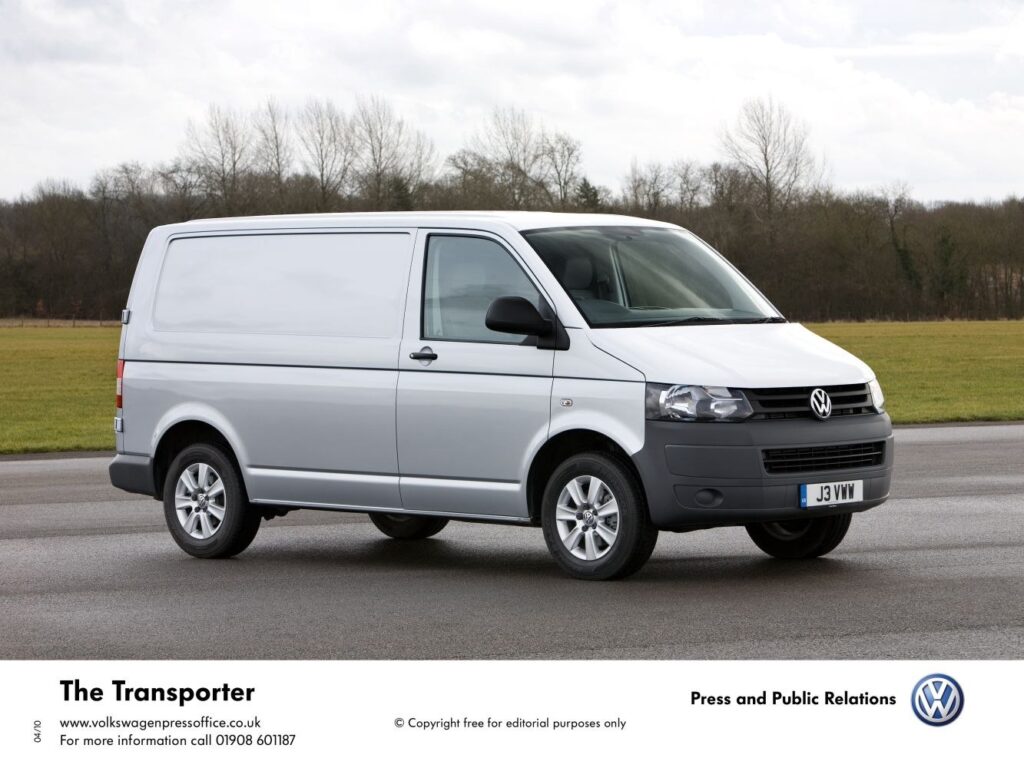
The Volkswagen Transporter, a name synonymous with versatility and reliability in the light commercial vehicle (LCV) segment, has a storied history spanning over seven decades. The fifth-generation Transporter, internally known as the T5, received a significant facelift in 2009, bringing updated styling, enhanced technology, and more efficient powertrains. Among its many configurations, the Volkswagen Transporter (T5, facelift 2009) Panel Van 2.0 TSI (204 Hp) L2H2 stands out as a particularly capable variant, combining substantial cargo capacity with an unexpectedly spirited gasoline engine. Produced from 2011 to 2015, this model was a cornerstone of Volkswagen’s commercial vehicle offerings across Europe and other international markets, though it was not officially imported into the United States.
This specific iteration, designated L2H2, signifies its long wheelbase and high roof configuration, designed to maximize cargo volume for various business needs. It represented a blend of traditional Transporter robustness with modern automotive engineering, offering a compelling package for businesses requiring both utility and a measure of driving refinement often associated with passenger cars. Its role in its primary European market was crucial, catering to a wide array of trades and services, from logistics and delivery to mobile workshops and specialized conversions.
Engine and Performance: The Surprising Power of the 2.0 TSI
At the heart of the Volkswagen Transporter (T5, facelift 2009) Panel Van 2.0 TSI (204 Hp) L2H2 is a sophisticated 2.0-liter turbocharged, direct-injection gasoline engine, identified by the EA888/CJKA code. This four-cylinder inline engine, known for its widespread use across the Volkswagen Group’s performance-oriented passenger cars, delivers a robust 204 horsepower (Hp) at a broad range of 4200-6000 rpm. What truly distinguishes this powertrain in a commercial van application is its impressive torque output: 350 Newton-meters (Nm), or approximately 258.15 lb.-ft., available from a remarkably low 1500 rpm all the way up to 4000 rpm. This wide torque band is crucial for a commercial vehicle, ensuring strong pulling power from a standstill and excellent flexibility in urban traffic or when navigating hilly terrain, even when fully loaded.
Mated to a precise 6-speed manual transmission, this front-wheel-drive van offers an engaging driving experience not typically found in its segment. The performance figures are quite remarkable for a vehicle of its size and intended purpose: it can accelerate from 0 to 60 mph in a swift 8.1 seconds, and achieve a top speed of 120.55 mph (194 km/h). This level of performance provides ample capability for highway cruising and maintaining pace with faster traffic, reducing journey times for urgent deliveries. Despite its power, Volkswagen engineered the engine to meet Euro 5 emission standards, reflecting the brand’s commitment to balancing performance with environmental considerations for its time.
Fuel efficiency, while not the primary focus of a powerful gasoline van, was still a consideration. The combined NEDC fuel consumption was rated between 9.5-9.8 liters per 100 kilometers, translating to approximately 24-24.8 US miles per gallon. This figure, respectable for a turbocharged gasoline engine in a large van, underscores the efficiency gains achieved through direct injection and turbocharging compared to older, naturally aspirated units.
Design and Features: Practicality Meets Modern Utility
The T5 facelift brought a refreshed aesthetic to the Transporter line, characterized by a more angular grille, revised headlights, and updated bumpers, aligning its design language with other contemporary Volkswagen passenger vehicles. As a panel van, the Volkswagen Transporter (T5, facelift 2009) Panel Van 2.0 TSI (204 Hp) L2H2 emphasizes pure utility. Its L2H2 designation indicates a long wheelbase (3400 mm or 133.86 inches) and a high roof (2176 mm or 85.67 inches), providing an expansive cargo area. The maximum trunk (boot) space measures an impressive 7800 liters (275.45 cubic feet), making it suitable for transporting large volumes of goods or accommodating specialized equipment.
The interior, while designed for durability and functionality, also offered ergonomic improvements over its predecessor. The standard seating configuration typically accommodates 2-3 occupants, with robust materials chosen to withstand the rigors of daily commercial use. Practical features include numerous storage compartments, easy-to-clean surfaces, and a well-laid-out dashboard. For safety, the Transporter was equipped with essential systems like ABS (Anti-lock Braking System), contributing to secure stopping power, especially when the vehicle is heavily loaded.
Underneath, the T5 featured an independent suspension system both front and rear. The front utilized a McPherson strut setup with coil springs and an anti-roll bar, while the rear employed an independent coil spring system with a transverse stabilizer and trailing arms. This sophisticated suspension design, unusual for a commercial van, contributed significantly to its car-like handling characteristics and ride comfort, reducing driver fatigue on long journeys. Braking performance was ensured by ventilated discs all around, with substantial sizes (340×32.5 mm front, 294×22 mm rear) to manage the vehicle’s weight and potential cargo loads. Hydraulic power steering provided responsive and predictable control, further enhancing the driving experience.
Technical Specifications
Here is a detailed breakdown of the technical specifications for the Volkswagen Transporter (T5, facelift 2009) Panel Van 2.0 TSI (204 Hp) L2H2:
| General Information | |
| Brand | Volkswagen |
| Model | Transporter |
| Generation | Transporter (T5, facelift 2009) Panel Van |
| Type (Engine) | 2.0 TSI (204 Hp) L2H2 |
| Start of Production | 2011 year |
| End of Production | 2015 year |
| Powertrain Architecture | Internal Combustion engine |
| Body type | Van |
| Seats | 2-3 |
| Doors | 4-5 |
| Performance Specs | |
| Fuel consumption (economy) – urban (NEDC) | 12.7-13 l/100 km (18.1-18.5 US mpg) |
| Fuel consumption (economy) – extra urban (NEDC) | 7.7-8 l/100 km (29.4-30.5 US mpg) |
| Fuel consumption (economy) – combined (NEDC) | 9.5-9.8 l/100 km (24-24.8 US mpg) |
| CO2 emissions (NEDC) | 222-228 g/km |
| Fuel Type | Petrol (Gasoline) |
| Acceleration 0 – 62 mph (0 – 100 km/h) | 8.5 sec |
| Acceleration 0 – 60 mph (Calculated) | 8.1 sec |
| Maximum speed | 194 km/h (120.55 mph) |
| Emission standard | Euro 5 |
| Weight-to-power ratio | 8.8 kg/Hp (113.3 Hp/tonne) |
| Weight-to-torque ratio | 5.1 kg/Nm (194.4 Nm/tonne) |
| Engine Specs | |
| Power | 204 Hp @ 4200-6000 rpm |
| Power per liter | 102.8 Hp/l |
| Torque | 350 Nm (258.15 lb.-ft.) @ 1500-4000 rpm |
| Engine layout | Front, Transverse |
| Engine Model/Code | EA888 / CJKA |
| Engine displacement | 1984 cm3 (121.07 cu. in.) |
| Number of cylinders | 4 |
| Engine configuration | Inline |
| Cylinder Bore | 82.5 mm (3.25 in.) |
| Piston Stroke | 92.8 mm (3.65 in.) |
| Compression ratio | 9.8:1 |
| Number of valves per cylinder | 4 |
| Fuel injection system | Direct injection |
| Engine aspiration | Turbocharger, Intercooler |
| Valvetrain | DOHC |
| Engine oil capacity | 5.7 l (6.02 US qt) |
| Coolant capacity | 11 l (11.62 US qt) |
| Space, Volume and Weights | |
| Kerb Weight | 1800-2217 kg (3968.32 – 4887.65 lbs.) |
| Max. weight | 2800-3200 kg (6172.94 – 7054.79 lbs.) |
| Max load | 983-1000 kg (2167.14 – 2204.62 lbs.) |
| Trunk (boot) space – maximum | 7800 l (275.45 cu. ft.) |
| Fuel tank capacity | 80 l (21.13 US gal) |
| Permitted trailer load with brakes (12%) | 2500 kg (5511.56 lbs.) |
| Permitted trailer load without brakes | 750 kg (1653.47 lbs.) |
| Permitted towbar download | 100 kg (220.46 lbs.) |
| Dimensions | |
| Length | 5292 mm (208.35 in.) |
| Width | 1904 mm (74.96 in.) |
| Width including mirrors | 2283 mm (89.88 in.) |
| Height | 2176 mm (85.67 in.) |
| Wheelbase | 3400 mm (133.86 in.) |
| Front overhang | 896 mm (35.28 in.) |
| Rear overhang | 996 mm (39.21 in.) |
| Ride height (ground clearance) | 201 mm (7.91 in.) |
| Minimum turning circle (turning diameter) | 13.2 m (43.31 ft.) |
| Approach angle | 21° |
| Departure angle | 17° |
| Ramp-over (brakeover) angle | 12° |
| Drivetrain, Brakes and Suspension Specs | |
| Drivetrain Architecture | Front wheel drive (Internal Combustion engine drives the front wheels) |
| Drive wheel | Front wheel drive |
| Number of gears and type of gearbox | 6 gears, manual transmission |
| Front suspension | Independent, type McPherson with coil spring and anti-roll bar |
| Rear suspension | Independent coil spring, Transverse stabilizer, Trailing arm |
| Front brakes | Ventilated discs, 340×32.5 mm |
| Rear brakes | Ventilated discs, 294×22 mm |
| Assisting systems | ABS (Anti-lock braking system) |
| Steering type | Steering rack and pinion |
| Power steering | Hydraulic Steering |
| Tires size | 215/60 R17; 235/55 R17; 255/45 R18 |
| Wheel rims size | 7J x 17; 8J x 18 |
Legacy and Market Impact
The Volkswagen Transporter T5, especially its facelifted version, continued the proud legacy of the Transporter line as a benchmark in the European light commercial vehicle segment. The Volkswagen Transporter (T5, facelift 2009) Panel Van 2.0 TSI (204 Hp) L2H2, with its powerful gasoline engine, carved out a niche for operators who valued strong performance and a more refined driving experience alongside traditional van utility. Its reputation for durability, robust build quality, and excellent residual values made it a preferred choice for many businesses across the continent.
In Europe, the Transporter faced stiff competition from rivals such as the Ford Transit Custom, Mercedes-Benz Vito, Renault Trafic, and Opel Vivaro. However, the T5 consistently held its own, often lauded for its car-like driving dynamics, comfortable interior, and premium feel compared to some of its more utilitarian competitors. The availability of a high-output gasoline engine like the 2.0 TSI also offered an alternative to the predominantly diesel-powered LCV market, appealing to those with specific operational needs or preferences.
While an iconic vehicle globally, the T5 Transporter was never officially sold in the United States or Canada. Volkswagen’s strategy for the North American market shifted away from large vans after the T4-based EuroVan ceased production. Factors such as the “Chicken Tax” (a tariff on imported light trucks), differing market demands, and the presence of established full-size van competitors (like Ford’s E-Series/Transit, GM’s Express/Savana, and later the Mercedes-Benz Sprinter and Ram ProMaster) meant that the Transporter T5 did not find a direct path to American dealerships. Instead, Volkswagen focused on other segments in the US, leaving the commercial van market to more specialized offerings.
Despite its absence in the US, the T5 Transporter, particularly high-performance variants like the 2.0 TSI, left an indelible mark on the international commercial vehicle landscape. It showcased that a workhorse could also be a driver’s vehicle, blending practicality with surprising agility and power. Its engineering prowess and enduring design ensured its relevance throughout its production run and solidified its status as a beloved and highly capable utility vehicle for years to come.