The Renault Espace II (J63): A European Minivan Pioneer
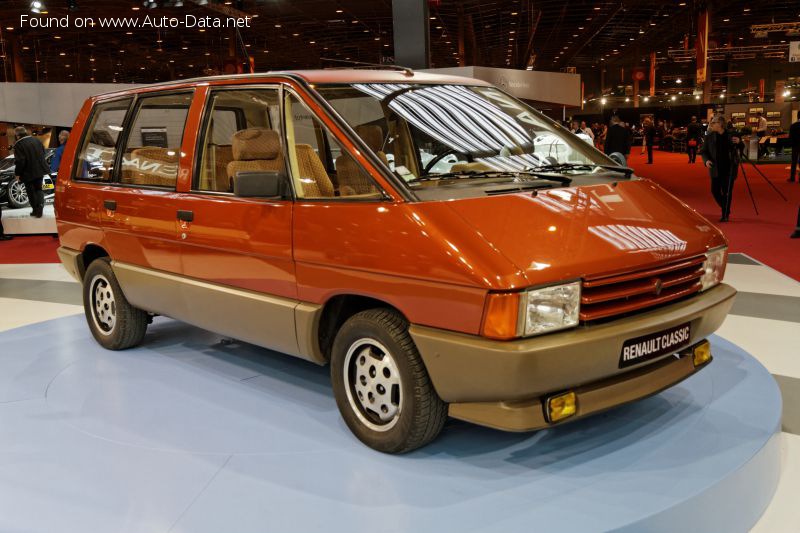
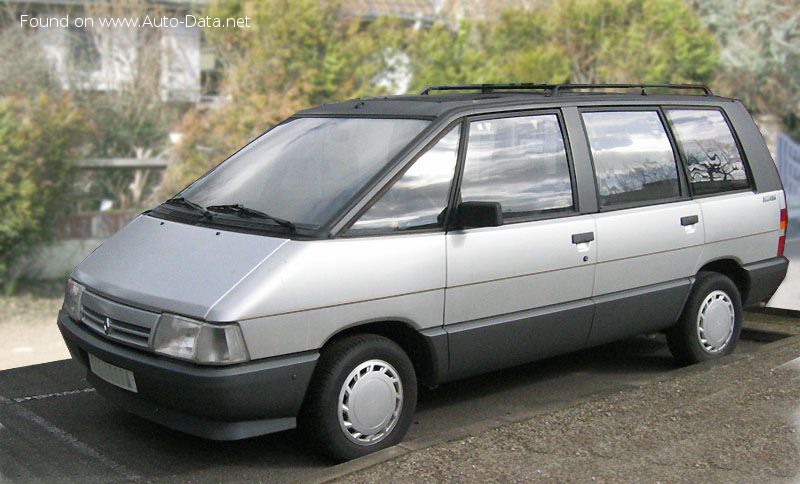
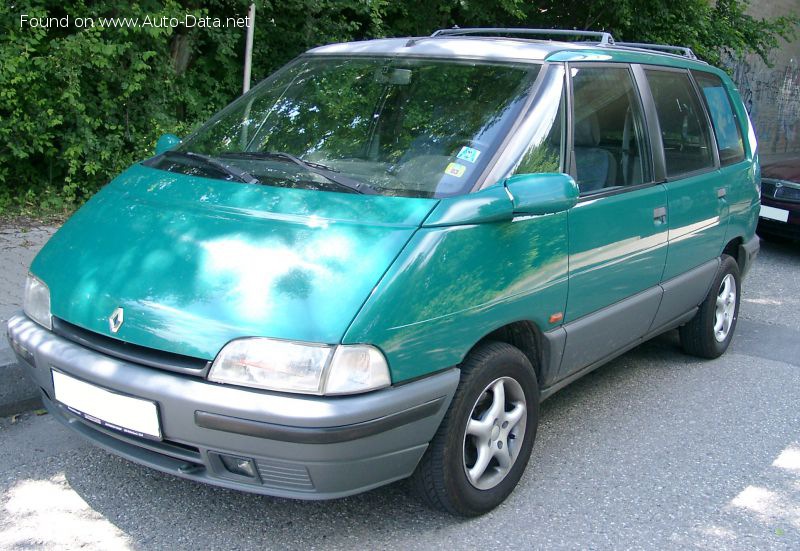
The Renault Espace II (J63) represents the second generation of Renault’s groundbreaking multi-purpose vehicle (MPV), a segment it largely pioneered in Europe. Produced from 1991 to 1996, the Espace II built upon the revolutionary concept of its predecessor, solidifying its role as a versatile and family-oriented vehicle designed to maximize interior space and comfort. While never officially sold in the United States, the Espace (French for “space”) became an icon on European roads, a testament to its innovative “one-box” design that offered unparalleled flexibility for passengers and cargo. This particular variant, the 2.2i with 107 horsepower, was a popular choice, balancing adequate performance with fuel efficiency for the typical family hauling duties it was intended for. It embodied Renault’s commitment to thoughtful, practical automotive design, offering a compelling alternative to traditional sedans and station wagons for European families.
Engine and Performance: The 2.2i Powertrain
Under the hood of the Renault Espace II (J63) 2.2i (107 Hp) was a robust and proven 2.2-liter (2165 cm3, or 132.12 cubic inches) inline-four engine, designated by Renault as the J7T. This naturally aspirated gasoline engine featured an Overhead Camshaft (OHC) valvetrain with two valves per cylinder and a multi-port manifold injection fuel system, a common and reliable configuration for the early 1990s. It was engineered to deliver a balance of usable power for urban and highway driving, combined with reasonable fuel economy for a vehicle of its size and passenger capacity. The longitudinally mounted engine, a layout often favored for better weight distribution and packaging, drove the front wheels, providing predictable handling and efficient power transfer.
The engine produced a respectable 107 horsepower at 5000 revolutions per minute (rpm), making it capable of moving the Espace II with confidence, even when fully loaded with passengers and luggage. Torque output stood at 125.39 lb.-ft. (170 Nm) delivered at a relatively low 3500 rpm, providing good low-end grunt for acceleration from a standstill and for climbing hills, essential attributes for a family vehicle. Power was sent to the front wheels via a smooth-shifting 5-speed manual transmission, offering direct control over the vehicle’s dynamics and allowing drivers to optimize engine performance for various driving conditions.
In terms of performance, the Espace II 2.2i was not designed for outright speed but rather for comfortable, safe, and efficient travel. It achieved a 0-60 mph acceleration in a calculated 12.3 seconds, with a top speed of 108.74 mph (175 km/h). These figures were competitive for a family-oriented minivan of its era, emphasizing practicality over raw performance. Fuel economy was also a key consideration for European buyers, who often face higher fuel prices than in the United States. The Espace II 2.2i delivered an estimated 19.9 US mpg in urban driving, 31.4 US mpg on extra-urban cycles, and a combined average of 24.2 US mpg. These efficiency numbers, while modest by today’s sophisticated standards, were practical for the period, especially for a vehicle capable of seating seven passengers and carrying substantial cargo, making it an economical choice for long-distance family trips.
Design and Features: Maximizing Interior Space in the Renault Espace II (J63)
The design philosophy behind the Renault Espace II (J63) was centered on its core strength: interior versatility and space. As a minivan (or MPV in European terminology), it featured a distinctive “one-box” silhouette, where the engine compartment, passenger cabin, and cargo area seamlessly flowed into one another. This design choice, inherited from the first generation, allowed for exceptional interior volume and a commanding, car-like driving position that offered excellent visibility, a boon for navigating busy European streets and highways.
The Espace II boasted five doors and a standard seven-seat configuration, making it an ideal choice for larger families or those requiring flexible seating arrangements. The true genius of the Espace’s interior was its modularity. Seats could be individually removed, swiveled, or reconfigured, transforming the vehicle from a comfortable passenger carrier to a spacious cargo van in minutes. This flexibility translated into an impressive trunk (boot) space, ranging from a minimum of 8.83 cubic feet (250 liters) with all seats in place, to a cavernous 105.94 cubic feet (3000 liters) when the rear seats were removed. This adaptability was a significant selling point, allowing the Espace to cater to a wide array of family and lifestyle needs.
With a length of 174.37 inches (4429 mm), a width of 70.67 inches (1795 mm), and a height of 66.65 inches (1693 mm), the Espace II offered substantial exterior dimensions that translated directly into interior roominess. Its wheelbase of 101.57 inches (2580 mm) contributed to a stable ride and generous legroom for passengers in all three rows, making long journeys more comfortable. The design also featured a relatively low ride height of 6.22 inches (158 mm), aiding ease of entry and exit, particularly for children and older passengers.
Suspension-wise, the Espace II featured a double wishbone setup at the front, known for its ability to provide precise wheel control and a comfortable ride, and a semi-independent, coil spring arrangement at the rear. This configuration provided a comfortable ride quality, crucial for long family journeys across varying road surfaces, while maintaining predictable handling for a vehicle of its stature and purpose. Braking was handled by ventilated discs at the front for effective stopping power, complemented by drum brakes at the rear, a common and cost-effective setup for family vehicles of this era. Hydraulic rack-and-pinion power steering ensured ease of maneuverability, particularly in urban environments and during parking, where the vehicle’s minimum turning circle of 38.06 feet (11.60 m) proved advantageous. The vehicle was typically fitted with 195/60 R14 or 195/65 R15 tires, mounted on 14- or 15-inch wheel rims, providing a good balance of grip, ride comfort, and durability.
Technical Specifications for the Renault Espace II (J63) 2.2i (107 Hp)
| Feature | Value |
|---|---|
| Brand | Renault |
| Model | Espace |
| Generation | Espace II (J63) |
| Engine Type | 2.2i (107 Hp) |
| Production Start | 1991 year |
| Production End | 1996 year |
| Powertrain Architecture | Internal Combustion Engine, Front-wheel drive |
| Body Type | Minivan, MPV |
| Seats | 7 |
| Doors | 5 |
| Performance Specs | |
| Fuel Consumption (Urban) | 11.8 l/100 km (19.9 US mpg) |
| Fuel Consumption (Extra Urban) | 7.5 l/100 km (31.4 US mpg) |
| Fuel Consumption (Combined) | 9.7 l/100 km (24.2 US mpg) |
| Fuel Type | Petrol (Gasoline) |
| Acceleration 0-60 mph | 12.3 sec |
| Acceleration 0-100 km/h | 12.9 sec |
| Maximum Speed | 175 km/h (108.74 mph) |
| Weight-to-Power Ratio | 12.3 kg/Hp (81.1 Hp/tonne) |
| Weight-to-Torque Ratio | 7.8 kg/Nm (128.8 Nm/tonne) |
| Engine Specs | |
| Power | 107 Hp @ 5000 rpm |
| Power per liter | 49.4 Hp/l |
| Torque | 170 Nm @ 3500 rpm (125.39 lb.-ft. @ 3500 rpm) |
| Engine Layout | Front, Longitudinal |
| Engine Model/Code | J7T |
| Engine Displacement | 2165 cm3 (2.2 liters / 132.12 cu. in.) |
| Number of Cylinders | 4 |
| Engine Configuration | Inline |
| Cylinder Bore | 88 mm (3.46 in.) |
| Piston Stroke | 89 mm (3.5 in.) |
| Compression Ratio | 9.2:1 |
| Valves per Cylinder | 2 |
| Fuel Injection System | Multi-port manifold injection |
| Engine Aspiration | Naturally aspirated engine |
| Valvetrain | OHC |
| Engine Oil Capacity | 7 l (7.4 US qt) |
| Coolant Capacity | 8.4 l (8.88 US qt) |
| Space, Volume and Weights | |
| Kerb Weight | 1320 kg (2910.1 lbs.) |
| Max. Weight | 2070 kg (4563.57 lbs.) |
| Max Load | 750 kg (1653.47 lbs.) |
| Trunk (boot) space – minimum | 250 l (8.83 cu. ft.) |
| Trunk (boot) space – maximum | 3000 l (105.94 cu. ft.) |
| Fuel Tank Capacity | 77 l (20.34 US gal) |
| Max. Roof Load | 60 kg (132.28 lbs.) |
| Permitted Trailer Load with Brakes (12%) | 1590 kg (3505.35 lbs.) |
| Permitted Trailer Load without Brakes | 600 kg (1322.77 lbs.) |
| Dimensions | |
| Length | 4429 mm (174.37 in.) |
| Width | 1795 mm (70.67 in.) |
| Width including mirrors | 2060 mm (81.1 in.) |
| Height | 1693 mm (66.65 in.) |
| Wheelbase | 2580 mm (101.57 in.) |
| Front Track | 1494 mm (58.82 in.) |
| Rear (Back) Track | 1505 mm (59.25 in.) |
| Front Overhang | 974 mm (38.35 in.) |
| Rear Overhang | 875 mm (34.45 in.) |
| Ride Height (ground clearance) | 158 mm (6.22 in.) |
| Minimum Turning Circle (turning diameter) | 11.60 m (38.06 ft.) |
| Drivetrain, Brakes and Suspension Specs | |
| Drive Wheel | Front wheel drive |
| Number of Gears and Type of Gearbox | 5 gears, manual transmission |
| Front Suspension | Double wishbone |
| Rear Suspension | Semi-independent, coil spring |
| Front Brakes | Ventilated discs |
| Rear Brakes | Drum |
| Steering Type | Steering rack and pinion |
| Power Steering | Hydraulic Steering |
| Tires Size | 195/60 R14; 195/65 R15 |
| Wheel Rims Size | 14; 15 |
Legacy and Market Impact in the European Segment
The Renault Espace II (J63) built upon the foundation laid by its revolutionary first generation, further cementing Renault’s reputation as a pioneer in the European MPV segment. While the original Espace introduced the concept of a “space-wagon” to the masses, the second generation refined the formula, offering improved aesthetics, enhanced comfort, and greater practicality. Its production run from 1991 to 1996 saw it compete in a burgeoning market, facing rivals such as the Chrysler Voyager (which was marketed under various badges in Europe), and later, purpose-built European competitors like the Volkswagen Sharan, Ford Galaxy, Citroën Evasion, and Peugeot 806. The Espace II, however, often stood out with its distinct styling and continued emphasis on interior flexibility that few could match.
Despite increasing competition, the Espace II maintained a strong market position due to its well-established reputation for versatility, reliability, and innovative interior design. It was widely praised for its comfortable ride, excellent visibility, and the sheer flexibility of its cabin, which could adapt from a luxurious seven-seater to a capacious cargo hauler with ease. This adaptability made it a favored choice for large families, who appreciated its ability to handle school runs, grocery trips, and long vacation drives with equal aplomb. Its appeal also extended to taxi services and even small businesses across Europe that needed a vehicle capable of transporting both people and goods efficiently. The Espace became synonymous with practical family travel and utility, symbolizing a shift in automotive priorities for many European consumers who increasingly valued interior space and functionality over traditional sedan styling.
The Espace II’s historical significance lies in its role in popularizing the MPV concept and demonstrating its long-term viability. It proved that a vehicle could be both practical and desirable, successfully carving out a new niche in the automotive landscape. This model contributed significantly to the gradual decline of traditional station wagons in some markets as families opted for the elevated driving position, superior interior volume, and unparalleled modularity of the minivan. Its success encouraged other manufacturers to enter the segment, leading to a vibrant and competitive MPV market throughout the 1990s and early 2000s. While the MPV segment eventually faced challenges from the relentless rise of SUVs in the late 1990s and 2000s, the Renault Espace II remains a testament to a period when intelligent design and maximizing interior “space” were at the forefront of automotive innovation, leaving a lasting legacy on European automotive culture and design philosophy.