The Volvo V60 I (2013 facelift): A European Efficiency Stalwart
The Volvo V60 I (2013 facelift) represents a significant chapter in Volvo’s modern history, particularly within the European market. As a compact executive station wagon (or “estate” as it’s known across the Atlantic), the V60 aimed to blend Volvo’s renowned safety credentials with a more dynamic driving experience and contemporary Scandinavian design. The first generation V60, initially launched in 2010, received a comprehensive facelift for the 2014 model year, ushering in a refreshed aesthetic and updated powertrain options. This article specifically focuses on the 2.0 D2 (120 Hp) variant, a highly efficient diesel model produced from 2015 to 2018, which was a cornerstone of Volvo’s European sales strategy due to its impressive fuel economy and low emissions profile. While this particular diesel configuration was not offered in the United States, the V60 I played a crucial role in establishing Volvo’s premium wagon presence globally, showcasing the brand’s commitment to practical luxury and environmental responsibility.
Evolution and Design of the Volvo V60 I (2013 facelift)
The original Volvo V60, introduced in 2010, was designed to be a sportier, more dynamic alternative to its larger V70 sibling, targeting a younger demographic and competing in the increasingly crowded premium compact executive segment. Its sleek, coupe-like roofline distinguished it from traditional boxy Volvo wagons, signaling a shift towards more emotive design.
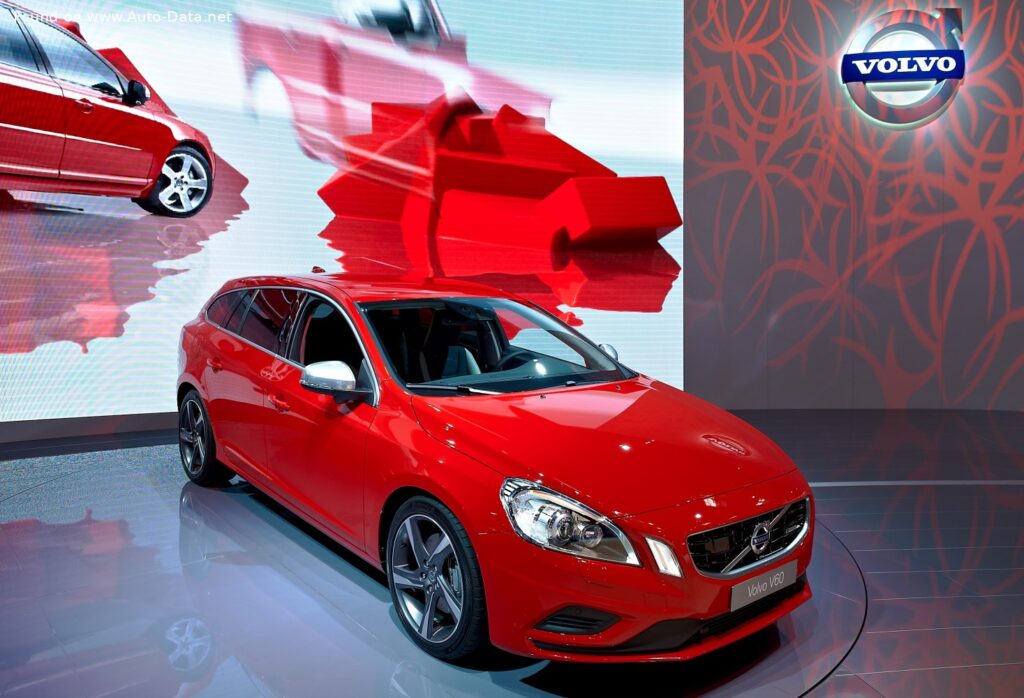
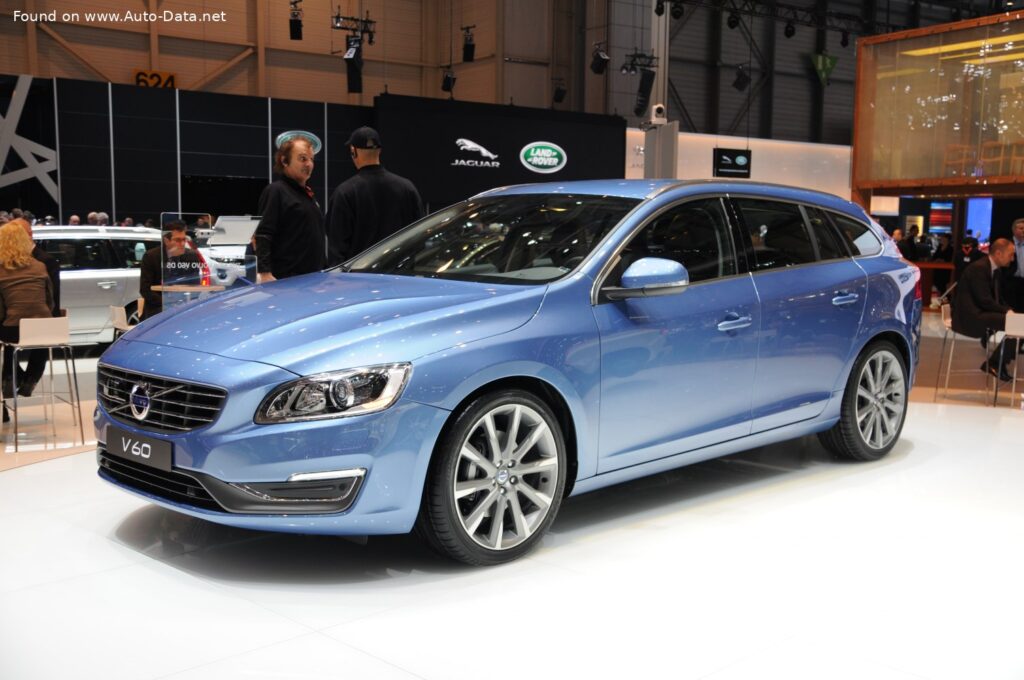
The 2013 facelift for the V60 I brought a series of notable enhancements, both visually and mechanically. On the exterior, the most significant changes included a new front fascia with a wider grille, revised headlights that integrated into a single unit with the daytime running lights, and redesigned bumpers. These updates gave the V60 a more sophisticated and cohesive look, aligning it with Volvo’s evolving design language. The rear also saw minor tweaks to the taillights and bumper, subtly refining its profile.
Inside, the V60 I facelift maintained Volvo’s characteristic ergonomic layout and high-quality materials. The floating center console, a Volvo hallmark, remained, housing a user-friendly infotainment system. Emphasis was placed on comfort, with supportive seats and a refined cabin ambiance. While the V60’s design prioritized style over outright cargo volume compared to some rivals, it still offered practical utility for families and professionals, embodying Volvo’s commitment to thoughtful design and passenger well-being.
Engine and Performance: The Efficient 2.0 D2 Powertrain
At the heart of the discussed variant is the 2.0-liter (1969 cm3 or 120.16 cu. in.) D4204T8 inline-four diesel engine. This powerplant, part of Volvo’s Drive-E engine family, was engineered for optimal efficiency and smooth operation. It generates a respectable 120 horsepower at 3750 rpm, providing adequate power for daily driving and highway cruising. More impressively, the engine delivers a robust 206.52 lb.-ft. of torque across a broad and accessible rev range, peaking between 1500 and 2250 rpm. This low-end torque is crucial for responsive acceleration and effortless overtaking, particularly when the vehicle is loaded.
The D2 engine employs a diesel common rail fuel injection system, ensuring precise fuel delivery for combustion efficiency, and is augmented by a turbocharger and intercooler. This forced induction setup not only boosts power but also contributes to the engine’s strong torque characteristics and overall refinement. The valvetrain utilizes a Double Overhead Camshaft (DOHC) configuration with four valves per cylinder, optimizing airflow and combustion. With a compression ratio of 16:1, the engine is tuned for efficiency.
Power is channeled to the front wheels via a smooth-shifting 6-speed manual transmission, offering direct driver engagement. This drivetrain architecture, combined with the engine’s inherent efficiency, results in remarkable fuel economy figures. The V60 I 2.0 D2 achieves a combined fuel consumption of 61.9 US miles per gallon (3.8 liters per 100 kilometers), making it exceptionally economical to run. Its CO2 emissions are a low 101 grams per kilometer, a significant factor for its appeal in European markets with emission-based taxation.
In terms of acceleration, the V60 I 2.0 D2 (120 Hp) can sprint from 0 to 60 miles per hour in a respectable 10.9 seconds, with a maximum speed of 121.17 mph (195 km/h). While not a performance powerhouse, these figures underscore its capability as a comfortable and competent long-distance cruiser, perfectly suited for its intended market.
Chassis, Safety, and Practical Features
The V60 I (2013 facelift) is built on Volvo’s P3 platform, shared with other models like the S60 and XC60 of the era. The suspension setup features an independent McPherson strut system with coil springs and an anti-roll bar at the front, paired with an independent coil spring rear suspension. This configuration provides a balanced ride, offering both comfort and composed handling. Stopping power is handled by ventilated disc brakes at the front and disc brakes at the rear, complemented by an Anti-lock Braking System (ABS) for enhanced safety during emergency braking. The steering system utilizes a responsive rack and pinion setup.
As a Volvo, safety is paramount. While specific advanced driver-assistance systems are not detailed in the provided data beyond ABS, the V60 I facelift would have been available with a host of Volvo’s pioneering safety technologies, such as City Safety (automatic braking), pedestrian detection, lane keeping aid, and blind spot information system (BLIS), depending on the trim and options. These features reinforced Volvo’s reputation as a leader in automotive safety.
The V60’s dimensions contribute to its balanced road presence and interior space. With a length of 182.48 inches (4635 mm), a width of 74.76 inches (1899 mm), and a height of 58.43 inches (1484 mm), it strikes a good balance between maneuverability and interior room. The wheelbase of 109.29 inches (2776 mm) provides a stable ride. Interior practicality includes seating for five occupants and a minimum trunk space of 15.19 cubic feet (430 liters), expandable with the rear seats folded down. The fuel tank capacity of 17.83 US gallons (67.5 liters), combined with the D2 engine’s efficiency, allows for an impressive driving range, ideal for European touring.
Technical Specifications: Volvo V60 I (2013 facelift) 2.0 D2 (120 Hp)
| Category | Specification |
|---|---|
| Brand | Volvo |
| Model | V60 |
| Generation | V60 I (2013 facelift) |
| Engine Type | 2.0 D2 (120 Hp) |
| Production Start | 2015 year |
| Production End | 2018 year |
| Powertrain Architecture | Internal Combustion Engine |
| Body type | Station wagon (estate) |
| Seats | 5 |
| Doors | 5 |
| Performance Specifications | |
| Fuel Consumption (Combined) | 3.8 l/100 km (61.9 US mpg) |
| CO2 Emissions | 101 g/km |
| Fuel Type | Diesel |
| Acceleration 0 – 60 mph | 10.9 sec |
| Maximum Speed | 121.17 mph (195 km/h) |
| Engine Specifications | |
| Power | 120 Hp @ 3750 rpm |
| Power per liter | 60.9 Hp/l |
| Torque | 206.52 lb.-ft. @ 1500-2250 rpm (280 Nm) |
| Engine Layout | Front, Transverse |
| Engine Model/Code | D4204T8 |
| Engine Displacement | 1969 cm3 (120.16 cu. in.) |
| Number of Cylinders | 4 |
| Engine Configuration | Inline |
| Cylinder Bore | 3.23 in. (82 mm) |
| Piston Stroke | 3.67 in. (93.2 mm) |
| Compression Ratio | 16:1 |
| Number of Valves per Cylinder | 4 |
| Fuel Injection System | Diesel Commonrail |
| Engine Aspiration | Turbocharger, Intercooler |
| Valvetrain | DOHC |
| Engine Oil Capacity | 5.49 US qt (5.2 l) |
| Coolant Capacity | 9.4 US qt (8.9 l) |
| Space, Volume, and Weights | |
| Trunk (Boot) Space – Minimum | 15.19 cu. ft. (430 l) |
| Fuel Tank Capacity | 17.83 US gal (67.5 l) |
| Dimensions | |
| Length | 182.48 in. (4635 mm) |
| Width | 74.76 in. (1899 mm) |
| Height | 58.43 in. (1484 mm) |
| Wheelbase | 109.29 in. (2776 mm) |
| Front Track | 62.52 – 62.13 in. (1588-1578 mm) |
| Rear Track | 62.4 – 62.01 in. (1585-1575 mm) |
| Ride Height (Ground Clearance) | 5.35 in. (136 mm) |
| Minimum Turning Circle | 37.73 – 40.68 ft. (11.5 – 12.4 m) |
| Drivetrain, Brakes, and Suspension | |
| Drivetrain Architecture | Front-wheel drive (ICE drives front wheels) |
| Drive Wheel | Front wheel drive |
| Gearbox Type | 6 gears, manual transmission |
| Front Suspension | Independent, McPherson with coil spring and anti-roll bar |
| Rear Suspension | Independent coil spring |
| Front Brakes | Ventilated discs |
| Rear Brakes | Disc |
| Assisting Systems | ABS (Anti-lock braking system) |
| Steering Type | Steering rack and pinion |
Legacy and Market Impact
The Volvo V60 I (2013 facelift) 2.0 D2 (120 Hp) carved out a significant niche in its primary European market. Its appeal stemmed from a compelling combination of factors: Volvo’s sterling reputation for safety, a stylish and practical station wagon body, and, critically, the exceptional fuel economy and low emissions offered by the D2 diesel engine. In many European countries, where fuel prices are high and vehicle taxation is often linked to CO2 emissions, the D2 variant presented a highly attractive proposition for both private buyers and, especially, large corporate fleets. Its low running costs and environmental credentials made it a smart choice for companies looking to manage their carbon footprint and operational expenses.
Competitors in this premium compact executive wagon segment were formidable, including well-established German rivals such as the BMW 3 Series Touring, Audi A4 Avant, and Mercedes-Benz C-Class Estate, as well as mainstream challengers like the Volkswagen Passat Estate. The V60 distinguished itself with its unique Scandinavian design aesthetic, a slightly more comfort-oriented ride than some of its sportier German counterparts, and a clear focus on real-world safety. While it might not have offered the ultimate in driving dynamics, its composed handling and refined cruising ability were highly regarded.
The V60 I generation, and particularly its facelifted iteration, played a vital role in Volvo’s brand narrative during a transitional period. It helped solidify Volvo’s image as a manufacturer of sophisticated, safe, and increasingly efficient vehicles. The D2 engine, part of the new Drive-E engine family, showcased Volvo’s engineering prowess in developing highly economical powertrains without sacrificing refinement. It allowed Volvo to compete effectively in a market segment that valued both premium feel and practical considerations.
Ultimately, the Volvo V60 I (2013 facelift) 2.0 D2 (120 Hp) stands as a testament to Volvo’s ability to create a desirable and responsible family vehicle. It successfully blended emotional design with rational benefits, securing its place as a respected and popular choice across Europe and reinforcing Volvo’s enduring legacy as a leader in automotive safety and practical luxury. Its influence helped pave the way for subsequent generations of Volvo vehicles, continuing the brand’s evolution into a truly modern and globally competitive premium automaker.