Peugeot 3008 II (Phase I, 2016) Overview
The Peugeot 3008 II (Phase I, 2016) marked a significant turning point for the French automaker in the highly competitive compact SUV segment. Introduced in 2016, this second-generation 3008 completely redefined its predecessor, shedding its minivan-like crossover aesthetics for a far more assertive and contemporary SUV design. This strategic shift was a direct response to burgeoning consumer demand for sport utility vehicles, particularly in its primary European market where it quickly became a sales leader and critical darling, even earning the prestigious European Car of the Year award in 2017. While not officially sold in the United States, the 3008’s impact reverberated globally, influencing design trends and setting new benchmarks for interior quality and technological integration within its class. The specific variant under review, the 2.0 BlueHDi (150 Hp) S&S, represents a compelling blend of robust diesel performance and impressive fuel efficiency, a combination highly valued by European drivers.
Positioned as a C-segment SUV, the 3008 II aimed to challenge established players with its distinctive styling, advanced i-Cockpit interior, and a strong emphasis on driving dynamics and environmental performance. This first phase of the second generation, produced from 2016 to 2018, laid the groundwork for the model’s enduring success, establishing Peugeot as a formidable contender in a segment historically dominated by German and Asian manufacturers. Its success underscored Peugeot’s ability to innovate and adapt to evolving market preferences, particularly concerning design language and powertrain offerings tailored for European regulations and consumer priorities.
Engine and Performance: The 2.0 BlueHDi (150 Hp) S&S in the Peugeot 3008 II (Phase I, 2016)
At the heart of this particular Peugeot 3008 II (Phase I, 2016) variant is the efficient and potent 2.0-liter BlueHDi diesel engine, designated with the internal code RHE DW10CTED4. This inline four-cylinder powerplant, featuring a common rail fuel injection system, a turbocharger, and an intercooler, delivers a respectable 150 horsepower at 3750 revolutions per minute. More critically for an SUV, it generates a substantial 272.9 lb.-ft. (370 Nm) of torque available at a low 2000 rpm, providing excellent mid-range grunt for overtaking and confident cruising. The engine’s displacement measures 1997 cubic centimeters (121.86 cu. in.), with a bore of 3.35 inches (85 mm) and a stroke of 3.46 inches (88 mm), optimized for a balance of power and efficiency.
Paired with a precise 6-speed manual transmission, this powertrain enables the 3008 to accelerate from 0 to 60 mph in a brisk 9.1 seconds, with a 0-100 km/h time ranging from 9.6 to 10.6 seconds. The top speed is rated at 128.62 mph (207 km/h), making it perfectly capable for highway travel. A key highlight of the BlueHDi engine is its exceptional fuel economy, a critical factor for European buyers. The combined fuel consumption is an impressive 50-53.5 US mpg (4.4-4.7 l/100 km), with extra-urban figures reaching up to 58.8 US mpg (4.0 l/100 km). This efficiency is further bolstered by the standard Start/Stop system, which intelligently shuts off the engine when the vehicle is stationary, reducing fuel consumption and emissions in urban environments.
The BlueHDi technology is also instrumental in ensuring the vehicle meets stringent Euro 6 emission standards, thanks to its advanced Diesel Particulate Filter (DPF) and Selective Catalytic Reduction (SCR) system (though SCR is implied by “BlueHDi” and not explicitly listed, it’s the technology for NOx reduction). CO2 emissions are kept remarkably low, ranging from 114 to 121 g/km, underscoring Peugeot’s commitment to environmentally conscious engineering. The front-transverse engine layout drives the front wheels, a common and efficient setup for compact SUVs, contributing to its agile handling and packaging efficiency.
Design and Features
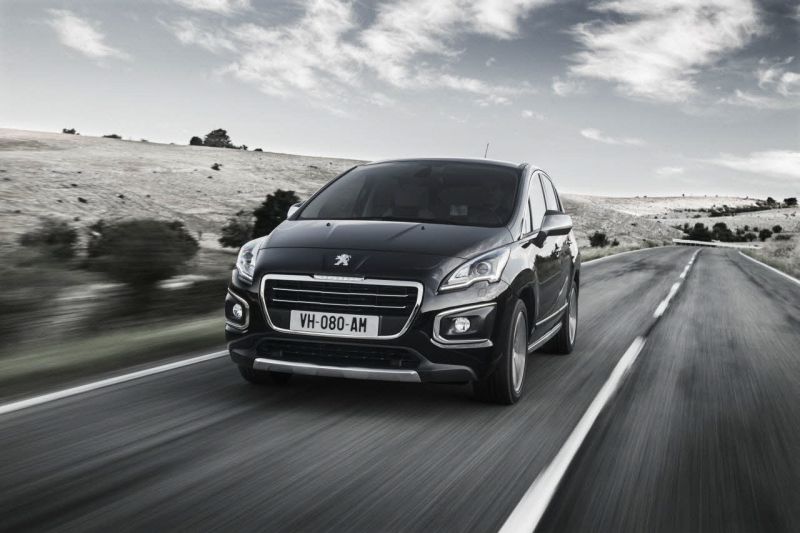
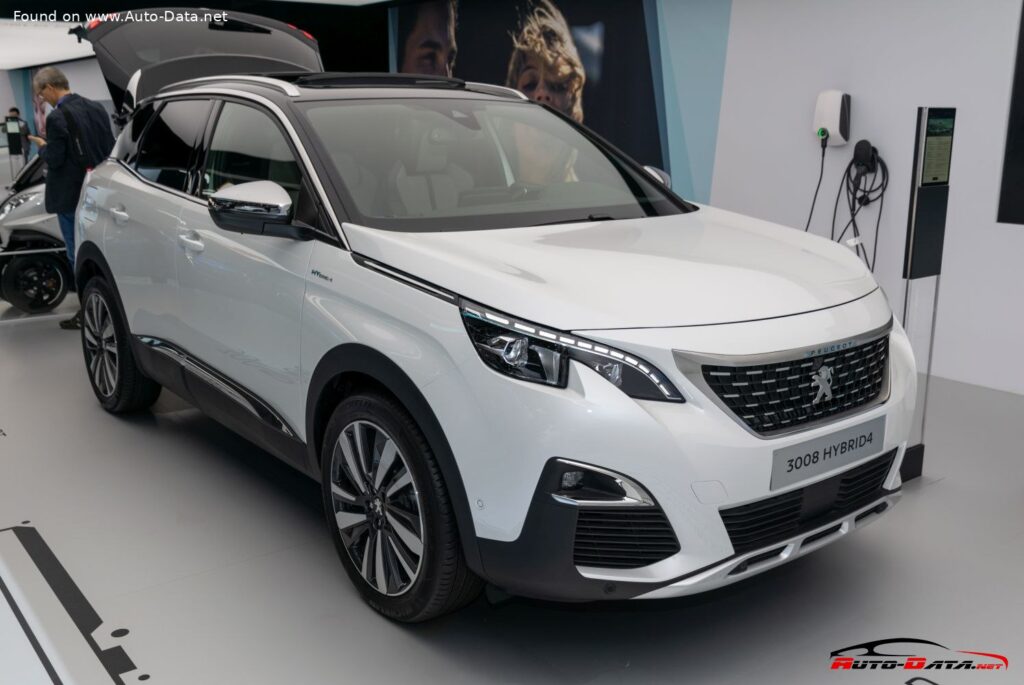
The Peugeot 3008 II (Phase I, 2016) represented a radical departure in design compared to its predecessor. Moving away from a somewhat ambiguous crossover silhouette, the second generation embraced a bold, athletic, and distinctly SUV-like aesthetic. Its five-door, five-seat body type features sharp lines, a prominent grille, and distinctive LED lighting signatures (depending on trim), giving it a commanding presence. The vehicle measures 175.08 inches (4447 mm) in length, 72.48 inches (1841 mm) in width (82.6 inches or 2098 mm including mirrors), and stands 63.58 inches (1615 mm) tall. These dimensions contribute to a well-proportioned and visually appealing stance, enhanced by a generous 8.62 inches (219 mm) of ground clearance, which hints at its light-off-road capability, typical for a FWD SUV.
Inside, the 3008 II introduced Peugeot’s revolutionary i-Cockpit, a design philosophy that prioritizes an immersive and intuitive driving experience. It features a compact steering wheel, a configurable 12.3-inch digital instrument cluster (often referred to as a head-up display due to its elevated position), and a central touchscreen infotainment system. While the exact trim level determines the specific features, the core i-Cockpit layout provides a modern and driver-focused cabin. The materials used throughout the interior were a significant upgrade, contributing to a premium feel that belied its segment.
Practicality is a strong suit for the 3008. With a minimum trunk space of 18.36 cubic feet (520 liters), expanding to an impressive 52.34 cubic feet (1482 liters) with the rear seats folded, it offers ample cargo capacity for families and active lifestyles. The curb weight of 3141.59 lbs. (1425 kg) is relatively light for its class, aiding both performance and fuel efficiency. Standard safety and convenience features include an Anti-lock Braking System (ABS) for enhanced stopping power, an electric power steering system for effortless maneuverability, and ventilated disc brakes at the front with solid discs at the rear. The suspension setup features an independent McPherson strut system with coil springs and an anti-roll bar at the front, complemented by a semi-independent coil spring arrangement at the rear, tuned for a comfortable yet engaging ride. The availability of various tire sizes (215/65 R17, 225/55 R18, 205/55 R19) allows for customization in ride quality and aesthetic.
Technical Specifications
| Category | Specification |
|---|---|
| Brand | Peugeot |
| Model | 3008 |
| Generation | 3008 II (Phase I, 2016) |
| Engine Type | 2.0 BlueHDi (150 Hp) S&S |
| Production Start/End | 2016 – 2018 |
| Body Type | SUV |
| Seats / Doors | 5 / 5 |
| Performance | |
| Fuel Consumption (Urban) | 5.1-5.4 l/100 km (43.6 – 46.1 US mpg) |
| Fuel Consumption (Extra Urban) | 4.0-4.3 l/100 km (54.7 – 58.8 US mpg) |
| Fuel Consumption (Combined) | 4.4-4.7 l/100 km (50 – 53.5 US mpg) |
| CO2 Emissions | 114-121 g/km (Euro 6) |
| Fuel Type | Diesel |
| Acceleration 0-60 mph | 9.1 sec |
| Acceleration 0-100 km/h | 9.6-10.6 sec |
| Maximum Speed | 128.62 mph (207 km/h) |
| Weight-to-Power Ratio | 9.5 kg/Hp (105.3 Hp/tonne) |
| Engine Specifications | |
| Power | 150 Hp @ 3750 rpm |
| Power per liter | 75.1 Hp/l |
| Torque | 272.9 lb.-ft. (370 Nm) @ 2000 rpm |
| Engine Layout | Front, Transverse |
| Engine Model/Code | RHE DW10CTED4 |
| Engine Displacement | 1997 cm3 (121.86 cu. in.) |
| Number of Cylinders | 4, Inline |
| Cylinder Bore | 3.35 in. (85 mm) |
| Piston Stroke | 3.46 in. (88 mm) |
| Valves per Cylinder | 4 |
| Fuel Injection System | Diesel Common Rail |
| Engine Aspiration | Turbocharger, Intercooler |
| Engine Oil Capacity | 5 l (5.28 US qt) |
| Engine Systems | Start/Stop System, Diesel Particulate Filter |
| Dimensions, Volume & Weights | |
| Curb Weight | 3141.59 lbs. (1425 kg) |
| Max. Weight | 4519.48 lbs. (2050 kg) |
| Max Load | 1377.89 lbs. (625 kg) |
| Trunk Space (min/max) | 18.36 – 52.34 cu. ft. (520 – 1482 l) |
| Fuel Tank Capacity | 14 US gal (53 l) |
| Permitted Trailer Load (with brakes) | 4519.48 lbs. (2050 kg) |
| Length | 175.08 in. (4447 mm) |
| Width | 72.48 in. (1841 mm) |
| Width (incl. mirrors) | 82.6 in. (2098 mm) |
| Height | 63.58 in. (1615 mm) |
| Wheelbase | 105.31 in. (2675 mm) |
| Front Track | 62.17 – 63.03 in. (1579-1601 mm) |
| Rear Track | 62.48 – 63.39 in. (1587-1610 mm) |
| Ground Clearance | 8.62 in. (219 mm) |
| Minimum Turning Circle | 35.01 ft. (10.67 m) |
| Approach Angle | 20° |
| Departure Angle | 29° |
| Drivetrain, Brakes & Suspension | |
| Drivetrain Architecture | Front-wheel drive, Internal Combustion Engine |
| Drive Wheels | Front wheel drive |
| Gearbox Type | 6-speed manual transmission |
| Front Suspension | Independent, McPherson strut with coil spring and anti-roll bar |
| Rear Suspension | Semi-independent, coil spring |
| Front Brakes | Ventilated discs |
| Rear Brakes | Disc |
| Assisting Systems | ABS (Anti-lock braking system) |
| Steering Type | Rack and pinion with Electric Power Steering |
| Tire Sizes | 215/65 R17; 225/55 R18; 205/55 R19 |
| Wheel Rim Sizes | 17; 18; 19 inches |
Legacy and Market Impact of the Peugeot 3008 II (Phase I, 2016)
The Peugeot 3008 II (Phase I, 2016) fundamentally reshaped Peugeot’s image and its standing in the European automotive market. Its transformation from a somewhat polarizing MPV-crossover to a genuinely attractive and capable compact SUV was a masterstroke. This strategic pivot allowed Peugeot to tap into the booming demand for SUVs, a segment that continued to grow exponentially throughout the late 2010s. The 3008 II quickly garnered critical acclaim, most notably winning the coveted European Car of the Year award in 2017, a testament to its compelling blend of design, practicality, technological innovation, and driving pleasure. This award significantly boosted its reputation and sales performance across the continent.
In its primary European markets, the 3008 faced stiff competition from segment heavyweights such as the Nissan Qashqai, Volkswagen Tiguan, Renault Kadjar, Skoda Karoq, and Hyundai Tucson. Despite this formidable lineup, the 3008 distinguished itself with its audacious exterior styling and its unique, driver-centric i-Cockpit interior. This bold differentiation resonated with consumers looking for something beyond the conventional, helping it carve out a substantial market share. The 2.0 BlueHDi (150 Hp) S&S variant, in particular, was highly regarded for its robust performance and excellent fuel economy, making it a popular choice for both private buyers and fleet operators who prioritized low running costs and strong residual values.
The 3008’s success also played a crucial role in elevating Peugeot’s brand perception. It demonstrated the brand’s capability to produce vehicles that were not only stylish but also sophisticated, technologically advanced, and well-built, challenging the long-held dominance of premium German brands in terms of perceived quality and design flair. The platform it utilized, PSA’s EMP2 (Efficient Modular Platform 2), also underpinned other successful models, showcasing the group’s engineering prowess and flexibility. The legacy of the 3008 II is one of rejuvenation and triumph, establishing it as a benchmark for compact SUVs in Europe and solidifying Peugeot’s position as a leading force in modern automotive design and engineering. Its impact continues to be felt in subsequent Peugeot models, which have largely adopted its design language and interior philosophy, proving the 3008 II was more than just a successful car; it was a blueprint for the brand’s future direction.