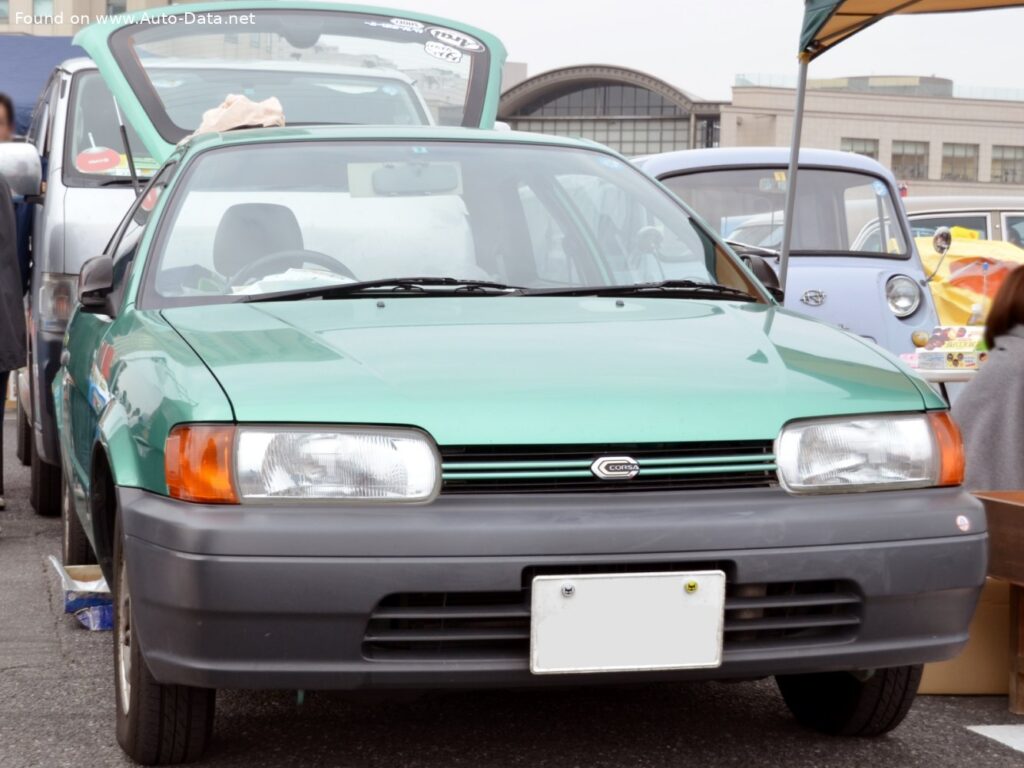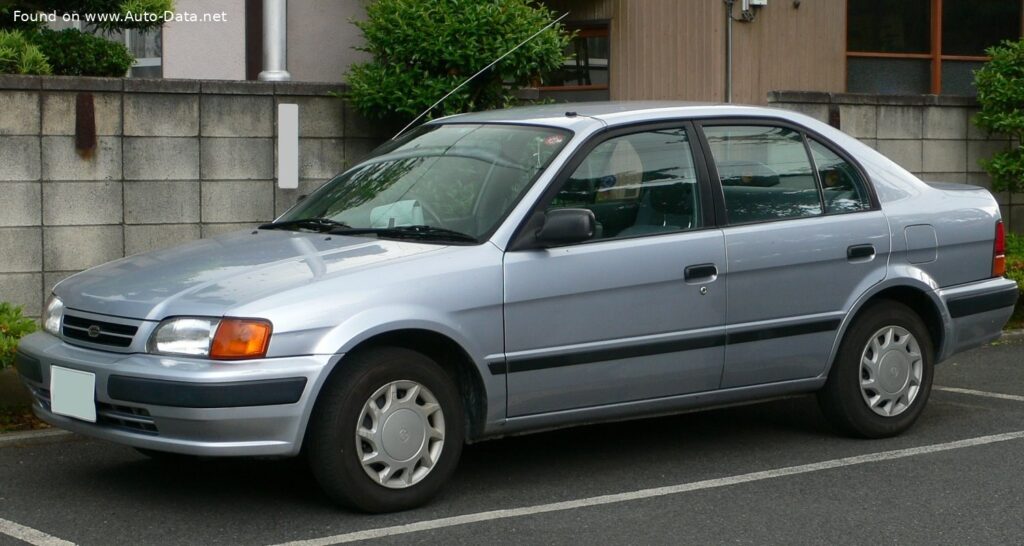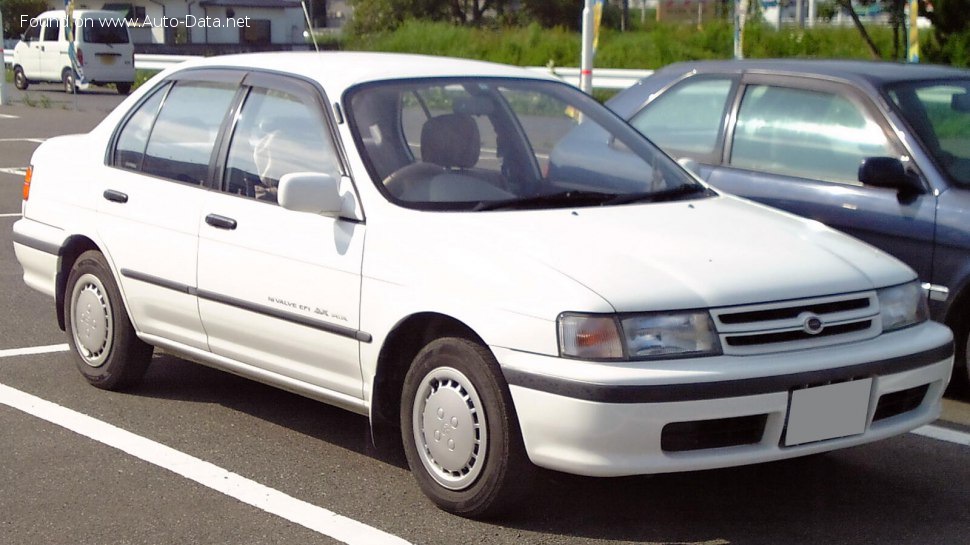
Toyota Corsa (L40) 1.3 i (88 Hp)
The Toyota Corsa (L40) 1.3 i (88 Hp) represents a significant chapter in Toyota’s history of producing reliable and economical compact vehicles primarily for the Japanese domestic market (JDM). Introduced in 1990, the L40 generation marked the fourth iteration of the Corsa nameplate, which, alongside its twin model, the Toyota Tercel (known as the Corsa in Japan and some other markets), served as a cornerstone of Toyota’s compact car lineup. This particular variant, powered by the efficient 1.3-liter 4E-FE engine, was designed to offer practicality, affordability, and robust performance for everyday commuting and family use in its primary market. While the Corsa nameplate might not be familiar to American consumers, its mechanical underpinnings and design philosophy are intrinsically linked to Toyota’s global reputation for quality, durability, and reliability, characteristics that defined its presence in the early 1990s compact segment.
The L40 generation of the Toyota Corsa was a direct evolution of its predecessors, building upon a formula of front-wheel-drive efficiency and a compact footprint. It was positioned below the larger Corolla in Toyota’s hierarchy, targeting buyers who prioritized fuel economy and maneuverability without sacrificing Toyota’s renowned build quality. The 1.3 i (88 Hp) sedan variant, with its four doors and five-seat configuration, was a quintessential example of a practical family car in Japan, designed to navigate congested urban environments with ease while offering sufficient space for its occupants. Its production run from 1990 to 1994 saw it compete fiercely in a crowded segment, showcasing Toyota’s engineering prowess in delivering a well-rounded package.
Engine and Performance: The Heart of the Toyota Corsa (L40)
At the core of the Toyota Corsa (L40) 1.3 i (88 Hp) was the venerable Toyota 4E-FE engine, a 1.3-liter (1299 cm³) inline four-cylinder unit. This powerplant was a testament to Toyota’s commitment to developing efficient and durable engines. Featuring a Double Overhead Camshaft (DOHC) valvetrain with four valves per cylinder, the 4E-FE was advanced for its time, ensuring optimal breathing and combustion efficiency. Fuel delivery was managed by a multi-port manifold injection system, a sophisticated setup that allowed for precise fuel metering compared to older carburetor-based systems, contributing to improved fuel economy and reduced emissions.
With a compression ratio of 10.5:1, the naturally aspirated engine produced a respectable 88 horsepower at 6000 rpm. Its peak torque output stood at 123 Newton-meters (90.72 lb.-ft.) at 4400 rpm, providing adequate low-end and mid-range pulling power for a vehicle of its size and intended purpose. This power output, combined with the Corsa’s remarkably low curb weight of 1851.88 pounds (840 kg), resulted in a favorable weight-to-power ratio of 9.5 kg/Hp (104.8 Hp/tonne), making the car feel surprisingly sprightly in urban conditions. The engine’s front, transverse layout, coupled with front-wheel drive, was typical for compact sedans of this era, maximizing interior space and contributing to manufacturing efficiency.
In terms of fuel efficiency, the Toyota Corsa (L40) 1.3 i (88 Hp) delivered impressive figures for its segment. It achieved an urban fuel consumption of 7.5 liters per 100 kilometers (31.4 US mpg) and an even more remarkable extra-urban economy of 4.2 liters per 100 kilometers (56 US mpg). These numbers underscored the 4E-FE engine’s design philosophy: to offer dependable performance with an emphasis on economical operation, a crucial factor for buyers in markets where fuel costs were a significant consideration.
Design and Features of the L40 Generation
The Toyota Corsa (L40) presented a clean, unpretentious design typical of early 1990s Japanese compact sedans. Its body type was a classic four-door sedan, a popular choice for families and individuals seeking a practical and versatile vehicle. Measuring 162.2 inches (4120 mm) in length, 65.35 inches (1660 mm) in width, and 53.94 inches (1370 mm) in height, the L40 was compact yet offered a surprisingly spacious interior for its class. The wheelbase of 93.7 inches (2380 mm) contributed to a stable ride and a tight minimum turning circle of 29.53 feet (9 meters), making it highly maneuverable in crowded city streets and tight parking spaces.
While the Corsa (L40) wasn’t designed to be a luxury vehicle, it provided a comfortable and functional cabin. The five-seat configuration was standard, offering adequate room for four adults and a child. Interior features, while basic by today’s standards, were robust and user-friendly, focusing on durability and ease of maintenance. For its era, the L40 generation introduced refinements in interior ergonomics and material quality compared to its predecessors, reflecting Toyota’s continuous improvement philosophy.
Safety features for the 1990s compact segment were less comprehensive than modern vehicles, but the Corsa (L40) included essential elements. It was equipped with disc brakes at the front and drum brakes at the rear, a common and cost-effective setup for compact cars. Crucially, the vehicle also featured an Anti-lock Braking System (ABS), an advanced safety system for its time, especially in an economy car, which helped prevent wheel lock-up under hard braking, enhancing directional stability and control. The vehicle rode on 155/80 SR13 tires, a standard size that prioritized ride comfort and fuel efficiency.
Technical Specifications
| Category | Specification | Value |
|---|---|---|
General Information |
||
| Brand | Toyota | |
| Model | Corsa | |
| Generation | Corsa (L40) | |
| Type (Engine) | 1.3 i (88 Hp) | |
| Start of production | 1990 year | |
| End of production | 1994 year | |
| Powertrain Architecture | Internal Combustion engine | |
| Body type | Sedan | |
| Seats | 5 | |
| Doors | 4 | |
Performance Specs |
||
| Fuel consumption (economy) – urban | 7.5 l/100 km (31.4 US mpg) | |
| Fuel consumption (economy) – extra urban | 4.2 l/100 km (56 US mpg) | |
| Fuel Type | Petrol (Gasoline) | |
| Weight-to-power ratio | 9.5 kg/Hp (104.8 Hp/tonne) | |
| Weight-to-torque ratio | 6.8 kg/Nm (146.4 Nm/tonne) | |
Engine Specs |
||
| Power | 88 Hp @ 6000 rpm | |
| Power per liter | 67.7 Hp/l | |
| Torque | 123 Nm @ 4400 rpm (90.72 lb.-ft. @ 4400 rpm) | |
| Engine layout | Front, Transverse | |
| Engine Model/Code | 4E-FE | |
| Engine displacement | 1299 cm³ (1.3 liters / 79.27 cu. in.) | |
| Number of cylinders | 4 | |
| Engine configuration | Inline | |
| Cylinder Bore | 75 mm (2.95 in.) | |
| Piston Stroke | 73.5 mm (2.89 in.) | |
| Compression ratio | 10.5:1 | |
| Number of valves per cylinder | 4 | |
| Fuel injection system | Multi-port manifold injection | |
| Engine aspiration | Naturally aspirated engine | |
| Valvetrain | DOHC | |
| Engine oil capacity | 3.2 liters (3.38 US qt) | |
Space, Volume and Weights |
||
| Kerb Weight | 840 kg (1851.88 lbs) | |
| Fuel tank capacity | 45 liters (11.89 US gal) | |
Dimensions |
||
| Length | 4120 mm (162.2 in.) | |
| Width | 1660 mm (65.35 in.) | |
| Height | 1370 mm (53.94 in.) | |
| Wheelbase | 2380 mm (93.7 in.) | |
| Front track | 1400 mm (55.12 in.) | |
| Rear (Back) track | 1430 mm (56.3 in.) | |
| Minimum turning circle (turning diameter) | 9 m (29.53 ft.) | |
Drivetrain, Brakes and Suspension Specs |
||
| Drivetrain Architecture | The Internal combustion engine (ICE) drives the front wheels of the vehicle. | |
| Drive wheel | Front wheel drive | |
| Front brakes | Disc | |
| Rear brakes | Drum | |
| Assisting systems | ABS (Anti-lock braking system) | |
| Tires size | 155/80 SR13 | |
Legacy and Market Impact of the Toyota Corsa (L40)
The Toyota Corsa (L40) 1.3 i (88 Hp) left a significant legacy as a quintessential compact sedan in the Japanese domestic market during the early 1990s. While not widely exported to the United States under the Corsa name (the related Tercel was Toyota’s compact offering there), its impact in Japan was substantial. It solidified Toyota’s reputation for producing highly reliable, economical, and practical vehicles that catered to the everyday needs of a broad consumer base. The L40 Corsa was a common sight on Japanese roads, valued for its low running costs, ease of maintenance, and renowned longevity.
In its primary market, the Corsa (L40) faced stiff competition from other Japanese manufacturers, all vying for dominance in the fiercely competitive compact segment. Key rivals included the Nissan Sunny (known as Sentra in North America), the Honda Civic, and the Mazda Familia (known as Protegé in North America). The Corsa distinguished itself through its unwavering commitment to Toyota’s core values: superior build quality, exceptional reliability, and outstanding fuel efficiency. While some competitors might have offered sportier driving dynamics or more avant-garde styling, the Corsa appealed to a pragmatic buyer who prioritized peace of mind and long-term value.
The historical significance of the Toyota Corsa (L40) lies in its contribution to Toyota’s global success story. It demonstrated the company’s ability to engineer sophisticated yet affordable powertrains like the 4E-FE engine, which became a workhorse in many Toyota compacts. The integration of advanced features like multi-port fuel injection and optional ABS in an economy car underscored Toyota’s commitment to offering modern technology even in its entry-level models. Furthermore, the L40 Corsa played a vital role in maintaining Toyota’s market share in Japan during a period of intense competition and evolving consumer demands.
Today, while the Corsa (L40) is considered a classic car in its own right, particularly within JDM enthusiast circles, its enduring legacy is less about performance heroics and more about its steadfast reliability and its role in shaping the compact car segment. It represents an era when Japanese manufacturers honed their craft in producing efficient, well-engineered, and accessible vehicles that served as the backbone of personal transportation for millions. The Toyota Corsa (L40) 1.3 i (88 Hp) stands as a testament to Toyota’s foundational principles, proving that practical and unassuming vehicles can achieve significant and lasting market impact through sheer dependability and intelligent engineering.